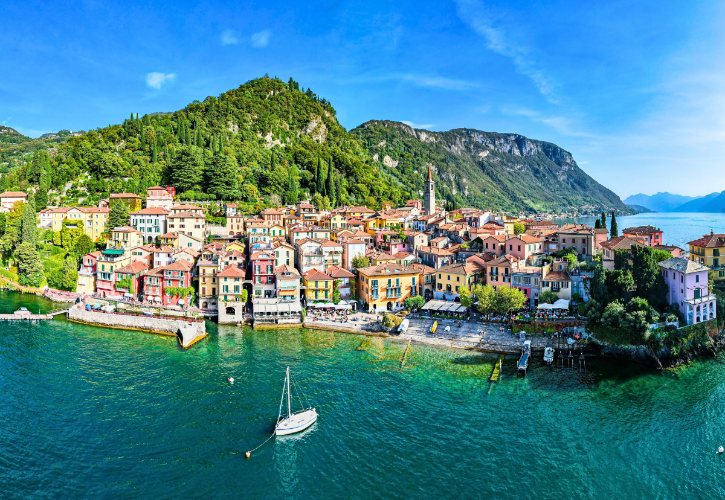
Lake Como sits in a deep, Y-shaped basin carved by glaciers, and that shape is what makes it such a rewarding road trip. You can cross between neighboring towns in just 10 to 30 minutes, yet each hop changes the scenery completely.
You move from a busy old city to a gorge cut through a village, then on to promontory resorts, villa gardens, a sacred hillside, and quiet stone hamlets. Vehicle ferries link the shores into one smooth loop, so the whole lake opens up to you. 😊
1. Como Old Town & Cathedral
a. Why You Should Start Here
Begin in Como because it has anchored this region for over two thousand years, giving you the historical backbone before the villages get smaller and quieter. The city took shape in 59 BC, when Julius Caesar laid out a fortified colony on a grid. Its position guarding the route to the Alpine passes made Como wealthy long before the shoreline filled with villas.
b. The Cathedral’s Long Story
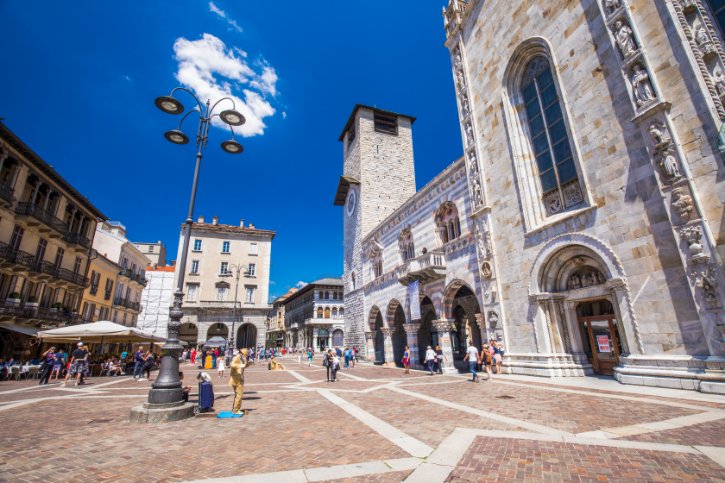
The heart of it all is Piazza Duomo, where the Cathedral of Santa Maria Assunta stands beside the medieval Broletto. What makes it so unusual is how long it took to build.
- Work began in 1396 on an older Romanesque basilica and carried on for nearly four centuries
- The result mixes styles in one building: late Gothic in the lower nave, Renaissance in the transepts, and a late-Baroque dome finished between 1731 and 1740
c. What to Notice on the Façade
Slow down at the front and look closely.
- White Musso marble and grey Olgiate stone, with a central rose window, all finely carved by the brothers Tommaso and Jacopo Rodari
- Statues of Pliny the Elder and Pliny the Younger flank the main door, two pagan Roman writers on a Christian cathedral, a sign of how deeply Renaissance humanism took root here
d. The Porta della Rana
Walk to the north side along Via Pretorio for the Porta della Rana, the Portal of the Frog. The Rodari workshop finished it around 1507, with pilasters of grotesques, foliage, and saints. Its nickname comes from a small marble frog at the base of the left doorjamb, worn smooth from centuries of visitors touching it.
e. Inside the Cathedral
Step in for a few highlights: sixteenth-century tapestries from Flemish, Brussels, and Florentine workshops, two altarpieces by Bernardino Luini, and paintings by Gaudenzio Ferrari. The cathedral is an active place of worship, so visits pause during services and modest dress is expected.
f. Exploring the Old Town
Beside the cathedral stands the Broletto of 1215, the old communal palace, banded in grey, white, and rust-colored stone. Pass under its arcade into streets that still follow the Roman grid, then head southeast to Piazza San Fedele, once the Roman grain market, ringed by timber-framed houses and a Romanesque basilica with a three-lobed apse.
2. Torno
a. A Village That Earns Its Own Stop
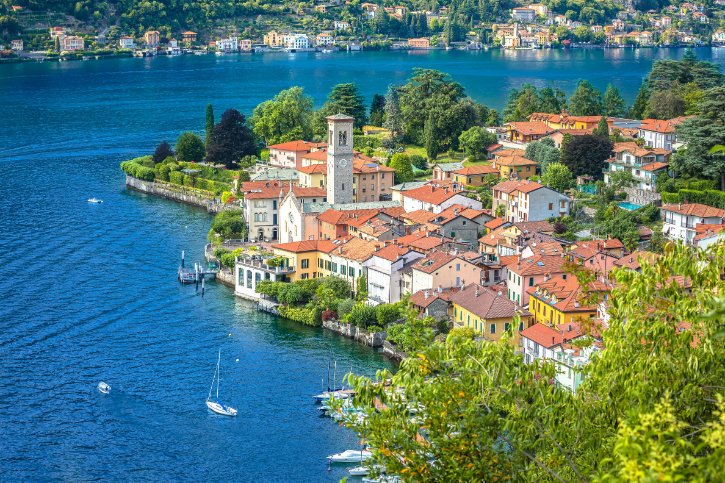
Do not just drive past Torno on the way to Bellagio. It is where the trip changes gear, dropping from city scale into a compact village stacked against the hillside. Set on a rocky point, it once rivaled Como in wool weaving and lake trade, until imperial troops sacked it in 1522 and its fortunes shrank to fishing and quarrying.
b. The Harbor and Waterfront
Make the small harbor, the Riva di Torno, the center of your visit.
- Stone quays enclose a sheltered basin lined with pastel houses from the sixteenth to eighteenth centuries, looking across the narrowest part of the lower lake toward Moltrasio
- Narrow lanes climb behind the shore, between thick walls, covered underpasses, and steep steps called risciare
c. The Church of Santa Tecla
This church dominates the harbor, steps from the water. It began in the Romanesque era and was largely rebuilt in Lombard Gothic style in the late fifteenth century. Look for the gabled front with its large Gothic rose window and the 1480 portal with a carved lunette of Saint Tecla.
d. The Church of San Giovanni Battista
Climb the steep alleys to this second church, set on a terrace along the old Strada Regia, and it gives you a reason to explore beyond the waterfront.
- A thirteenth-century bell tower and a fine Renaissance marble portal, again by the Rodari workshop
- Inside, the venerated Santo Chiodo, an iron nail said to have been carried from the Holy Land around the First Crusade, shown only on special feast days
e. Details You Might Miss
As you climb, keep your eyes open for the small things: keystones bearing old merchant emblems, reused blocks of local limestone, and quiet lake views between the houses.
Church interiors follow parish schedules, so they may or may not be open when you arrive. The harbor and lower lanes are yours to walk freely.
3. Nesso & Orrido di Nesso
a. Where Nature and Village Collide
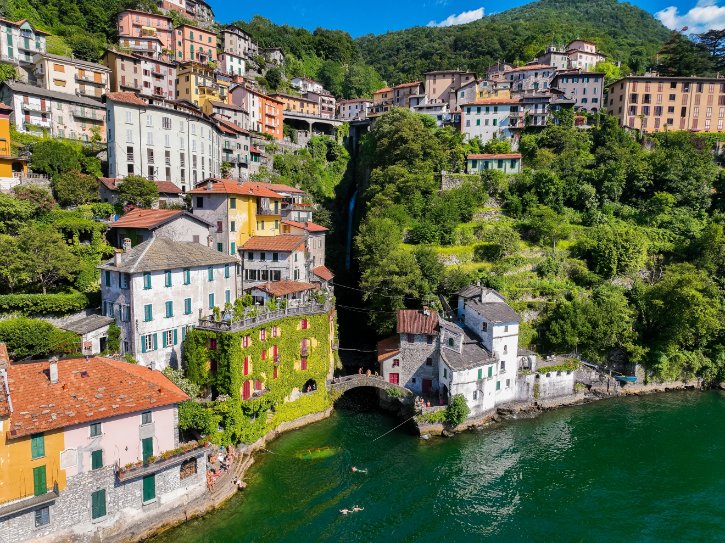
At Nesso, the scenery and the houses are tangled together. The famous Orrido di Nesso does not sit off to one side. It cuts straight through the middle of the village, formed where two mountain streams, the Tuf and the Nosè, meet beneath the houses and plunge through a dark chasm in a 200-meter waterfall before reaching the lake.
b. The Setting
The village spills down the cliffs in tiers, its old buildings right on the edge of the drama. Stone houses with timber balconies and slate roofs hang over the ravine, their foundations rooted in the living rock. For centuries the waterfall powered mills and forges here.
c. Descending Through the Village
To reach the best of Nesso, you leave the upper road and walk down more than 340 stone steps.
- The paved mule track threads through the old Coatesa quarter, under stone arches and through dark vaulted passages
- The sound of the falls grows from a rumble to a full roar, so the descent itself becomes part of the attraction
d. Ponte della Civera
At the bottom stands this single-span stone packhorse bridge, arching above the point where the stream meets the lake. It is the classic Nesso viewpoint, looking straight into the dark heart of the canyon where the water crashes into a deep pool. Even Leonardo da Vinci noted this place in his notebooks.
e. Safety Rules You Need to Know
Local rules have tightened after dangerous overcrowding, so pay attention.
- Diving or jumping from the bridge, parapets, walls, or roofs is prohibited under a municipal order, with fines from 25 to 500 euros
- A 100-meter zone keeps boats away from the mouth of the gorge
- The bridge stays open for walking and photos, but climbing the railings is not allowed
- The steps are steep, uneven, and slippery from spray, so wear solid shoes
Where Torno felt calm and settled, Nesso feels raw and vertical, shaped entirely by moving water.
4. Bellagio
a. The Power of Its Position
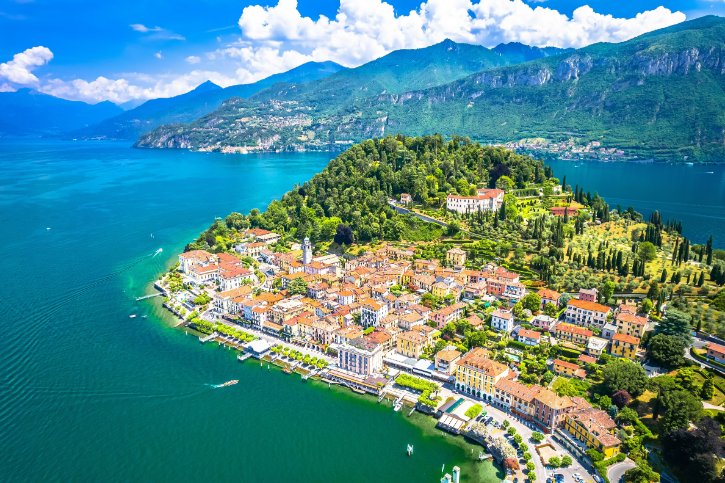
You cannot understand Bellagio without its geography. It sits at the tip of the peninsula that splits Lake Como into two southern arms, giving it exceptionally wide views north to the Alps. That setting made it a lookout in Roman times and, much later, a favorite of European royalty who turned it into a great resort town.
b. The Historic Center
Before chasing the villas, spend time in Il Borgo, the old village climbing the hillside.
- Steep stone stairways called salite rise from the lakefront, paved with river cobbles and lined with pastel houses, wrought-iron balconies, and small silk workshops
At the upper edge stands the Church of San Giacomo, built between 1075 and 1125, with a twelfth-century font, an old Spanish crucifix, and a sixteenth-century triptych. It adds a much older layer, from long before the villa era.
c. Villa Melzi and Its Gardens
The villa is closed, but its gardens are a highlight, laid out in the English landscape style along the shore.
- Giant cedars of Lebanon and bald cypresses at the water’s edge, with a Japanese water garden of water lilies and weeping maples
- Classical sculpture, a Moorish kiosk by the lake, and a chapel with neoclassical monuments
Season matters here. Camellias, azaleas, and rhododendrons bloom from April through mid-May, while the maples turn deep scarlet in autumn.
d. Villa Serbelloni Park
For something different, this large romantic park climbs the wooded spine behind the town.
- Owned by the Rockefeller Foundation, it can only be visited on a guided walking tour of about two hours, leaving twice daily from Piazza della Chiesa
- The climb is on steep, unpaved gravel and is not wheelchair accessible
e. One Easy Viewpoint
For a free public view, walk out to Punta Spartivento at the northern tip, where the lake divides into its two branches, with Varenna to the east and Menaggio to the west.
Bellagio pulls its town, churches, gardens, and promontory into one grand whole. To reach the next stop, board the vehicle ferry across the basin to a much narrower village.
5. Varenna
a. A Village With No Flat Ground
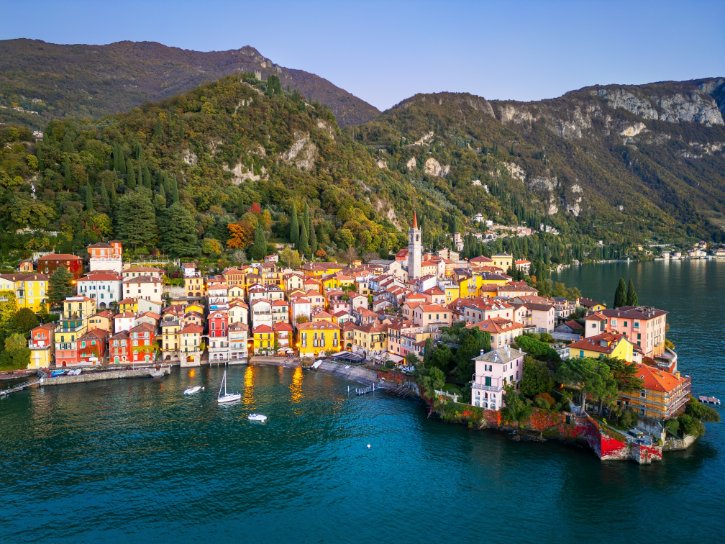
Varenna clings to the steep eastern shore, below the ruins of a hilltop castle. Unlike Bellagio’s rolling promontory, it has almost no level land, so the whole village tumbles down to the water in a cascade of stepped lanes. It kept its ancient Roman street grid and was later fortified during the medieval wars between Como and Milan.
b. The Lakefront Walk and Old Center
Arriving by ferry, you follow the Passeggiata degli Innamorati, the Lovers’ Walk, anchored into the rock over the water and shaded by arched red pergolas. It links the ferry harbor to a sheltered pebble cove called Riva Grande, where colorful fishermen’s houses press above vaulted arcades. Climb the steps to Piazza San Giorgio to find the Church of San Giorgio from 1313, with a huge outdoor fresco of Saint Christopher and a painted altarpiece inside.
c. Villa Monastero: The Buildings
This is the main cultural stop, and its story is unusual. It began as a Cistercian convent in the late twelfth century, was suppressed in 1567, became a private residence, and was redesigned in an ornate style around 1900.
- Today it serves as a museum and conference center
- The Casa Museo offers 14 furnished rooms in rich late-nineteenth-century style, including a Red Room with original tapestries and an elaborate library
d. Villa Monastero: The Garden
The botanical garden is shaped entirely by the land, and that is what makes it special.
- It forms a long, narrow ribbon stretching nearly two kilometers along the shore, with the lake in view for much of the walk
- A gentle microclimate lets exotic plants thrive: Canary Island date palms, agaves, Atlas cedars, citrus groves, and a rare Ginkgo tree, set among balustrades, fountains, stone sphinxes, and small neoclassical temples
The villa and garden open seasonally, roughly March through November. Expect stone staircases and gravel terraces, hard to manage with wheelchairs or strollers.
Bellagio was broad and polished. Varenna is steep and tight. Board the ferry again, and the cramped eastern cliffs give way to a far more open town.
6. Menaggio
a. An Open, Working Town
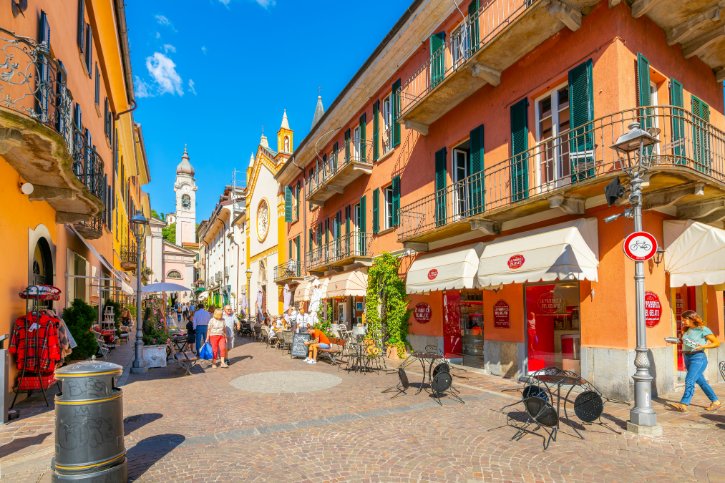
Menaggio feels lived-in rather than a resort set piece. It sits where a river meets the lake on a flat plain, at a junction where the shore road crosses an old trade route toward Switzerland, and that crossroads gave the town a lively, year-round character.
b. Piazza Garibaldi and the Promenade
Start in this spacious paved square, lined with cafés that open onto the water, then stroll the broad promenade shaded by plane trees, with clear views across to Bellagio. Near the southern end, pause at the Monument to the Female Silk Weaver, carved from white Carrara marble. It honors the women whose labor powered Lake Como’s silk industry, a reminder of working-class history the grand villas often overshadow.
c. The Historic Core
Head inland along Via Calvi to the older heart of town.
- Church of Santa Marta: a Roman funerary stone from the first century is set into its front, with a fourteenth-century carving of the town’s old castle above it
- Church of Santo Stefano: an ancient foundation rebuilt in the seventeenth century, with Baroque stuccoes, frescoes, and a processional cross from 1539
d. The Castello Quarter
Climb the cobbled incline into the upper village, where a medieval castle once stood. It was torn down in 1523, but its outline survives in the curved walls and narrow alleys, along with the seventeenth-century Church of San Carlo and its distinctive Spanish-style bell gable.
e. A Trail to Skip
One heads-up. The hiking trails into the Val Sanagra gorge behind the town have suffered rockfalls and washouts, and sections are marked impassable. Focus on the town center and promenade instead.
Menaggio gives you civic life, silk history, and a medieval past in one everyday town.
7. Villa Carlotta & Botanical Garden
a. One Estate, Three Experiences
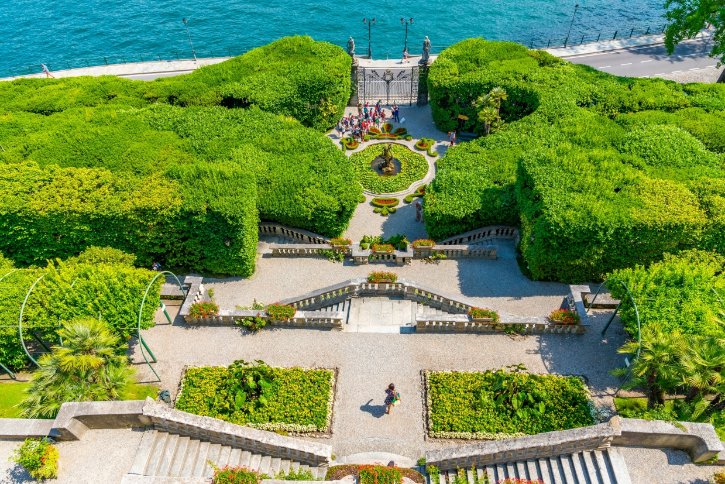
Villa Carlotta is one of the finest combinations of historic villa, art collection, and botanical garden on the lake. It sits on eight hectares of terraced grounds, looking across to the Bellagio promontory. Three families shaped what you see today.
- Around 1690, Marquis Giorgio Clerici built the grand Baroque residence, with terraces, staircases, and a central water cascade
- In 1801, art patron Gian Battista Sommariva added neoclassical touches and a serious collection
- In 1850, it was gifted to Princess Charlotte, known as Carlotta, whose husband was a keen botanist who expanded the park
b. The Museum
Step into the ground-floor museum before the garden pulls you away.
- Works connected to Antonio Canova, including his marble Palamedes
- A monumental plaster frieze by Bertel Thorvaldsen showing Alexander the Great entering Babylon
- Francesco Hayez’s romantic masterpiece, The Last Kiss of Romeo and Juliet, from 1823
c. The Garden’s Two Halves
The garden shifts in character as you climb, and that contrast is the point.
- The lower Italian Garden is formal and symmetrical, with balustrades, fountains, box hedges, and tunnels of orange and lemon trees
- The upper Romantic Garden is wilder, with centuries-old sequoias, Atlas cedars, and magnolias
d. What to Seek Out
Beyond the star displays, the garden hides plenty to find.
- The Rhododendron and Azalea Valley, home to more than 150 species, becomes a wall of magenta, pink, and red from mid-April through May
- A Bamboo Garden with over 25 varieties, a humid Fern Valley with Australian tree ferns, a Rock Garden of succulents, and an olive grove that still produces estate oil
The lower Italian Garden and the museum are reachable by elevator, but the upper garden involves steep gravel and stone stairs difficult for anyone with limited mobility.
Villa Carlotta blends fine art, formal design, and serious plant collecting in one estate.
8. Lenno
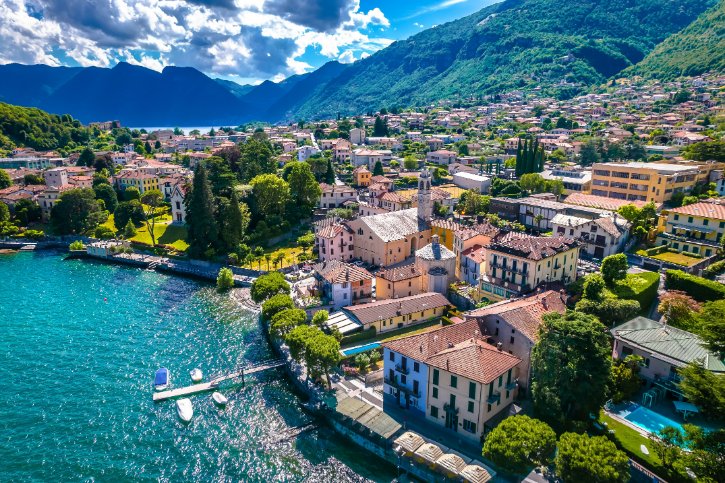
a. A Welcome Pause
Lenno is the quiet break between grand estates. The village curls around the Golfo di Venere, the Gulf of Venus, sheltered from the north winds by a wooded promontory. That shelter gives the water a calm, glassy quality that mirrors the mountains, quite different from the open waterfronts elsewhere.
b. The Waterfront
The town runs along a stone-paved promenade, shaded by plane trees and free of fast traffic. Local trattorias, wooden boat docks, and small pebble beaches line the shore, a place to linger rather than rush toward the next big sight.
c. The Old Religious Complex
Just back from the water, a fine early complex shows how deep Lenno’s history runs.
- Collegiata di Santo Stefano: founded in the eleventh century on the site of Roman baths, keeping its Romanesque masonry and an old crypt with vaults on slender columns
- The Baptistery of San Giovanni Battista: standing separately across the square, with an eight-sided plan and delicate blind arcades along the walls
Church interiors open on a seasonal parish basis and may close for restoration, but the exteriors are always there to admire. The waterfront and piazzas are level and easy to walk.
d. Looking Toward Your Next Stop
From the shore, look east across the bay to the forested ridge of the Dosso di Lavedo. This promontory reaches about 1.5 kilometers into the lake and hides the gardens of your next stop along its crest.
Lenno is a public bay you can enjoy without a ticket, a calm pause between the grand estates.
9. Villa del Balbianello
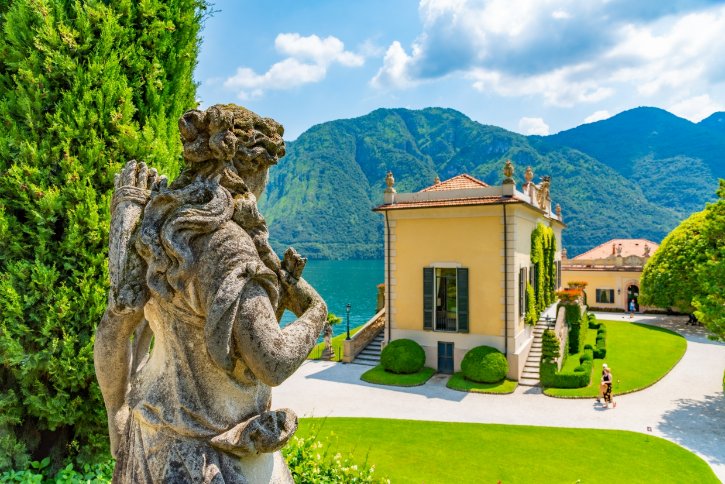
a. Why the Location Matters
Villa del Balbianello sits right at the tip of the Lavedo promontory, and that narrow point is the whole reason it works. Reaching into the lake, the estate enjoys dramatic views in two directions, northeast toward Bellagio and south toward the little island offshore. Its terraces are arranged to use that position, so the lake and mountains become part of the composition.
b. An Explorer’s Legacy
The villa was built in 1787 by a cardinal who turned a ruined monastery into a retreat for reading and reflection. Its most colorful chapter came in 1974, when Count Guido Monzino bought it. A mountaineer and explorer, he led the first Italian team to summit Everest in 1973 and reached the North Pole by dog sled in 1971, then restored the estate and left it to the national trust FAI on his death in 1988.
c. The Gardens
These gardens are about sculpted greenery, stone, and framed views rather than vast plant collections.
- The Loggia Durini, the famous open pavilion draped in climbing fig and jasmine, is the estate’s signature, framing the lake on both sides
- Massive holm oaks are clipped into umbrella canopies, and balustrades hung with wisteria drop down to the water
d. The Interiors
Seen only on a guided tour, the inside tells Monzino’s story, with pre-Columbian artifacts, Chinese glass paintings, French furniture, and the actual red dog sled from his 1971 polar expedition. The estate has appeared in major films, but the setting and history are the real reasons to come.
e. Planning Your Visit
A few practical points from FAI will save you trouble.
- In peak season from April to October, book grounds entry and interior tours online well ahead
- You can visit the gardens on your own, but interiors require a guided tour of about 45 to 50 minutes
- Access is on foot via a one-kilometer woodland trail from Lenno, about 20 to 25 minutes, or by taxi-boat
- Continuous stone steps and steep gravel make it unsuitable for wheelchairs or strollers
Balbianello is a controlled, private world of designed views.
10. Ossuccio & Sacro Monte di Ossuccio
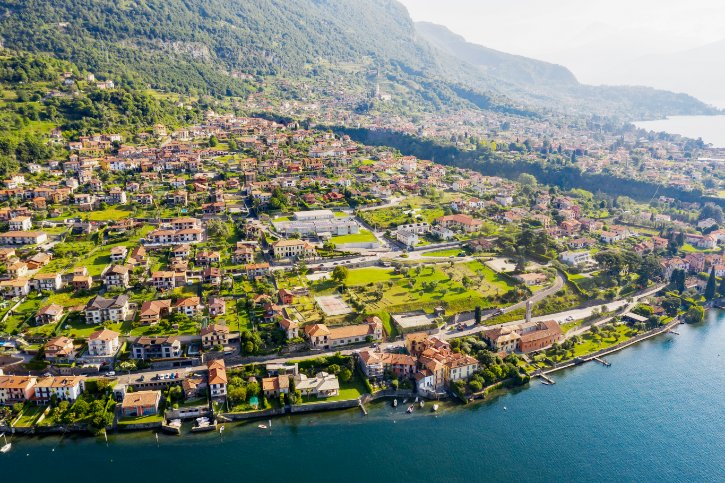
a. A Different Kind of Stop
Ossuccio keeps the trip from becoming only a string of villages and villas. Its heart is the Sacro Monte di Ossuccio, a sacred hillside recognized as a UNESCO World Heritage site in 2003, part of a group of nine such sites across Piedmont and Lombardy.
b. What a Sacro Monte Is
Think of it as a devotional route built into the landscape. These complexes were created during the Counter-Reformation as a safe alternative to the dangerous pilgrimage to the Holy Land, combining architecture, life-size sculpture, and natural scenery to bring religious stories to life.
c. The Devotional Route
Construction ran from about 1635 to 1710 on the slopes of Monte Giubilato.
- The route is dedicated to the Mysteries of the Rosary
- 14 freestanding chapels line a stone-paved path through olive groves, ending at the Sanctuary of the Beata Vergine del Soccorso at the top
- Each chapel holds a full three-dimensional scene of life-sized painted figures against frescoed walls
d. The Art Inside the Chapels
Look inside rather than walk past. The chapels are the whole point.
- Around 230 statues in total, most by the master sculptor Agostino Silva, with frescoes by respected painters of the Lombard school
- Scenes viewed through iron grilles and small openings, which heightens the drama, while the lake and island open up around you as you climb
Be honest about the walk. The path is unpaved gravel and rough cobblestone, steep and continuous, so it is not suitable for limited mobility.
e. Down by the Shore
Lower Ossuccio rounds out the stop with a few treasures.
- Church of Santa Maria Maddalena, known for its remarkable bell tower, an openwork stone octagon topped by a delicate lantern
- The Antiquarium, a small museum of Roman inscriptions and finds from the nearby island
- La Velarca, a modern houseboat from 1959, later given to FAI and opened to the public with its own lakeside garden
Ossuccio swaps private landscaping for a public, sacred landscape shaped over centuries.
11. Brienno
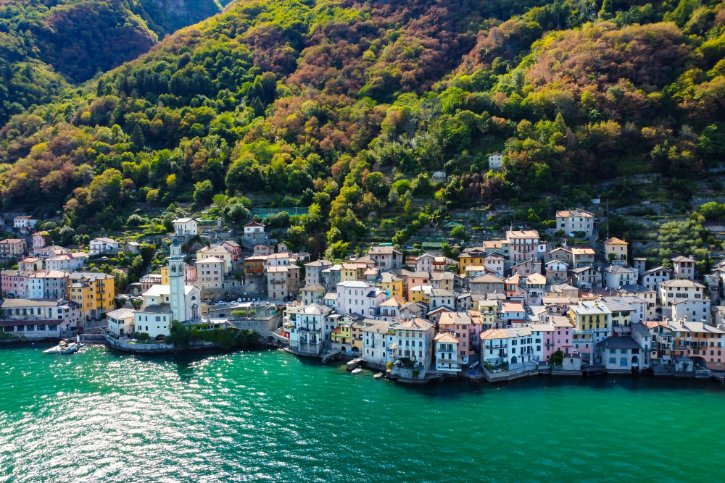
a. The Village Itself Is the Attraction
Brienno is one of the best places to feel the traditional shape of a Como village, with no famous villa to organize your visit. Built on a rocky spur that drops into the water, it has no lakefront promenade at all, just a dense maze of stone houses, covered vaulted passages, steep staircases, and narrow cobbled lanes.
b. How Geography Shaped It
You can read the reason in every wall.
- The mountain drops straight into the lake, leaving barely any land, so homes were packed one against another, their lowest foundations in the lake bed
- Covered tunnels between them gave direct access to the water, so Brienno grew upward and inward, layer upon layer
To explore, follow the central walking route through dark stone corridors, lit by old-style lanterns, that open now and then to sudden lake views.
c. Churches to Find
Two churches anchor the ends of the village.
- Church of San Vittore: perched on an outcrop at the southern edge, with Romanesque foundations, a Baroque interior, and a bell tower at the water’s edge
- Church of the Madonna del Ronco: set on a promontory at the northern tip, and because the ridge is so narrow, it is the only church here oriented north to south
d. A Hidden Piece of History
Beneath the terrace of the Madonna del Ronco lies the Galleria della Mina, and its story is fascinating.
- A First World War military installation, part of a northern defensive line meant to block an invasion through neutral Switzerland
- It holds supply rooms, ammunition stores, and six deep vertical shafts, to be packed with explosives and detonated to cut the lakeside route
- It opens only for special events or by advance arrangement, so you cannot simply walk in
e. The Charm in the Details
Brienno’s appeal is concrete rather than vague: medieval archways and carved family crests above heavy wooden doors, and the sound of water under the stone passages. Wear good shoes, since the continuous steps and uneven cobbles make walking a challenge throughout.
12. Cernobbio
a. A Graceful Finish
Cernobbio makes a fitting end, a bridge between the small stone villages and the city of Como. In the late nineteenth and early twentieth centuries it grew from a textile town into a summer retreat for Milan’s industrial elite.
b. The Public Waterfront
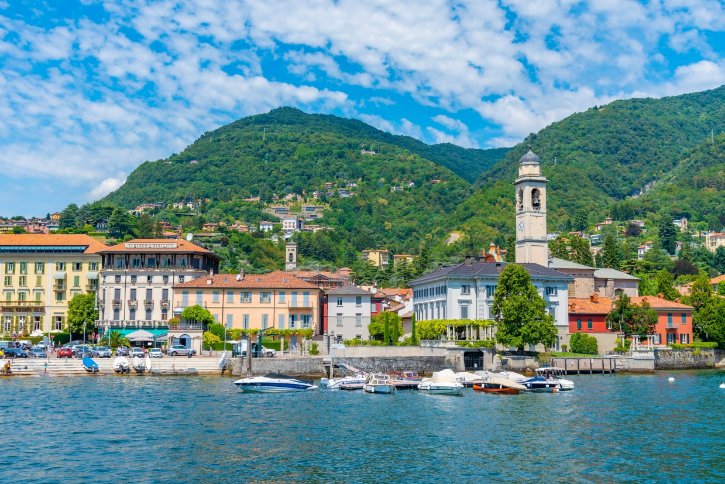
The heart of town is the Riva di Cernobbio, a wide paved lakeside square shaded by mature plane trees.
Broad views stretch across the lower lake toward Como, with Art Nouveau railings, vintage lampposts, and a historic ferry dock framing the water. After Brienno’s tight lanes, this sense of scale and light makes it a satisfying final stop.
c. Villa Bernasconi
The main museum to visit was built in 1905 and 1906 for a silk industrialist, one of Italy’s finest examples of Stile Liberty, the Italian Art Nouveau. Its decoration celebrates industry and craft rather than classical grandeur.
- Concrete reliefs and ceramic friezes shaped like mulberry leaves and silkworms, with wrought-iron balconies forged into flowing curves, butterflies, and plants
- A lively museum concept, “The House That Speaks”, where interactive displays let the villa tell its own story. It usually opens on set days, so check before you go.
d. Two Estates to Understand
Cernobbio’s most famous estates have very different rules.
- Villa Erba: a grand nineteenth-century palace, once the childhood home of film director Luchino Visconti, now an exhibition and conference venue rather than a daily drop-in museum
- Villa d’Este: a sixteenth-century property turned into a luxury hotel in 1873, its gardens and interiors open only to hotel guests and restaurant patrons, so admire it from outside
e. Looking Back Along the Lake
From Cernobbio it is only about ten minutes back to Como, closing the loop. Look back over the whole journey and it comes into focus.
Como’s Roman streets and cathedral, Torno’s stone harbor, Nesso’s roaring gorge, Bellagio’s promontory, Varenna’s steep lanes, Menaggio’s civic waterfront, Villa Carlotta’s terraced gardens, Lenno’s calm bay, Balbianello’s sculpted point, Ossuccio’s sacred hillside, Brienno’s dense passages, and Cernobbio’s elegant shore. Twelve short drives, and every one of them shows you a different face of the same remarkable lake.