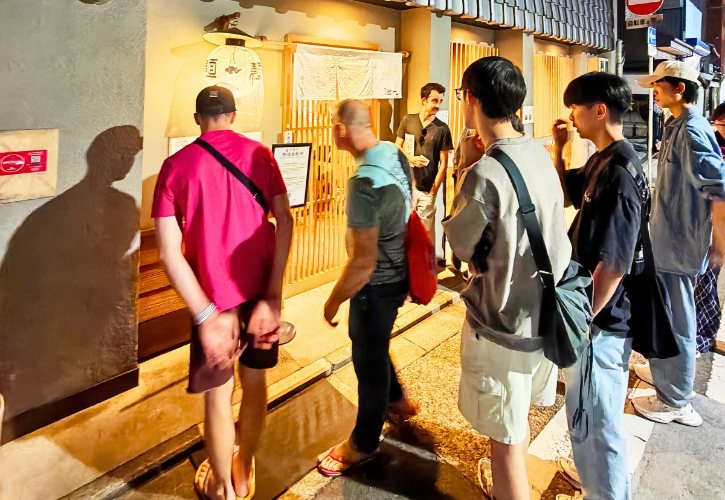
Dining in Japan is one of the best parts of any trip, but the experience really begins before you step inside.
Unlike many places back home, a lot of the important details in Japan are sorted out at the entrance, not at the table.
Walk in unprepared and you may be politely turned away, feel lost, or create awkward moments for the staff.
Here are 10 common mistakes tourists make before they even sit down, and how to avoid them.
1. Not Checking the Restaurant Type Before Going
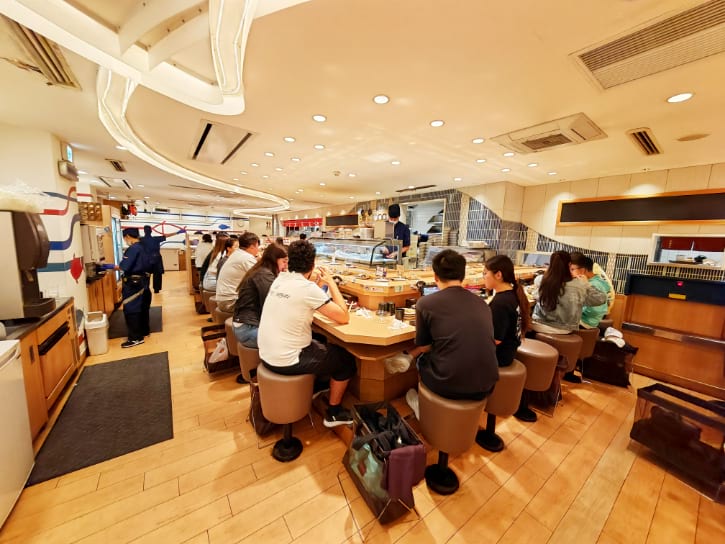
Japanese restaurants are highly specialized. Most places focus on one thing and do it very well, so showing up at the wrong type of spot for your mood or budget can quickly turn into a disappointing meal.
Here are the main types you will run into:
- Ramen-ya: Counter seating, fast and focused. ¥500 to ¥1,500 per bowl. Order, slurp, leave.
- Izakaya: Casual Japanese pubs. Loud, social, drink-focused. ¥1,000 to ¥5,000, more in central Tokyo.
- Conveyor belt sushi (kaitenzushi): Family-friendly, casual. Colored plates show the price. ¥1,000 to ¥3,000.
- Omakase sushi-ya: Tiny counter spots where the chef decides everything. Quiet, formal, ¥15,000 to ¥80,000 or more per person.
- Kaiseki ryori: Traditional multi-course meals in tatami rooms. Highly seasonal. ¥3,000 to ¥20,000 or more per course.
- Yakitori-ya: Counter seats around charcoal grills, serving chicken skewers. Smoky, casual. ¥1,000 to ¥4,000.
- Yakiniku-ya: Tables with built-in grills where you cook your own meat. Social and hands-on. ¥2,000 to ¥6,000.
- Teishoku-ya or shokudo: Neighborhood spots serving set meals with rice, miso soup, and pickles. ¥1,000 to ¥2,000.
- Family restaurants (famiresu): Big chains like Saizeriya or Gusto. Spacious booths, drink bars, kid-friendly. ¥1,000 to ¥2,000.
Why this matters: Picture walking into a quiet omakase counter expecting casual rolls from a menu. The chef has no standard menu, the room is silent, and your group will likely be turned away. The same logic applies in reverse for a quiet dinner inside a noisy izakaya on a Saturday night.
How to research before you go:
- Check Google Maps photos to see the seating and crowd.
- Read reviews for words like counter-only, set menu, or drinking spot.
- Look at the exterior. Red paper lanterns (chochin) often signal an izakaya or yakitori spot. Heavy wooden doors with small nameplates usually mean fine dining.
- Use Tabelog to confirm the genre and price range.
A friendly tip: Visit a depachika, the basement food hall inside major department stores like Isetan, Mitsukoshi, or Takashimaya. You can browse real food and pick your style of meal before committing.
2. Not Making a Reservation and Not Knowing When You Need One
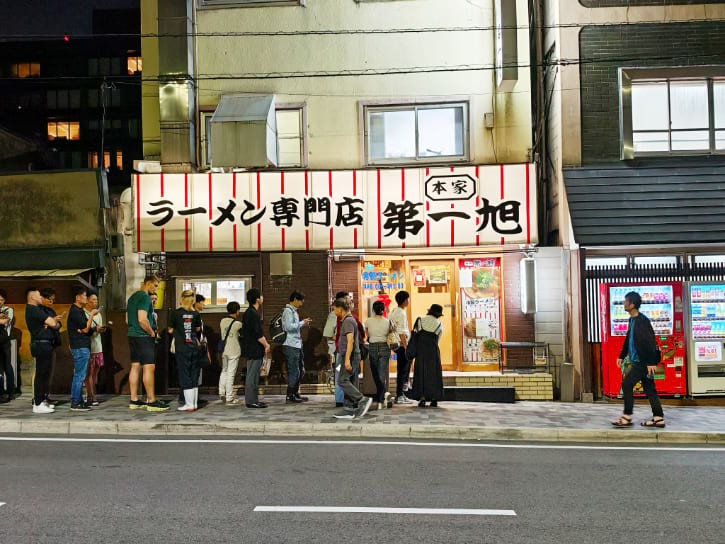
Many tourists assume they can just show up anywhere. That works in some cases, but not others.
Book ahead for:
- Fine dining and Michelin-starred restaurants, often months in advance
- Popular mid-range spots on Friday and Saturday nights
- Groups of more than four people
- Anyone with dietary restrictions or allergies
You usually do not need a reservation for:
- Conveyor belt sushi
- Family restaurant chains
- Ramen shops
- Casual lunch spots
A simple rule of thumb: If the meal is the highlight of your day or for a bigger group, book it. If it is a quick, single-focus meal under ¥2,000, just walk in.
English-friendly reservation platforms:
- TableCheck: Over 7,000 restaurants in Japan. No account needed.
- Tabelog (English): Over 890,000 listings across Japan. Great for casual and mid-range spots.
- Pocket Concierge: About 800 premium and Michelin-starred restaurants. Backed by American Express.
- Tableall: A small list of very exclusive venues. Charges a flat ¥8,000 reservation fee but guarantees the booking.
For walk-in spots: Arrive 15 to 30 minutes before opening. That gets you into the first seating cycle and saves you from long queues later.
3. Forgetting That Some Restaurants Are Very Small
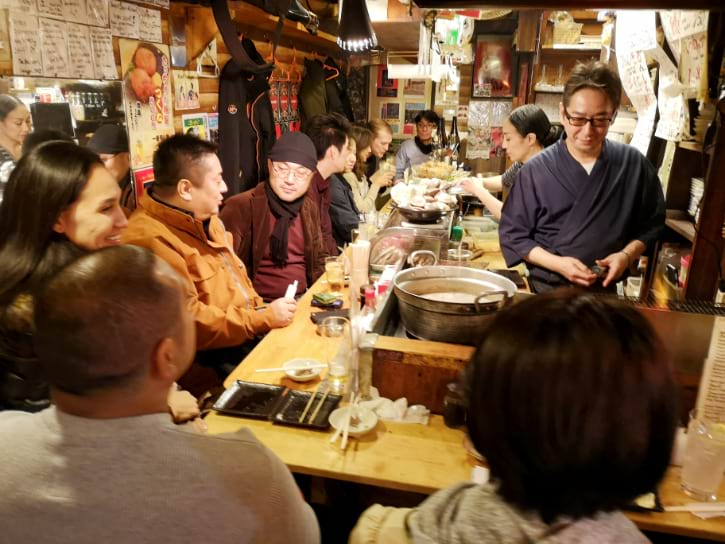
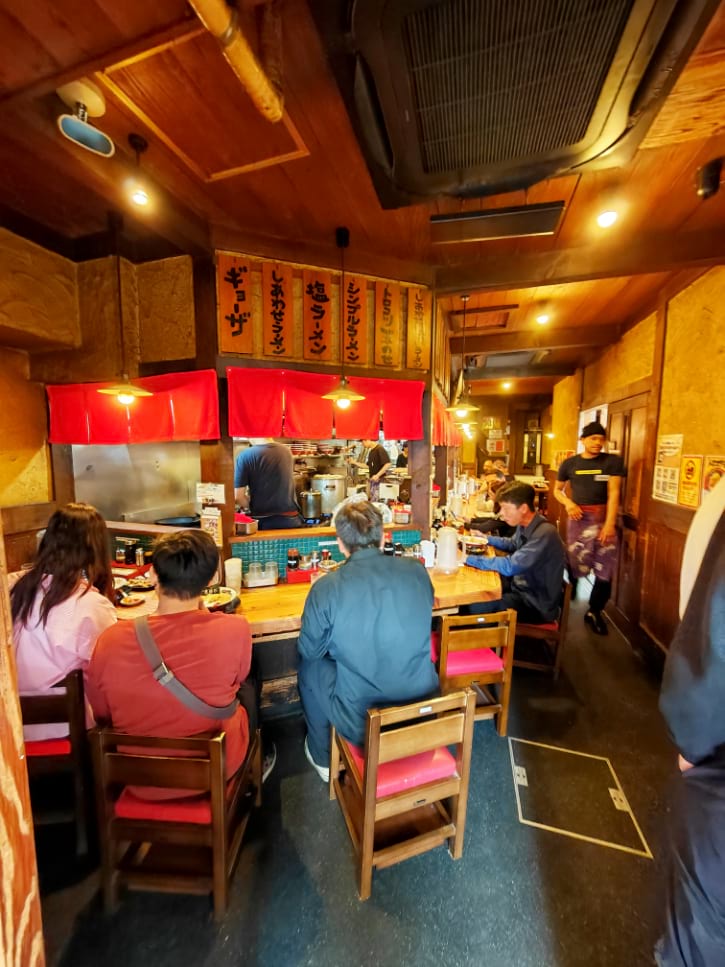
Restaurants in Japanese cities are often tiny. Counter-only sushi bars, narrow ramen shops, and yokocho alleyway spots may only have 6 to 10 seats.
This shapes how you behave inside:
- Voices travel instantly across the room. Keep conversations soft.
- Big groups may not be able to sit together. Some places turn away parties of four or more.
- Tight aisles mean you should move slowly and stay mindful of staff and diners.
Tatami seating: Many small restaurants use raised tatami platforms. Before stepping up, remove your shoes at the platform edge, place them on the entry shelves, and step on the tatami only in clean socks.
How to check the size before you go:
- Look through Google Maps interior photos.
- Browse social media tags.
- Scan reviews for counter only, cozy, tight space, or limited seating.
A cultural note: A tiny restaurant is not a low-quality restaurant. In Japan, small counter spaces are deliberate. They let the chef focus completely on each plate and connect directly with every guest. Some of the most respected restaurants in the country only seat eight people.
4. Walking In With Large Luggage, Bulky Bags, or an Unready Group
Showing up with suitcases or oversized backpacks causes friction. Aisles are narrow, dining rooms are small, and tatami rooms have no real space for luggage. Bulky items block servers and disrupt the calm feel of the room.
Coin lockers at train stations:
- Small: ¥300 to ¥400 per day, fits a daypack
- Medium: ¥400 to ¥600 per day, fits a carry-on
- Large: ¥500 to ¥800 per day, fits a checked bag
- Extra-large: ¥900 to ¥1,200 per day, fits oversized luggage
Most lockers reset at midnight or 2:00 AM, so overnight storage means paying for an extra day.
Cloak rooms at major stations:
- Available at Tokyo, Shinjuku, and Kyoto Stations
- Run by Sagawa Express, Yamato Transport, or JR East
- Around ¥800 to ¥1,500 per item per day
Hotel luggage storage: Almost every hotel will hold your bags for free before check-in and after check-out. Just ask the front desk.
Takuhaibin (luggage delivery service):
- Yamato’s TA-Q-BIN is the most popular option.
- Ships luggage between airports, hotels, and cities nationwide.
- Roughly ¥1,650 to ¥3,500 depending on size and distance.
- Sending a 100cm suitcase from Tokyo to Kyoto costs around ¥1,650.
The “group readiness” problem: Arriving at the entrance while still debating who is paying, what someone can eat, or whether a missing friend is coming, blocks the doorway and frustrates staff. Sort all of this out before you reach the door.
Simplest tip: Drop your bags at a station locker or hotel lobby before sightseeing. Trust me, this small step can save you a lot of stress later.
5. Not Checking the Restaurant’s Ordering System First
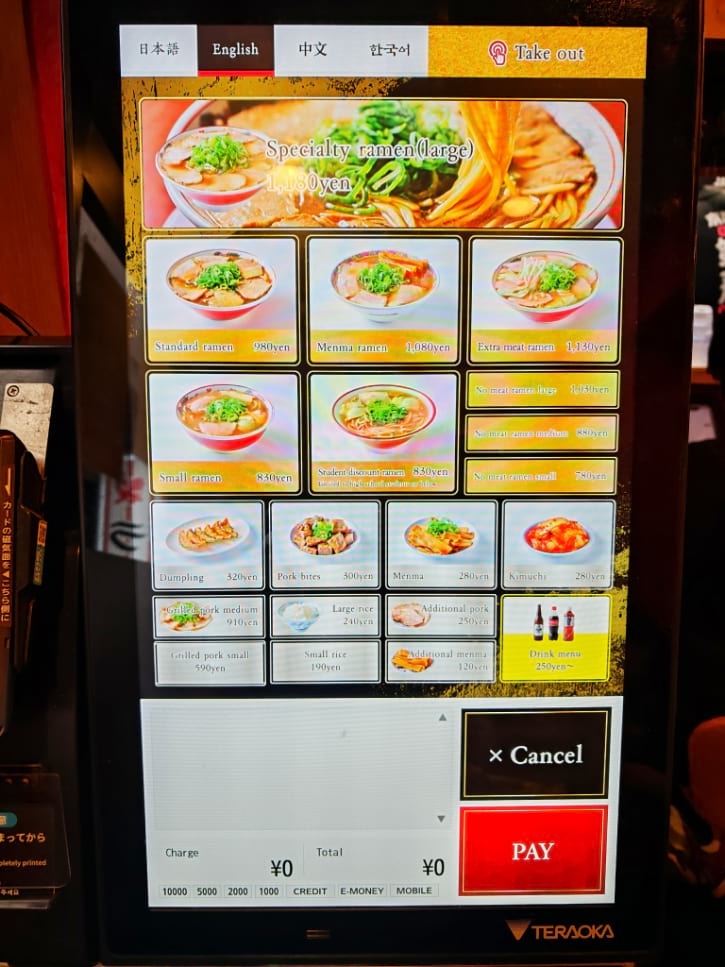
Japanese restaurants use four main ordering systems. Sit down without knowing which one is in use, and you may wait forever for service that is never coming.
a. Ticket Vending Machine (Kenbaiki)
Common in ramen shops and fast-casual diners.
- Step up to the machine near the entrance.
- Insert cash, or tap an IC card like Suica or PASMO if accepted.
- Press the buttons for your dish, toppings, and drinks.
- Collect your tickets and change.
- Sit down and hand the tickets to the chef or server.
Here is the part many tourists miss. On older Japanese-only machines, the top-left button is almost always the signature bestseller.
b. Tablet or QR Code Ordering
Common in izakayas, sushi chains, and family restaurants.
- Use the tablet at your table, or scan a QR code with your phone.
- English options are usually available, but check first.
c. Traditional Waiter Service
- Raise your hand slightly and say “Sumimasen” clearly.
- Make eye contact.
- Do not snap your fingers, wave aggressively, or whistle. These are seen as rude.
d. Call Button at the Table (Yobidashi)
- Press the small button on the table once and wait.
- A server will come over without you needing to shout.
How to spot the system from outside
- Check the entrance for a vending machine.
- Peek at tables for tablets.
- Watch how current customers are ordering.
Navigating a Japanese-only ticket machine:
- Match the buttons to the plastic food models (sampuru) displayed outside.
- Use Google Translate’s camera or Google Lens for live translation.
- Look for photo displays on the machine.
- Use an IC card to pay when possible.
6. Assuming You Can Just Walk In and Pick Any Seat
In Japan, self-seating is a real breach of etiquette in most restaurants.
The standard entry protocol:
- Stand quietly near the entrance.
- Wait to be acknowledged by staff.
- Listen for the warm “Irasshaimase!” greeting.
- Hold up fingers to show your group size.
- Let staff guide you to your seat.
The “X” signal: If staff cross their arms or index fingers into a clear “X” shape, it means the restaurant is full or cannot take you. It is not personal. It is just a clear, silent way to communicate in a busy room.
Self-seating is fine at:
- Casual ramen shops after handing in your ticket
- Ticket-machine eateries
- Shopping mall food courts
- Fast-food-style chains
Tatami room seating: Remove your shoes at the raised platform, place them on the shelves, and store your bags in the plastic baskets provided under your seat.
Checking in with a reservation:
- Say “Yoyaku no [your name] desu” (I have a reservation under [name]).
- If pronunciation feels tricky, just show the booking confirmation on your phone.
The simplest cue that you are waiting to be seated: Pause at the entrance and make polite eye contact with a staff member. They will come to you.
7. Expecting English Menus Everywhere
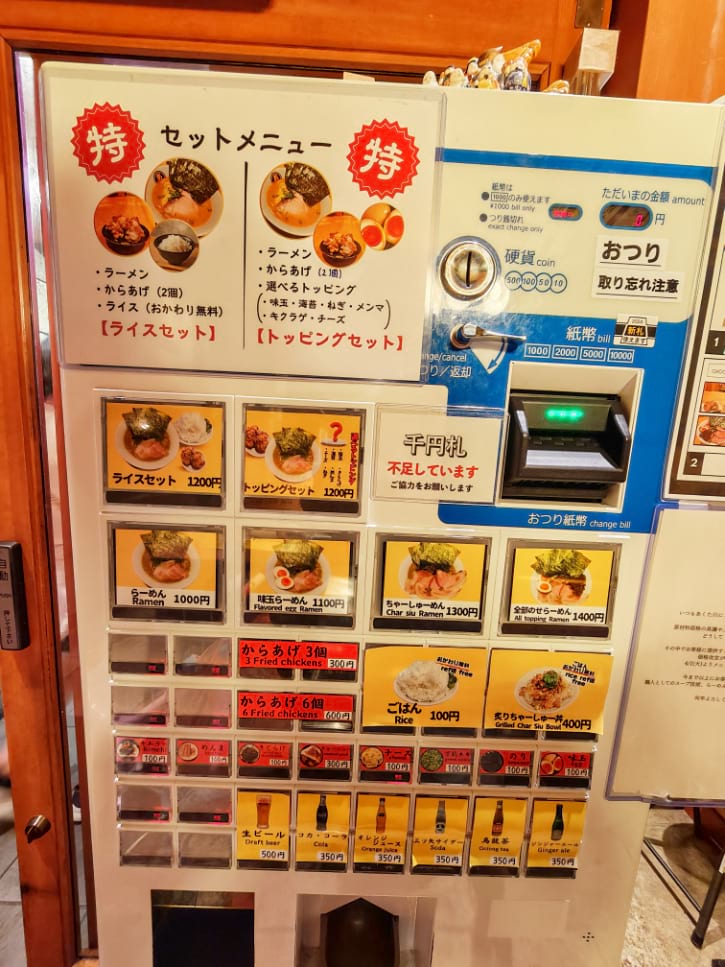
English menus are more common than they used to be, but they are far from universal.
More likely to have English menus:
- Nationwide chain restaurants
- Restaurants in major tourist areas
- Big-city restaurants in Tokyo, Osaka, and Kyoto
- Department store restaurant floors
Less likely to have English menus:
- Local neighborhood restaurants
- Family-run shokudo
- Specialist counters like small ramen or sushi bars
- Smaller shops off the main tourist streets
Japan’s two visual menu lifesavers:
- Plastic food replicas (sampuru): Hyper-realistic models displayed at the entrance. Point to one to order.
- Photo menus: Many restaurants have menus filled with clear photos of every dish.
How to navigate a Japanese-only menu:
- Point at sampuru models or photo menus.
- Use Google Translate’s camera function for live overlay translations.
- Try Google Lens for quick image-based translations.
Two key phrases to memorize:
- “Eigo no menyu wa arimasu ka?” (ay-goh-noh-meh-nyoo-wah-ah-ree-mah-soo-kah) means “Do you have an English menu?”
- “Osusume wa nan desu ka?” (oh-soo-soo-meh-wah-nahn-dess-kah) means “What do you recommend?”
Cultural reframe: A Japanese-only menu is often a great sign. It usually means the restaurant is authentic, beloved by locals, and has not changed its style to chase tourist traffic.
8. Not Knowing Basic Restaurant Phrases
A few simple Japanese phrases go a long way. They soften the interaction, show respect, and often lead to warmer service from staff.
On Arrival
- Hitori desu / Futari desu / San-nin desu (hee-toh-ree dess / foo-tah-ree dess / sahn-neen dess): “One person / Two people / Three people”
- Yoyaku no [Name] desu (yoh-yah-koo no [Name] dess): “I have a reservation under [Name]”
When Ordering
- Sumimasen (soo-mee-mah-sen): “Excuse me”. Use with a slight raised hand to call a server.
- Kore o kudasai (koh-reh oh koo-dah-sigh): “This one, please”. Use while pointing at a menu item or sampuru.
- Osusume wa nan desu ka? (oh-soo-soo-meh wah nahn dess kah): “What do you recommend?”
- Omakase shimasu (oh-mah-kah-seh shee-mah-soo): “I’ll leave it to you”. Used at sushi bars or chef-driven counters.
Before Eating
- Itadakimasu (ee-tah-dah-kee-mah-soo): “I gratefully receive”. Said quietly with palms together before your first bite.
After Eating
- Okaikei o onegai shimasu (oh-kay-kay oh oh-neh-guy shee-mah-soo): “The bill, please”. You can also cross your index fingers into a small “X” shape.
- Gochisosama deshita (goh-chee-soh-sah-mah deh-shee-tah): “Thank you for the meal”. Said to staff as you leave.
Why this matters: Saying “sumimasen” before ordering and “gochisosama deshita” on the way out often turns a simple meal into a warm, memorable exchange.
Why sumimasen is the most useful word: It works as “sorry”, “thank you”, and “excuse me” all at once. You will use it more than any other word at a Japanese restaurant.
Worried about pronunciation? Type the phrases into your phone notes app and show the screen to the staff. They will understand right away.
9. Not Understanding the Otoshi Cover Charge
When the bill comes at an izakaya, many tourists notice an unexpected charge of ¥300 to ¥800 per person. It is not a mistake or a tourist trick. It is otoshi.
What otoshi is:
- A small appetizer served automatically after you sit down and order drinks.
- An indirect table or seating charge.
- A standard, fully legal business practice in Japan.
A regional note:
- In eastern Japan (Kanto), including Tokyo, it is called otoshi.
- In western Japan (Kansai), including Kyoto and Osaka, it is called tsukidashi.
Typical price: ¥300 to ¥800 per person. You pay even if you do not eat the dish.
Where you will see otoshi:
- Izakayas
- Traditional bar-restaurants
- Spots where alcohol is the focus
Where you will not see otoshi:
- Ramen shops
- Fixed-menu kaiseki restaurants
- Fast food outlets
- Family restaurant chains
Cultural reframe: Think of otoshi as a small cover charge that comes with a free seasonal bite. It often hints at the kitchen’s style, like simmered bamboo shoots in spring, chilled edamame in summer, or warm potato salad in winter.
How to spot it before sitting down: Scan the menu for these characters, usually in small print near the drinks section:
- お通し (otoshi)
- 席料 (sekiryo, meaning seat charge)
10. Ignoring Cash and Payment Rules
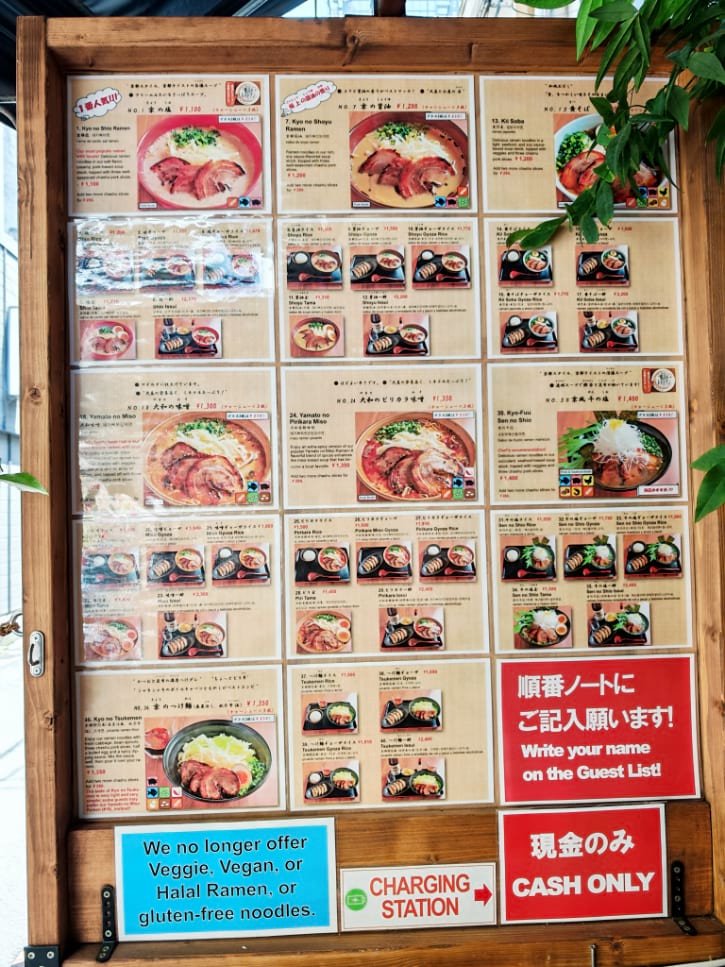
Japan looks high-tech, but its restaurants are still surprisingly cash-friendly. Relying only on credit cards is one of the most common tourist mistakes.
Where cards are usually accepted:
- Chain restaurants
- Department store restaurants
- Hotel restaurants
- Larger restaurants in major cities
Where cash may still be required:
- Small local restaurants
- Independent ramen shops
- Older family-run diners
- Rural restaurants
A quirky thing to watch for: Some restaurants display credit card stickers at the door but still ask for cash, especially for discounted lunch sets or when splitting a group bill (warikan).
Outside major cities: The further you go from Tokyo and Osaka, the more cash-dependent things become.
How to stay cash-ready:
- Carry ¥5,000 to ¥10,000 per person per day for meals.
- Use 7-Eleven ATMs (Seven Bank) for reliable international withdrawals. English menus, open 24/7.
- Keep your Suica or PASMO IC card topped up. It works at many casual eateries, ticket machines, and convenience stores.
The phrase to ask before sitting down:
- “Kaado wa tsukaemasu ka?” (kah-doh wah tsoo-kah-eh-mah-soo-kah) means “Can I use a credit card?”
No tipping in Japan: Leaving extra coins on the table is confusing for staff. They may even chase you down the street to return the money you “forgot”. Excellent service is built into the price thanks to omotenashi, Japan’s philosophy of selfless hospitality.
The correct bill payment procedure:
- The tray method: At the register, place your cash or card directly into the small plastic or wooden tray on the counter. Handing money directly to the cashier is considered poor form.
- Register vs. table: In most restaurants, you pay at the front register near the exit, not at the table. Take the paper bill slip from your table and bring it to the register when you leave. Only ultra-high-end fine dining spots tend to settle at the table.