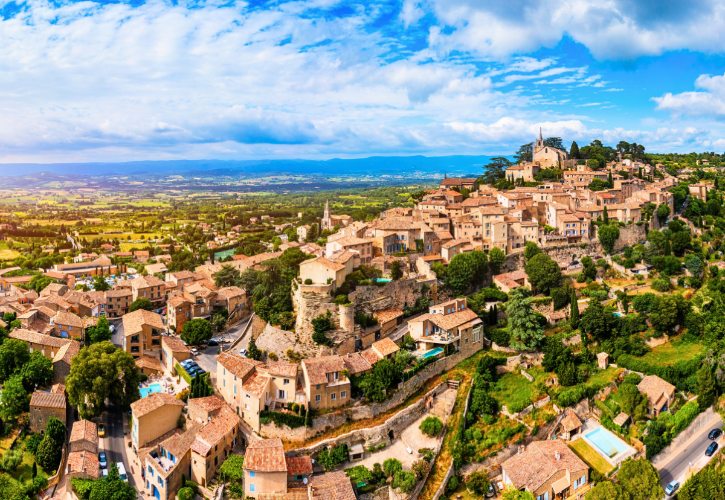
Provence never shows you the same beauty twice. One place is a pale stone village that looks carved from its hill. The next glows with ochre cliffs, turquoise sea, folded rock, or canals that still turn old wooden wheels.
Geology, light, history, and village life shaped each one differently. This is not one postcard repeated twelve times. It is twelve distinct kinds of beauty to explore on your next trip. 😊
1. Gordes
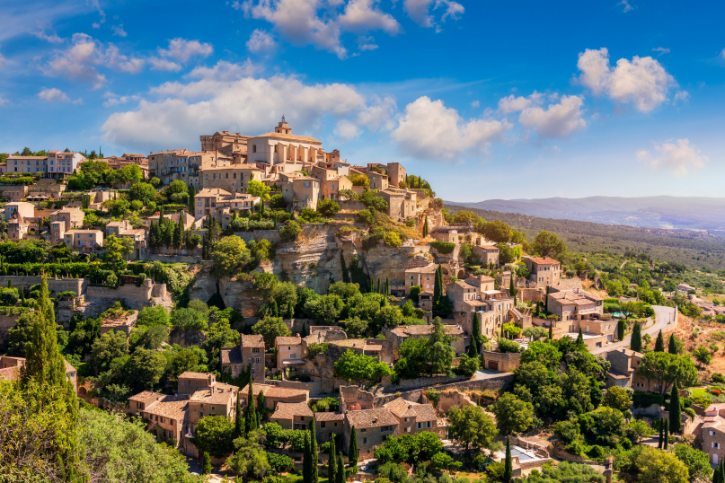
a. A village carved from its hill
Gordes sits on a rocky promontory above the Calavon valley. The cliffs and the houses share the same pale limestone, so the village looks cut from the mountain rather than built on it. It is one of Les Plus Beaux Villages de France, and its stepped stone silhouette is the reason people call it breathtaking.
b. See it first from Rocher Bel-Air
- Stone houses cascade down the slope in tiers.
- The château and church crown the top.
- Olive groves, dry-stone walls, and vineyards fall away below.
- Viewing it from outside first reveals the whole village at once.
c. Inside the old center
- Narrow calades, streets paved with edge-set cobbles.
- Enclosed lanes suddenly open onto wide valley views.
- Carved lintels, mullioned windows, and old iron torch holders.
- The push between tight streets and big views is best on foot.
d. The château
- A medieval fortress, later rebuilt in the Renaissance.
- The north side keeps its defenses: round towers and high walls.
- The south side shows softer Renaissance windows.
- Towering over the houses, it gives the village a fortified crown.
e. Hidden Gordes and rural stone
- The Caves du Palais Saint-Firmin run levels deep into bedrock.
- Underground you find olive mills, cisterns, grain silos, and tanneries.
- The nearby Village des Bories holds dry-stone huts built with no mortar.
- Together they show a whole village made of stone, above and below.
f. Sénanque Abbey and what sets Gordes apart
The Cistercian Abbaye Notre-Dame de Sénanque sits in a hidden valley and is still a working monastery. Its plain church is a calm contrast to the village. Note the lavender usually blooms from about mid-June to mid-July and is harvested in late July, so it is a short summer sight, not something you will see year-round. Gordes’s signature is monumental limestone unity, one continuous stone world.
2. Roussillon
a. Color, geology, and architecture
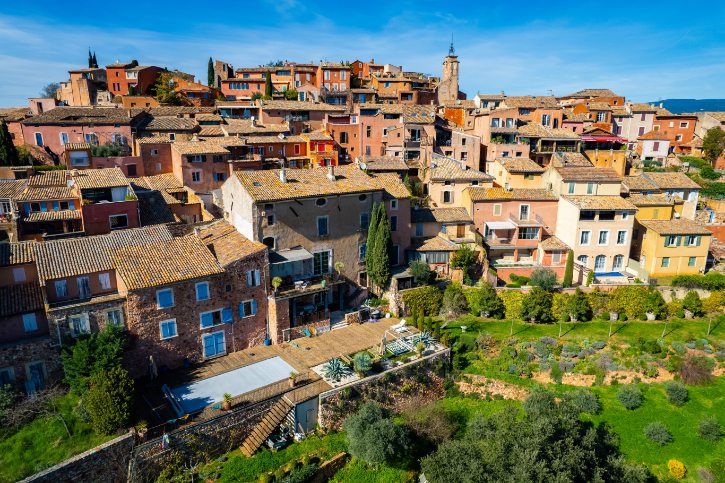
After Gordes’s pale stone, Roussillon glows warm. It sits on the largest ochre deposit in Europe, and the village shares the earth’s colors. The pigments dug from the ground went into the plaster on the houses, giving shades of saffron, terracotta, yellow, and deep red. It too is one of Les Plus Beaux Villages de France.
b. The Sentier des Ocres
- A path through the old ochre quarries just outside the village.
- Iron oxides give the yellows, reds, and oranges.
- This is a post-industrial landscape, not untouched wilderness.
- Old cuts have softened into cliffs, spires, and gullies over time.
c. Where color climbs into the walls
- Façades shift between apricot, gold, pink, and deep sienna.
- Shutters add slate gray, olive green, and muted blue.
- Low morning and evening light makes the walls glow red and gold.
d. The upper village
- Climb to the top and close-up color gives way to open landscape.
- The old belfry and cliff-edge Église Saint-Michel stand near the summit.
- The highest terrace opens to the Vaucluse plateau, Mont Ventoux, and the Grand Luberon.
- Red earth at your feet, green countryside in the distance.
e. Ôkhra, where color became industry
- A former ochre factory that processed pigment for decades.
- Stone settling basins separated fine pigment from sand.
- Furnaces roasted yellow ochre into deep red.
- The site ties together geology, industry, architecture, and art.
f. Details and what sets it apart
- Look for weathered plaster showing older pigment layers beneath.
- Fine ochre powder gathers along wall bases and tree roots.
- Roussillon’s theme is color with a story: ochre geology, old quarries, and pigmented homes in one warm palette.
3. Moustiers-Sainte-Marie
a. Suspended between cliffs and water
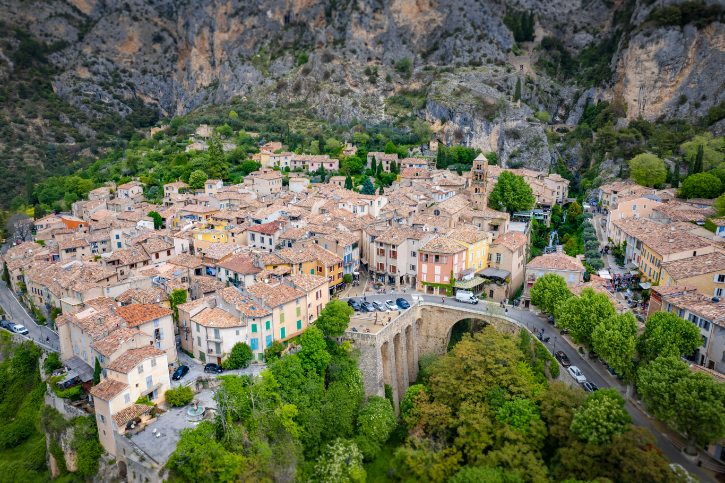
Moustiers is built into a gorge under a tall limestone cliff, near the turquoise Lac de Sainte-Croix. It is one of Les Plus Beaux Villages de France. What makes it unforgettable is the vertical stack: the village, a chapel halfway up the cliff, and a gilded star on a chain strung across the gorge overhead.
b. Start low, by the water
- A spring-fed stream, the Adou, runs through the center.
- It passes under arched medieval bridges.
- Old washhouses and stone fountains line the lower streets.
- Moving water below, dry cliffs above: that is the magic.
c. The parish church
- The nave is austere Romanesque.
- A later Gothic choir sits slightly off-line, giving a visible bend.
- A golden Lombard Romanesque bell tower rises against the cliff.
- It is one of the defining images of Haute-Provence.
d. The climb to Notre-Dame de Beauvoir
- A stair of 262 steps climbs to the cliffside chapel.
- First you see rooftops at eye level.
- Then the whole village pressed beneath the cliffs.
- Finally the wider Verdon opens toward the lake. The climb is half the experience.
e. The star and the faïence
- Legend says a crusader knight vowed to hang the star, a tale the poet Mistral made famous.
- History finds no medieval record, only a mention from the 1600s.
- Moustiers is also world-famous for faïence, fine blue-and-white pottery still made here.
f. What sets it apart
Think of Moustiers as vertical theater: cliffs, a suspended star, a chapel above the roofs, water through the center, and a pottery tradition. Cotignac also sits under a cliff, but its rock and story are completely different.
4. Cassis
a. Two cliff worlds meet the sea
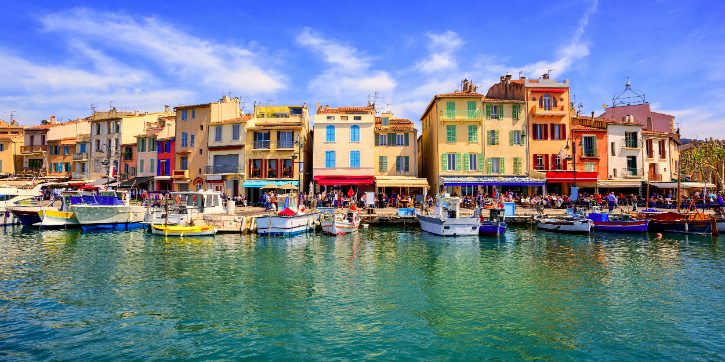
Cassis is the shift to the Mediterranean. To the west, the Calanques, bright white limestone canyons cut into the sea. To the east, Cap Canaille, a wall of rust-red sandstone. Between them sits an old fishing port. That double geology makes Cassis unlike anywhere else on the coast.
b. The port
- Traditional wooden fishing boats, the pointus, in bright colors.
- Tall waterfront houses in terracotta, ochre, and rose.
- Views across to Cap Canaille one way, the old château the other.
- Small buildings framed by huge geology all around.
c. Cap Canaille
- It reaches a verified 394 meters, the highest coastal cliff in continental France.
- It is not the highest sea cliff in Europe, since taller ones exist elsewhere.
- Its layered sandstone gives red, ochre, and gold tones.
- The Route des Crêtes runs along the edge with sweeping viewpoints.
d. The calanques
- Port-Miou: a long, narrow inlet shaped by nature and old quarrying.
- Port-Pin: smaller and greener, framed by Aleppo pines.
- En-Vau: the climax, sheer walls over the sea and a needle called the Doigt de Dieu.
- Their tall walls dwarf the boats below.
e. See them from the sea
- View the Calanques from the water as well as from above.
- From sea level the rock layers, caves, and sheer height make sense.
- You catch the instant switch from white limestone to red Cap Canaille.
- Two viewpoints together give you the fullest picture.
f. What sets it apart
Cassis marks the shift from inland Provence to the Mediterranean coast. Its signature is fishing-port life, Mediterranean light, blue water, white Calanques, and red Cap Canaille, all in one place. After all those hilltop villages, it feels like a breath of salt air.
5. Saint-Rémy-de-Provence
a. A town of deep layers
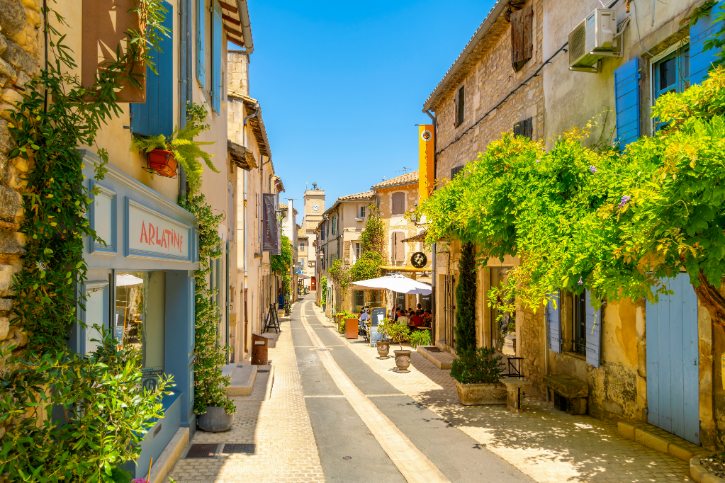
Saint-Rémy is not just a pretty village. It is a place of deep layers at the foot of the Alpilles. In one visit you touch three worlds: a busy market town, the ancient ruins of Glanum, and the landscape that inspired Van Gogh.
b. The lived-in heart
- Shaded boulevards trace the line of the old town walls.
- Grand mansions rise in blond Alpilles limestone.
- Cafés, galleries, and markets fill the squares.
- It hums with life, unlike the tiny hill villages.
c. Glanum
- A Celtic sanctuary grew around a healing spring.
- Greek trade brought Hellenistic architecture.
- Rome rebuilt it as an imperial city with a forum and temples.
- Nearby stand Les Antiques, a Roman mausoleum and arch.
d. The setting and Van Gogh
Glanum sits in a limestone ravine below craggy Mont Gaussier. Right beside it, at Saint-Paul-de-Mausole, Van Gogh spent a year and made nearly 150 paintings. You can still find his subjects: olive groves, cypresses, and the rolling Alpilles, marked along the Promenade Van Gogh.
e. The Alpilles and the art scene
- White limestone ridges drop into garrigue and pine.
- Valley floors hold olive groves and vineyards.
- The Musée Estrine holds a Van Gogh interpretation center.
- Independent studios keep the town’s art scene alive.
f. What sets it apart
Saint-Rémy is about cultural depth inside a beautiful landscape: an ancient sanctuary, a Greek and Roman city, a living Provençal town, and 19th-century art, all under the enduring Alpilles.
6. Lourmarin
a. Graceful, not dramatic
After the heights, Lourmarin is an exhale. It sits on a gentle slope in the southern Luberon, ringed by vineyards and orchards. A member of Les Plus Beaux Villages de France, its charm is elegance and atmosphere, not dizzying elevation.
b. The streets are the point
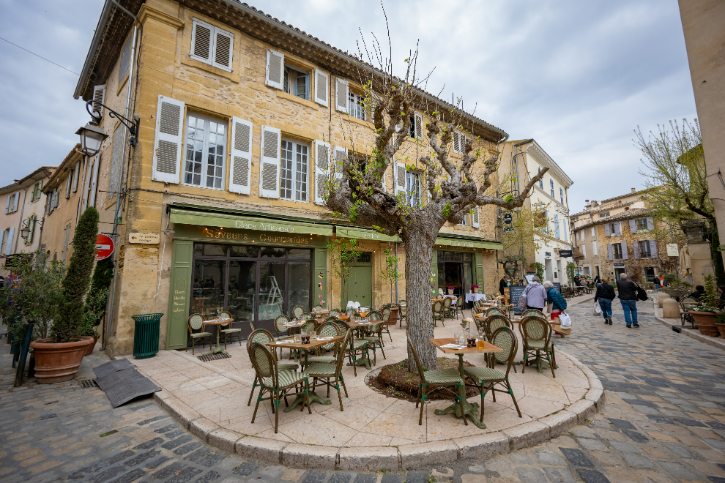
- Flat, walkable lanes of honey-toned stone houses.
- Shaded squares full of café terraces under plane trees.
- Arched carriage entrances, pastel shutters, and gallery windows.
- Wandering itself is the main event here.
c. Read it through its towers
- The Belfry, topped with an open iron campanile.
- Église Saint-André, an old Romanesque and Gothic church with a tall bell tower.
- The neoclassical Protestant Temple.
- Locals call it the village of three towers.
d. The château
The Château de Lourmarin is the first Renaissance château in Provence, and really two buildings in one: a fortified medieval castle and a Renaissance wing with an open loggia and a grand spiral staircase. It watches over gentle vineyards, not steep drops, which is the whole mood.
e. Literary Lourmarin
- Albert Camus lived here and is buried in the village cemetery.
- The novelist Henri Bosco rests nearby.
- Writers were drawn by the quality of the light and the calm.
- That legacy gives the village a quiet, reflective soul.
f. What sets it apart
Lourmarin is about ease and elegance: human-scale streets, a layered château, and literary ties in gentle country. Where Gordes and Bonnieux thrill with height, Lourmarin is a deliberate change of pace.
7. L’Isle-sur-la-Sorgue
a. A town whose beauty moves
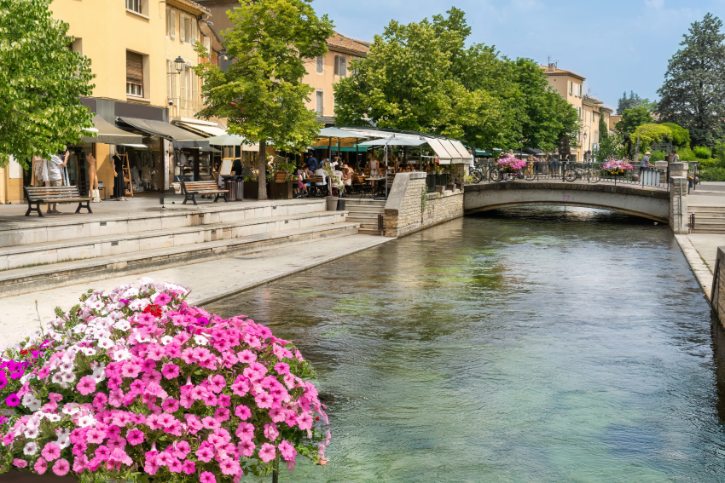
Most iconic Provence is dry stone on a hill. L’Isle-sur-la-Sorgue is the opposite, a town built on water where the Sorgue river splits into canals and threads through the streets. People call it the Venice of the Comtat.
b. Start with the river
- The water is clear, emerald-green, and cold all year.
- It splits into five main branches through town.
- Willows trail in the current under stone bridges.
- Café terraces sit right at the water’s edge.
c. The paddlewheels
- The mossy paddlewheels were the town’s engines, not decoration.
- They once powered flour, oil, paper, and silk mills.
- Around fifteen historic wheels survive and still turn.
- They are visible reminders of an industrial past.
d. Follow the water
- Start at Le Partage des Eaux, where the river splits in two.
- Follow lanes where wheels turn between old stone bridges.
- Reach quays where tall façades rise straight from the moving water.
- The rhythm is canal, wheel, building, bridge, and repeat.
e. The church and the antiques
- Notre-Dame-des-Anges hides a lavish Baroque interior behind a plain front.
- Inside: rich gilding, painted ceilings, and hundreds of carved angels.
- The town is France’s antiques capital, second only to Paris.
- Many dealers fill old converted industrial buildings.
f. What sets it apart
This town is about water in motion: river channels, paddlewheels, reflections, Baroque richness, and antiques. Here you explore at river level, looking along the water, not down from a hilltop.
8. Bonnieux
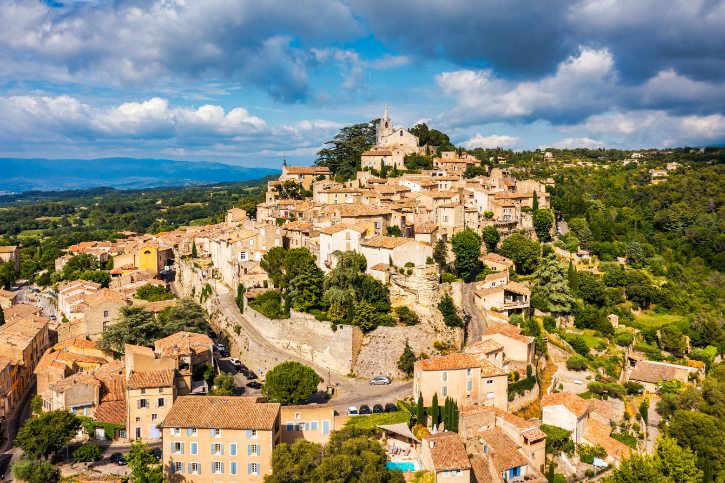
a. A climb from valley to sky
Bonnieux clings to the northern face of the Petit Luberon and rises like an amphitheater. Unlike villages you grasp from one square, Bonnieux only reveals itself as you climb. Ascent is the whole idea.
b. Follow the climb
- Streets turn into steep stone stairways and calades.
- You pass through layers of old ramparts and fortified gates.
- Houses built into the slope hide extra levels below.
- Views widen with every tier you gain.
c. The Upper Church
- At the very top stands the old church, blending Romanesque and early Gothic.
- Its terrace is shaded by tall pines, cypresses, and century-old cedars.
- An old stone cemetery sits alongside it.
- Reaching it feels earned, where tight alleys give way to open sky.
d. The panorama
- Across the valley sit Lacoste and its ruined castle.
- North stretches the fertile Calavon valley of vineyards and orchards.
- The ochre cliffs of Roussillon stand out to the northeast.
- Mont Ventoux dominates the far horizon.
e. The cedar forest
- A planted Atlas cedar forest covers the plateau above the village.
- It is one of the finest mature cedar stands in western Europe.
- Trails lead to the Portalas viewpoint over the Durance valley.
- Under the canopy, the air turns noticeably cool.
f. What sets it apart
Where Gordes is best seen from afar, Bonnieux must be climbed to be understood. Its theme is ascent into landscape, rewarded by sweeping views and an unexpected mountain cedar forest above the stone village.
9. Sisteron
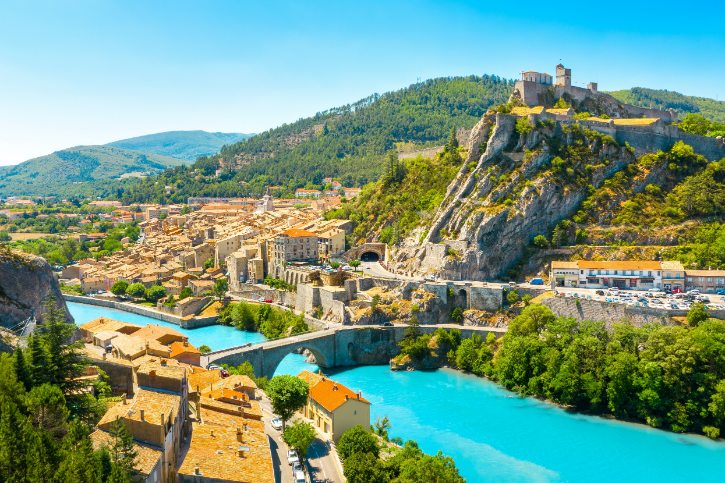
a. Geology meets fortress
Sisteron guards a natural bottleneck where the Durance river squeezes through a limestone gap. It has long been called the Gateway to Provence. On one bank rises a wall of folded rock. On the other, a citadel clings to the ridge above the town.
b. Gateway to Provence
- It marks the line between Alpine and Mediterranean country.
- North of it lie peaks and torrents; south, olive groves and garrigue.
- The narrow gap was the main corridor between the Mediterranean coast and the Alps.
- Whoever held it controlled the flow of trade and armies.
c. The citadel
- Not simply a Vauban fortress, but seven centuries of building.
- A medieval keep crowns the top of the rock.
- Later engineers added saw-tooth artillery bastions.
- Vauban’s grand plan was mostly never built.
d. The viewpoint
- From the summit platform, the fortress’s purpose is obvious.
- The Durance curves through the rock gap below.
- The folded strata rise straight across the river.
- The valley opens toward the Alps one way and Provence the other.
e. Rocher de la Baume and the old town
- The Rocher de la Baume is folded rock tilted nearly vertical, like pages of a book.
- The old town’s andrônes are covered stairways tunneling under stone arches.
- A fine Romanesque former cathedral anchors the center.
- Folded natural rock on one bank, engineered walls on the other.
f. What sets it apart
Sisteron trades gentle Luberon charm for raw mountain scale and frontier defense: a folded rock wall, a narrow river gap, and a fortress layered over centuries. It is not just another fortified hill town.
10. Cotignac
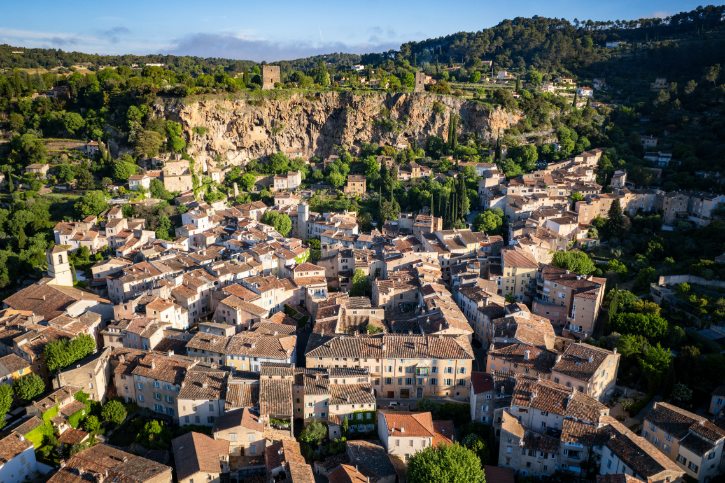
a. A village against a natural wall
Cotignac lives in the shadow of a huge tufa cliff that looms right over its streets. It joined Les Plus Beaux Villages de France recently, and it stacks up in three levels: the village below, caves in the cliff, and towers on top.
b. How the cliff formed
- It is tufa, a freshwater limestone, not volcanic rock.
- A river once poured over the crest in waterfalls.
- Minerals coated the plants along the falls and hardened.
- The result is a porous wall full of tubes and hollows.
c. Troglodyte traces
- The soft rock was easily carved, so people moved in.
- The caves sheltered villagers, animals, and grain in hard times.
- Residents added façades, chimneys, and stone niches.
- A restored path lets you walk the old cliff dwellings.
d. Towers and old streets
- Two medieval watchtowers crown the cliff rim, the top of the old castle.
- Steep cobbled lanes wind past old stone houses and an iron belfry.
- Some homes pull the raw tufa rock straight into their cellars.
- The contrast of huge wall and cozy village is the whole charm.
e. Sociable Cotignac and its history
- The Cours Gambetta is a shaded promenade of cafés under plane trees.
- Seventeen historic fountains give the town its name for water.
- The hilltop Notre-Dame-de-Grâces sanctuary drew a royal pilgrimage by Louis XIV.
- Its apparition traditions are matters of faith, not proven fact.
f. What sets it apart
Cotignac and Moustiers look similar at a glance, but they are not the same. Moustiers sits between hard limestone cliffs. Cotignac rests beneath a soft tufa wall riddled with man-made caves. Its theme is a village living in the shadow of geology, balancing deep history with easy café life.
11. Venasque
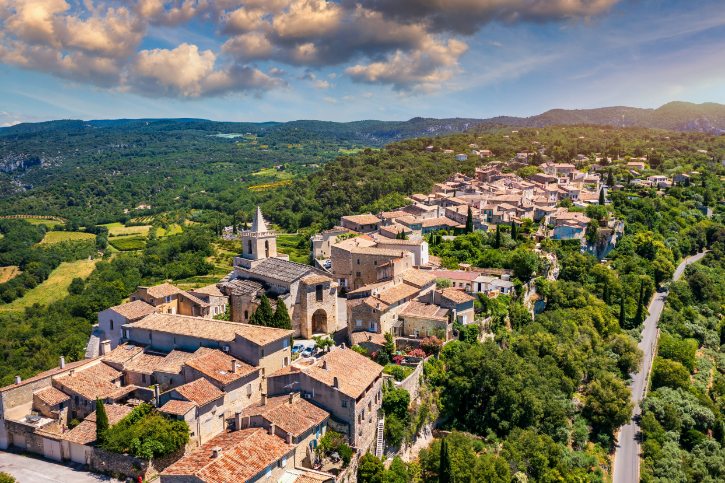
a. Ancient stone and a huge horizon
Venasque sits on a high rocky spur off the Monts de Vaucluse, ringed by ravines. It sheltered the region as Rome fell and gave its name to the whole surrounding land. A member of Les Plus Beaux Villages de France, its mood is quieter and older than the others.
b. Place des Tours
- A cliff-edge terrace and a superb natural viewpoint.
- Below spreads a plain of cherry orchards and vineyards.
- Mont Ventoux towers over the whole northern skyline.
- In Gordes you look at the village; here the village looks out.
c. Towers and ramparts
- Three massive round towers guard the narrow approach.
- They rest on late-Roman foundations, rebuilt in the Middle Ages.
- The upper walls were raised to protect the bishopric.
- Their ancient weight shapes the village’s austere feel.
d. The Baptistery
- One of France’s celebrated early religious buildings.
- Long dated to the 6th century, it is now seen as mostly a Romanesque rebuild.
- It stands on an ancient Christian site.
- Inside, it reuses old Roman marble columns around a central immersion basin.
e. The church and quiet streets
- Église Saint-Siffrein is austere Provençal Romanesque.
- It holds a 15th-century painted masterpiece, the Crucifixion of Venasque.
- Narrow lanes of packed stone houses feel introspective.
- Alleys suddenly open onto the plain and Mont Ventoux.
f. What sets it apart
Venasque is about age, restraint, and horizon: fortified stone, early Christian heritage, a compact core, and big Mont Ventoux views. It leans on antiquity and calm rather than color or drama.
12. Cucuron
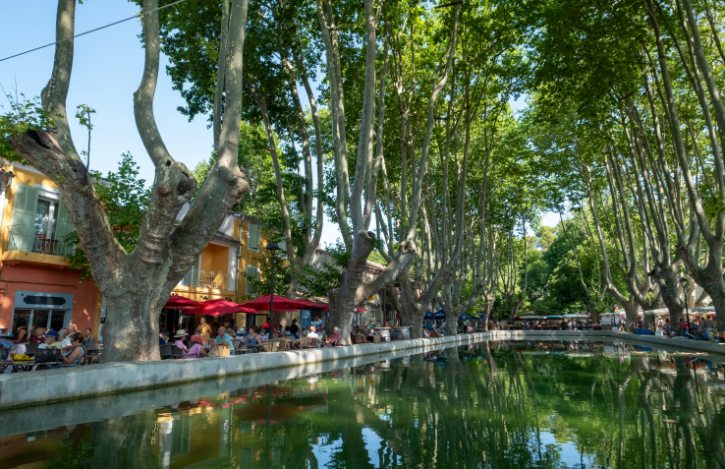
a. An intimate, quiet village
Cucuron sits below the Grand Luberon’s highest peak, with no sea cliffs or colored canyons. At its heart lies the Bassin de l’Étang, a water basin shaded by old plane trees. It proves a place can be breathtaking through atmosphere, not scale.
b. The Étang
- A large rectangular pool edged with dressed stone.
- Once used to power communal flour mills downstream.
- The town planted a double row of plane trees around it.
- It is a scenic space, historic water engineering, and a gathering place.
c. Under the plane trees
Two centuries on, the branches have grown into a high green ceiling that filters the sun into cool shade. The water mirrors the bark, leaves, and warm ochre façades. Locals play boules, café tables line the edge, and carp drift in the clear spring water. It feels like an outdoor room.
d. The medieval village
- Cucuron grew across two rocky hillocks.
- Winding lanes follow the contours of the hills.
- Old ramparts and two historic gates survive.
- A medieval keep and a Gothic-Baroque church anchor the skyline.
e. Water through the village
- Covered washhouses worn smooth by generations.
- Eight historic fountains fed by mountain springs.
- A water route links the springs, fountains, and central basin.
- Water is the thread tying the whole village together.
f. Setting and what sets it apart
Mourre Nègre shelters the village from the cold Mistral, and vineyards and orchards spread south. Cucuron’s beauty is quiet rather than dramatic: the Étang, its water features, and easy daily life. It is a quiet, restful note after all the grand cliffs and castles.