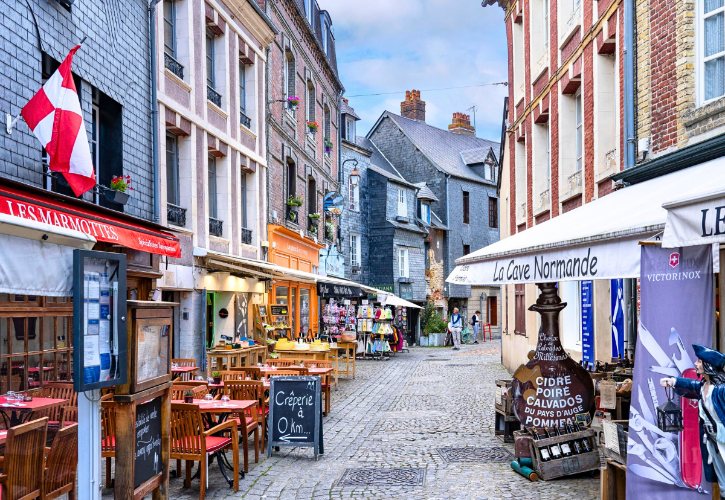
Few corners of France pack so much into so little driving. In Normandy, you can leave an Impressionist garden after breakfast, stand beneath white sea cliffs by lunch, and watch the tide swallow a medieval abbey by evening.
Villages, harbor towns, Gothic cities, apple country, and the beaches of 1944 all sit within short, easy hops, often thirty minutes to an hour apart. The real surprise is how naturally one landscape flows into the next. 😊
1. Giverny
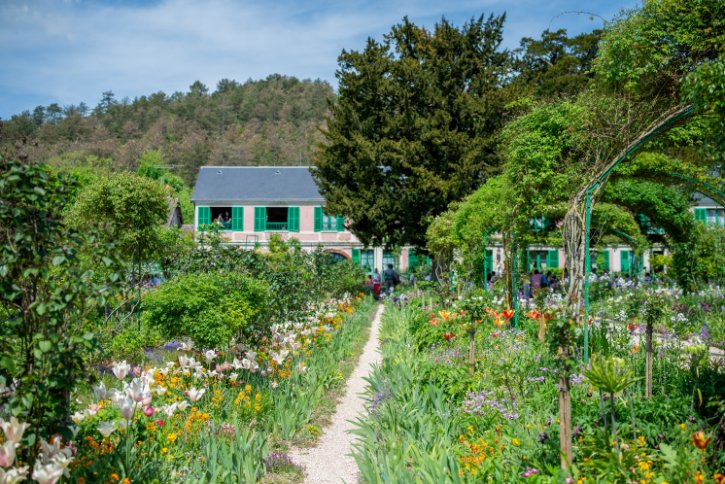
a. Two Gardens That Feel Like Living Paintings
- The Clos Normand is the flower garden, about one hectare of planned color.
- You walk iron trellises of climbing nasturtiums and beds of poppies, irises, and tulips.
- The Water Garden came later, shaped from land Monet bought and fed by a small arm of the River Epte.
- The green Japanese bridge, draped in wisteria, sits above the famous lily pond.
b. The Pond Behind the Water Lilies
This is where Monet’s water-lily paintings were born. Stand at the same pond and you can see how he stopped worrying about perspective and focused on reflections, shifting skies, and floating flowers.
c. Step Inside the Pink House
- Restored pink walls with green shutters set the tone from outside.
- The sunny yellow dining room is hung with Monet’s Japanese prints.
- The blue-tiled kitchen and his early studio complete the visit.
d. Why Painters Came From Around the World
The Seine Valley gave Monet river mists, chalk slopes, and soft light. His fame turned a quiet farm village into an artists’ colony, and American painters arrived to work outdoors alongside him.
e. There Is More Than One House to See
- Rue Claude Monet is lined with old limestone farmhouses and former artist lodgings.
- The Romanesque Église Sainte-Radegonde holds Monet’s family grave.
- The nearby Musée des Impressionnismes sets the whole movement in context.
- The old Hôtel Baudy once hosted visiting American painters.
- Poplars, pastures, and limestone slopes frame the village on every side.
2. Les Andelys
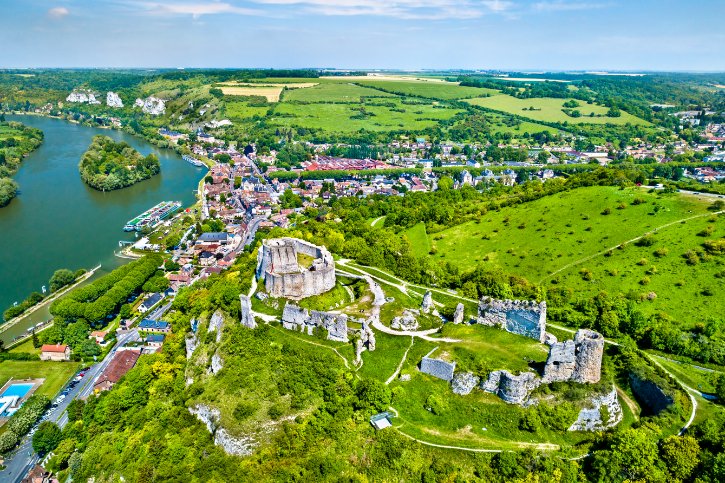
a. A Cliff-Top Castle Built by Richard the Lionheart
High on a 100-meter cliff above a bend in the Seine, Château Gaillard went up fast, between 1196 and 1198. Richard the Lionheart built it to block the French king’s path to Rouen.
b. What You Can Still Explore in the Ruins
- Three walled sections split by deep moats cut straight into the chalk.
- A curved, scalloped inner wall built to remove blind spots for defenders.
- The shell of a massive round keep.
- Sweeping views over the Seine loop far below.
c. The Castle’s Dramatic Fall
Richard boasted it could hold even with walls of butter. It did not. The French king took it in 1204 after an eight-month siege, and Normandy soon passed to France.
d. Two Old Towns Joined Into One
- Petit-Andely sits by the river, with timber-framed houses and a Gothic church.
- Grand-Andely lies inland, grown around a very old abbey.
- Its Collégiale Notre-Dame holds Renaissance stained glass and paintings by local-born artist Nicolas Poussin.
e. One of the Region’s Best River Views
The river carved deep bends into white chalk here, leaving bright cliffs above green plains. From the castle you look down on the bend, the wooded islands, and red rooftops. Trust me, it is a view you will not forget.
3. Rouen
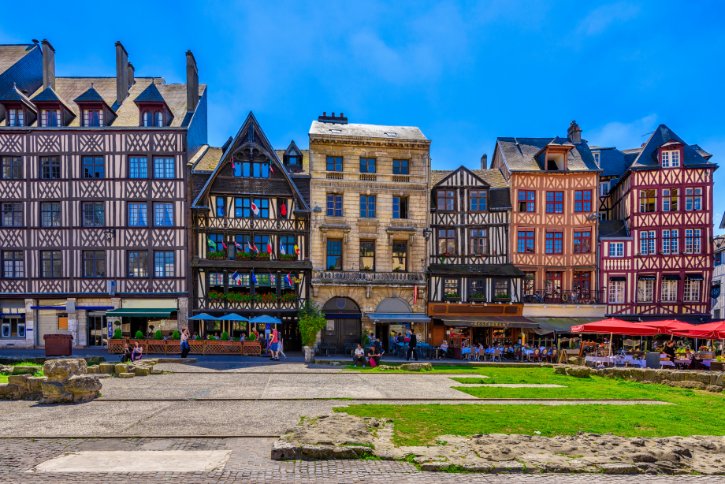
a. A Cathedral Monet Painted Again and Again
- Rouen Cathedral is a full lesson in French Gothic, with a richly carved, uneven west front.
- The tall Butter Tower was paid for by dispensations to eat dairy during Lent.
- Monet painted this facade more than 30 times to catch the changing light.
- Inside rest the tomb holding Richard the Lionheart’s heart and early Norman dukes.
b. Getting Lost in the Medieval Old Town
- The pedestrian Rue du Gros-Horloge runs through the heart of the old city.
- Its Gros-Horloge is a Renaissance astronomical clock with a single hour hand.
- More than 2,000 half-timbered houses fill the surrounding lanes.
c. Walking in Joan of Arc’s Footsteps
Rouen is where Joan of Arc was tried and executed during the English occupation. To follow her story, look for these:
- The Place du Vieux-Marché, where she was burned at the stake in 1431.
- A striking modern church beside the square, fitted with old rescued stained glass.
- The Historial Jeanne d’Arc, which uses original court records to walk you through her trial.
d. One of France’s Great Art Collections
- The Musée des Beaux-Arts holds French, Italian, and Dutch masters.
- Its Impressionist rooms rank second in France only to the Musée d’Orsay in Paris.
- Look for works by Monet, Pissarro, and Sisley.
e. Why Rouen Feels Like the Capital
Rouen mixes grand Gothic architecture, medieval streets, deep history, and real city life. After the small riverside towns, its scale and energy come as a welcome change.
4. Jumièges Abbey
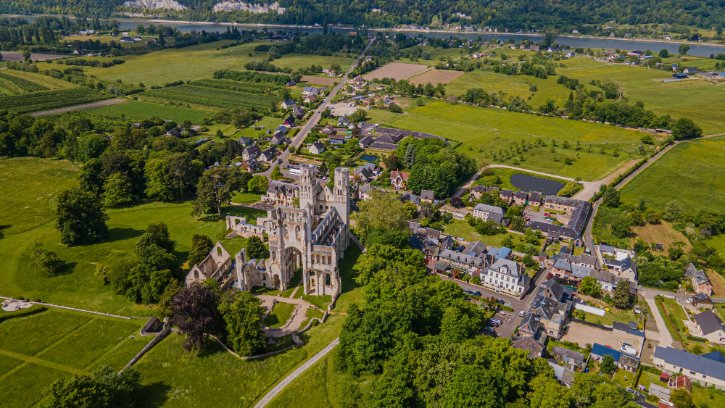
a. One of Europe’s Most Beautiful Ruins
Set inside a loop of the Seine, the Abbaye de Jumièges is a roofless wonder. Victor Hugo called it the most beautiful ruin in France, and standing beneath its towers, you will see why.
b. What Still Stands Today
- Twin western towers rise 46 meters into the sky.
- The nave stands open to the air, its stone piers bare.
- A neighboring church keeps rare 8th-century masonry.
c. From Powerful Abbey to Stone Quarry
- Founded in 654, it grew into a major religious center.
- Vikings destroyed it, and the Norman dukes later rebuilt it.
- After the Revolution it was sold and used as a quarry, with parts blown apart by gunpowder.
- Rescue efforts in the 1850s saved what you see now.
d. A Style That Crossed the Channel
Jumièges helped shape the Anglo-Norman style that later influenced English cathedrals like Durham and Ely. Its tall, three-level nave became a model across northern Europe.
e. Quiet Parkland All Around You
- The grounds cover about 15 hectares of lawns and old trees.
- Yews and weeping beeches frame the ruins.
- The setting shuts out the modern world, leaving mostly the sound of the wind.
5. Veules-les-Roses
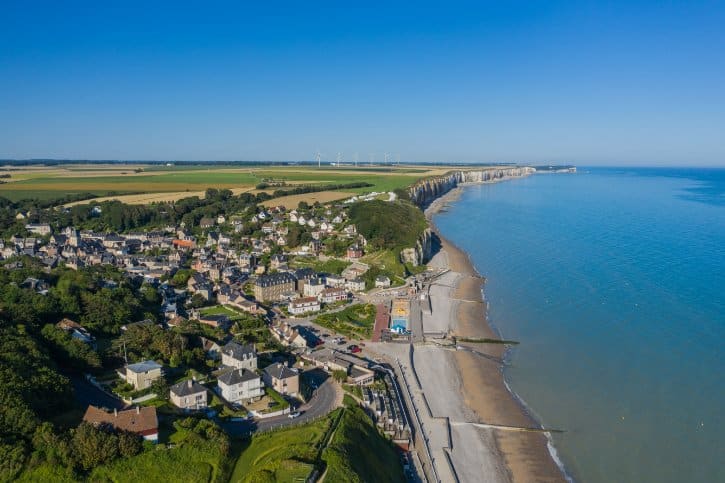
a. A Storybook Village by the Sea
- One of the official Most Beautiful Villages of France.
- Tucked into a narrow gap in the chalk cliffs.
- Five centuries of building styles stand side by side, from thatched cottages to seaside villas.
b. Follow France’s Shortest River
The River Veules runs just 1,149 meters from its springs to the sea, and a walking trail follows its whole length. It makes an easy, charming stroll from the top of the village down to the beach.
c. Watermills, Washhouses, and Roses
- Restored watermills still turn in the stream.
- Old stone washhouses and small footbridges line the banks.
- The paths are edged with hydrangeas and climbing roses.
- Cool spring water once fed beds of watercress you can still spot.
d. Cliffs, Pebbles, and Fresh Oysters
- The valley opens onto the Alabaster Coast under 40-meter chalk cliffs.
- The beach is pebbles at high tide and sand at low tide.
- Local oysters get their crisp, briny taste from mixing seawater and spring flow.
e. A Quiet Refuge for Writers and Painters
Victor Hugo was a regular guest here, and Russian and French painters came for the light where the river meets the sea. That creative calm still hangs over the village, and you feel it as you walk the streambanks.
6. Fécamp
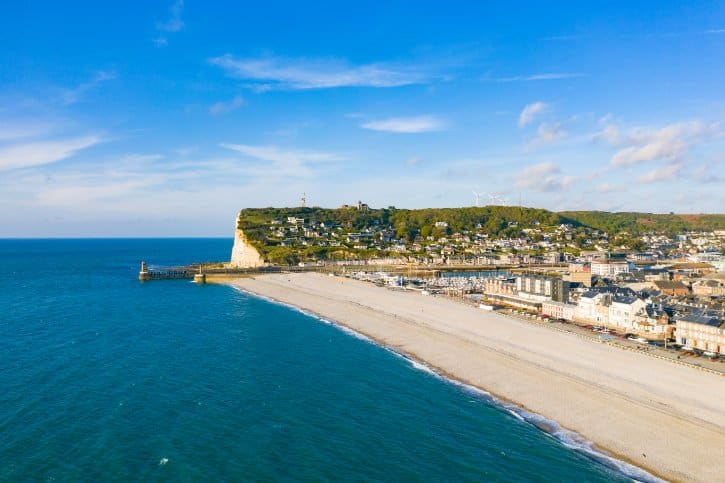
a. High Cliffs and Wide Sea Views
- Cap Fagnet rises to 105 meters, among the highest points on this coast.
- From the top you see the open Channel and the working harbor below.
- A sailors’ chapel and old wartime bunkers share the headland.
b. A Palace Built for a Famous Liqueur
The Palais Bénédictine is a grand, eclectic palace and distillery. It helps to separate fact from legend here: the herbal liqueur was created by merchant Alexandre Le Grand in 1863, not by a medieval monk, though the myth made great marketing.
c. What You See Inside the Palace
- Halls filled with medieval sculpture and Renaissance ironwork.
- A working distillery using 27 herbs and spices.
- Oak cellars where the spirit slowly ages.
d. A Proud Cod-Fishing Past
- For centuries, Fécamp fleets sailed to Newfoundland for cod.
- The Musée des Pêcheries sits inside an old cod-drying factory.
- Its rooftop gives you 360-degree views over the marina and cliffs.
e. A Great Medieval Church
The abbey church of the Sainte-Trinité matches Notre-Dame de Paris in length. It once drew pilgrims to its relics and holds the tombs of early Norman dukes.
7. Étretat
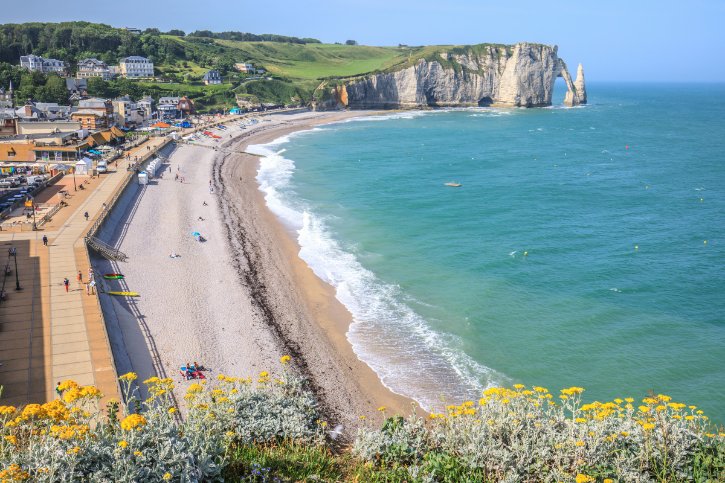
a. The Cliffs Everyone Comes to See
- The Porte d’Aval is a graceful arch reaching into the sea.
- The Aiguille is a 51-meter needle of chalk standing offshore.
- La Manneporte is the largest arch, wide enough for small boats.
- A northern arch is topped by a small clifftop chapel.
- A natural tunnel at the cliff base opens to a hidden cove at low tide.
b. Walk the Clifftop Trails
Well-marked paths climb both sides of the bay for wide sea views. Keep to the trails and away from the edges, since the chalk crumbles easily.
c. The Town Below the Cliffs
- A pebble beach shields the low village from storms.
- 19th-century half-timbered villas line the seafront.
- Clifftop gardens mix sculpted topiary with modern art.
d. A Magnet for Artists and Writers
- Monet painted these cliffs across more than 50 canvases.
- Courbet, Boudin, and Corot all worked here too.
- Guy de Maupassant grew up nearby.
- Maurice Leblanc used the hollow needle in his Arsène Lupin stories.
e. Why the View Stays With You
The mix of white chalk, dark flint bands, and blue-green water is unforgettable. Come early or late and you get the best light with fewer crowds.
8. Honfleur
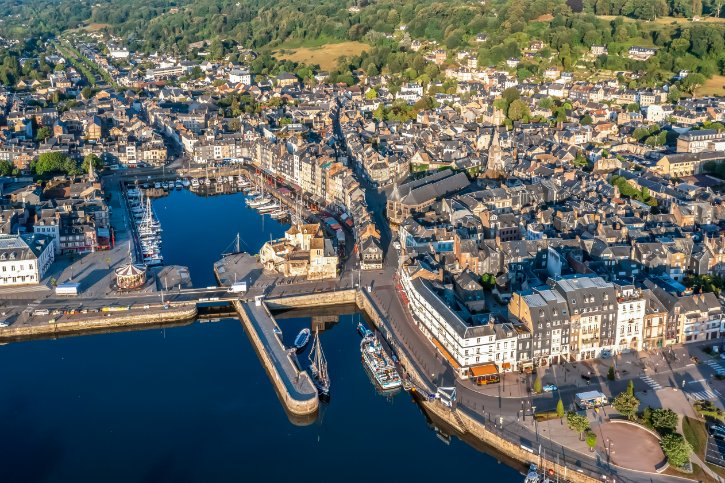
a. A Harbor Made for Painters
- The Vieux Bassin is ringed by tall, narrow houses five to seven stories high.
- Slate tiles protect their timber frames from the salty air.
- A stone bastion, La Lieutenance, guards the harbor mouth.
b. A Church Built Like a Ship
The Église Sainte-Catherine is the largest timber church in France, built by local shipwrights in oak. Look up and the ceiling resembles upturned ship hulls. Its bell tower stands apart to protect the church from lightning.
c. Where Impressionism Took Root
Painters gathered at a hilltop inn above the estuary, where local artist Eugène Boudin worked with a young Claude Monet. Monet always credited Boudin with teaching him to truly see the sky.
d. Two Museums Worth Your Time
- The Musée Eugène Boudin holds Boudin’s work plus paintings by Monet and Corot.
- Les Maisons Satie is a playful tribute to composer Erik Satie.
e. Old Quarters to Wander
- L’Enclos, the medieval core, keeps huge old salt storehouses once used for the cod trade.
- The Sainte-Catherine quarter is full of galleries and half-timbered houses.
- A hilltop chapel above town holds ship models left by sailors before long voyages.
9. Trouville-sur-Mer & Deauville
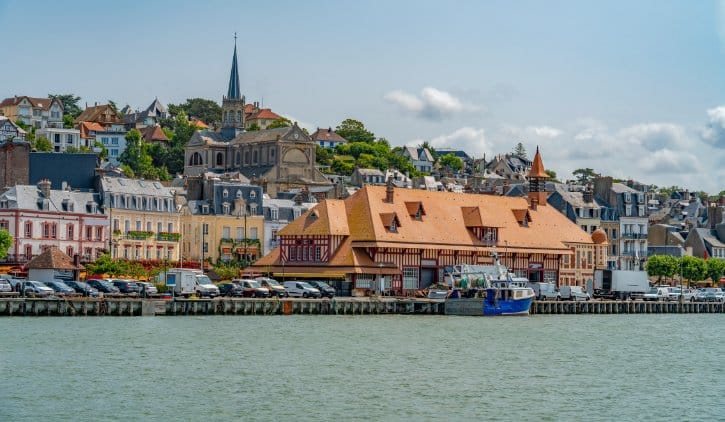
a. Two Neighbors, Two Personalities
- Trouville grew naturally from an old fishing village.
- Deauville was built from scratch in the 1860s for the aristocracy.
- Only the mouth of the River Touques separates them.
b. Trouville’s Working Charm
- A busy fish market sells the daily catch straight from the boats.
- A historic wooden boardwalk runs beside the sandy beach.
- Eclectic 19th-century villas climb the hills behind the shore.
c. Deauville’s Polished Glamour
- Les Planches, a tropical-wood boardwalk, is lined with Art Deco beach cabins.
- The cabin panels carry the names of visiting film stars.
- A grand casino and luxury hotels sit just behind the seafront.
d. Film Stars and Racehorses
Deauville is tied to both cinema and horses. It hosts a long-running American film festival and is a major center for horse racing and breeding. Its misty beach even starred in a famous French film.
e. Why You Should See Them Together
Crossing the bridge takes you from a real fishing town to an aristocratic resort in minutes. Together, the two give you the full range of French seaside life.
10. Beuvron-en-Auge
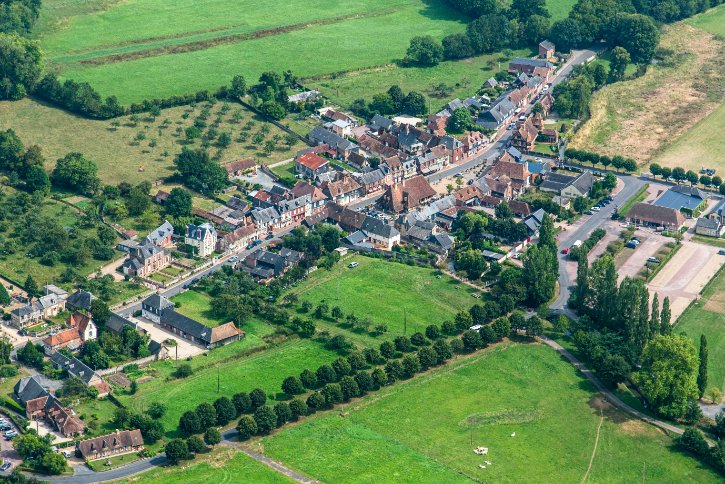
a. A Half-Timbered Gem in Apple Country
- One of the official Most Beautiful Villages of France.
- Classic Pays d’Auge houses of oak frames filled with clay or red brick.
- A pretty central square framed by old inns and shops.
b. The Truth About the Market Hall
The village’s timber market hall looks ancient, but it was rebuilt in 1975 using salvaged old timbers and brick. That effort saved the village from decline and sparked its wider restoration.
c. Cider, Calvados, and Cheese
- Beuvron sits on the signposted Cider Route through the orchards.
- The area is known for cider, the apple brandy Calvados, and apple aperitifs.
- It lies within the zone for Camembert, Pont-l’Évêque, and Livarot cheeses.
d. A Slower Kind of Day
- Quiet lanes, small streams, and wisteria-draped houses set the pace.
- Browse antique shops and cider cellars around the square.
- Sample local dishes under the old covered hall.
e. Why It Feels Like the Real Countryside
After the busy coast, Beuvron is calm and unhurried. Its restored houses and cider traditions give you an honest taste of inland Normandy.
11. Arromanches-les-Bains
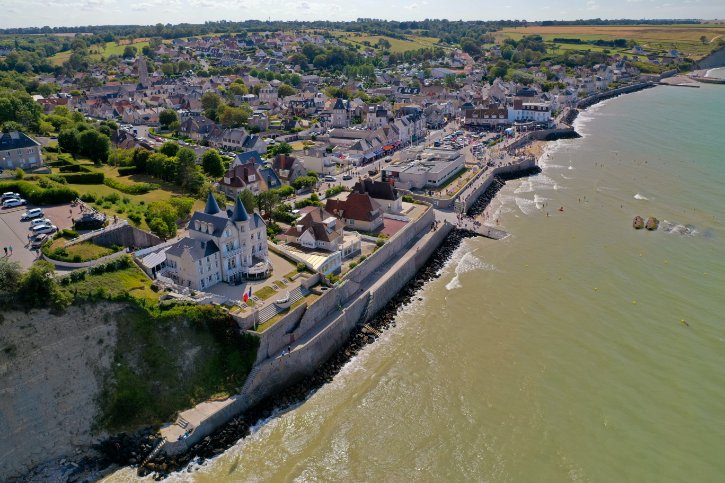
a. The Beach That Became a Harbor
Just after the D-Day landings in June 1944, Allied forces in this sector assembled an artificial harbor code-named Mulberry. It was working within about two weeks, and over the months that followed it landed some 2.5 million men, 500,000 vehicles, and 4 million tons of supplies.
b. War Relics You Can Still See
- Giant concrete caissons rest offshore, the bones of the old harbor.
- At low tide you can walk close to some of them.
- Traces of the floating roadways remain along the shore.
c. A Museum Right on the Sand
- The Musée du Débarquement stands on the beachfront.
- A large animated model shows exactly how the harbor worked.
- Big windows line the displays up with the real caissons at sea.
d. See the Story on Screen
- A clifftop circular cinema shows a short film about the campaign.
- It blends real 1944 footage with modern aerial views.
- Nine screens surround you for the full effect.
e. A Peaceful Town With a Heavy Past
Behind the sea wall, Arromanches is a small, friendly seaside town of cafes and bakeries. The calm sits in quiet contrast to the concrete war relics out in the bay.
12. Bayeux
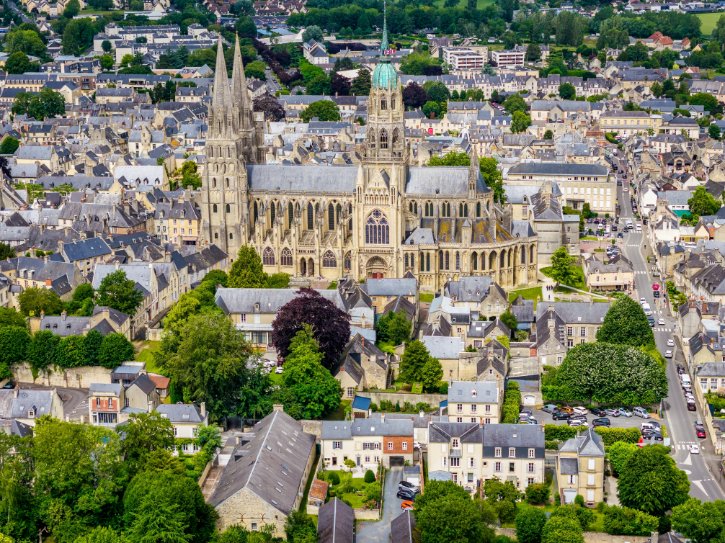
a. A Thousand-Year-Old Story in Thread
- The Bayeux Tapestry is an embroidered linen band nearly 70 meters long.
- It tells the events leading to the Norman conquest of England.
- It is a rare, detailed record of 11th-century armor, ships, and daily life.
b. Plan Ahead Before You Go
Good to know: the tapestry’s museum is closed for a major redevelopment, and the embroidery is on temporary loan to the British Museum in London through July 2027. A brand-new museum is due to reopen in Bayeux in October 2027, timed to the millennium of William the Conqueror’s birth.
c. A Rare, Intact Medieval Town
- Bayeux came through the Second World War almost untouched.
- The old center follows the River Aure past waterwheels and stone bridges.
- The great cathedral blends Romanesque, Gothic, and Flamboyant styles.
d. The First City Freed After D-Day
- Bayeux was liberated on June 7, 1944, the first major French city set free.
- A memorial museum covers the long Normandy campaign.
- The largest British war cemetery in France lies nearby.
e. A Lively Market Town Today
Beyond its monuments, Bayeux is a real working town. Its streets are full of bistros, lace workshops, and a market selling local butter, cheeses, and cider.
13. Omaha Beach

a. The Hardest Landing of D-Day
Stretching eight kilometers below steep bluffs, Omaha Beach was the most fiercely defended of the five landing beaches on June 6, 1944. American forces met heavy fire and suffered more than 2,400 casualties before breaking through.
b. Why It Was So Deadly
- A wide open beach left soldiers exposed with little cover.
- German strongpoints guarded every exit through the bluffs.
- Rough seas and off-target bombing made the assault even harder.
c. The American Cemetery Above the Sea
- The Normandy American Cemetery holds 9,388 graves on the bluffs.
- White crosses and Stars of David face west toward home.
- A garden records over 1,500 names of the missing.
d. Powerful Monuments on the Sand
Down at the water stands Les Braves, a tall steel sculpture whose wing-like forms stand for hope, freedom, and brotherhood. Walking the quiet shore below the graves, you feel the weight of what happened here.
e. Where to Understand It All
- The official cemetery visitor center shares the human stories behind the day.
- The nearby Overlord Museum displays vehicles and equipment in lifelike scenes.
- Traces of German posts still sit in the brush above the beach.
14. Pointe du Hoc
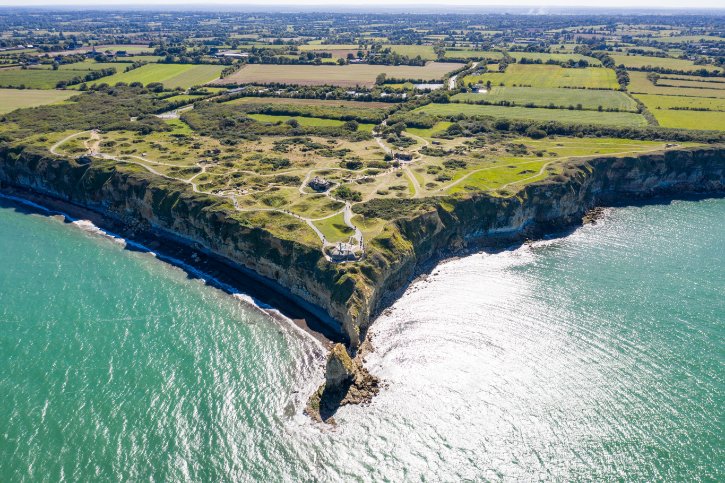
a. The Cliff That Had to Be Taken
Pointe du Hoc is a jagged headland rising about 30 meters straight from the sea, set between Omaha and Utah beaches. Its German guns threatened both landings, which made capturing it urgent.
b. The Rangers’ Impossible Climb
- On D-Day, 225 U.S. Army Rangers scaled the wet cliffs under fire.
- They used rocket-fired hooks, rope ladders, and fire-truck ladders.
- At the top they found the big guns moved, then tracked them down and disabled them.
- They held the headland for two days, taking heavy losses.
c. A Battlefield Frozen in Time
- The ground is still a moonscape of bomb craters.
- Ruined concrete bunkers and gun posts remain in place.
- A trail winds safely between them.
d. Wide Views and a Simple Memorial
- From the tip, the coast curves toward both Omaha and Utah beaches.
- A stone memorial stands on top of a German bunker.
- Marked paths keep you safe from the crumbling edges.
e. Why It Hits So Hard
Unlike a tidy memorial park, Pointe du Hoc leaves the craters and cracked concrete in plain sight. Standing here, the reality of the assault becomes very clear.
15. Barfleur
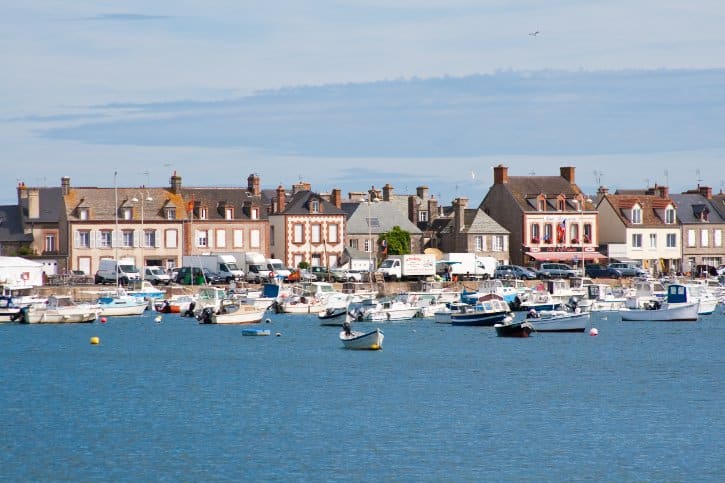
a. A Quiet Granite Fishing Port
- Barfleur curves around a small tidal harbor of grey granite.
- Wooden boats and trawlers rise and fall with the tide.
- It is one of the official Most Beautiful Villages of France.
b. A Village Once Tied to Kings
This was once the main royal port linking Normandy with England. In 1120 the doomed White Ship sailed from here and sank offshore, drowning the king’s heir and throwing England into years of civil war.
c. Stone Streets and a Sturdy Church
- Granite cottages and old fishermen’s workshops line the lanes.
- The fortress-like Église Saint-Nicolas sits right by the sea.
- The nearby Gatteville lighthouse, at 71 meters, is one of the tallest in Europe.
d. Wild Coast and Fresh Mussels
- A coastal path runs past tide pools and rocky coves.
- The fleet is known for the wild Blonde de Barfleur mussel.
- Quayside bistros serve them steamed with white wine and shallots.
e. Slow Down and Breathe
Barfleur runs on the rhythm of the tides, not on tourism. After the intensity of the D-Day sites, you will find its calm feels like a gift.
16. Granville
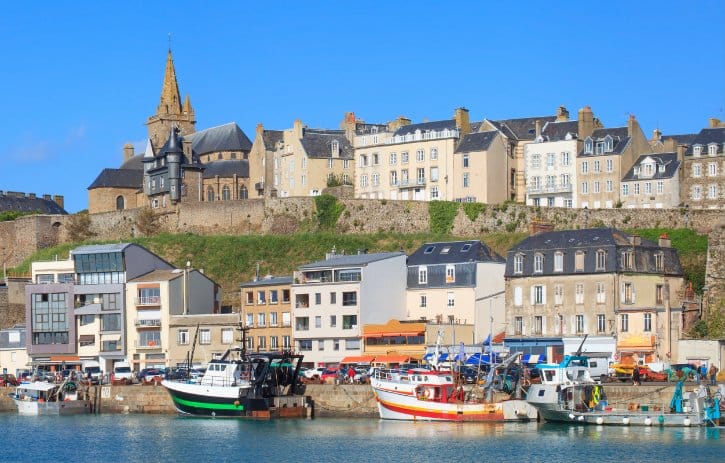
a. A Walled Town Built on the Rocks
- The old upper town sits inside 15th-century ramparts on a rocky headland.
- You enter through stone gates into lanes of granite mansions.
- Rampart walks open onto the sea and the bay toward Mont Saint-Michel.
b. Known as the Monaco of the North
Thanks to its clifftop setting and old noble ties, Granville has long carried the nickname “Monaco of the North”. A stern granite church built by sailors stands out at the point.
c. A Busy Port and Fine Beaches
- Granville is a leading French harbor for shellfish like whelks and scallops.
- Wide sandy beaches sit below the headland.
- A seafront promenade leads to a tidal seawater pool.
d. The Birthplace of Christian Dior
- Dior grew up in a pink-and-grey clifftop villa here.
- Its garden of pines and roses shaped his later work.
- The villa is now the Musée Christian Dior.
e. History, Sea Air, and Energy
Granville pairs a historic walled town with a lively working port and open beaches. After tiny Barfleur, its busier pace makes a nice change before the grand finale.
17. Mont Saint-Michel
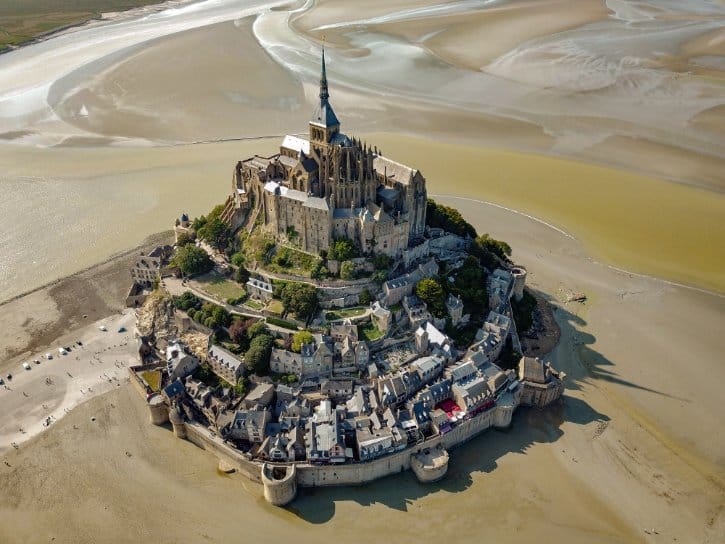
a. An Abbey Rising From the Sea
- A granite island climbs 80 meters out of a vast tidal bay.
- Medieval ramparts wrap the rock below the abbey.
- A golden statue of the Archangel Michael crowns the spire.
b. A World Heritage Marvel
Mont Saint-Michel joined the UNESCO World Heritage list in 1979 as a masterpiece of human creativity. Its buildings span many centuries, and its famous cloister and great halls are known together as La Merveille, or The Marvel.
c. The Most Dramatic Tides in Europe
- The bay has the greatest tidal range in continental Europe.
- At low tide the sea pulls back for kilometers of sand.
- At the highest tides the water races back and rings the mount.
- Those sands hide quicksand, so cross only with a certified local guide.
d. Climb Through the Medieval Village
- Enter through the old gate onto the narrow main street.
- Small shops and inns fill the 15th- and 16th-century houses.
- Quiet staircases lead up to ramparts with wide bay views.
- Below the walls, sheep graze the salt meadows on coastal herbs.
e. Centuries of Pilgrims and Legend
Founded as a sanctuary in 708, the mount grew into one of the great pilgrimage sites of medieval Christendom.
- Tradition links its founding to a vision of the Archangel Michael.
- Pilgrims crossed Europe on foot to reach the abbey.
- Royal patronage helped turn a simple chapel into a fortress-abbey.
- It held out against English sieges through the Hundred Years’ War.
f. A Fitting End to the Journey
The mount pulls together everything you have seen: faith, fortresses, and the sea. Rising above the shining sands, the abbey is the perfect final image of Normandy, and a stop unlike any other on the route.