
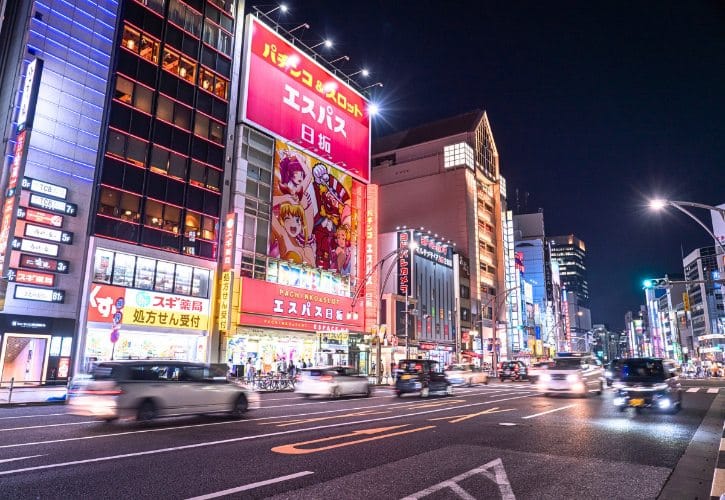
Many travelers book hotels in the same few well-known Tokyo districts. But there is one area that quietly offers better value, easier transport, and less stress.
Hotel prices are lower, airport access is simple, and moving around the city is surprisingly easy. It is practical, affordable, and often overlooked.
This is one Tokyo base most tourists never think about. It is called Ueno.
1. Where This Area Is and Why Tourists Skip It
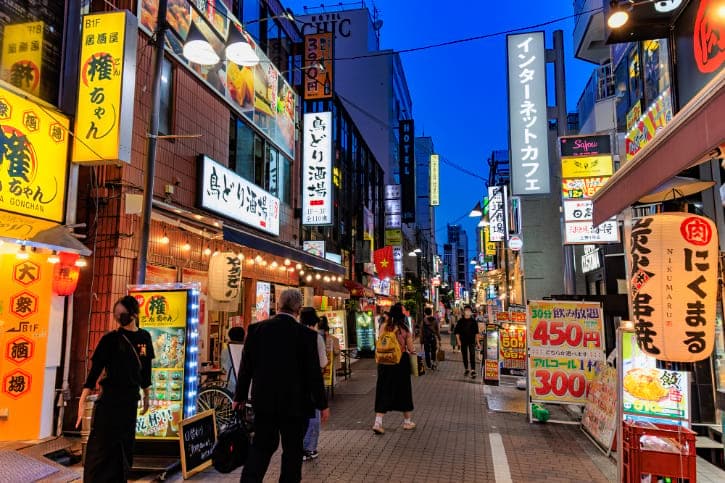
Ueno sits on the northeastern side of central Tokyo. It is a major transportation hub and one of the city’s most important cultural centers.
This is where trains head north to places like Nikko, Sendai, and even Hokkaido. Yet most international visitors skip right past it. They head straight to Shinjuku, Shibuya, or Ginza instead.
a. The “Old Tokyo” Reputation
Ueno is part of what locals call shitamachi, or the “low city”. This was where merchants and craftsmen lived during the Edo period.
Today, some travelers assume this means Ueno is old-fashioned or less exciting than the neon-lit towers of western Tokyo. That assumption is wrong.
b. What Ueno Is Really Like
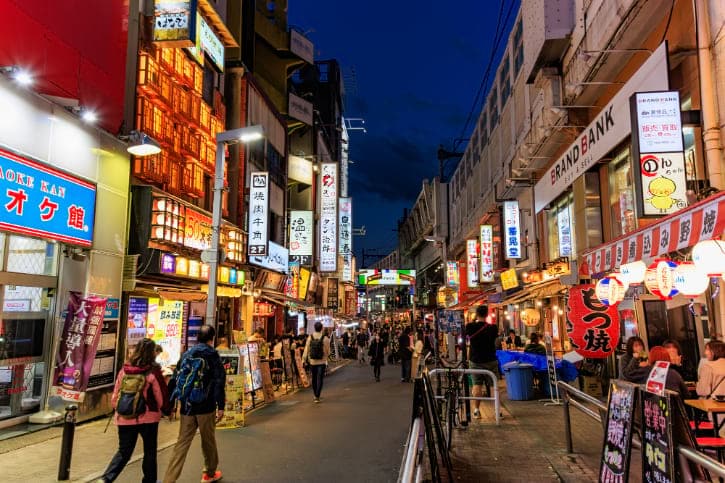
The truth is, Ueno is full of energy. It has bustling markets, great food, and easy access to the rest of the city.
It is only four stops from Tokyo Station on the JR Yamanote Line. That takes about eight minutes.
You will find a mix of everyday local life, peaceful green spaces, and world-class museums. It just does not have the global “brand” of Shibuya or Harajuku.
What People Think vs. What Ueno Is Really Like
- “Traditional and quiet” → Actually has energetic markets and a busy train hub
- “Out of the way” → Actually just eight minutes to Tokyo Station
- “Old-fashioned” → Actually home to the Shinkansen and fast airport trains
- “Only good during the day” → Actually has lively izakayas and evening market culture
2. Why This Area Is One of the Cheapest Places to Stay in Tokyo
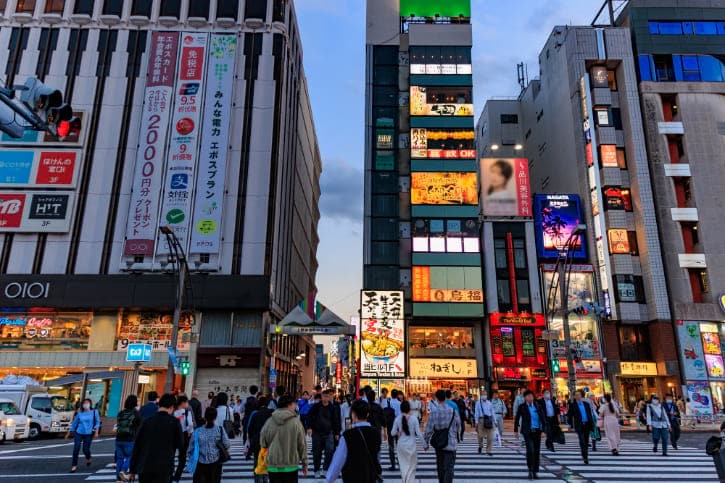
Ueno has one of the best hotel options in Tokyo for budget-conscious travelers. The area is packed with business hotels and budget-friendly options.
These hotels are designed for efficiency. Rooms are compact but clean, and most are just a short walk from the station.
a. How This Benefits You
Because there are so many hotels competing for guests, prices stay low. You can often find a good room for much less than what you would pay in Shinjuku or Shibuya.
Some even sit right next to the station exits.
Recommended Hotels in Ueno:
- APA Hotel Keisei Ueno-Ekimae (Agoda | Booking.com)
- Hop Inn Tokyo Ueno (Agoda | Booking.com)
- Hotel Sardonyx Ueno (Agoda | Booking.com)
- APA Hotel Ueno Ekiminami (Agoda | Booking.com)
- Hotel RESOL Ueno (Agoda | Booking.com)
- Mitsui Garden Hotel Ueno (Agoda | Booking.com)
- Hotel Aima (Agoda | Booking.com)
- Dormy Inn Ueno Okachimachi Hot Spring (Agoda | Booking.com)
- Sotetsu Fresa Inn Ueno-Okachimachi (Agoda | Booking.com)
b. Great for Longer Stays
If you are staying five nights or more, the savings really add up. You can use that extra money for food, day trips, or experiences.
The area around Ueno, including Ueno-Okachimachi and Higashi-Ueno, also has apartment-style hotels. These give you more space, which is rare in central Tokyo.
How Ueno Compares to Other Districts
- Ueno – Business hotels and hostels. Best for budget travelers and long stays.
- Ginza – Luxury boutique hotels. Best for high-end shopping trips.
- Shinjuku – Large international chains. Best for nightlife and business.
- Asakusa – Ryokans and modern hostels. Best for cultural immersion.
3. Easy Airport Access That Makes Travel Simpler
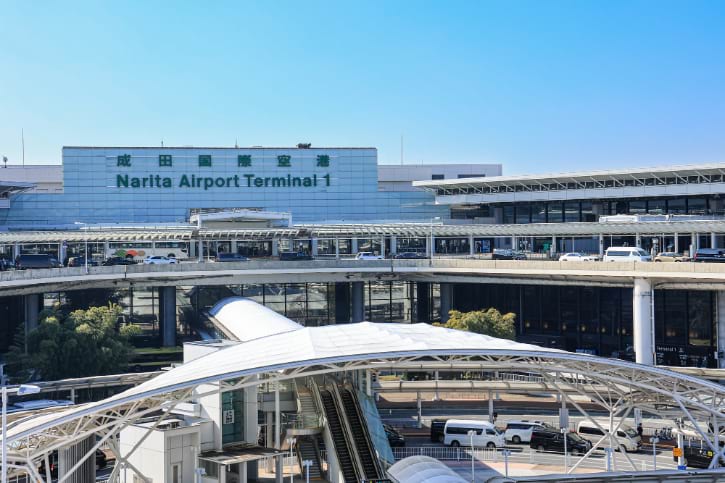
If you are flying into Narita Airport, Ueno is one of the easiest places to reach in central Tokyo.
The Keisei Skyliner takes you from Narita directly to Keisei Ueno Station. No transfers needed.
a. Fast and Comfortable
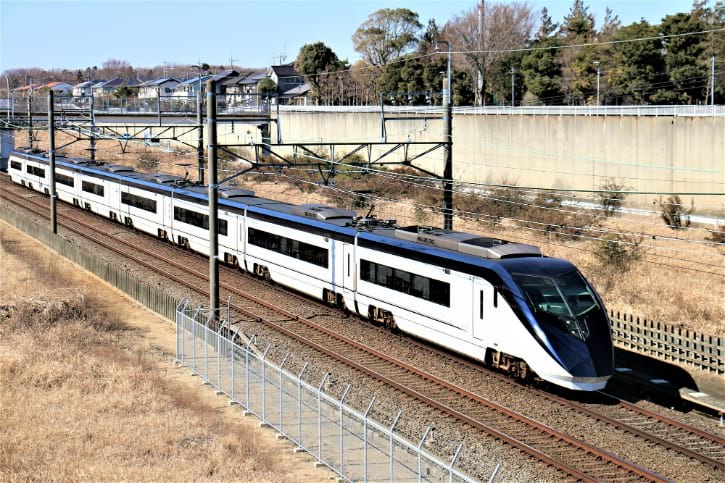
The Skyliner is one of Japan’s fastest non-bullet trains. It travels at up to 160 km/h and gets you to Ueno in about 50 minutes.
Every seat is reserved, so you do not have to worry about crowds after a long flight. Trains run every 20 to 30 minutes, giving you plenty of flexibility.
b. Designed for Travelers with Luggage
Each car has dedicated luggage storage areas with security cameras. Seats are spacious, with a pitch of about 105 cm and power outlets at every seat.
Once you arrive at Keisei Ueno Station, you are right next to Ueno Park. Many hotels are within walking distance, so you can skip the confusing underground maze of bigger stations like Shinjuku.
c. Early and Late Trains
The first train leaves Ueno at 5:40 and reaches Narita at 6:24. The last train from Narita arrives in Ueno at 23:48.
This wide schedule is helpful if you have an early flight or arrive late at night.
4. A Great Base for Getting Around Tokyo
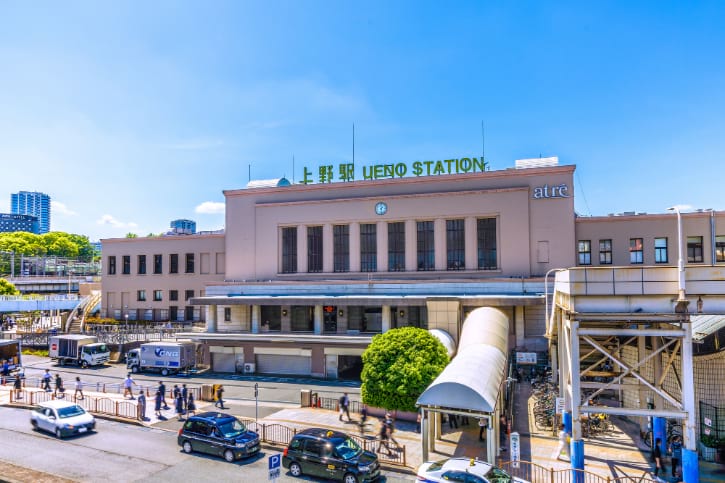
Ueno Station is one of Tokyo’s most connected hubs. From here, you can reach almost anywhere in the city without much hassle.
a. Train and Subway Lines
Several major lines pass through Ueno.
- JR Yamanote Line connects you to Akihabara, Tokyo Station, Shibuya, and Shinjuku in a big loop around the city.
- Tokyo Metro Ginza Line takes you to Asakusa, Akihabara and Ginza.
- Tokyo Metro Hibiya Line goes to Roppongi and the Tsukiji area.
- JR Keihin-Tohoku Line runs north to Saitama and south to Yokohama through Tokyo and Shinagawa.
- Toei Oedo Line is available at nearby Ueno-Okachimachi Station and reaches areas like Ryogoku.
b. How Long It Takes to Reach Popular Spots
Here is a quick look at travel times from Ueno.
Travel Times from Ueno
- Asakusa – Ginza Line, about 5 to 7 minutes
- Akihabara – Yamanote or Hibiya Line, about 4 minutes
- Tokyo Station – Yamanote Line, about 8 minutes
- Ginza – Ginza or Hibiya Line, about 15 minutes
- Roppongi – Hibiya Line, about 25 minutes
- Shinjuku – Yamanote Line, about 24 to 26 minutes
- Shibuya – Yamanote Line, about 30 minutes
- Harajuku – Yamanote Line, about 29 minutes
c. Day Trips Made Easy
Ueno is also a stop for the Shinkansen (bullet train). You can head north to Nikko, Sendai, or Yokohama without needing to go through the busier Tokyo Station.
5. Food, Markets, and Local Tokyo Atmosphere
Ueno has a down-to-earth food scene that reflects the area’s shitamachi roots.
You will find bustling markets, casual eateries, and restaurants that focus on doing one thing really well.
a. Ameyoko Market
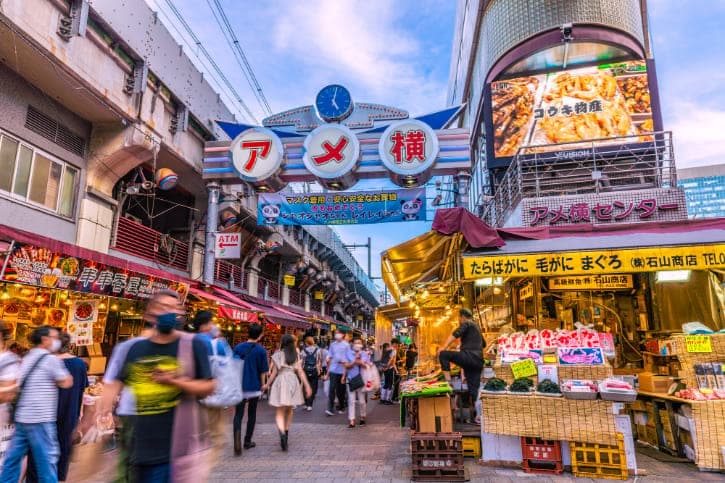
Ameyoko is the heart of Ueno’s street life. This 500-meter market runs under the train tracks between Ueno and Okachimachi stations.
It started as a post-war black market and has grown into a lively shopping street. Vendors sell fresh seafood, dried goods, spices, cosmetics, and clothing.
The atmosphere is energetic. You will hear sellers calling out to customers, and the whole place buzzes with local life.
b. Where to Eat
Here are some spots worth checking out.
- Tonkatsu Yamabe serves high-quality pork cutlet sets for under 2,000 yen.
- Niku no Ohyama is a meat specialist with a standing bar for quick bites like menchi katsu.
- Ramen Kamo to Negi Ueno Okachimachi Main Store offers a refined duck-based broth made without chemical additives.
- Ichiran inside Atre Ueno is famous for its tonkotsu ramen and solo dining booths.
- Miura Misaki Port Ueno is a conveyor belt sushi spot near Ameyoko, known for generous gunkan maki.
- Ueno Menya Musashi Bukotsu Soden serves ramen, creamy tsukemen with thick braised pork.
- Hakata Furyu Ueno offers fast tonkotsu ramen for under 1,200 yen.
- Nadai Unatoto is one of the few casual spots where you can try traditional charcoal-grilled eel over rice at a reasonable price.
These places reflect what makes Tokyo’s food culture special. Each one focuses on mastering a single dish.
6. Things to Do Within Walking Distance
One of Ueno’s biggest strengths is how much you can do on foot. Most major attractions are clustered around Ueno Park, which is right next to the station.
a. Parks and Nature
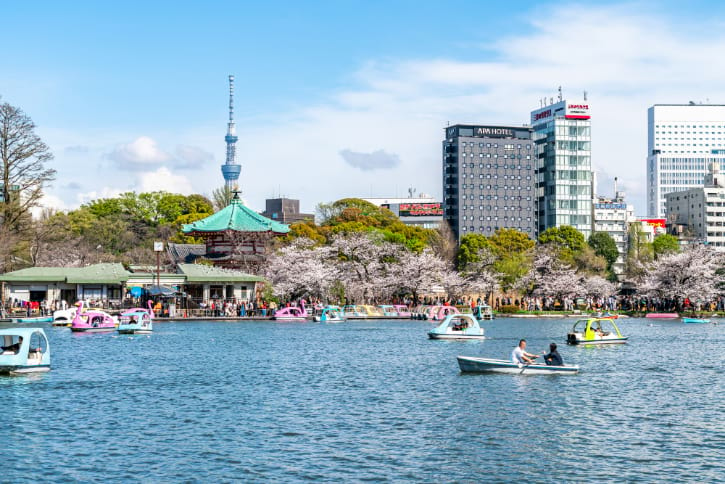
- Shinobazu Pond features lotus flowers in summer, a boating area, and the picturesque Bentendo hall on a small island.
- Ueno Park was established in 1873 and is one of Tokyo’s most beloved green spaces. It is famous for cherry blossoms in spring, when over two million people come to enjoy the blooms.
- Ueno Zoo is Japan’s oldest zoo and home to a wide variety of wildlife from around the world.
b. Museums
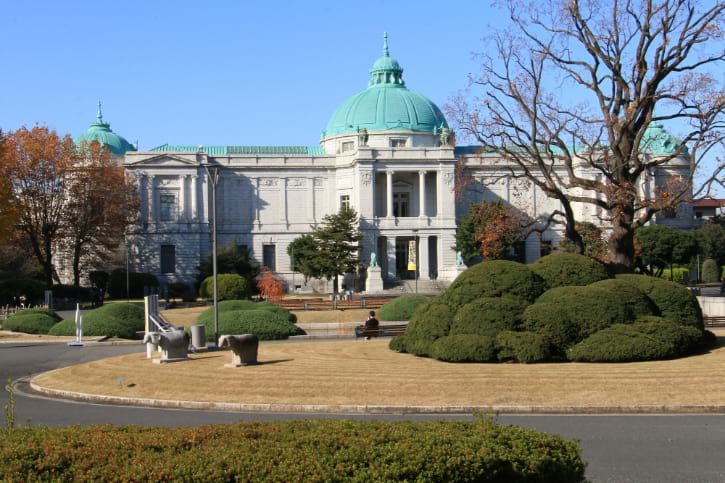
Ueno has the highest concentration of museums in Tokyo.
- Tokyo National Museum is the largest and oldest museum in Japan. It focuses on Japanese and Asian art.
- National Museum of Nature and Science covers Japan’s natural history with hands-on exhibits and a 360-degree theater.
- National Museum of Western Art holds European and American masterpieces. The building itself, designed by Le Corbusier, is a UNESCO World Heritage site.
c. Temples and Shrines
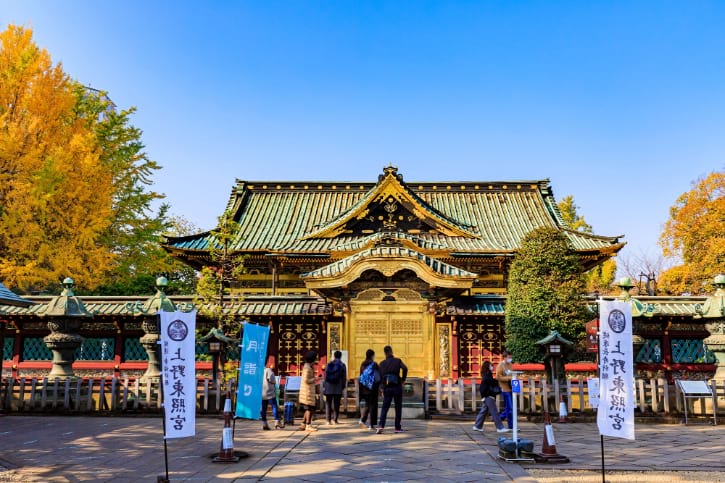
The area has deep historical roots.
- Ueno Toshogu Shrine was built in 1627 to honor the first Tokugawa shogun. It is known for its gold leaf decorations.
- Kiyomizu Kannon-do Temple was inspired by Kyoto’s famous Kiyomizu-dera and features the unique “Moon Pine” tree.
- Kaneiji Temple was once the most powerful temple in Edo. Its original grounds covered all of what is now Ueno Park.
d. Shopping Streets
Beyond the park, you can explore several pedestrian-friendly streets.
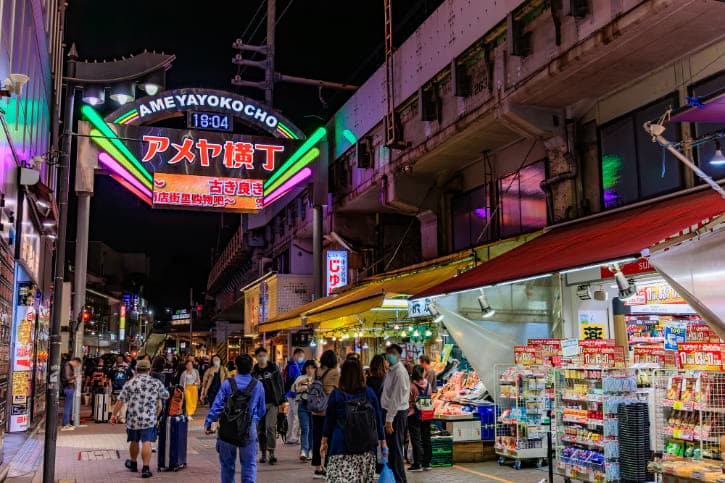
- Ameyoko Market is the main draw for fresh food and bargain shopping.
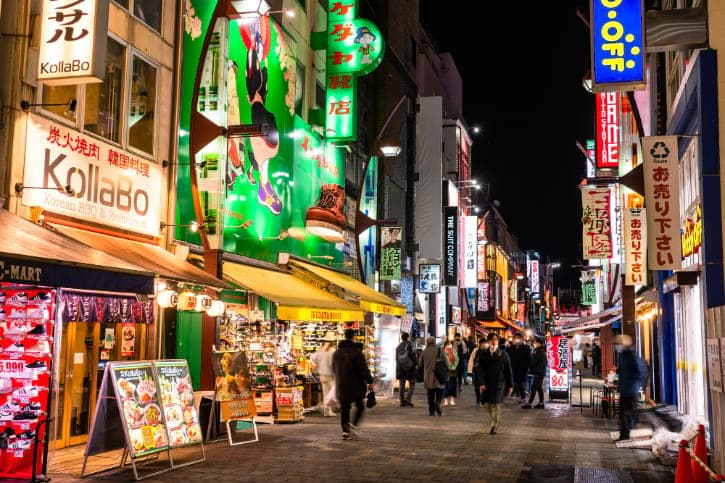
- Ueno Nakadori Shopping Street (Uechun) runs parallel to Ameyoko with a more relaxed vibe. It focuses on clothing and footwear.
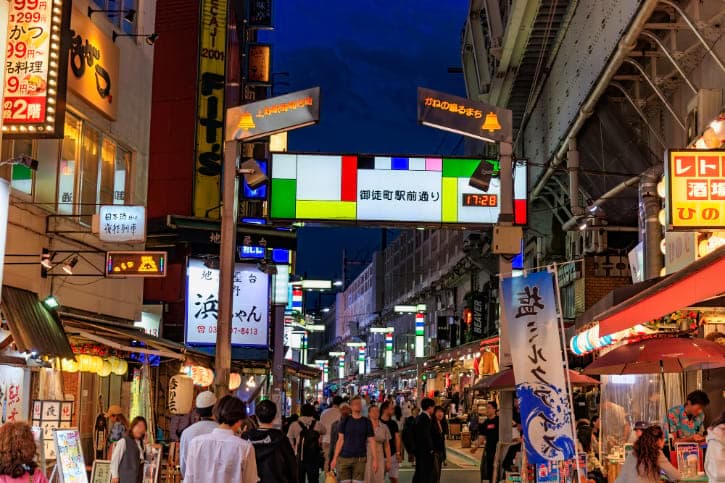
- Okachimachi Ekimae-dori Shopping Street offers diverse restaurants and is known for its jewelry wholesale trade.
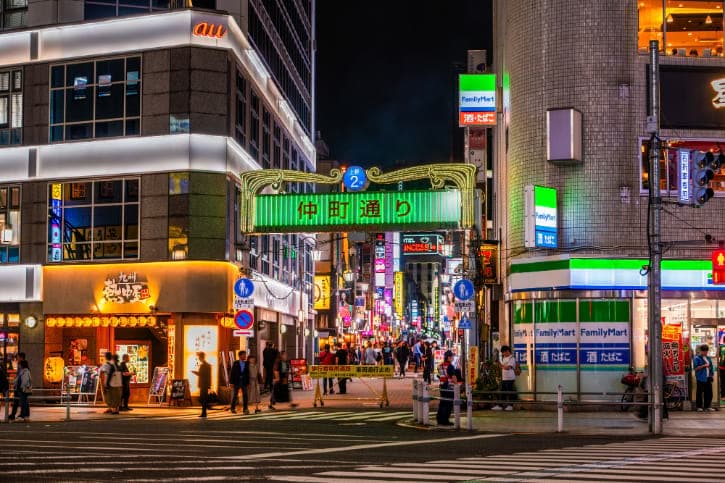
- Ueno Nakacho Street is a lively area with a concentration of restaurants and local nightlife.
You can easily spend a full day exploring without ever needing to take a train.
7. Who This Area Is Best For
Ueno is not for everyone, but it is an excellent fit for many types of travelers.
a. Great For
- Budget travelers looking for affordable hotels without sacrificing location.
- First-time visitors who want a simple, stress-free base. The direct airport train and clear routes to major attractions make navigation easy.
- Families and older travelers who appreciate wide pathways, a zoo, and hotels with larger rooms.
- Travelers with heavy luggage who want to avoid dragging bags through crowded stations.
- Long-stay visitors who want to save money on food and have easy access to the Shinkansen for day trips.
b. Not Ideal For
- Late-night clubbers looking for the big entertainment zones of Shinjuku or Roppongi.
- Luxury shoppers who want to be surrounded by high-end flagship stores. Ginza or Omotesando would be a better fit.
My Final Thoughts
Ueno is a practical, affordable, and surprisingly well-connected base for exploring Tokyo. It may not have the flashy reputation of other neighborhoods, but that is part of its charm.
If you want to save money, travel easily, and experience a more authentic side of the city, Ueno is worth considering.
Related Posts

Photo Credit:
Photos by PIXTA