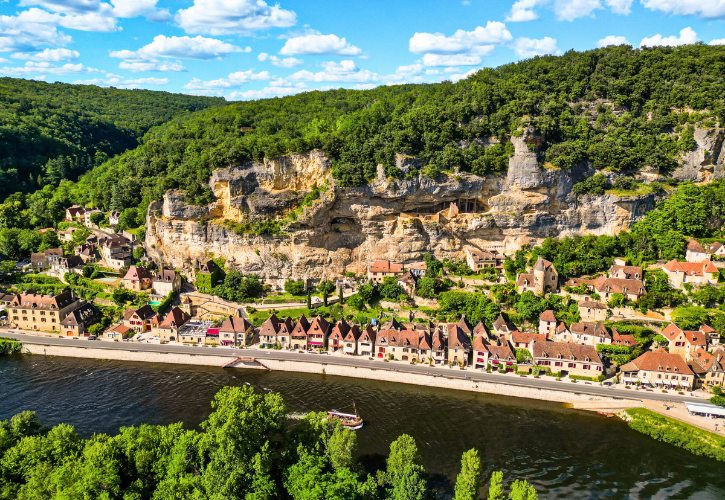
The Dordogne packs a huge amount of history into a small space, which makes it one of the easiest parts of France to explore by car.
In minutes you can go from golden medieval towns to clifftop castles, from sculpted gardens to quiet river bends, and from Renaissance townhouses to caves painted long before recorded time.
The roads are gentle, the distances short, and almost every turn gives you a reason to stop. 😊
1. Sarlat-la-Canéda
a. The Perfect Place to Begin
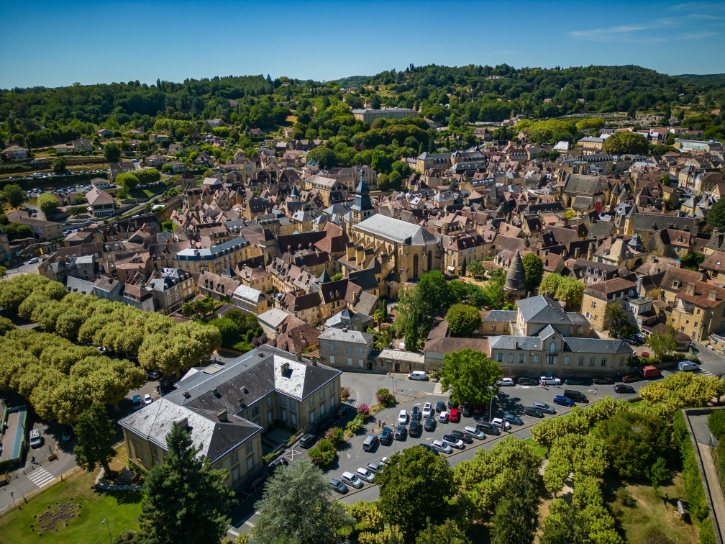
Sarlat sits at the heart of the Périgord Noir and works as the cultural anchor for the whole route. Start here and you learn to read the stone and roofs you will see everywhere later.
- Grew around a 9th-century Benedictine abbey
- Gained importance in 1317, when Pope John XXII made the seat a bishopric
b. Why Its Old Town Survived So Well
Its finest building period ran from the late 1400s through the 1600s, when wealthy magistrates put up grand stone townhouses known as hôtels particuliers. Then it got lucky.
- Largely escaped the heavy industrial rebuilding of the 1800s
- Kept an unusually dense collection of old houses
- In 1962, under Culture Minister André Malraux, became France’s first official conservation sector
- That status triggered careful restoration across the old streets
c. Reading the Streets and Their Golden Stone
The warm glow comes from local stone: honey-toned limestone walls and steep roofs clad in lauzes, thick hand-cut limestone slabs. One wide road, Rue de la République (La Traverse to locals), cuts through the center, but the character lives in the narrow lanes beside it.
- Stone arches and shadowed passageways
- Projecting corner turrets and quiet courtyards
- Enclosed spiral stair towers known as escaliers en vis
d. The Central Square and Its Landmarks
At the heart sits Place de la Liberté, a sloping square lined with café terraces. A few key sights ring the old center:
- The former Gothic Church of Sainte-Marie, reworked by architect Jean Nouvel into a covered food market, with huge steel doors in the old arch
- A panoramic glass lift in the church tower that rises above the rooftops
- The Cathedral of Saint-Sacerdos, with a 12th-century Romanesque bell tower and later Gothic nave
- The Lanterne des Morts, a 12th-century tower behind the cathedral, best understood as a Romanesque funerary chapel and cemetery light tower, not the work of Saint Bernard that legend claims
e. Renaissance Faces and Market Traditions
Facing the cathedral is the Maison de La Boétie, built in 1525, birthplace of humanist thinker Étienne de La Boétie, a close friend of Michel de Montaigne.
- Mullioned cross-windows and Corinthian pilasters
- Carved medallion profiles on the façade
- Markets still selling Périgord staples like black truffles, walnut oils, and duck products
That trade funded the merchant families and their beautiful houses, so food and architecture share one story here.
From Sarlat the land climbs, and the next village swaps close streets for wide open sky.
2. Domme
a. A Fortress Town Built on a Cliff
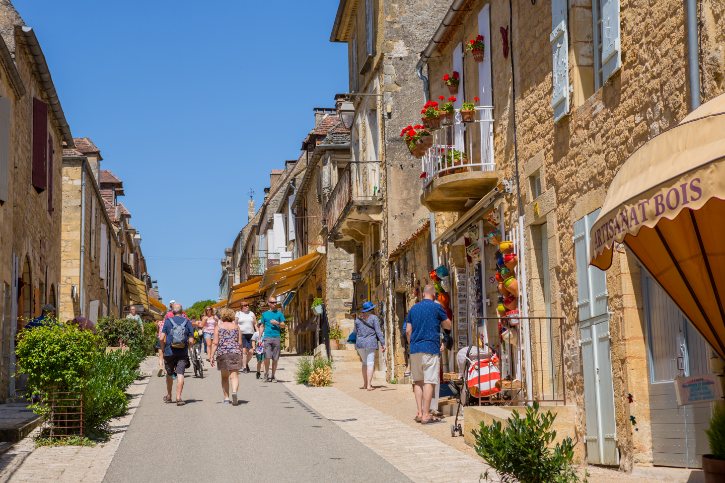
Domme sits on a cliff edge more than 140 meters above the river, and the change from Sarlat’s enclosed streets is immediate. It is a bastide, a planned medieval town founded by King Philip III of France in 1281.
- Bastides were deliberately built, not grown around a castle
- Their purpose was to gather people, raise taxes, and hold contested land
- Domme’s clifftop site bends the usual grid to follow the precipice
b. The Walls and Gates That Guarded It
The southern side, easiest to attack, kept a wall with heavy stone gates. The standout is the Porte des Tours:
- Two rounded stone towers
- Arrow slits and machicolations for defense
- A central vaulted entrance with a slot for a portcullis
c. Templar Prisoners and Their Carvings
After King Philip IV ordered the arrest of the Knights Templar in 1307, around 70 were held in these guard chambers until 1318, carving crucifixes, haloed figures, and kneeling suppliants into the soft limestone.
- Documented view: historians read these as genuine medieval Christian devotional graffiti
- Popular theories call them secret codes, but serious research does not back that up
d. The Hidden Cave Beneath the Village
At the center sits Place de la Halle, anchored by a 17th-century open market hall. The surprise lies underneath.
- The Grotte de Domme is a 450-meter network of natural caverns full of stalactites and stalagmites
- A full cave system under a hilltop fortified town is genuinely unusual
- It once sheltered villagers during the Hundred Years’ War and the Wars of Religion
- The tour ends with a glass elevator that climbs the outer rock back to the cliff edge
e. The View That Defines Domme
At the northern edge, the Belvédère de la Barre delivers the signature panorama. From here you can trace:
- The river’s wide, looping bends
- Farmland and walnut groves on the valley floor
- The towers of other villages downstream
The plateau gave Domme’s defenders command of the river. Where Sarlat feels busy and enclosed, Domme feels calm and lofty.
The next village does the opposite, making you gaze up at a cliff that rises straight above the rooftops.
3. La Roque-Gageac
a. A Village Pressed Between Cliff and River
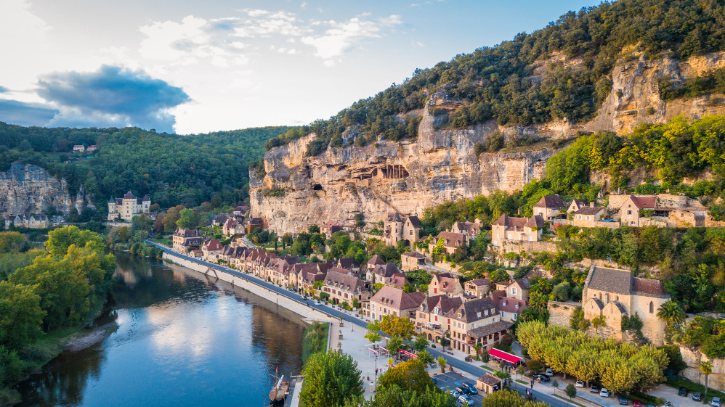
La Roque-Gageac shows how tightly village, cliff, and river fit together. The whole settlement sits on a thin shelf between a vertical 120-meter cliff, known as Le Roc, and a bend in the Dordogne.
- The cliff faces south and works like a natural radiator
- It traps the day’s heat and blocks cold winds, creating a mild microclimate
- With nowhere to spread, the houses climb straight up against the rock
b. Stone Houses and Cliffside History
Walking the narrow lanes, you will see Périgord houses built into the rock face. Two features stand out:
- The Manoir de Tarde, with a round pepper-pot turret and Renaissance windows, home of scholar and mapmaker Jean Tarde, who corresponded with Galileo and brought an early telescope back to the region
- The Fort Troglodytique, set into a natural fissure about 40 meters up, built in the 12th century by the Bishops of Sarlat as a refuge and reinforced with walls, arrow slits, and cisterns
c. An Exotic Garden in an Unlikely Spot
The warm cliff lets surprising plants thrive. The Exotic Garden, created by local enthusiast Gérard Dorin in 1970, climbs the stone steps beneath the rock.
- Windmill palms and banana trees
- Tall bamboo groves
- Bougainvillea, oleander, and flowering agaves
The mix of Mediterranean plants, warm stone, and the river gives the village a look you would not expect this far from the coast.
d. The River and Its Traditional Boats
The riverfront is central to any visit, since this was an inland port for centuries.
- Flat-bottomed oak boats called gabarres carried timber, walnut oil, and Bergerac wines toward Bordeaux
- Today you can ride modern replicas of these boats
- From the water you take in the current, the stacked rooftops, and the cliff overhead at once
e. How It All Comes Together
As you stroll the riverfront and lanes, watch the pieces blend into one picture:
- The cliff looming above
- The subtropical plants clinging to the steps
- The golden stone houses stacked on the ledge
- The river sliding past below
There is more depth here than the famous postcard view suggests.
The next stop flips your view, sending you high onto a wooded spur to look out across the whole valley.
4. Jardins de Marqueyssac
a. A Garden That Doubles as a Grand Viewpoint
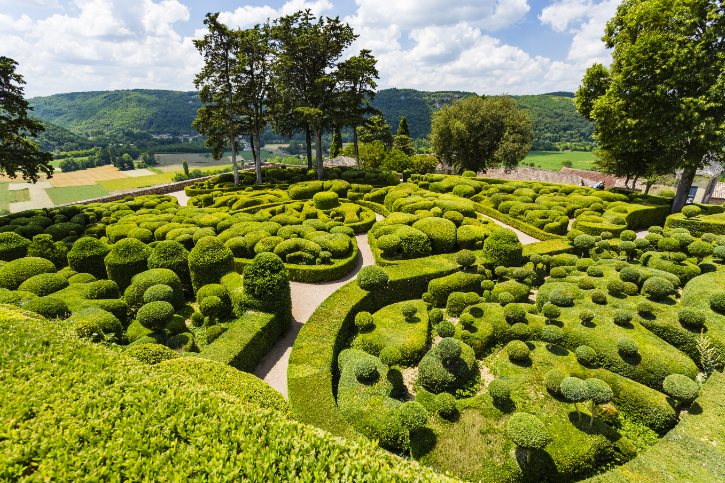
The Jardins de Marqueyssac are famous for their topiary, but they are just as valuable for how they help you read the valley.
- Sit on a steep limestone spur 130 meters above the Dordogne
- Cover 22 hectares of protected parkland
- Centered on a manor from just before the French Revolution, under a lauze roof weighing more than 500 tons
b. The Man Who Shaped the Grounds
The gardens took their current form in the late 1800s under Julien de Cerval, a former Sarlat magistrate who inherited the estate in 1861.
- He drew inspiration from the romantic villas of Italy
- He spent three decades reshaping the grounds
- He chose soft, rolling shapes over sharp, formal geometry
c. The Famous Boxwood and Its Flowing Shapes
The heart of the garden is its boxwood, and it looks nothing like a rigid French parterre.
- More than 150,000 century-old boxwood plants fill the terraces
- They are clipped by hand twice a year, in spring and late summer
- Instead of the straight hedges made famous by André Le Nôtre, de Cerval planted flowing, cushion-like mounds
- The curves echo the rounded hills and river loops below
d. Walking the Paths and Finding the Peacocks
About six kilometers of paths run here, split into three walks: the Bastion Promenade, the Grand Avenue, and the Cliff Walk.
- Shaded stretches lined with cypress, holm oaks, and stone pines
- Peacocks roaming freely across the esplanade
- The way each turn opens a new view
Do not rush to the boxwood and leave. The shaded walks and cliff-edge sections are where the garden feels wildest.
e. The View Over the Valley of Five Castles
At the far western tip sits the Belvédère de la Dordogne, one of the finest views on the whole trip. On a clear day you may pick out:
- Château de Beynac on the north bank cliff
- Château de Castelnaud across the water
- Château de Fayrac on the lower ground
- Château de Lacoste and Château des Milandes farther along the valley
Seeing these fortresses face each other explains everything: this was a contested frontier, and the castles were built to watch one another.
One of them sits just across the gorge, its walls built for war, not for pleasure.
5. Castelnaud-la-Chapelle Castle
a. A Fortress Built to Control the River
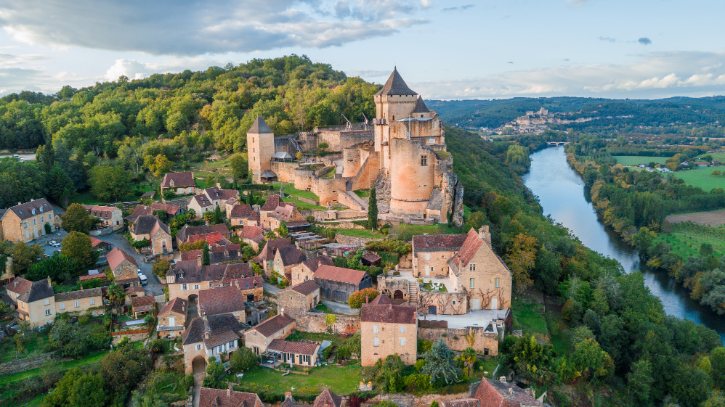
Château de Castelnaud is more than a photogenic ruin. It is one of the best places on the route to understand medieval warfare.
- Rises from a rocky ridge where the Dordogne and Céou rivers meet
- That spot let its lords control traffic on both waterways
- Seized and burned by Simon de Montfort in the Albigensian Crusade, then rebuilt through the 13th century
b. Picking the English Side in a Long War
During the Hundred Years’ War, Castelnaud took a major role.
- A marriage tied the lordship to the Caumont family, who pledged loyalty to the English crown
- It sat directly across the river from French-loyal Beynac, so the two stared each other down for generations
- French forces under Charles VII took it in 1442 after a three-week bombardment with early gunpowder artillery
This is why Beynac and Castelnaud are almost always discussed together, as rivals on opposite banks.
c. Defenses You Can Still Walk Through
The castle shows how defenses evolved over time. Look for:
- A 13th-century spur keep, with a pointed corner built to deflect rams and missiles
- Curtain walls with tiered arrow slits
- Wall-walks and machicolated galleries for defenders
- A massive rounded artillery tower added in the early 1500s to mount cannons
d. Arms, Armor, and Siege Engines
Since 1985 the fortress has housed the Musée de la Guerre au Moyen Âge, with more than 300 authentic arms and armor pieces from the 13th to 17th centuries.
- Broadswords, halberds, and tournament maces
- Crossbows with iron cranking mechanisms and early firearms
- Full suits of plate armor, chainmail shirts, and etched helmets
- Full-scale working siege machines on the terraces, including a counterweight trebuchet, a mangonel, and a pierrière
A trebuchet’s weighted arm could hurl a 100-kilogram stone hundreds of meters into a wall, and seeing the machines at real scale makes a medieval siege suddenly concrete.
e. The Strategic View from the Walls
From the castle, the elevated position reveals why this spot mattered.
- You see the river corridor it once guarded
- You look across to Beynac, its old rival
- You sense the land its lords taxed and defended
Walking the gates, wall-walks, and keep gives you the feel of a working fortress.
The next château was built for a different life, and centuries later it gained one of the most remarkable owners in French history.
6. Château des Milandes
a. A Home Built for Comfort, Not War
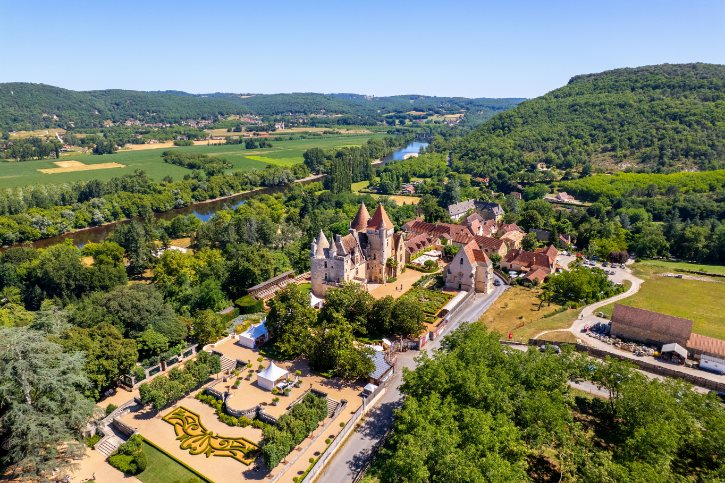
François de Caumont built Milandes in 1489 for his wife, Claude de Cardaillac, who found the drafty keep of nearby Castelnaud unsuited to court life.
- Planned as an open country manor among gentle hills and good farmland
- Marked a clear shift from fortress to graceful residence
b. Renaissance Details Worth a Closer Look
The château blends late Flamboyant Gothic detail with early French Renaissance style. Look for:
- Mullioned cross-windows that flood the rooms with light
- Slender decorative corner turrets
- Steep slate roofs with carved dormers showing foliage and family crests
- A graceful stone spiral staircase, with grounds reshaped in the early 1900s into formal parterres and water basins
c. Josephine Baker and Her Great Estate
In 1947, after leasing it for about ten years, the world-famous entertainer, civil rights advocate, and French Resistance agent Josephine Baker bought Milandes. Her wartime story is remarkable and well documented:
- She used her international fame as cover to help the Resistance and de Gaulle’s Free French
- She sheltered Resistance fighters and refugees at the estate
- She carried intelligence across borders, writing enemy troop movements in invisible ink on her sheet music
- She received the Croix de Guerre, the Médaille de la Résistance, and the Légion d’Honneur, and was later honored at the Panthéon in Paris
d. The Rainbow Tribe and a Bold Idea
Through the 1950s, Baker and her husband, conductor Jo Bouillon, raised a large family here that she called the Rainbow Tribe. She adopted twelve children of different nationalities, ethnicities, and religions.
Her aim was serious and personal: to show, through her own family, that people from all over the world could live together as one, and that brotherhood could cross lines of race and nation.
e. What You Will See at the Château Today
The château now works as a memorial museum devoted to Baker’s life, walking you through her story from the stage to the Resistance to the family she built. You can see:
- Original couture stage outfits by Christian Dior and Pierre Balmain
- A replica of her famous 1926 Folies Bergère costume
- Preserved 1930s Art Deco bathrooms with gold-leaf mosaic tiles
- Wartime medals, photographs, and the children’s bedrooms
- Bird-of-prey and falconry presentations out on the grounds
The next stop swings back toward medieval muscle, where a fortress and its village cling to a towering cliff.
7. Beynac-et-Cazenac
a. A Village and Fortress That Work as One
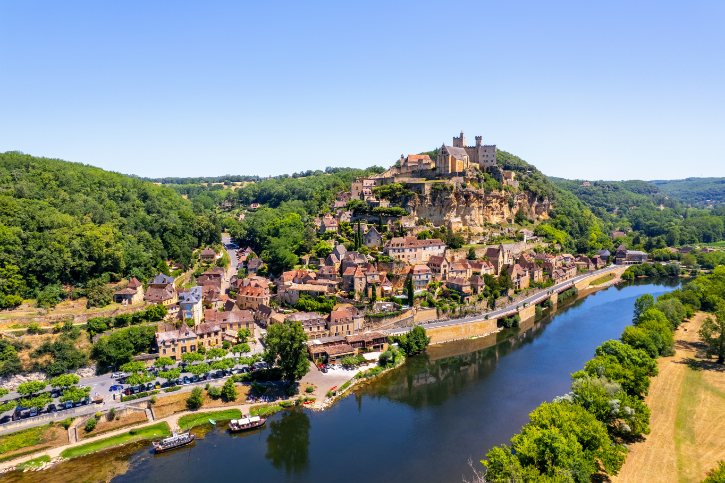
Beynac is really two things that act as one: a steep cliffside village and a commanding fortress above it.
- Sits between the Dordogne River and a sheer 150-meter limestone cliff
- A riverside base gives way to a steep cobbled lane of golden cottages and lauze roofs climbing toward the castle
- Grew up beneath the castle, so the climb and the fortress belong together
b. A Castle at the Heart of a Border War
Château de Beynac, one of the four historic baronies of Périgord, dates to the 12th century.
- In 1194, King Richard the Lionheart of England claimed it and placed his captain, Mercadier, in charge
- After Richard’s death, the castle returned to the Beynac family
- Through the Hundred Years’ War, Beynac stood firmly for the French crown, facing English-held Castelnaud across the river
That cross-river rivalry is why the two castles are always paired in the telling.
c. Inside the Walls and Great Halls
The fortress preserves a clear sequence of medieval rooms and defenses. Look for:
- The Romanesque keep, built in the early 1100s with walls up to three meters thick, its original door reached only by a ladder that could be pulled up
- The Guard Room, a vaulted hall where the lord could ride straight into the courtyard
- The Hall of the Estates, a 15th-century room under a pointed barrel vault, built for assemblies of the four baronies
- A private oratory with original frescoes of the Passion and the family coat of arms
d. The Climb, the River, and the Views
At the edge of the walls, the Spur Terrace gives a sweeping view over the river loop and valley floor, and the climb itself is part of the reward.
- Look down to see the old river port that collected tolls from passing gabarre boats
- As you work up from the riverside, the views keep opening wider
- Beynac has served as a film set, appearing in Luc Besson’s The Messenger: The Story of Joan of Arc and Ridley Scott’s The Last Duel
e. Why It Feels Different from Castelnaud
Both stops are crowned by medieval fortresses, yet they feel different.
- Castelnaud leans into warfare, with its museum and siege engines
- Beynac feels more like a lived-in baronial residence, with grand halls, a chapel, and painted rooms
- Here the castle, cliff, river, and village read as a single historical landscape
From here the river softens. A little farther on, two great rivers come together beneath another hilltop village.
8. Limeuil
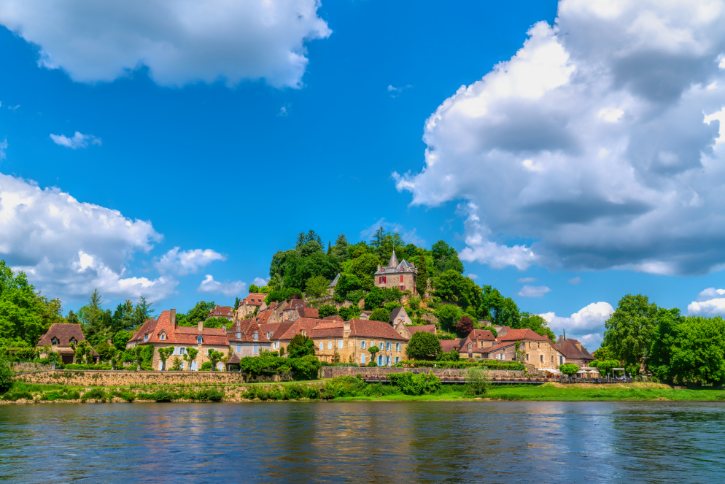
a. The Village Where Two Rivers Meet
Limeuil was shaped by water, sitting where the Dordogne and the Vézère rivers join. That meeting point explains both its history and the experience you get today.
- The confluence made it a vital river port
- Through the 1700s and 1800s it was a busy inland trading hub
b. A Trading Hub Built on the Water
The two rivers each brought something different to the quays:
- The fast, shallow Vézère carried timber, charcoal, and iron down from the Massif Central
- The broader Dordogne carried farm goods and wine toward Bordeaux
- The lower quays buzzed with boatbuilders, blacksmiths, barrel makers, and inns
- Two 19th-century stone arched bridges still mark where the currents join
c. Climbing the Lanes to the Old Gates
From the riverbanks, cobbled lanes called carreyrous climb past terraced gardens and half-timbered cottages. Along the way you pass:
- The Porte du Port, a fortified 14th-century gate near the lower wharves
- The Porte du Récluzou, a 15th to 16th-century gate higher up the ridge
- The upper-village Church of Sainte-Catherine and the late-12th-century Romanesque Church of Saint-Martin, linked to Richard the Lionheart
- Artisan workshops where glassblowers, ceramicists, and blacksmiths keep old trades alive
d. The Panoramic Gardens at the Summit
At the top sit the Jardins Panoramiques de Limeuil, on the site of a medieval fort largely taken down in the 1800s by a local doctor who served the Sultan of Morocco and planted terraced gardens.
- Themed arboretums
- Water-saving gardens
- Educational bee gardens
e. The Turning Point of the Whole Route
The highest terrace is the real payoff, with the confluence spread out below:
- The two rivers merging
- The small river islands
- Open castle country to the east and the limestone gorge of the Vézère to the north
Limeuil marks a natural turning point. The castle-rich Dordogne Valley is behind you, and the prehistoric Vézère Valley lies ahead, where the story shifts from knights and kings to the first humans in Europe.
9. Les Eyzies
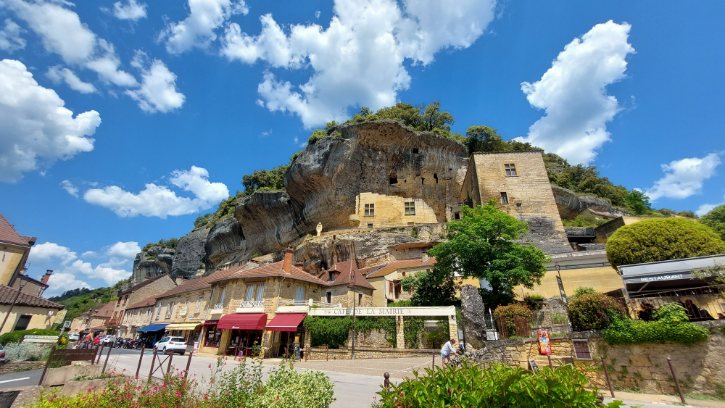
a. The Village at the Center of Human Prehistory
Les Eyzies is often called the “World Capital of Prehistory”, and it sits at the center of one of the richest prehistoric landscapes on Earth, yet it stays easy to visit.
- Lies in an eroded limestone basin along the Vézère
- Its cliffs are full of deep, south-facing rock overhangs known as abris
b. How the Cliffs Preserved the Past
These shelters were close to ideal for Stone Age hunter-gatherers, and the geology protected their traces for tens of thousands of years.
- Dry, sunlit, and easy to defend
- Overlooking the paths of migrating reindeer and other game
- The core of the UNESCO listing, Prehistoric Sites and Decorated Caves of the Vézère Valley
- Those sites are spread across the wider valley, not all crammed into the village itself
c. The National Museum of Prehistory
The best starting point is the Musée National de Préhistoire, founded in 1918 and built into the cliff-hung ruins of the 16th-century Château des Eyzies, with a modern extension set into the rock.
- Stone tools and carved bone implements
- Neanderthal burials and Middle Paleolithic tools
- Delicate flint blades, bone needles, and hooked spear-throwers
- Portable art, including engraved bone plaques and small animal carvings
Above it stands the 1931 limestone sculpture L’Homme Primitif, and the terraces show the same cliffs that once sheltered people.
d. Where Our Species Got a Famous Name
A short walk away is the Abri de Cro-Magnon, where 1868 railway construction uncovered several human skeletons with flint blades and shell ornaments.
- Geologist Louis Lartet identified the remains as early modern humans
- They date to roughly 28,000 to 30,000 years ago
- The site gave its name, Cro-Magnon, to early modern humans across Europe
- In today’s understanding, these were simply early Homo sapiens, people like you
e. Deep Layers and Original Cave Art
Two more sites complete the picture around the village:
- The Abri Pataud, where excavations revealed a nine-meter-deep sequence recording human life across about 15,000 years, including a carved ibex on the rock ceiling
- The Grotte de Font-de-Gaume, the last cave in France with original color prehistoric paintings open to the public, holding more than 200 figures of bison, mammoths, horses, and reindeer in red and black pigment
Because the paintings at Font-de-Gaume are genuine and not copies, it is one of the most precious sites in the region. Les Eyzies gives you the real context you need before the final stop.
10. Lascaux International Center of Parietal Art
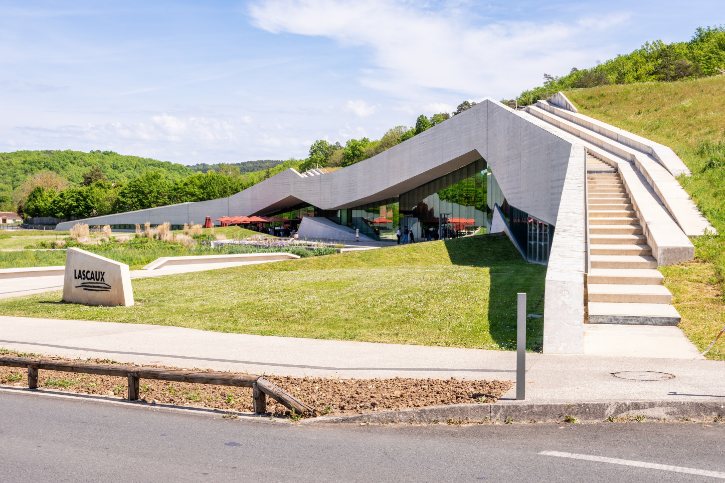
a. Far More Than a Replica or a Museum
The final stop lets you experience one of the world’s greatest works of prehistoric art while understanding the effort needed to protect the fragile original.
- On September 12, 1940, four local youths and a dog named Robot found the entrance above Montignac
- The prehistorian Abbé Henri Breuil confirmed the find and called the cave the “Sistine Chapel of Prehistory”
- The paintings belong mainly to the early Magdalenian culture, dating to roughly 17,000 to 21,000 years old, a range worth stating loosely since scholars still discuss the exact figures
b. Why the Original Cave Had to Close
After the war, the cave opened to the public in 1948 and drew more than 1,000 visitors a day. That popularity became a threat.
- Lighting, body heat, moisture, and carbon dioxide changed the cave’s delicate climate
- This triggered fungal outbreaks and calcite crystallization that endangered the pigments
- Culture Minister André Malraux closed Lascaux to the public in 1963
- Protecting the original is why today you experience recreations instead
c. From Early Copies to the Modern Center
The effort to share Lascaux safely led to a series of reproductions:
- Lascaux II recreated the main chambers
- Lascaux III became a traveling exhibition
- Lascaux IV, the current International Center, opened as a full-scale copy of the entire cave
- Designed by the firm Snøhetta and set into the Montignac hillside as a low concrete and glass fissure between the wooded hill and the fields below
d. How the Cave Was Recreated So Precisely
The centerpiece is a copy made to the millimeter by specialist artists and technicians.
- They used 3D laser scanning and layered resin and mineral mortars
- They matched the original’s textures, contours, temperature, and humidity
- They applied the images as Stone Age artists did: blowing pigments through tubes, hand-stenciling, and engraving with flint tools, using natural iron oxide and manganese in red and black
Inside you follow the layout of the real cave, so watch for its most famous spaces:
- The Hall of the Bulls, with a 20-meter frieze and four huge black aurochs, the largest over five meters long
- The Axial Gallery, a narrow passage of running horses and ibex, with proportions adjusted so the animals look correct from the floor
- The Nave, home to the Panel of the Black Cow and overlapping bison that create real depth
- The Shaft Scene, the most mysterious image, showing a bird-headed human figure before a wounded bison
e. What the Art Shows, and What It Still Hides
The animals reveal real mastery, yet their meaning remains an open question.
- Horses, aurochs, deer, bison, and ibex are rendered with a sharp eye for anatomy and movement
- The artists used the cave’s own bumps and ridges to add shape and volume
- Abstract signs and symbols appear alongside the animals
- Early researchers suggested hunting magic, but modern experts stay careful and treat the meaning as unproven
To study the details, the center adds the Parietal Art Atelier with movable panels, a 3D cinema and digital theater, and the Imagination Gallery, which links the cave art to artists like Picasso and Miró.
Spend real time here and your sense of Stone Age people will shift. They were keen observers and gifted artists, not distant primitives.
In a landscape small enough to cross in easy hops, you move from Renaissance townhouses and medieval keeps to river ports and painted caves, traveling from a few centuries back to tens of thousands of years in the past.
Few places on Earth hold so much human history so close together, and even fewer make it this easy to reach.