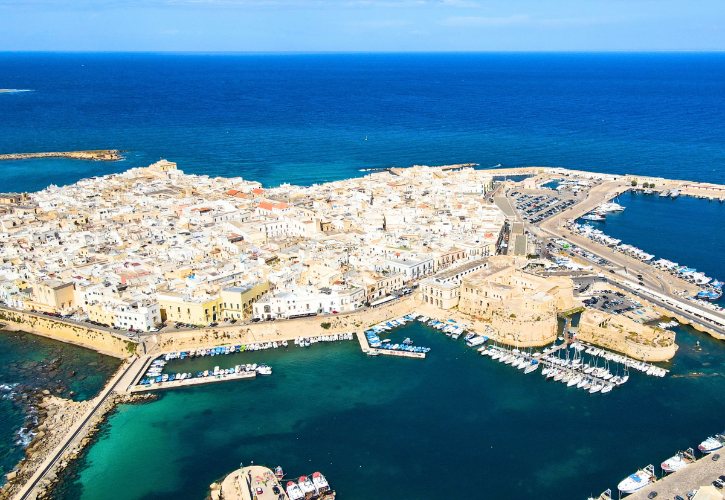
You might be surprised how much Puglia packs into short, easy drives.
Many of the stops sit just 30 minutes to an hour apart, so in one simple loop you can trade Adriatic and Ionian coastlines for medieval old towns, whitewashed villages, the olive country of the Valle d’Itria, deep limestone caves, trulli, Baroque cities, seaside castles, beaches, and dramatic ravines.
One favorite, Matera, sits just over the border in Basilicata, not Puglia, yet its ancient cave city is far too remarkable to leave out. So fuel up, and let’s start with the very first stop. 😊
1. Trani
a. The Harbor Town That Welcomes You First
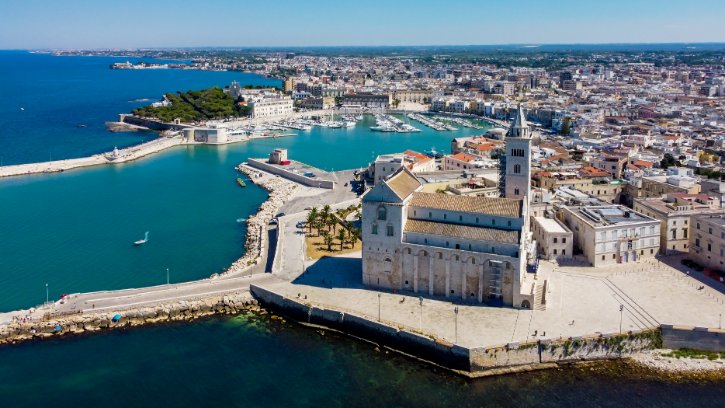
Trani is small, calm, and elegant, and its whole character comes from the sea. You’ll feel it the moment you reach the half-moon harbor, still lined with wooden fishing boats.
b. The Cathedral That Stands Right on the Water
The Cathedral of San Nicola Pellegrino is the star, built on the water’s edge between 1099 and the mid-twelfth century. Look for:
- Warm pietra di Trani stone that shifts color in the coastal light
- A tall gabled façade with a double staircase and a carved rose window
- A 59-meter bell tower resting on an open arch that frames the sea
- A layered crypt below, held up by slim marble columns
c. A Castle Ordered by an Emperor
- The Castello Svevo was commissioned by Frederick II in 1233 and finished in 1249
- It guarded Trani’s sea trade from a low rocky shelf by the bay
- Under Charles V, it was rebuilt for cannon fire with big bastions and a wide seawater moat
- It later served as a prison, and today it’s a cultural venue
d. The Old Jewish Quarter You Shouldn’t Skip
Behind the harbor sits the Giudecca, a medieval Jewish quarter that thrived on trade and learning. A few spots stand out:
- The Scolanova Synagogue, returned to active Jewish worship in 2005
- The Sant’Anna Synagogue, now a museum of regional Jewish history
- The twelfth-century Church of Ognissanti, tied by tradition (but not firm proof) to the Knights Templar
e. A Sweet Wine With Deep Roots
If you want a taste of local history, try Moscato di Trani DOC, an old sweet passito wine once traded across the Adriatic.
2. Bari Vecchia
a. Step Into a Living Old Town
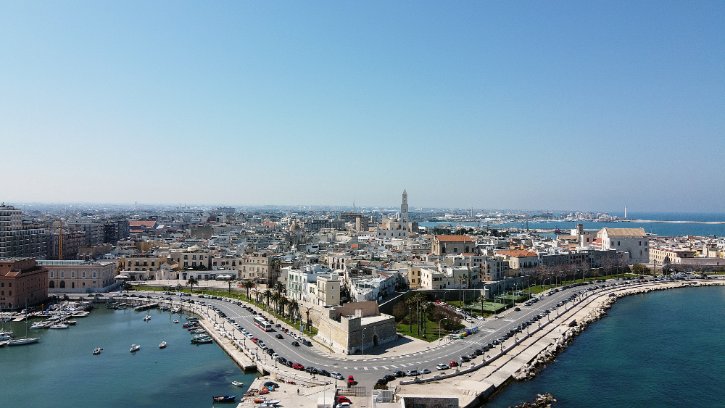
Bari Vecchia isn’t a museum, it’s a real neighborhood. You’ll walk through roughly forty narrow alleys where laundry hangs overhead and neighbors chat from stone balconies.
b. Watch Pasta Made Right in the Street
- On Strada Arco Basso, local women shape fresh orecchiette by hand at wooden tables
- They work the dough from just durum wheat semolina and water, shaping each piece with a small knife
- The pasta dries on mesh frames along the lane, in full view, as part of everyday street life
c. A Basilica Known Around the World
- The Basilica di San Nicola was founded in 1087 to hold the relics of Saint Nicholas of Myra
- Sixty-two Bari sailors brought those relics from Asia Minor, making the city a major pilgrimage site
- The crypt holds the tomb of Saint Nicholas, on twenty-six columns
- It’s a shared holy place for both Catholic and Orthodox Christians
d. The Castle and the Sea Walls
The Castello Normanno-Svevo was first built around 1132, rebuilt by Frederick II between 1233 and 1240, then adapted for artillery in the sixteenth century. From the raised northern seawall you get fine views over the Adriatic and the red rooftops.
e. Eat Like a Local by the Water
Along the Lungomare Nazario Sauro, the food is the show. Don’t leave without trying:
- Focaccia barese, soft and topped with cherry tomatoes and olives
- Panzerotti, fried dough pockets filled with mozzarella and tomato
- Crudo barese, fresh raw seafood straight off the boats
3. Polignano a Mare
a. A Town Perched on the Cliffs
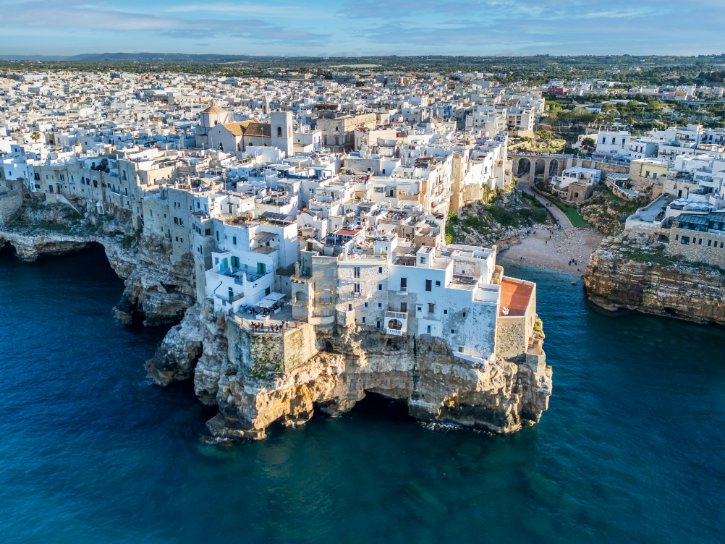
Polignano sits on a limestone shelf about 20 meters above the sea, its white houses lined up right along the edge. The cliffs below are full of fissures, arches, and caves carved by the waves.
b. The Famous Cove of Lama Monachile
- Lama Monachile, also called Cala Porto, is an old river gorge cutting down to the sea
- A stone bridge crosses above it, on the route of the ancient Roman Via Traiana and rebuilt in the 1800s as the Ponte Borbonico
- At the bottom sits a small white-pebble cove between sheer cliffs
- It’s a regular stop on the Red Bull Cliff Diving series
c. Wander the White Old Town
You enter through the sixteenth-century Arco Marchesale, the only surviving gate. Inside you’ll find paved lanes, tiny piazzas, and painted poetry tucked onto walls and doors. Near the old town stands a bronze statue of singer Domenico Modugno, born here and famous for “Volare”, shown with open arms toward the sea.
d. Sea Caves Below the Surface
- The coast holds more than seventy sea caves
- The best known is Grotta Palazzese, lit by daylight bouncing off the water
- The natural sea cave is separate from the seasonal restaurant set into the cliff cavern above it
- Boat trips reach others, like the turquoise-lit Grotta Azzurra
e. Slow Evenings and a Special Coffee
Even with summer crowds, Polignano stays a working town. In the evening, settle at a café and order il caffè speciale, a local mix of espresso, lemon peel, sugar, cream, and amaretto.
4. Monopoli
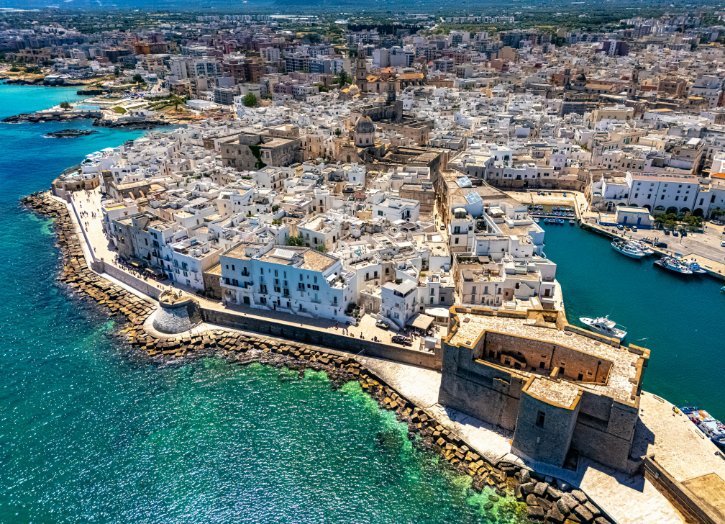
a. A Real Working Harbor
Monopoli feels grounded and busy, built around its Porto Vecchio. You’ll see traditional wooden boats painted blue and red, backed by stone palazzi with Venetian Gothic touches.
b. The Fortress at the Harbor Mouth
- The Castello di Carlo V is a five-sided fortress finished in 1552
- It was built under Spanish rule to fend off Ottoman raids
- It even wraps around a small Romanesque church, San Nicola de Pinna
- Old sixteenth-century walls and bastions still line the shore
c. A Cathedral With a Floating Legend
The Basilica Cattedrale di Maria Santissima della Madia was rebuilt in Roman Baroque style over an older Romanesque church. Local lore says a wooden raft drifted into the harbor in 1117 carrying both a sacred icon and the timber needed to finish the roof. The town still reenacts the story at the harbor twice a year.
d. Swim Beneath the City Walls
- Cala Porta Vecchia sits right under the old ramparts
- Porto Bianco and Porto Rosso are sheltered sandy coves nearby
- Capitolo offers a longer run of sand farther south
e. Seafood Straight From the Docks
With the catch landed daily, the kitchen leans on the sea. Look for zuppa di pesce alla monopolitana, raw tagliatella di seppia, and slow-braised polpo in pignata.
5. Grotte di Castellana
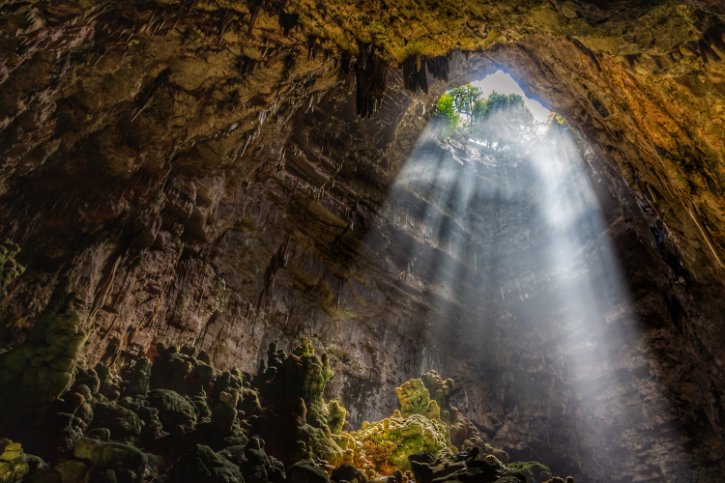
a. Go Underground Into Another World
Here you leave the coast and drop into one of Italy’s great cave systems, carved into the Murge plateau over millions of years.
b. How This Cave System Formed
- The limestone itself is ancient, formed around 90 to 100 million years ago
- The caves came much later, as rainwater slowly dissolved cracks in the rock over the ages
- Modern exploration began in 1938, led by Franco Anelli
- The network runs 3,348 meters long and 122 meters deep
c. The Two Chambers You’ll Remember
- La Grave is a huge open chasm where sunlight pours in from above
- At its center stand tall stalagmites called the Ciclopi
- Grotta Bianca, the White Cave, is one of the most pristine alabaster caverns anywhere
- It glows with white stalactites, columns, and delicate curling formations
d. What the Walk Feels Like
The real thrill is how the mood keeps shifting. You move from the giant, daylight-washed scale of La Grave into narrow, pitch-dark galleries where fragile crystals line the walls. Chambers like the owl-shaped Caverna della Civetta get their names from shapes in the rock.
e. Why This Stop Resets the Trip
After coastlines and towns, this ancient underground landscape completely changes the rhythm. It also shows the hidden water systems that shaped farming on the surface above.
6. Alberobello
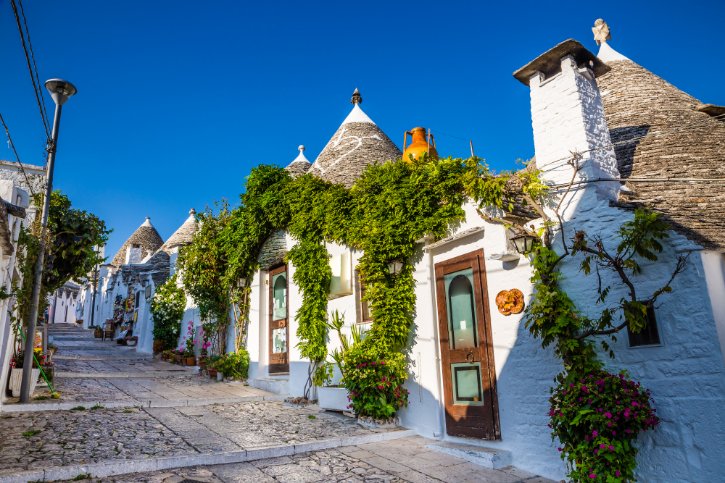
a. The Trulli Capital of the World
Alberobello is famous for its tight cluster of trulli, the cone-roofed stone houses added to the UNESCO World Heritage list in 1996. Nowhere else in Europe looks quite like this.
b. What Makes a Trullo a Trullo
- Thick stone walls built without mortar
- Cones made from overlapping flat slabs called chiancarelle
- Carved stone pinnacles on top
- Whitewashed symbols painted on many roofs
c. Two Quarters, Two Very Different Moods
- Rione Monti: more than 1,000 trulli, full of shops and workshops
- Aia Piccola: a quieter district of about 400 trulli where families still live
- Visit both to feel the gap between commercial and everyday life
- Aia Piccola gives you the more genuine picture
d. The Grandest Trullo of All
The Trullo Sovrano is the only two-story trullo in existence. Built in the mid-eighteenth century, it has twelve cones, a 14-meter dome, and an interior staircase to upper living rooms. Standing inside, you really see how these homes worked.
e. The Truth About the Tax-Dodge Story
You’ll often hear that trulli were built dry so farmers could tear them down before tax inspectors arrived. There’s some truth to it, since local lords did enforce dry-stone building. But historians note the trullo is also a natural evolution of ancient Mediterranean building, using the stone already cleared from the fields.
f. Local Flavors to Try
Pick up savory taralli, good olive oil, and regional charcuterie like Capocollo di Martina Franca.
7. Locorotondo
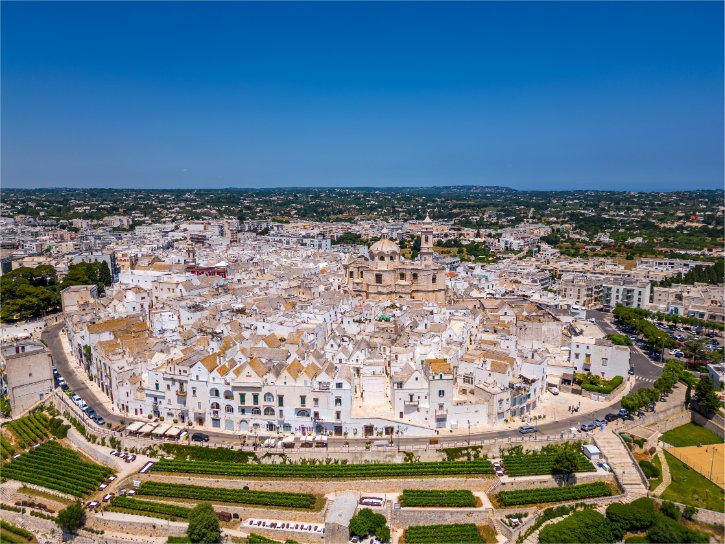
a. The Town Built in a Circle
Locorotondo sits on a 410-meter hill, and its name means “round place”. You’ll notice the historic center really is laid out in concentric rings around the hilltop church.
b. Roofs Unlike the Ones You Just Saw
- The local homes are called cummerse
- They use the same limestone as Alberobello’s trulli
- But their roofs are steep and pitched, not conical
- That gives the whole town a tall, vertical look
c. Views Over the Valle d’Itria
From the walkway along Via Nardelli and the public gardens, you look out over the whole valley. Below you sit low dry-stone walls, small vineyards, ancient olive trees, and lone trulli scattered across the farmland.
d. A White Wine Born Here
- Locorotondo DOC is a white wine recognized in 1969
- It leans mainly on the Verdeca grape for crisp acidity and citrus
- Bianco d’Alessano adds body and floral notes
- The result is fresh and dry, with sparkling versions too
e. Why You Should Linger
Where Alberobello wows you, Locorotondo relaxes you. It’s a calm, residential white hill town, perfect for a slow coffee and a long look over the countryside.
8. Ostuni
a. Meet the White City
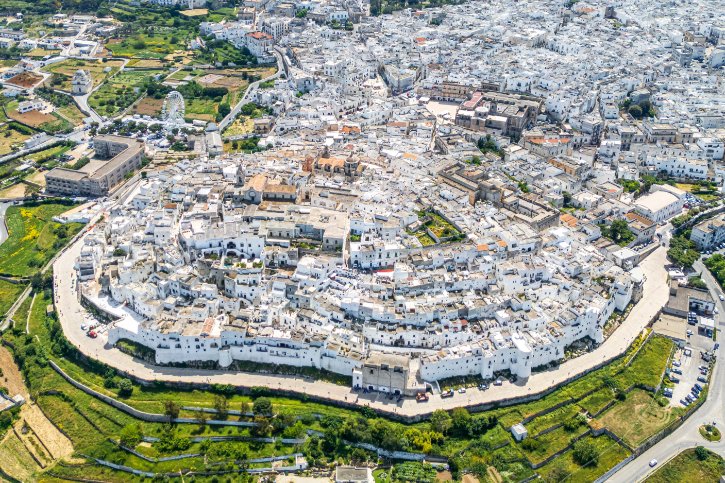
Across Italy, Ostuni is known as La Città Bianca, the White City. It spills across three hilltops, looking out toward the Adriatic.
b. Why Everything Here Is White
- Buildings were coated with slaked lime for centuries
- The lime brightened dim medieval alleys by reflecting sunlight
- More importantly, it worked as a natural disinfectant during the plague
- The result is a blinding white maze of stepped alleys and arches
c. The Cathedral at the Summit
At the top stands the Concattedrale di Santa Maria Assunta, built in the late fifteenth century. Its curved façade is crowned by a huge 24-ray rose window, one of the largest in Europe. Just outside, the arched Arco Scoppa spans the street overhead.
d. An Ocean of Ancient Olive Trees
- From the walls you overlook the Plain of Monumental Olive Trees
- Some of these gnarled trees date back to Roman times
- The land is dotted with masserie, fortified stone farmhouses
- Many once ran as self-contained estates with presses and watchtowers
e. Evenings You’ll Enjoy
Ostuni comes alive at night, with small bars and outdoor tables set along the white stairways. Workshops sell olive wood utensils, ceramics, and local olive oil.
9. Lecce
a. The Baroque Jewel of the South
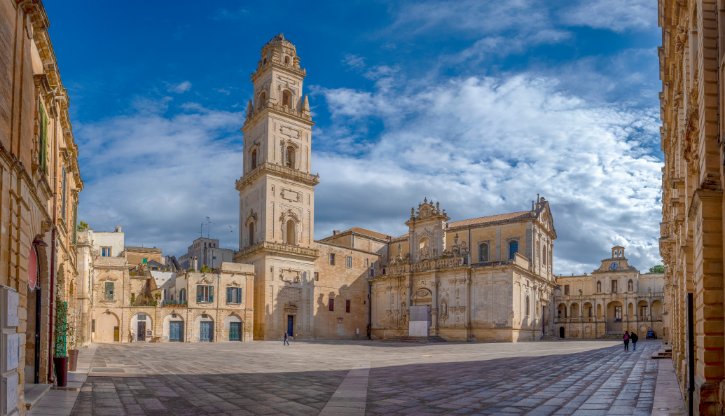
Lecce is a real turning point. The plain stone of the countryside gives way to Barocco Leccese, an ornate style that reshaped the city centuries ago.
b. The Stone That Made It Possible
- Pietra leccese is a soft, fine limestone
- When freshly cut, it’s easy to carve with simple tools
- Over time it hardens and turns a warm golden color
- That let sculptors cover façades in incredible detail
c. The Square You Enter Like a Stage
Piazza del Duomo is one of Italy’s finest enclosed Baroque squares, designed to be entered through a single portal for a sense of surprise. Around it stand the cathedral, a 70-meter bell tower, and grand church residences, all in glowing limestone.
d. The Masterpiece of Santa Croce
- The Basilica di Santa Croce is the high point of Lecce Baroque
- It was built over more than a century by several master architects
- The façade is covered in carved dragons, griffins, cherubs, and grotesque figures
- A grand rose window sits at its center, framed by rich stone carving
e. Where Rome Meets the Baroque
In Piazza Sant’Oronzo, a second-century Roman Amphitheater sits half-excavated below street level, once seating around 25,000 people. Above it rises the tall Column of Sant’Oronzo, giving you ancient Rome and Baroque Lecce in a single view.
f. Crafts and Treats to Remember
- Cartapesta, the local papier-mâché craft
- Pasticciotto, a warm cream-filled pastry
- Rustico leccese, a flaky savory puff
- Full-bodied Negroamaro and Primitivo wines
10. Otranto
a. Italy’s Eastern Edge
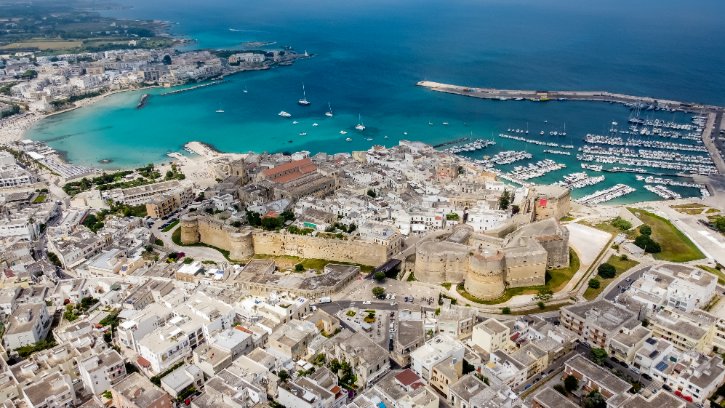
Otranto sits on the easternmost edge of Italy, along the Strait of Otranto, facing the Balkans across a narrow stretch of the Adriatic Sea. For centuries it was a key gateway to the eastern Mediterranean.
b. A Walled Town by the Harbor
- You enter through the grand Porta Alfonsina gate
- White-washed alleys lead down toward the water
- A seafront promenade follows the harbor
- The whole center sits inside old stone ramparts
c. The Cathedral’s Astonishing Floor
Inside the cathedral lies one of Europe’s great medieval artworks: a vast floor mosaic made in the 1160s by the monk Pantaleone. It shows a giant Tree of Life on the backs of two elephants, branching out into biblical scenes, mythical figures like King Arthur, and fantastical beasts.
d. A Solemn Piece of History
The cathedral also holds the Chapel of the Martyrs, honoring 813 men executed in 1480 after refusing to convert during an Ottoman invasion. Their remains are kept behind the altar, told plainly, without drama.
e. The Castle and the Coast
- The Castello Aragonese guards the old town with thick walls and a moat
- It inspired Horace Walpole’s 1764 novel The Castle of Otranto
- Baia dei Turchi is a white-sand cove backed by pines just north
- Punta Palascìa marks the easternmost point of mainland Italy
One thing to keep straight: the Adriatic and Ionian do not actually meet here.
11. Santa Maria di Leuca
a. The Very Tip of the Heel
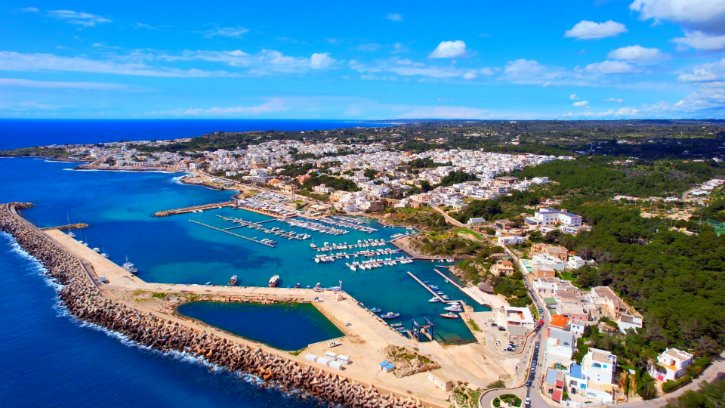
Santa Maria di Leuca marks the southern tip of Salento, where the coast curves between two rocky points. It genuinely feels like the end of the mainland, with open sea stretching out ahead of you.
b. The Truth About the Two Seas
- Tradition says the Adriatic and Ionian meet right off the cliffs here
- It’s a lovely, symbolic idea rather than an official boundary
- The real maritime line sits farther north at the Strait of Otranto
- Locals still treat this cape as the dividing point
c. The Lighthouse and the Sanctuary
Side by side on the cliffs stand two landmarks. The lighthouse rises 102 meters above the sea and is one of the most powerful in Italy. Next to it, the Basilica de Finibus Terrae, whose name means “at the Ends of the Earth”, marks the end of an old pilgrimage route.
d. A Grand Staircase of Water
- Here you reach the end of the Apulian Aqueduct
- A stepped artificial waterfall drops down the cliff
- A grand monumental staircase climbs beside it up to the sanctuary
- An ancient Roman column marks the arrival of fresh water
e. Belle Époque Villas by the Sea
Unlike the medieval towns to the north, Leuca’s seafront is lined with elegant old villas built by wealthy families. Their styles mix freely, from neo-Gothic towers to pagoda roofs and Moorish arches.
f. Caves on Both Sides of the Cape
The cliffs hide sea grottos on each side, some carved by waves and others by underground springs. A quick tip: the most famous caves farther up the coast are only reachable on longer boat trips, not right beside Leuca.
12. Gallipoli
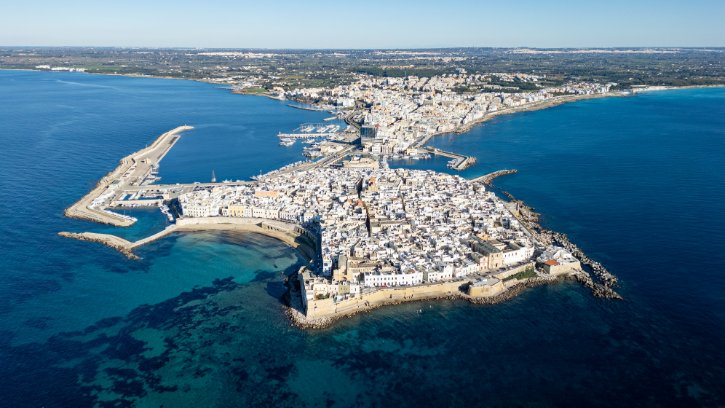
a. A City on Its Own Island
Gallipoli’s historic center sits on a limestone island in the Ionian Sea, linked to the mainland by a seventeenth-century stone bridge. Its name comes from the Greek Kallipolis, meaning “Beautiful City”.
b. Walls Built to Face the Sea
- Thick sixteenth-century Spanish ramparts ring the island
- A perimeter road follows the sea walls all the way around
- The alleys were laid out to scatter the wind and confuse invaders
- The Castello Angioino-Aragonese guards the bridge entrance
c. Baroque Churches in Golden Stone
At the island’s high point stands the Basilica di Sant’Agata, built in warm carparo stone that weathers better than Lecce’s limestone. Inside you’ll find a wealth of seventeenth-century paintings. Compared with Lecce, Gallipoli’s Baroque feels more compact and tied to the sea.
d. A Harbor Built on Fishing
- An active fishing fleet still works from the docks
- The quayside fish market sells prawns, cuttlefish, and swordfish
- The signature dish is scapece gallipolina, fish preserved with vinegar and saffron
- The local red prawns are a real treat
e. The Surprising Underground Oil Trade
Beneath the streets lie around thirty-five underground olive oil mills. Gallipoli once shipped huge amounts of olio lampante, a lamp oil used to light cities like London and Paris. It’s a reminder this small town once mattered far beyond its beaches.
f. Soft Ionian Beaches
South of the island, the coast turns to fine sand and clear shallow water, including Baia Verde and the pine-fringed Punta della Suina.
13. Taranto
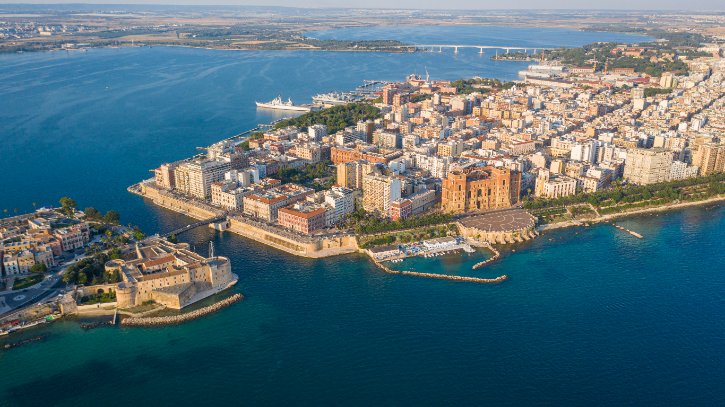
a. The City of Two Seas
Taranto is known as the Città dei Due Mari for the two bodies of water around it: the wide Mar Grande opening to the Ionian, and the enclosed Mar Piccolo lagoon behind the old town.
b. A Bridge That Swings Open
- A shipping canal separates the old island center from the mainland
- The Ponte Girevole is a 90-meter swing bridge
- It opens sideways to let navy ships pass between the two seas
- This rare geography made Taranto a key naval and trade center
c. A Castle Cared For by the Navy
The Castello Aragonese was built in the late fifteenth century with wide, low towers made to take cannon fire. The Italian Navy looks after it today and runs tours of its gunports and excavated Greek foundations. Nearby stands the Cathedral of San Cataldo, Puglia’s oldest.
d. Ancient Greek Roots
- Taranto was founded in 706 BC as Taras, the only colony Sparta ever built
- It grew into one of the richest centers of Magna Graecia
- Two columns of a Doric temple still stand in the old town
- Scholars now think the temple honored a goddess, not Poseidon
e. Treasures at the MArTA Museum
The National Archaeological Museum is one of Europe’s finest, built around the dazzling Ori di Taranto, or “Taranto Gold”. You’ll see delicate Hellenistic jewelry, painted Greek vases, and a complete athlete’s tomb.
f. Mussels From the Lagoon
The Mar Piccolo is fed by freshwater springs that create ideal conditions for the famous cozza tarantina, the Taranto black mussel. It turns up in local pasta and simple steamed dishes all over town.
14. Matera
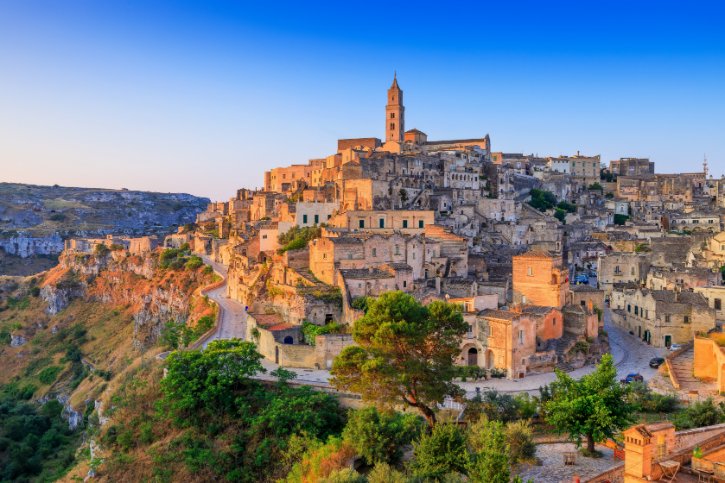
a. A Stop Just Over the Border
To be clear, Matera sits in Basilicata, not Puglia. You should still go, because it shares the same limestone plateau and ravine landscape, and it’s one of the most extraordinary places on the whole route.
b. The Ancient Cave City
- The Sassi di Matera joined the UNESCO list in 1993
- People have lived here since the Paleolithic era
- Homes are carved into the slopes of a river gorge
- A huge underground cistern once held up to 5 million liters of water
c. Churches Carved From Rock
The hills around Matera hold more than 150 rock-cut churches, hollowed out by monks between the eighth and thirteenth centuries. Inside you’ll find carved stone altars and faded Byzantine frescoes, like those at Santa Maria de Idris and Santa Lucia alle Malve.
d. Viewpoints Worth the Climb
- Belvedere Luigi Guerricchio looks over Sasso Barisano
- Piazzetta Pascoli frames Sasso Caveoso and the canyon
- Piazza Duomo, high on the Civita ridge, looks out over the Sassi below
- Belvedere Murgia Timone faces the city from across the gorge
e. How People Really Lived Here
Step into a reconstructed cave home and you’ll see how families once shared a single room with their animals for warmth. Life was genuinely hard, and after a famous 1945 book exposed the poverty, around 15,000 residents were relocated. A later preservation law brought the Sassi back to life as homes, shops, and cultural spaces.
f. A Star of the Screen
Matera’s ancient stone has long doubled for biblical and ancient cities on screen, in films like The Passion of the Christ. More recently it has featured in big productions such as Wonder Woman and the Bond film No Time to Die. The city was also named a European Capital of Culture in 2019.
15. Gravina in Puglia
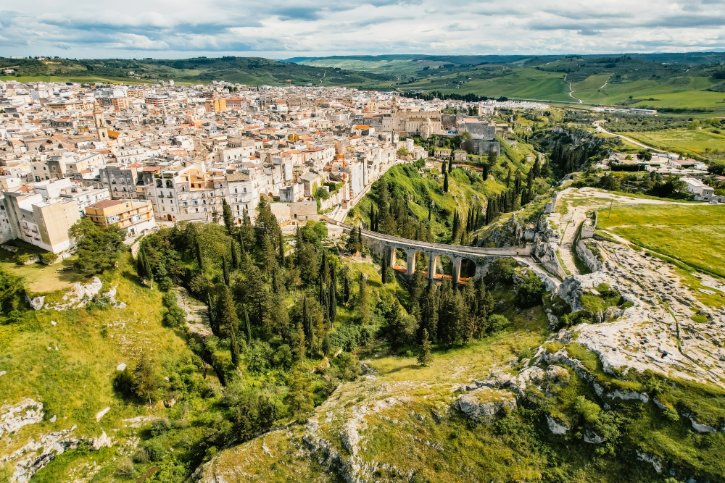
a. A Quieter Cousin to Matera
Gravina sits firmly in Puglia, built along the edge of a 100-meter canyon. It shares Matera’s world of ravines and caves, but with a calmer, less crowded feel.
b. The Bridge Over the Gorge
- The Ponte Acquedotto is Gravina’s signature landmark
- An earlier bridge here dates to the 1600s, rebuilt into an aqueduct by the Orsini family in the 1700s
- It stands 37 meters high and 90 meters long
- You may recognize it from the opening chase of No Time to Die
c. Churches Cut Into the Cliff
The standout is San Michele delle Grotte, carved entirely from the stone with five aisles divided by rock pillars. Legend claims the bones inside came from a Saracen massacre, but research shows they’re simply a town ossuary, so take the dramatic story lightly.
d. A Hidden World Below the Streets
- Gravina Sotterranea is a multi-level underground maze
- It was dug over more than 2,500 years
- It holds grain pits, cisterns, wine cellars, and old quarries
- Guided tours take you through the vaulted chambers
e. Food Rooted in the Land
Gravina’s table grows straight out of its wheat fields. Try the ball-shaped Pallone di Gravina cheese, the crusty Pane di Gravina, and the crisp white Gravina DOC wine.
f. One Journey, Fifteen Faces
String these stops together and you get a single, flowing journey rather than a list of places. You move from Adriatic harbors and Romanesque cathedrals to clifftop villages, deep caves, trulli, white hill towns, golden Lecce Baroque, the Salento coast, Ionian fishing towns, and finally the great ravines of Matera and Gravina. Different seas, different stone, different centuries, all within short, easy drives. That’s the real joy of a Puglia road trip, and why you’ll probably wish you’d planned even more time for it.