Italy rewards you with extraordinary art, scenery, and food, yet it also runs on a web of local rules that can quietly catch you off guard.
A ticket you forgot to stamp, a taxi fare you never confirmed, or bare shoulders at a church door can turn an easy afternoon into a stressful one.
A little preparation changes everything. Learn a handful of practical habits before you go, and the whole country opens up to you, smoother and far more enjoyable from the moment you arrive. 😊
1. Train Ticket Validation Mistakes Can Lead to Unexpected Fines
Italy’s regional trains run on trust, and that trust comes with a small task you have to remember yourself. Skip it, and a cheap ticket turns into an expensive lesson.
a. Why Regional Trains Expect You to Validate First
Most regional stations have open platforms with no gates, so the system depends on you validating your own ticket before boarding.
- Applies to paper tickets for regional trains, run by Trenitalia, Trenord, and other local operators.
- These tickets don’t assign a seat or departure time, which is why they need stamping.
- Use the small machines on pillars in the concourse and along the platform, usually green, yellow, or white.
- Insert the ticket to print the date, time, and station code. No stamp, and the conductor treats you as having no valid ticket.
b. The Four-Hour Clock That Starts at the Machine
Once you stamp a regional ticket, you are on the clock. A stamped regional ticket stays valid for four hours to complete your trip, so if your plans are loose, stamp only when you’re ready to travel rather than hours ahead.
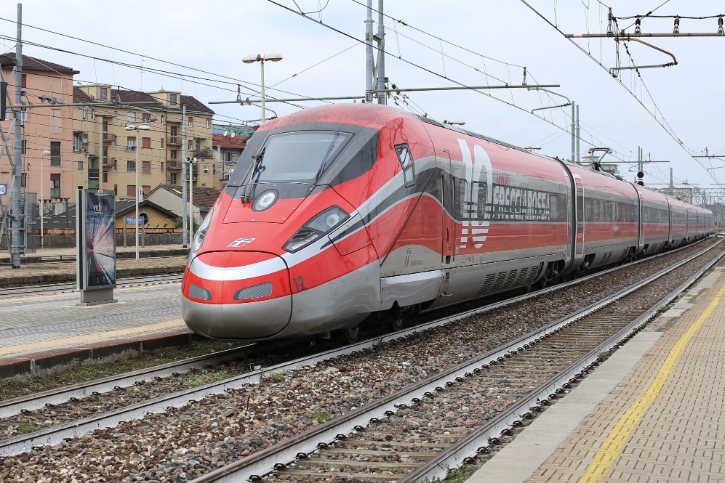
High-speed and Intercity services skip this entirely. Frecciarossa, Frecciargento, Frecciabianca, Intercity, and Italo already tie your ticket to a set train, date, time, and seat, so there is nothing to stamp.
c. What to Do When the Stamping Machine Is Broken
Broken machines are common at small, unstaffed stations, and there is a correct way to protect yourself.
- Board, then find the conductor (capotreno) right away.
- Report your unvalidated ticket before staff start checking, and they’ll fix it onboard with no penalty.
- Settling onboard is allowed when the office is closed, machines are dead, and no licensed seller operates within about 350 meters.
- Do not stay seated and wait, since that counts as fare evasion. Writing the date on the ticket is not the official fix. Speak to staff first.
d. Paper, Digital, and High-Speed Tickets Each Play by Different Rules
Know what you are holding before you step on.
- Paper regional tickets must be stamped before boarding, then stay valid four hours.
- Digital regional tickets (Trenitalia) now activate automatically at your chosen train’s departure time. The old SMS or app check-in is gone.
- High-speed and Intercity tickets, Italo included, need no stamping and are checked by scanning your booking.
- Trenord digital tickets activate at your chosen departure, or early via “Activate early” in the app.
- Digital regional tickets come already validated and stay valid for four hours from your chosen train’s departure, so if you miss it you can take a later regional train on the same route and class within that window. You can’t move the ticket to an earlier train, and it won’t work on a different operator like Italo.
e. What a Missing Stamp Actually Costs You
Inspectors enforce the rules firmly, because an unstamped ticket could be reused.
- Under Trenord in Lombardy: €35 within 5 days, €50 between 6 and 60 days, then 100 times the minimum fare after 60 days.
- Similar step-up systems apply nationwide under Trenitalia’s regional charters.
- You usually have 30 days to appeal with evidence, such as proof the machine was broken.
2. Airport Taxi Fares Are Not Always as Straightforward as Tourists Expect
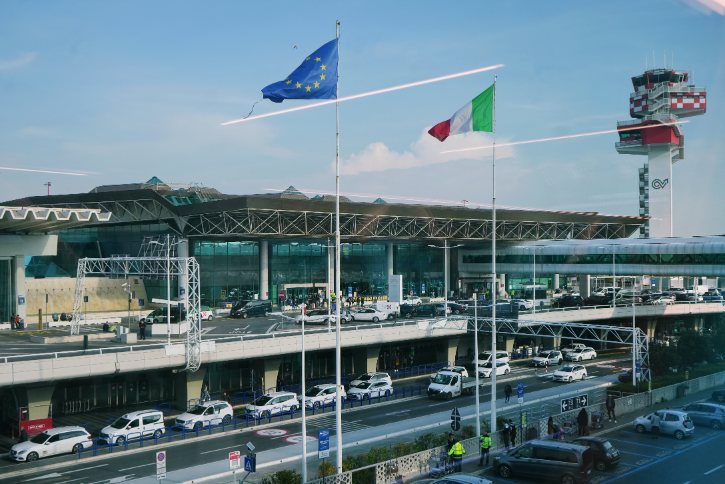
The ride from the airport is your first real transaction in Italy, and a few minutes of knowledge keeps it fair.
a. The Fixed Airport Fares Worth Knowing Before You Land
Several cities set official flat fares between the airport and the center, so you aren’t left watching a meter climb.
- Rome Fiumicino to central Rome: €55, per car for up to 4, luggage and night included.
- Rome Ciampino to central Rome: €40, per car, all-inclusive.
- Milan Malpensa to the city: €114, tolls and night included.
- Naples Capodichino: €21 to the Central Station or the historic centre, €24 to Molo Beverello and the port.
- Florence to the historic center: €28 day, €30 holiday, €32 night.
- Venice Marco Polo to Piazzale Roma: €40 land taxi, water transport separate.
- All fares are per vehicle, not per person, up to four passengers.
b. The Boundary Lines That Decide Your Price
A flat fare only holds inside a set zone. In Rome, the €55 rate covers destinations inside the Aurelian Walls, and beyond that the meter runs, capped by law at €80 for trips inside the ring road (GRA). Whenever your destination sits outside a fixed-fare zone, ask the driver to confirm the meter will run before you load your bags.
c. How to Tell a Real Taxi From a Tout
Official taxis are easy to recognize once you know the signs.
- White car, lit “TAXI” roof sign, and the city coat of arms plus license number on the front doors.
- Skip any driver who approaches you inside the terminal, and walk to the official taxi rank (posteggio taxi).
- At Fiumicino, only Comune di Roma taxis honor the €55 fare, while Comune di Fiumicino taxis may charge up to €80, so check the door reads “Comune di Roma”.
d. The Extra Charges That Quietly Add Up
On the meter, cities allow certain legal surcharges.
- Luggage: Florence about €1.20 per bag, Naples €0.50 per oversized piece. Rome and Milan include luggage in fixed fares.
- Night and holidays: higher start fares at night. In Milan, €4.10 by day rises to €7.90 at night.
- Extra passengers: Rome €5.00 per person beyond four, Florence €1.20 beyond three.
- Minimum fare: Milan sets a €16.00 minimum on metered rides from Linate, while Malpensa and Orio al Serio run on fixed fares instead.
e. Confirm the Price Before Your Bags Go In
A quick word at the start prevents any dispute at the end.
- State your exact destination and ask flat fare or meter, before bags are loaded.
- In Naples, the flat rate applies only if you ask for it first.
- Card payment is your legal right, so a “broken” reader is no excuse.
- Ask for the printed receipt (ricevuta) showing license number, route, date, and total.
3. Transport Strikes Can Disrupt Trains, Flights, and Local Travel
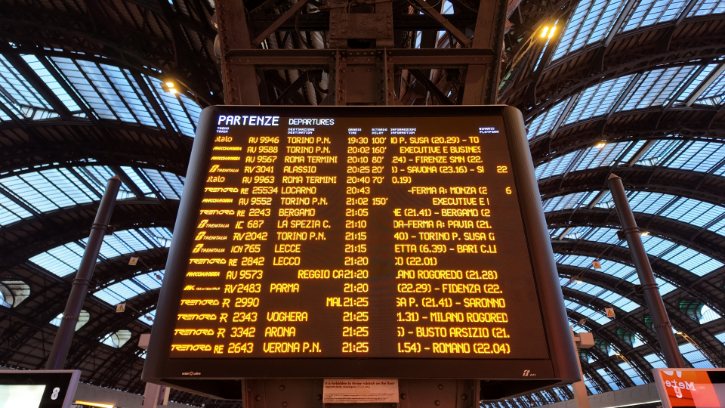
Strikes are a normal part of Italian life, and far less disruptive once you know how to read them.
a. How Strikes Work and What They Touch
Industrial action (sciopero) can affect trains, buses, metros, trams, airports, airlines, and ferries, but it follows clear rules.
- Strikes may be national, regional, or limited to a single company like ATAC or ATM.
- Surprise walkouts are banned in essential services, and unions give at least 10 days’ notice.
- A first action lasts no more than 4 hours, and follow-up actions on the same dispute are capped at 24 hours.
- Protected periods block strikes entirely, including late December to early January, Easter week, late April to early May, and late July into early September.
b. The Official Pages That Tell You the Truth
Skip the rumors and go straight to the sources.
- scioperi.mit.gov.it lists every announced strike with the unions, services, and time windows.
- cgsse.it publishes rulings, reductions, or cancellations, and enac.gov.it covers flights.
- Strikes are often reduced or called off, so re-check 48 hours and again 24 hours before you travel.
c. The Protected Hours That Keep Some Services Running
Even during a strike, the law protects a minimum service inside set windows.
- Flights between 07:00 and 10:00, or 18:00 and 21:00, should operate, and ENAC also protects emergency flights, Sardinia and Sicily links, and one intercontinental connection per continent.
- National rail protects weekday commuter services from 06:00 to 09:00 and 18:00 to 21:00, plus listed long-distance trains.
- City transit runs through morning and late-afternoon peaks, then often stops midday and late at night.
- Trenitalia and Italo publish guaranteed trains before any 24-hour rail strike.
A protected window still isn’t a guarantee for your exact service, so always confirm.
d. Your Rights When a Strike Hits
If a strike catches your journey, you are better protected than you might expect.
- Cancelled flights: EU Regulation 261/2004 gives a refund or re-routing, plus meals and a hotel if needed.
- Trains: usually a full refund or reschedule with no penalty through the operator’s desk or app.
- When buses and metros strike, licensed taxis keep running, and private airport shuttles can be a backup.
e. Building a Backup Into Your Plans
A little flexibility stops a strike from derailing an important day. On any day with a flight or a tight connection, check the strike calendar ahead and leave yourself extra time. Keep an alternative route in mind as well, whether another train, a bus, or a taxi, and verify that it is running too, since a backup can be caught in the same disruption.
4. Bus and Metro Tickets Have Their Own Validation Rules
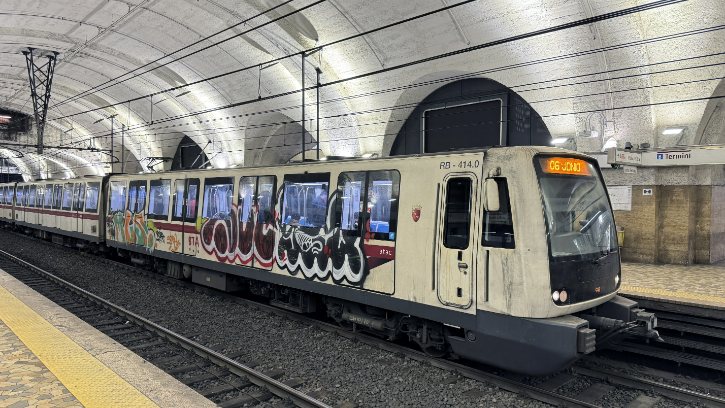
City transit follows a different logic from the trains, and the details shift from one city to the next.
a. Stamp at the Start, Not on Every Transfer
City tickets are time-based, and the clock starts when you validate.
- Stamp your paper ticket the moment you board your first bus or tram.
- Within the time window you can transfer between surface vehicles without stamping again, since the first validation covers you until it expires.
- For the metro, always insert or scan at the turnstile.
- With contactless Tap and Go, tap on every boarding and transfer so the system charges the best fare.
b. The Spot Fines That Catch Honest Travelers
A ticket you bought but never validated still counts as traveling for free.
- Inspectors (verificatori) board in plain clothes or uniform, often blocking the exits.
- In Rome, ATAC fines €104.90, reduced to €54.90 plus the €1.50 fare within 5 business days, then collection after 60 days.
- They scan the chip or QR code and see the exact minute and vehicle of validation, so there’s no talking your way out.
c. How the Big Cities Differ
Each city runs its own system, so the same habits don’t carry over.
- Rome (ATAC): BIT ticket, 100 minutes, unlimited bus and tram transfers but only one metro entry.
- Milan (ATM): STIBM Mi1 to Mi3, 90 minutes, unlimited transfers across metro, tram, and bus in central zones.
- Florence (Autolinee Toscane): urban ticket, 90 minutes, valid on city buses and the Sirio tram.
- Venice (ACTV): vaporetto ticket, 75 minutes, tapped at the pillar validator, excludes Alilaguna.
- Naples (ANM): urban and integrated tickets, 90 to 100 minutes, integrated allows metro, funicular, and bus transfers.
d. The Rome Metro Trap to Remember
Rome’s rule surprises more visitors than any other. Your €1.50 BIT gives unlimited surface transfers for 100 minutes, but only one metro entry. Exit the metro to the street and try to re-enter within that same window, and the gate rejects your ticket. Plan your underground legs so you don’t need to re-enter, or simply buy a fresh ticket when you do.
e. Where to Buy and How to Stay Covered
Buying ahead keeps you moving, since drivers rarely sell tickets.
- Buy from station machines, metro desks, tobacconists (black or blue “T” sign), or newsstands.
- If a validator is broken, try another one onboard, and if none works, keep your ticket and tell the driver or staff.
- On contactless, each traveler needs their own card, since one card for several people triggers a fine.
- Keep your ticket or digital proof handy until you leave the system.
5. Pickpocketing and Distraction Theft Are Risks in Busy Tourist Areas
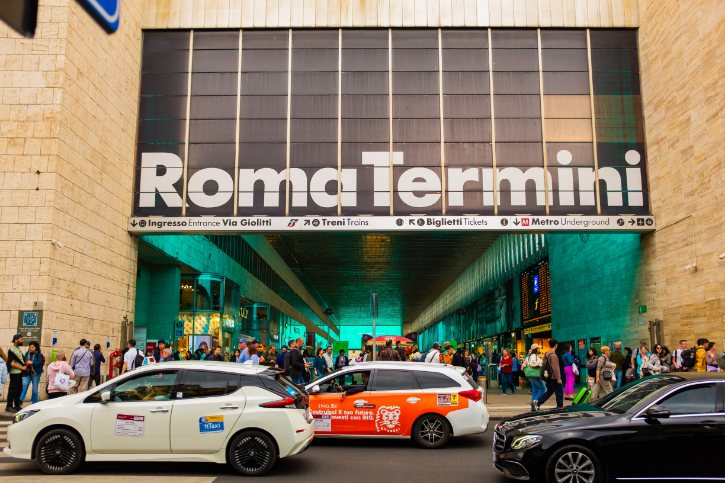
Violent crime is rare in Italy. The real nuisance is the quiet theft that thrives in crowds, and awareness is your best defense.
a. Where Crowds Turn Into Opportunity
Pickpocketing (borseggio) and bag-snatching concentrate in the busiest, most distracting places.
- Major stations such as Roma Termini, Milano Centrale, and Napoli Centrale.
- Busy transit like Rome’s Metro Line A and Bus 64 to the Vatican, and Milan’s Duomo and Centrale transfers.
- Famous squares, from the Colosseum and Trevi Fountain to Ponte Vecchio, Piazza del Duomo, and Piazza San Marco.
- This isn’t about any area being unsafe. Crowds simply attract opportunists, so you raise your guard a notch in packed places.
b. The Distraction Tricks You’ll Actually See
Most thefts pull your attention away for a couple of seconds.
- The doorway jam: someone stops short as everyone boards while a partner lifts your wallet from behind.
- Petition clipboards: you’re asked to sign while an accomplice reaches into your bag below the board.
- The spill trick: a drink is “accidentally” spilled on you, then dabbed off while your pockets are picked.
- Bracelets and flowers: a tout ties a string on your wrist or hands you flowers, then demands money.
- Fake police: imposters ask to “check” your cash or cards, but real police never inspect money on the street.
c. Simple Habits That Make You a Hard Target
Small adjustments quietly take you off a thief’s radar.
- Keep passport, main cards, and cash in inside zipped pockets, a neck pouch, or a money belt, never a back pocket or outer bag pocket.
- On crowded metros and buses, wear your backpack on your front or set it between your feet.
- Don’t leave your phone on the table at cafés, and ignore strangers “helping” at ticket machines.
d. The Steps to Take If Something Disappears
If the worst happens, act quickly and in order.
- Block your cards immediately via your banking app or an emergency hotline.
- Report the theft to the police (Polizia di Stato, Carabinieri, or railway police Polfer) for the stamped report (verbale di denuncia), needed for insurance and emergency documents.
- Contact your embassy or consulate if your passport is gone, with the report, photos, and document copies.
- For any emergency, dial 112, and keep secure copies of key documents before you travel.
6. Visiting Major Attractions Requires More Planning Than Just Buying a Ticket
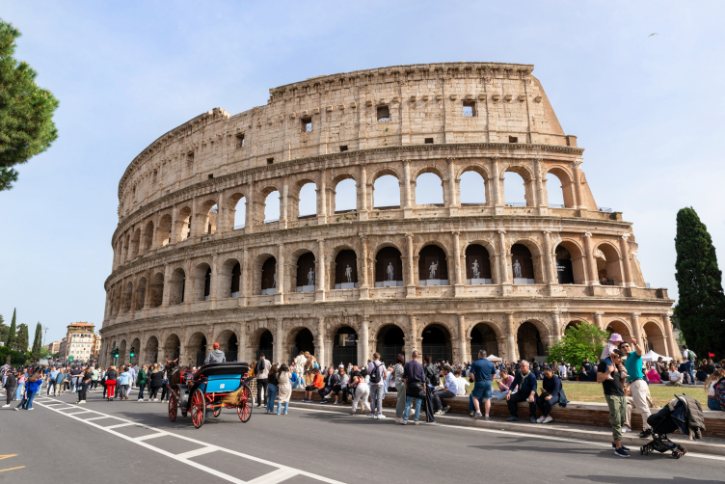
Italy’s headline sights now run on reservations, and a little planning is the difference between walking in and watching the gate turn you away.
a. Timed Entry Has Replaced Just Showing Up
Many top sites now use timed entry, and walk-up tickets often sell out in busy seasons.
- Compulsory timed entry ties your ticket to an exact date and time, and a missed slot is usually gone with no refund.
- Recommended booking means you can walk up, but queues can run two to four hours.
- Skip-the-line tickets only skip the ticket queue, never the mandatory security checks.
b. What Rome Expects Before You Arrive
Rome’s biggest sites are strict about names and timing.
- The Colosseum, Roman Forum, and Palatine Hill use named tickets at ticketing.colosseo.it, with the name matched to your ID at the gate.
- The standard ticket covers all three, while the Arena Floor or Underground needs a separate Full Experience ticket.
- Vatican Museums and Sistine Chapel tickets open 60 days ahead at museivaticani.va.
- St. Peter’s Basilica entry is free with no reservation, but the security line often runs 30 minutes or more, and well over an hour in peak season, while the dome (cupola) needs a paid ticket, on-site or online.
c. Florence, Venice, and Milan at a Glance
Each city has its own quirks, and knowing them saves hours.
- Florence: the cathedral nave is free, but Brunelleschi’s Dome needs the Brunelleschi Pass with a fixed slot. Book Uffizi and Accademia through the official B-ticket platform (b-ticket.com), where you get a digital ticket to scan at the entrance, and timed slots sell out, so reserve ahead.
- Venice: St. Mark’s Basilica now charges €10 for basic entry, with a named ticket booked online in advance, plus separate tickets for the Pala d’Oro and museum, and all bags banned inside (leave them at the free deposit next door).
- Venice continued: Doge’s Palace runs under the city museums pass covering the Correr, Archaeological Museum, and Marciana Library, while Secret Itineraries is booked separately.
- Milan: The Last Supper admits only 35 visitors every 15 minutes, releases quarterly on Vivaticket, and needs passport checks and a 30-minute early check-in. Milan Cathedral charges for interior and rooftop, and sunset terrace slots need booking.
d. The Security Rules That Catch People Out
Security here runs much like an airport, so travel light.
- Leave behind large backpacks, pointed umbrellas, glass bottles, and tripods, and note most sites can’t store suitcases.
- No flash photography, laser pointers, or selfie sticks inside historic interiors.
- Arriving even 10 to 15 minutes late can void your ticket with no rebooking.
- Discounted EU youth tickets (the €2 Colosseum fare for ages 18 to 25) apply only to EU citizens, so others who book them can be fined the difference or refused.
e. Booking Smart and Avoiding Fake Tickets
A few habits protect your money and your time.
- Book through official institutional sites to avoid markups and counterfeits.
- With a third-party package, confirm it includes real guided entry, not just a ticket plus a generic audio app.
- Check exactly what your ticket covers, and recheck conditions close to your visit date.
7. Dress Codes at Churches and Religious Sites Can Prevent Entry
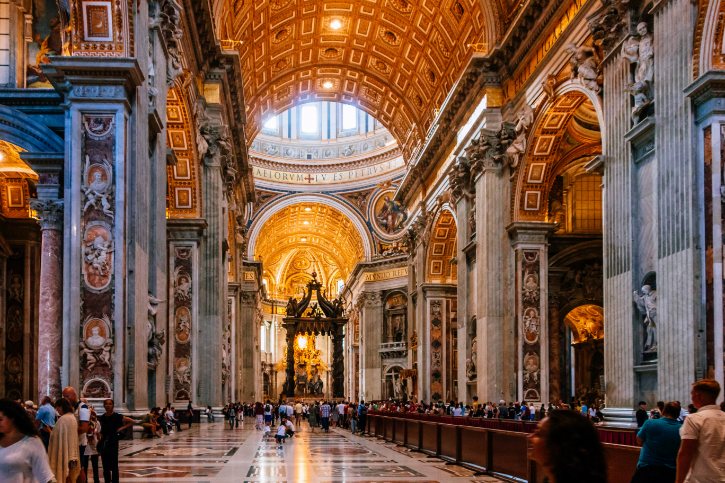
Italy’s great churches are living places of worship, and they enforce a dress code right at the door, ticket or no ticket.
a. The One Rule That Applies Everywhere
The baseline is simple and applies to everyone: shoulders and knees must be covered.
- No tank tops, halter tops, spaghetti straps, or sleeveless shirts.
- No mini-skirts, short dresses, or athletic shorts above the knee, so choose trousers, jeans, capris, or longer skirts.
- Men should remove caps and hats, and sheer fabric does not meet the rule.
- Turned away for clothing, a paid ticket won’t save you, so dress for it from the start.
b. How the Famous Churches Enforce It
The landmark basilicas apply the rule closely.
- In Rome and Vatican City, St. Peter’s and the Sistine Chapel are strictest, and basilicas like Santa Maria Maggiore and San Giovanni in Laterano have guards.
- In Florence, the Cathedral, Baptistery, and Santa Croce reject running shorts, backless dresses, and thin-strap wear.
- In Milan, the code covers the cathedral and rooftop terraces, with vending machines selling cheap cover-ups outside.
- In Venice, St. Mark’s bans sleeveless tops, shorts, low-cut clothing, and bulky bags inside.
c. The Single Item That Solves Everything
One light layer handles nearly every situation.
- Carry a lightweight scarf or pashmina, draped over shoulders or tied at the waist to cover knees.
- Choose linen trousers, midi skirts, or breathable cotton shirts to stay cool and compliant.
- Footwear is rarely restricted, though some sites discourage flip-flops on steep dome and tower stairs.
d. Big Landmarks vs. Quiet Parish Churches
Enforcement varies, so read the room wherever you go. The big tourist churches have professional security and apply the rules without exception, while smaller parish churches may have no guard at all, just a sign, though a priest or local may still ask an underdressed visitor to leave.
The same rules often extend to crypts, excavations, and attached museums, so dress for the whole visit, not only the main nave.
8. Some Medications Require Special Documentation Before Entering Italy
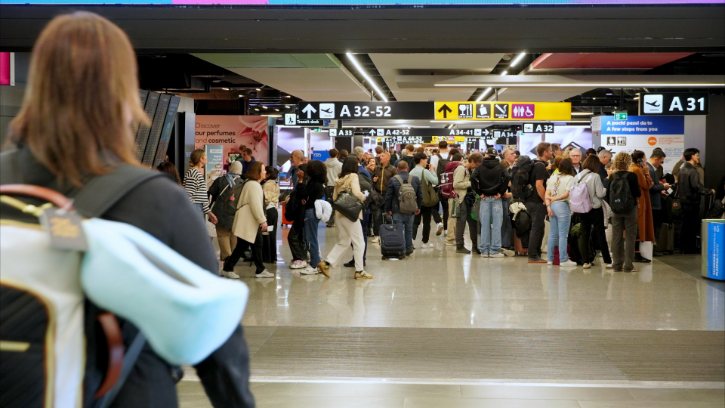
Handle this one with care, and if you take regular medication, confirm your exact situation with your doctor and the relevant authorities before you fly.
a. Carry Proof That Your Medicine Is Legal
If you bring prescription medicine for personal use, carry clear proof it was legally prescribed.
- Keep medicines in their original packaging, labeled to match your passport name.
- Carry a prescription or medical certificate in Italian or English, with your name, date of birth, and address.
- It should also name the prescribing doctor and license number, the active ingredient and brand, the form, strength, daily dose, treatment length, and medical need.
- For standard, non-controlled medicines, keep the amount in line with your trip, generally within a 30-day supply.
b. The Medicines That Need Extra Paperwork
Some medicines fall under Italy’s narcotics and psychotropics rules and need more than a pharmacy label.
- Commonly controlled: strong opioid painkillers, certain ADHD stimulants, strong sleep medicines and barbiturates, some benzodiazepines, and medical cannabis with THC.
- Carrying these without the right documents can mean confiscation, fines, or serious legal trouble.
- Classifications are specific, so check your exact medicine rather than assuming every painkiller or sleep aid is restricted.
c. Why Where You Live Changes the Rules
The right paperwork depends on where you are traveling from.
- From a Schengen country: the standardized Article 75 Schengen Certificate from your health authority, up to a 30-day supply, one per controlled medicine.
- From outside Schengen (US, UK, Canada, Australia): Italian Ministry of Health guidance, an official medical declaration plus your prescription, endorsed by your home authority, up to 30 days.
- Being in the EU is not the same as being in the Schengen Area, so check which rule applies.
d. Everyday Pills That Italy Treats Differently
Some medicines sold freely elsewhere are stricter here.
- Low-dose codeine with paracetamol is prescription-only in Italy and monitored as a narcotic.
- High-dose pseudoephedrine decongestants are restricted and need medical oversight.
- Melatonin above 1 mg per unit is treated as a medicine, not a supplement.
- Medical cannabis needs strict authorization, and unauthorized import is a criminal matter.
e. Packing Your Supply the Safe Way
Plan your supply so you never run short.
- Pack enough for your whole trip in your carry-on, plus a small legal buffer.
- Keep paper and digital copies of all certificates.
- Italian pharmacies can’t fill non-EU prescriptions, so if you run out you’d need an Italian doctor for a local one.
- For refrigerated, injectable, or time-sensitive medicines, confirm handling in advance, and never change or stop them without professional advice.
9. Everyday Medicines Are Not Usually Sold in Italian Supermarkets
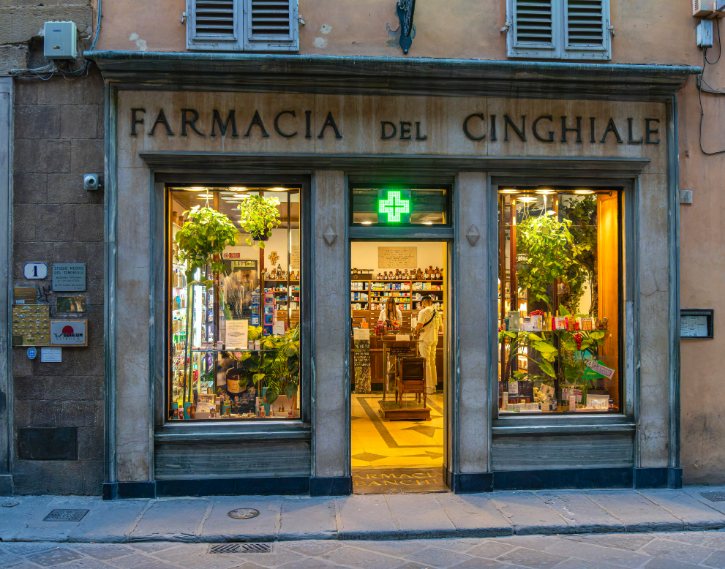
If you’re used to grabbing painkillers off a supermarket shelf, Italy works differently, and knowing where to look saves you a frustrating search.
a. Two Kinds of Shops You Need to Know
Medicine here is sold by trained staff, not off a grocery aisle.
- Farmacia (full pharmacy): lit green cross, licensed pharmacist, sells everything including prescription drugs.
- Parafarmacia (drugstore): blue cross, also pharmacist-staffed, but no prescription drugs.
- Non-prescription medicines split into OTC items you pick yourself and SOP items the pharmacist must hand you.
b. Why the Supermarket Shelf Comes Up Short
Ordinary supermarket aisles can’t stock real medicines.
- A supermarket can sell non-prescription medicines only through a separate health corner with its own space and a pharmacist.
- Regular shelves carry supplements, herbal teas, plain lozenges, and bandages, not actual medicines.
- Everyday products like paracetamol (Tachipirina), ibuprofen (Moment, Spididol), or hydrocortisone cream count as medicines, sold only at a farmacia, parafarmacia, or pharmacy corner.
c. Finding a Pharmacy, Day or Night
The good news is that pharmacies are easy to find across Italy.
- Roughly one pharmacy per 3,300 residents, so there’s almost always one nearby.
- Look for the green cross, with hours around 08:30 to 12:30 and 15:30 to 19:30, Monday to Saturday.
- Outside those hours, a duty pharmacy (farmacia di turno) stays open, and every closed pharmacy posts the nearest ones.
d. The Travel Kit Worth Packing From Home
A small kit saves you from hunting for a pharmacy or puzzling over brand names.
- Pain and fever: paracetamol
- Pain and inflammation: ibuprofen
- Diarrhea: loperamide
- Indigestion and heartburn: an antacid such as Riopan.
- Motion sickness: dimenhydrinate
- Allergies: cetirizine or loratadine
- Cuts and blisters: hydrocolloid bandages and antiseptic
- Keep everything in original packaging, pack sensible quantities, and don’t self-dose beyond the label.
10. Restaurant Bills May Include Extra Charges Tourists Should Know About
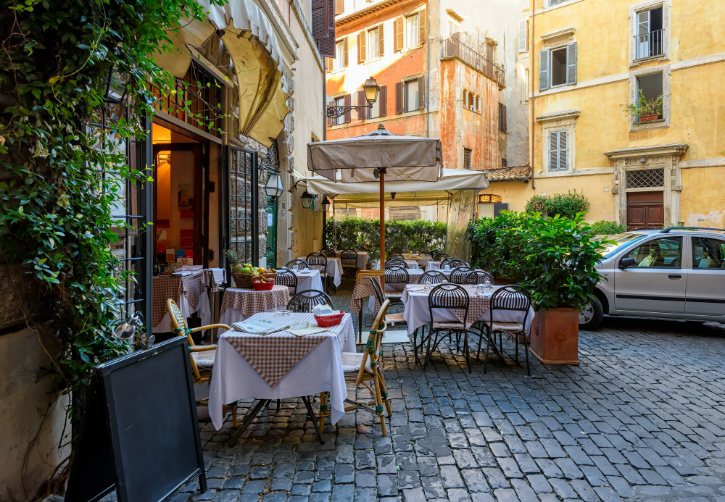
Dining in Italy is a joy, and the bill holds no nasty surprises once you understand the handful of charges that are simply part of the culture.
a. Coperto, the Cover Charge Explained
The coperto is a long-standing tradition, a small per-person charge for the table setting and basic bread service.
- Usually €1.50 to €4.00 per person, and legal and normal as long as it’s printed on the menu.
- In Lazio, which includes Rome, restaurants can’t list a “coperto”, so they bill bread or table service instead, if shown on the menu.
- Glance at the top or bottom of the menu, where it’s usually noted.
b. Servizio and What It Means for Tipping
The servizio is a separate labor charge, not the coperto.
- Usually 10% to 15%, often for larger groups or in tourist areas, and must be on the menu before you order.
- “Servizio incluso” means service is already in the prices.
- If a servizio is charged, no extra tip is expected.
c. Bread and Water Are Rarely Free
A couple of items catch visitors off guard.
- Bread is often part of the coperto, but in Rome and tourist spots it may be a separate €1 to €3 line. If a basket arrives unrequested and billed, decline it and ask for it removed.
- Water is usually bottled, still (naturale or liscia) or sparkling (frizzante or gassata), at about €2 to €4.
- Tap water (acqua del rubinetto) is safe, though asking for a free carafe is uncommon.
d. Counter Prices vs. Table Prices
One café habit can double the price of the same coffee.
- Standing at the counter (al banco) is cheaper, often €1.20 to €1.50 for an espresso.
- Sitting at a table (al tavolo) costs more, sometimes €2.50 to €6.00 for the same drink.
- Cafés must display a dual price list, so you can check before you choose.
e. Checking the Bill Before You Pay
A quick look at the receipt keeps everything clear. Review the itemized receipt (scontrino fiscale) before paying, and if a charge looks wrong or wasn’t disclosed, politely ask the staff to explain it. Tipping beyond any servizio is entirely optional, so rounding up by a euro or two is a kind gesture rather than an obligation.
Learn these habits once, keep a scarf and a validated ticket in your bag, and confirm a price before you commit, and you’ll move through Italy with the ease of someone who has been coming for years. Enjoy every moment of it.