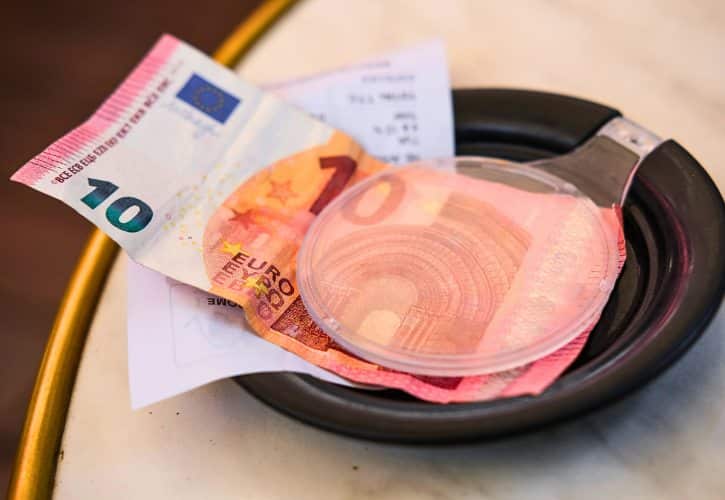
Tipping in France can feel confusing, especially if you come from a country where tipping is expected after every transaction.
The good news is that in France, service is usually already included in the bill, so you do not need to add a big tip just to feel polite.
Still, there are moments when leaving a little something is appreciated, and knowing the difference helps.
This guide walks you through tipping at restaurants, cafés, bars, taxis, hotels, tours, and card payment situations. 😊
1. Understand the Most Important Rule: Tipping Is Not Required in France
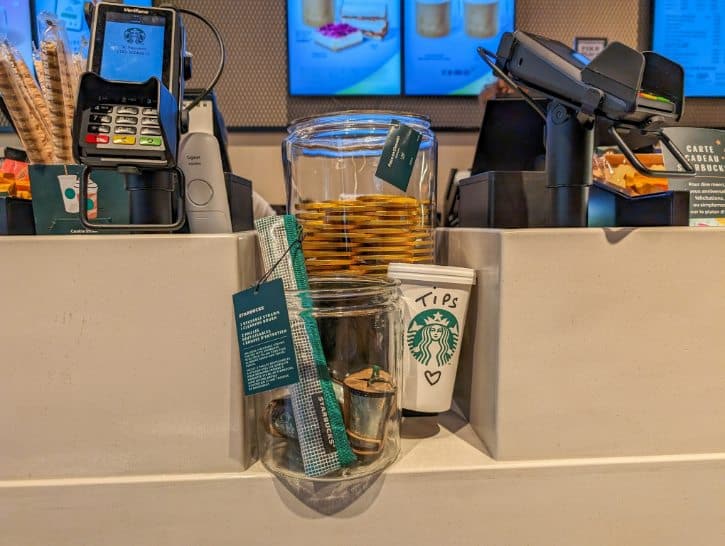
Tipping in France is optional, not mandatory. You should not feel pressured to tip the way you might back home in the U.S. or other strong tipping cultures.
In most restaurants and cafés, service is already included in the price you see on the menu. This is what the term “service compris” means, which translates simply to “service included”.
Because of this system, staff in France earn a stable wage and do not depend on tips to make a living. A large extra tip is not expected, and leaving nothing is not considered rude.
Key takeaway: Tipping is appreciated for good service, but you are not being rude if you do not leave a big tip in France.
2. Know What “Service Compris” Means on the Bill
The phrase “service compris” simply means that service is built into the menu prices. You will often see it printed on menus, restaurant bills, café receipts, or near the bottom of the check.
This is where many tourists get confused. Some travelers see the bill, forget about “service compris”, and add another 15% or 20% out of habit. That is not necessary in France.
A few things to remember before you pay:
- Always check the bill first to see if service is listed.
- If service is already included, you do not need to add a percentage on top.
- A small amount of extra change is more than enough if you want to show appreciation.
- You may also see “TVA” on the receipt. This is the value added tax, not a service charge.
Key takeaway: If you see “service compris”, the service is already paid for. Anything extra you leave is a bonus, not an obligation.
3. How Much to Tip at Restaurants in France
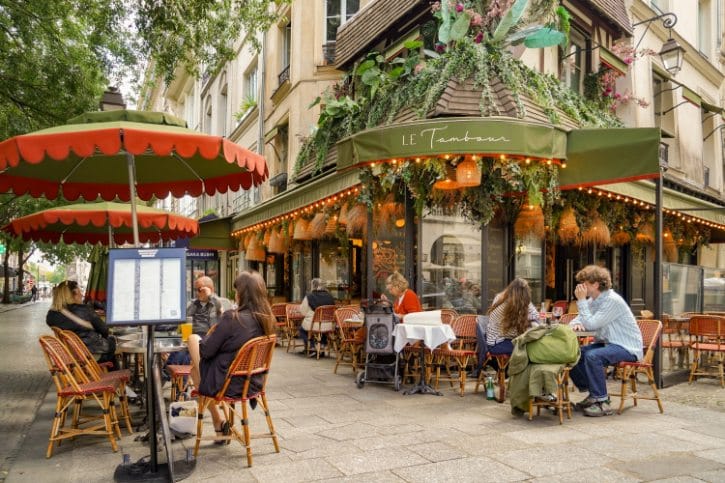
In regular French restaurants, you can leave nothing, round up the bill, or leave a small amount in cash. There is no strict percentage you need to calculate every time.
Here are some practical examples you can use:
- Coffee or a small snack: Rounding up or leaving small coins is enough.
- Casual meal or bistro: €1 to €3 in cash is plenty if service was good.
- Mid-range restaurant: Around 5% of the total is considered generous.
- Fine dining or special occasion meal: 5% to 10% is a thoughtful gesture for excellent service.
Locals do not usually calculate a tip by percentage. They tend to leave small change, round up, or skip the tip entirely if service was just average.
A simple way to think about it:
- Normal service: No need to overthink it. Paying the exact amount is fine.
- Good service: Round up or leave a few euros.
- Excellent service: A small extra thank-you is a nice touch, around 5% is plenty.
Key takeaway: 10% is already a very nice tip in France, not the expected default. Most of the time, a few euros is more than enough.
4. When You Should Consider Leaving a Tip
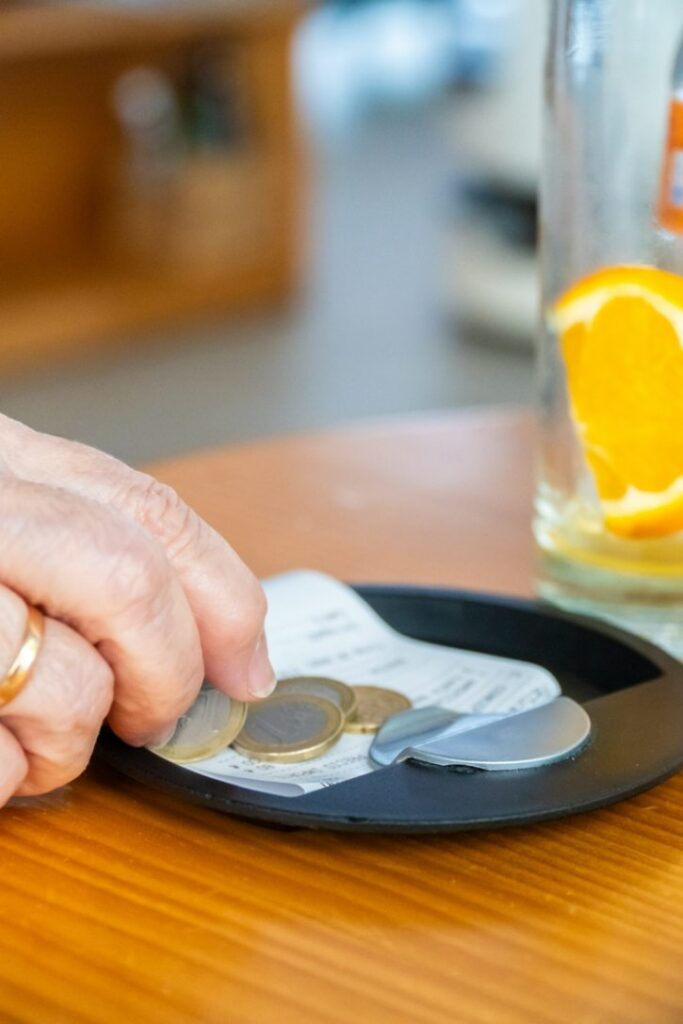
Think of tipping as a thank-you for extra care, not a required fee. A small tip feels appropriate when staff go beyond the basics.
Some situations where a tip makes sense:
- The server was especially helpful or patient.
- Staff explained the menu when you were unsure.
- They helped you navigate allergies or dietary needs.
- They gave useful wine pairings or food suggestions.
- The service was warm, attentive, and felt above the usual.
Tipping also feels more natural at nicer restaurants, special occasion meals, or any place where the staff genuinely improved your experience.
Key takeaway: Tip when you feel genuine appreciation, not because you feel pressured or embarrassed.
5. What to Do If the Card Machine Asks for a Tip
Some restaurants, cafés, and bars in tourist-heavy areas now show tipping options on the card machine when you pay. This can catch travelers off guard.
The most important thing to know is that a tip prompt on the card machine does not mean a tip is required. You can confidently choose:
- “No tip”
- “Skip”
- “€0” or a custom amount, if available
You should not feel embarrassed about declining. The staff sees this every day, and service is already included in the bill.
A few practical tips for card machine moments:
- Decide before the machine is handed over how much, if anything, you want to leave.
- If you do want to tip, cash tends to be more direct since the server receives it right away.
- Card tips can take longer to reach staff, depending on the system.
Key takeaway: Stay calm at the card machine. Skipping the tip prompt is perfectly normal in France.
6. How to Tip at Cafés and Casual Places
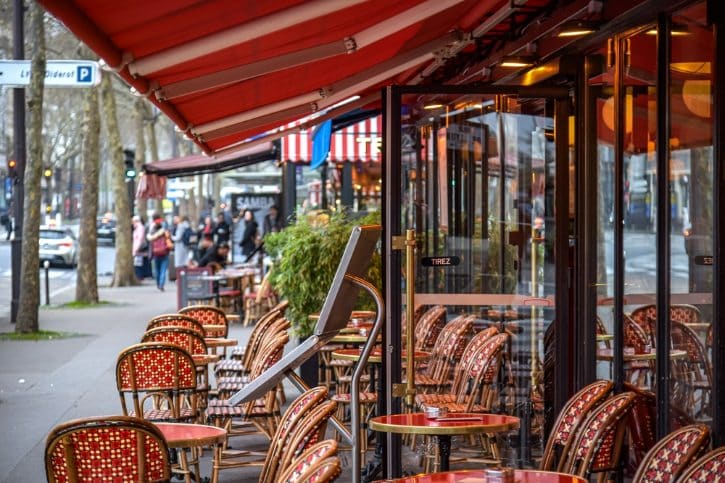
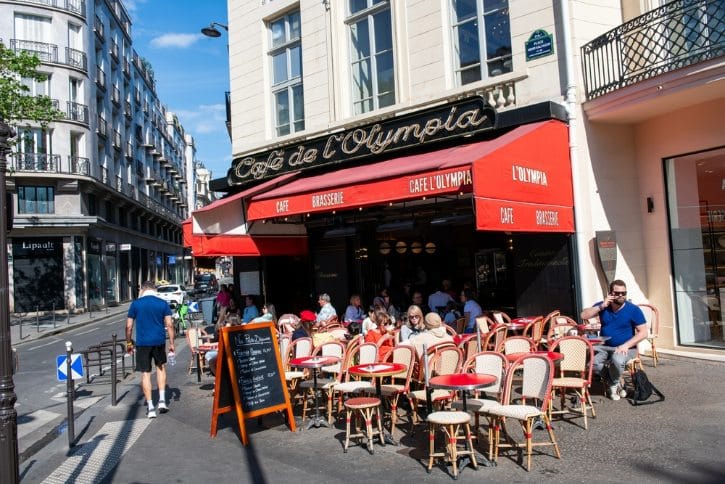
French cafés are relaxed when it comes to tipping. For coffee, drinks, pastries, or a quick lunch, leaving a few coins is more than enough if you want to tip at all.
A common move is to round up slightly. For example:
- If your coffee and croissant come to €4.60, leaving €5 is a friendly gesture.
- For a small lunch of €9.50, leaving €10 is plenty.
- If you only had a quick espresso for €2, no tip is needed.
There is also a difference between counter service and table service:
- Table service: A small tip is more fitting if the server brought your order and looked after you.
- Counter service or takeaway: No tip is expected for a quick drink or pastry to go.
Key takeaway: Small coins are perfectly fine at cafés, and no tip is also completely acceptable.
7. How to Tip for Drinks at Bars
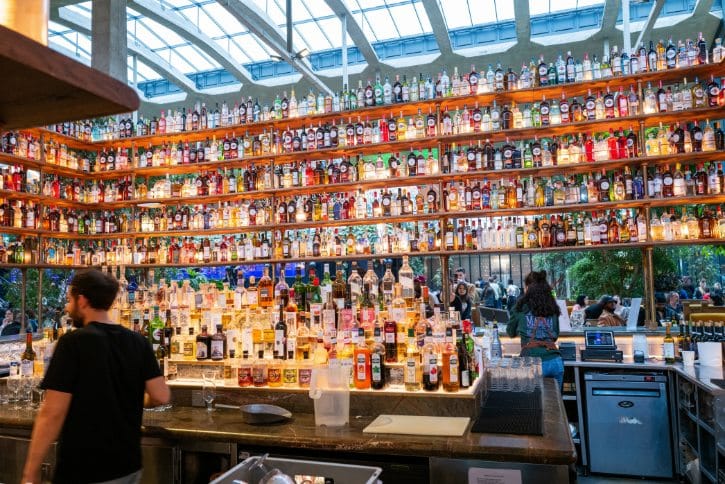
Tipping at bars in France is optional. Most locals do not leave a tip for basic drink orders.
What works well in most situations:
- One quick drink at the counter: No tip needed.
- Table service with friendly staff: €1 or €2 is a nice touch.
- Cocktail bars or hotel bars with attentive service: A little more, around €2 to €5, is appropriate for skilled or personalized service.
You do not need to add a big percentage on top of a bar tab. Modest change is the cultural norm.
Key takeaway: Skip the math at the bar. A small round-up is more than enough when you do choose to tip.
8. How to Tip Taxi Drivers and Ride Services

Tipping taxi drivers in France is optional. Many tourists simply round up to the nearest euro, and that is a perfectly acceptable approach.
Some practical examples:
- For an €18.50 fare, paying €19 or €20 is enough if the driver was helpful.
- For a €35 airport ride, rounding up or adding €1 to €3 is appropriate.
- For a short city ride under €10, rounding up to the next euro is fine.
A tip feels more appropriate when:
- The driver helped with your luggage.
- The driver was polite and drove safely.
- The driver waited patiently at a stop.
- The driver helped with directions or your hotel drop-off.
You do not need to tip heavily for a normal, straightforward ride. Before you start, it is a good idea to check the fare on the meter and confirm whether the driver accepts cards or cash.
Key takeaway: Round up if the driver was helpful, and skip the tip with no guilt if the ride was just routine.
9. How to Tip Hotel Staff in France
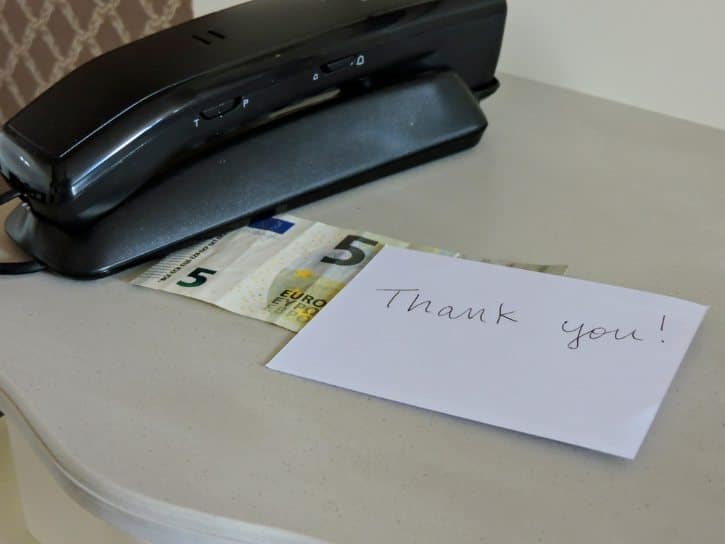
Tipping hotel staff is more common in higher-end hotels than in budget or mid-range places. The general rule is to tip selectively, only when someone has gone out of their way to help you.
Here is a simple breakdown for common hotel situations:
- Porter or bellhop: €1 to €2 per bag is appropriate.
- Housekeeping: €1 to €5 per day, especially during longer stays. Leaving it daily is better than at the end.
- Concierge: €5 to €10 for special help, such as securing a hard-to-get reservation or giving detailed local advice. For complex requests, a little more is fine.
- Room service: Check whether service is already included before adding anything extra. If not, €1 to €2 is enough.
You should not feel awkward tipping selectively. Only tip for service that genuinely stood out, and skip it for routine interactions.
Key takeaway: Tipping hotel staff is optional but appreciated when someone goes the extra mile for you.
10. How to Tip Tour Guides and Activity Guides
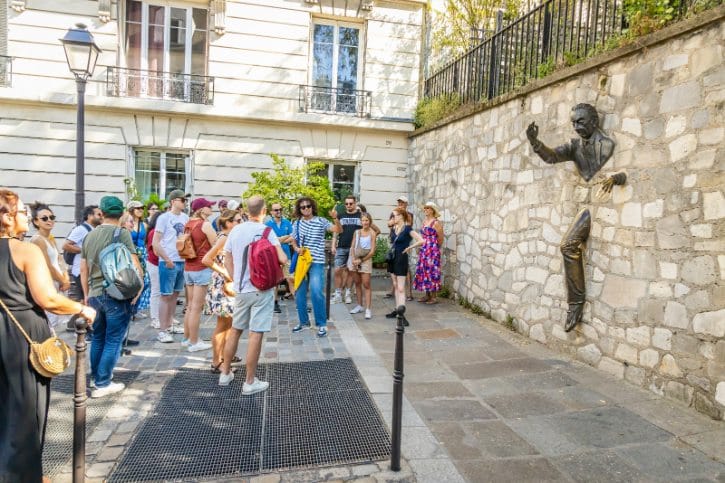
Tipping guides is more expected than tipping restaurant servers in France, especially for private tours or small group experiences. A good guide puts in real effort, and a tip is a thoughtful way to say thank you.
Here are practical ranges for different tour types:
- Free walking tour: Tipping is expected, since the guide often relies on tips as their main income. €5 to €10 per person is a fair range for a good guide.
- Paid group tour: €2 to €5 per person is a thoughtful amount.
- Private tour: €10 to €20 total for the group, or around 10% to 15% of the tour cost, is appropriate. A longer or more personalized tour may deserve a little more.
- Volunteer greeters (such as Paris Greeters): No tipping is allowed. Buying them a coffee or donating to the organization is the proper way to say thank you.
A tip feels right when the guide was:
- Knowledgeable about the area and the history.
- Engaging and easy to follow.
- Well-prepared and on time.
- Genuinely helpful with questions and recommendations.
Before booking, it is a good idea to check the tour description. Some companies include notes about tipping expectations so you know what to plan for.
If the service was poor, rushed, or unhelpful, you do not need to leave a tip.
Key takeaway: The more personal and helpful the service, the more reasonable a tip becomes. For a great guide, a small thank-you goes a long way.