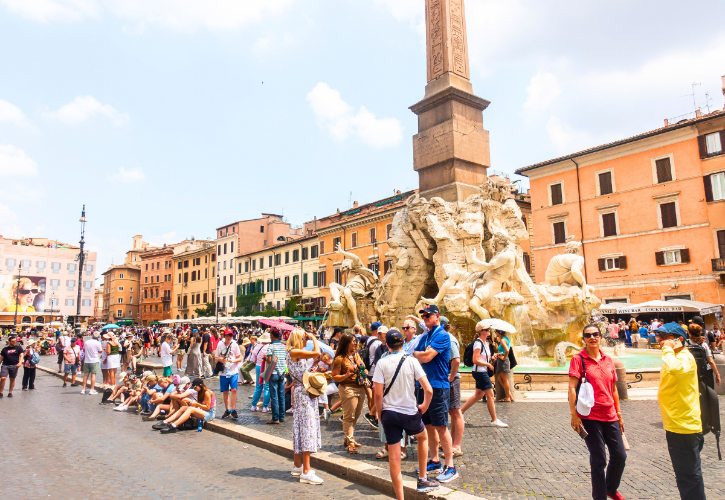
Rome can feel like one giant open-air museum, a place where you wander freely past fountains, ancient stone, and centuries of history.
But behind that easy charm sits a web of access systems, monument protection rules, and visitor policies that many travelers never see coming.
Miss them, and you could lose a ticket you already paid for, get turned away at a door, face a police check, or draw a fine you never expected. A little preparation keeps your trip smooth. 😊
1. Trevi Fountain Access Fee and Controlled Entry
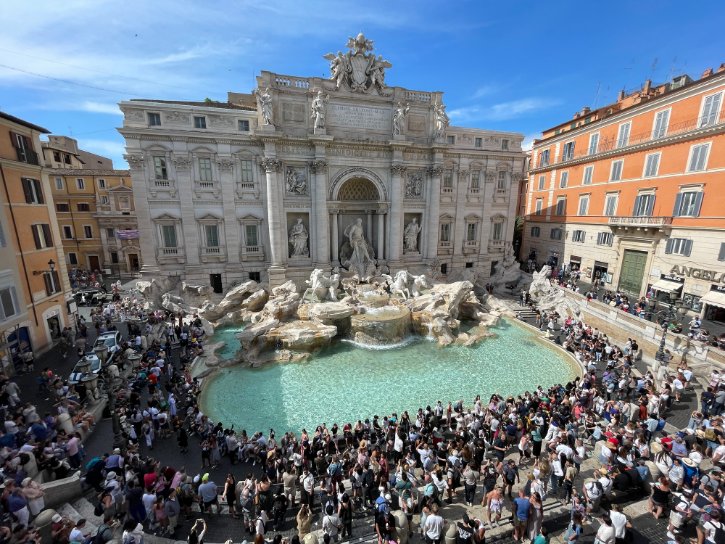
For years, standing in front of the Trevi Fountain cost nothing, and that is still true. What changed is a new, ticketed way to get right down close to the water.
a. What you actually pay for
- Viewing the fountain from the upper square in Piazza di Trevi stays free, unticketed, and open 24 hours a day.
- The fee applies only if you go down into the catino, the sunken, stepped marble area right around the main basin.
- The charge is €2 per person, and it covers that lower perimeter and nothing more.
- After the gates close for the night, you can still stand in the square and photograph the fountain for free.
So no, you do not pay simply to see the Trevi Fountain.
b. Hours you need to know
The controlled lower area runs on a set schedule that shifts by day:
- Tuesday, Wednesday, Thursday, Saturday, Sunday: 09:00 to 22:00, last entry 21:00.
- Monday and Friday: 11:30 to 22:00, last entry 21:00, opening later for fountain cleaning.
- Alternate Mondays: entry can be pushed to 14:00 during municipal coin collection.
- After 22:00: the lower gates close, and the upper square stays open for free viewing.
One thing to note: the €2 fee also applies on the first Sunday of the month, so the free-museum-Sunday habit does not carry over here.
c. Who gets in free
The charge is aimed at non-residents and visitors. Several groups enter free with the right proof:
- Residents of Roma Capitale and the Città Metropolitana di Roma, with a government photo ID.
- Children under 6.
- Disabled visitors and one companion.
- Certified tour guides.
- Active Roma MIC Card holders.
d. Buying your ticket
Here is how it works in practice:
- Book online at fontanaditrevi.roma.it or through Vivaticket.
- Online tickets are open vouchers, with no fixed arrival timeslot.
- You can also pay cash at Tourist InfoPoints and civic museums.
- At the fountain entrance on Via della Stamperia, payment is electronic card only, and cash is refused at the gate.
- Pre-purchased tickets are non-refundable and non-modifiable, so book only when you are sure.
e. What to expect on the ground
The route runs one way. You enter from Via della Stamperia and exit onto Via dei Crociferi. Stewards keep two lines, a faster lane for pre-purchased tickets and exempt cardholders, and a separate queue for on-site electronic payment. If you only want a photo from the square, you need no ticket at all.
f. Penalties inside the perimeter
Once you are down in the controlled area, eating, drinking, smoking, and sitting on the marble coping are all off limits. Break those rules and you can face a fine between €40 and €240.
Trying to enter without a valid ticket simply means you are turned away. Stepping or wading into the basin is far more serious, starting at a €450 fine, with criminal charges if you damage the stone.
2. Nominative Tickets and ID Checks at the Colosseum
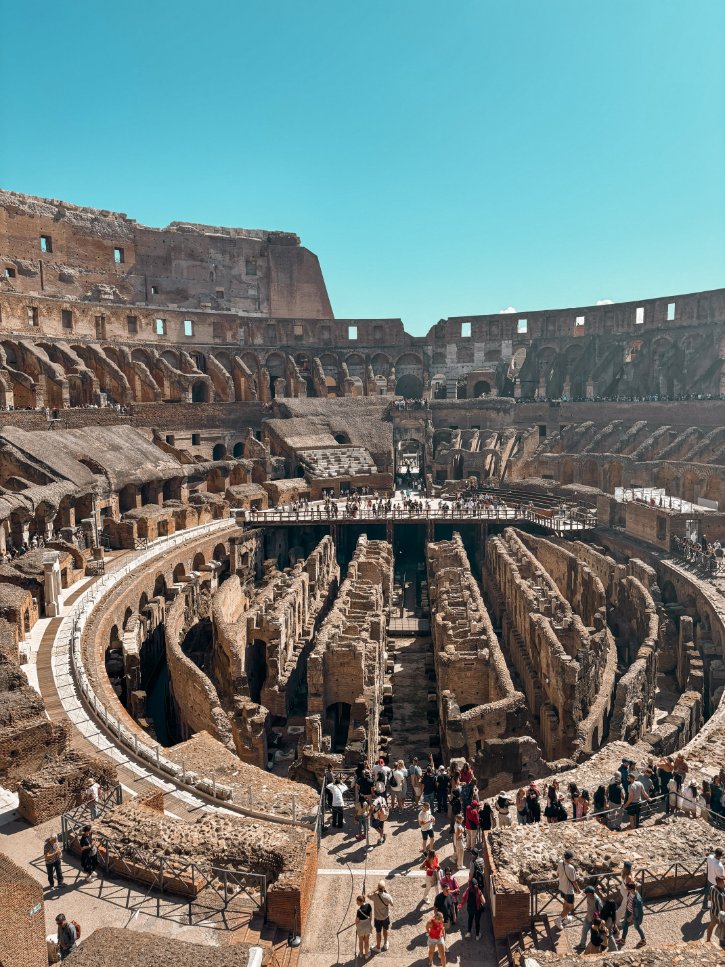
Colosseum tickets carry your name for a reason, and a recent rule change makes that connection even tighter. Getting it right before you travel saves you from being turned away at the turnstile.
a. What is old and what is new
- Nominative ticketing, meaning every ticket carries the visitor’s exact legal name, has been standard for years, brought in to stop scalpers reselling tickets.
- The newer change governs name changes on tickets, and it is the part worth your attention now.
So the name-on-ticket system is not new. What changed recently is how much you can alter that name later.
b. The new name-change rules
- You get one name change per ticket, and one only.
- Requests must be submitted by midnight, 7 days before your visit. Anything later is void.
- A change is no longer a quick self-service edit. You now have to request it through the official channel and have it approved, and it is allowed only for narrow reasons:
- A genuine typing error in a first or last name.
- A ticket-type mix-up within the same purchase, such as a reduced or free ticket wrongly assigned to a paying person in the same group.
- Serious, documented emergencies, backed by proof such as illness, bereavement, or a grounded flight.
- Requests go through the official ticketing site at ticketing.colosseo.it, and each one is reviewed individually.
c. Why these are not event tickets
These tickets are tied tightly to you as an individual:
- They cannot be freely transferred, resold, or casually reassigned between travelers.
- The rules separate a small typo from switching the ticket to an entirely different person, and only documented cases qualify.
Think of the name on the ticket as locked to a real ID, not a placeholder you can hand to a friend.
d. The ID check at the entrance
At the turnstiles, identity checks are strict. You must show your electronic ticket plus an original, physical photo ID that matches the name on the ticket, either a passport or a national identity card.
- Gate staff reject digital copies, smartphone photos, and paper photocopies.
- If the name on your ticket does not match your physical ID, entry is denied, the ticket is canceled, and there is no refund or on-site reissue.
e. What to check before you book
A few minutes of care prevents a ruined visit:
- Enter each name exactly as it appears on the ID that person will carry.
- Double-check spelling against passports or ID cards.
- For families and groups, match every ticket to the right traveler’s document.
- Remember the 7-day, one-change-only limit if you spot a mistake, and that you cannot simply edit the name yourself anymore.
- Do not assume you can swap tickets between group members later.
3. Carry Valid Original Photo Identification
You will read that Rome forces every tourist to carry a passport everywhere or face a fine. That is not how it works. The real picture has two separate parts: what attractions require at their doors, and what Italian national law requires on the street.
a. What Rome does and does not require
- Roma Capitale has no city rule forcing every tourist to carry a passport around Rome.
- ID rules come from two different places: specific attractions, like the Colosseum, and Italian national law.
Keep those two apart, and the advice suddenly makes sense.
b. What national law says for non-EU visitors
Travelers from the US, UK, Canada, Australia, and other non-EU countries must be able to show a valid passport and proof of lawful presence when a public security officer asks.
- Failing to do so without a justified reason is a criminal offense, punishable by a fine of up to €2,000 and possible arrest of up to one year.
- Italy’s highest court has held that leaving your passport in a hotel safe does not automatically count as a justified reason.
c. What national law says for EU visitors
- EU, EEA, and Swiss nationals must state their true identity details to officers on duty.
- They are not required to carry a passport if they hold a valid national identity card.
- Refusing to give your identity can bring detention or a fine up to €206.
d. If you cannot prove who you are
If officers stop you during a public safety check and you cannot confirm your identity on the spot, they can take you to a station for identification. That hold can last up to 12 hours, or up to 24 if cross-border verification is needed. Carrying your original ID keeps a routine check routine.
e. Sensible, honest advice
Rather than “carry your passport everywhere”, here is the accurate version:
- Attractions that require original ID, like the Colosseum, need the physical original matching your ticket.
- On the street, carry what your nationality requires: a passport for non-EU travelers, a national ID card for EU travelers who have one.
- Keep an encrypted digital backup for loss or theft. It helps with replacement but carries no legal weight as ID and will not replace an original where the original is required.
4. No Sitting on the Spanish Steps
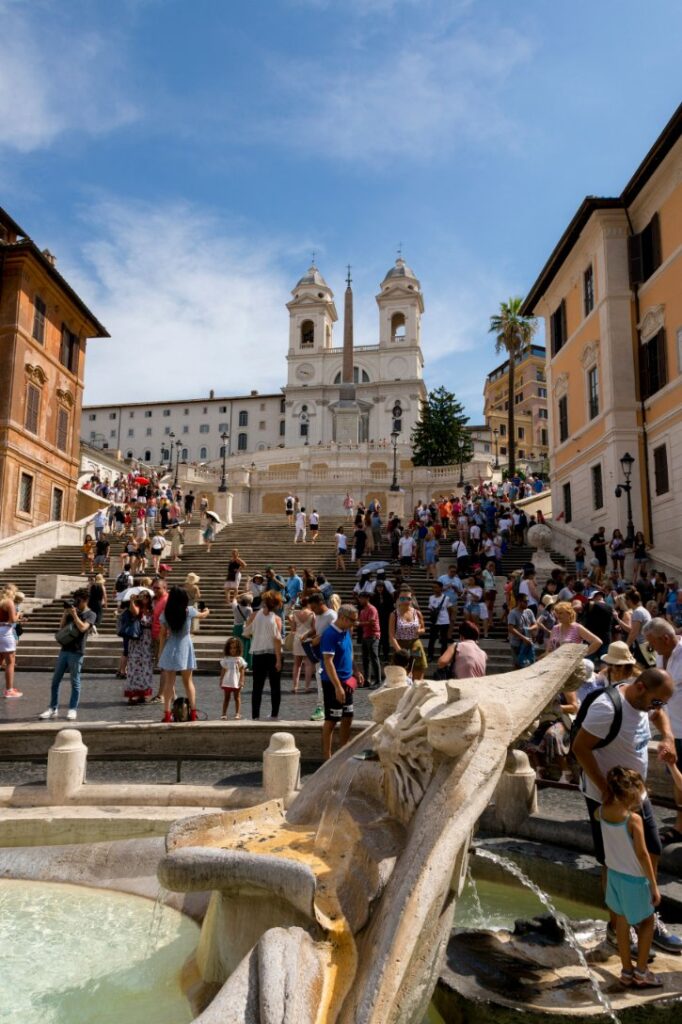
Those wide travertine steps look like the perfect place to sit and watch the world go by. They are not, at least not legally. And despite what some posts suggest, this is not a new rule.
a. A longstanding rule
- The ban comes from Rome’s Urban Police Regulation and has been in force for years.
- An administrative court reaffirmed it, agreeing that people sitting on the historic staircase block movement and spoil the view of the monument.
So this is settled, active policy, not a recent surprise.
b. What you can and cannot do
On the Scalinata di Trinità dei Monti:
- Allowed: walking up and down, and pausing briefly while standing.
- Not allowed: sitting, lounging, sprawling, lying down, or picnicking on the steps.
The simple line to remember: keep moving or stay on your feet.
c. Why it is so often misunderstood
The Spanish Steps are not a one-off case. They fall under a wider city rule protecting all historic, artistic, and monumental staircases, from the Aracoeli stairs to the Capitoline Cordonata. The Spanish Steps just get the most attention and the most active patrols.
d. Who enforces it
- The Polizia Locale di Roma Capitale watches the staircase throughout the day, often blowing whistles to wave seated visitors up.
- Comply quickly and you will usually move on with no penalty.
- Refuse to stand, act up, or eat while seated, and you can be issued a citation.
- Persistent trouble can escalate to a short-term urban exclusion order.
The reduced fine is set at €250 under the city’s sanctions schedule.
e. Where to rest instead
Plenty of nearby spots welcome a proper sit-down:
- The Pincio terrace benches in Villa Borghese, reached by the pedestrian ramps or, when it is running, the elevator inside the Spagna Metro Station, which brings you up near the top of the steps.
- Licensed café seating around Piazza di Spagna.
5. No Wading, Bathing or Entering Historic Fountains
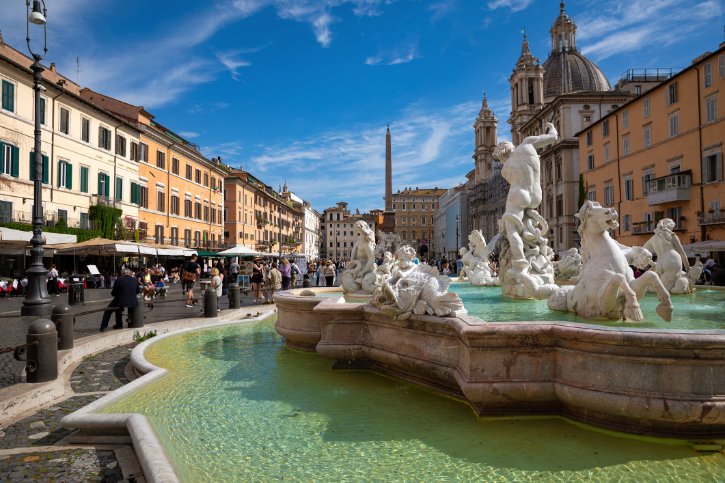
Rome’s grand fountains are working sculptures, and the rules around them protect fragile stone and clean water. One beloved tradition even gets a special pass.
a. What the rule bans
On the city’s historic fountains you may not:
- Fully or partially immerse yourself, wade, or dangle your feet in the water.
- Bathe or wash.
- Wash clothing or animals.
- Climb on the rims or ledges.
- Pour liquids into the basin.
The fine for entering or wading into a historic fountain starts at €450.
b. The coin toss is allowed
Here is the part travelers love: the traditional coin toss over your shoulder into certain historic-center fountains is specifically carved out of the ban. Tossing a coin into the Trevi Fountain stays part of the custom, not a violation. One catch: only Roma Capitale’s designated charity partner may collect those coins, so fishing them out yourself is prohibited.
c. Historic fountains versus nasoni
Rome has different water features, and the rules differ:
- Historic and monumental fountains, like Trevi, the Four Rivers fountain in Piazza Navona, and the Barcaccia, carry the strict protection.
- Nasoni, the roughly 2,500 cast-iron street drinking fountains, are meant for drinking and filling bottles.
d. Using the nasoni correctly
At a nasone you may drink from the small top jet and fill bottles, flasks, or cups. You may not:
- Put your mouth directly on the spout.
- Wash clothes or pets.
- Attach a hose.
Misuse can bring a fine of €100 to €250. To drink the local way, cover the bottom opening of the spout with a finger, and the water arcs up through a small hole on top.
e. When damage becomes a crime
Ordinary misuse brings municipal fines. Chipping or fracturing a fountain is far more serious. It can trigger criminal prosecution under Italy’s cultural-heritage and anti-vandalism laws, with fines reaching into the tens of thousands of euros and full liability for restoration.
f. Staying cool the right way
On a hot day, use the nasoni as intended: drink, refill your bottle, and cool your hands. Just keep the historic basins for looking, not for cooling off.
6. Restrictions on Eating and Drinking Near Historic Monuments

You may have heard Rome banned eating near its monuments. The truth is much narrower. There is no citywide ban on eating in public. What the city targets is how and where you sit while you do it.
a. What the rule really targets
Under permanent city law, you are free to eat and drink in Rome’s streets and squares. The rule focuses on an offense the regulation calls bivacco, which comes down to using monuments as furniture. Prohibited behavior includes:
- Sitting on fountain rims, ancient plinths, or church steps while eating or drinking.
- Sprawling across doorways, thresholds, or pedestrian lanes with your food in a way that blocks people.
Both can bring a €250 fine.
b. Everyday behavior that is fine
To make the line clear:
- Allowed: walking through Piazza Navona with a gelato, or strolling Via del Corso with pizza.
- Allowed: eating at a licensed restaurant or café’s outdoor tables.
- Allowed: picnicking on the grass in a park like Villa Borghese.
- Allowed: pausing on a designated public bench with food or a non-alcoholic drink.
- Not allowed: eating while seated on a monument, fountain rim, or monumental steps.
c. About that old “sandwich ban”
The famous “sandwich ban” you find in older articles came from a temporary emergency order that expired long ago. It is not the basis for today’s rules. Judge your plans by the current permanent regulation, not by a decade-old headline.
d. What officers actually do
Officers will usually ask anyone eating while seated on a cultural asset to pack up and stand.
- Comply, and you typically move on without a fine.
- Persist after a warning, or leave behind grease and litter, and the €250 fine applies, sometimes alongside a separate littering penalty.
e. Where to eat without worry
When you want to sit and eat:
- Choose café or restaurant outdoor seating.
- Head to a park or picnic area.
- Use an ordinary public bench or open public space where sitting and eating are fine.
Save the fountain steps and monument bases for photos.
7. Modest Dress Required in Churches

Rome’s churches and sacred sites expect modest dress, but this is not a single city law. It is a set of policies from religious authorities, and they can differ from one door to the next. One simple habit covers almost all of them.
a. Who sets the rules
Dress codes at sacred sites come from religious bodies, not Roma Capitale:
- The Holy See sets the rules for St. Peter’s Basilica and the Vatican Museums.
- The Diocese of Rome oversees the consecrated churches and basilicas across the city.
b. Vatican Museums and Sistine Chapel
The Vatican Museums turn away clothing they consider unsuitable, including:
- Sleeveless tops.
- Low-cut clothing.
- Shorts or skirts above the knee.
- Visible offensive tattoos.
Arrive dressed against the code and you can be stopped at the turnstile, with your ticket voided and no refund.
c. St. Peter’s Basilica
St. Peter’s sets its own standard, separate from the Museums. It restricts:
- Bare shoulders and plunging necklines.
- Shorts or skirts above the knee.
- Bare midriffs.
- Hats, which men are expected to remove.
Here the consequence is denial of entry at the security checkpoint, with no fine.
d. Churches inside Rome
Consecrated churches keep their own expectations. The Pantheon, which is also the church of Santa Maria ad Martyres and now charges cultural visitors, states plainly that it is a church and asks for covered shoulders and knees. Turn up underdressed and security can bar you, with your paid ticket forfeited.
Major basilicas like St. John Lateran and Santa Maria Maggiore hold similar standards. Not every small church posts identical wording, so treat covered shoulders and knees as the safe baseline.
e. The rule of thumb and the consequences
For both men and women, covered shoulders and covered knees works across Rome’s sacred sites, and men should remove hats indoors. Because these are religious policies, you will not get a city fine. Instead you will face:
- A request to cover up, or
- Refusal of entry, and at ticketed sites, a forfeited ticket.
f. Dressing for hot days
In summer, pack a light layer you can throw on at the door:
- A linen shawl or pashmina for your shoulders.
- A light overshirt or scarf to tie around your waist and cover your knees.
Treat these as practical fixes rather than strict requirements, unless a specific site asks for them.
8. Nighttime Street Alcohol Restrictions
The line you will hear is “no alcohol after 10 PM in Rome”. That is misleading on both counts. The rules apply in mapped nightlife zones, not the whole city, and several time limits overlap. Once you see how they stack, they are easy to follow.
a. Where the rules apply
- The restrictions cover 24 specific zones, not all of Rome.
- These are the busy nightlife and historic-center districts.
- Confirmed areas include Campo de’ Fiori, Piazza Navona, the Pantheon area, Trastevere, Monti, Celio, Esquilino, and Termini, plus San Lorenzo, Piazza Bologna, Pigneto, Marranella, Ostiense, Garbatella, Ponte Milvio, and Tor di Quinto.
b. The overlapping timetable
Several separate rules apply at different hours in these zones:
- 22:00 to 07:00: shops and vendors cannot sell alcohol to take away.
- 22:00 to 07:00: you cannot drink from glass containers in streets, squares, or parks.
- 23:00 to 07:00: you cannot drink alcohol on public streets in any container, glass, can, plastic, or paper.
- 03:00 to 07:00: bars, clubs, and restaurants must stop serving alcohol entirely.
Between 22:00 and 23:00, a can or plastic cup on the street is still fine, but glass is not, and shops cannot sell you a bottle to go.
c. The distinctions that matter
The key is where and how you are drinking:
- Inside a licensed bar or restaurant, or at its outdoor tables: you may drink until 03:00.
- Carrying an open drink onto the public sidewalk: now it counts as street drinking and falls under the ban.
- Buying takeaway alcohol after 22:00: not allowed in these zones.
Do not assume every kind of drink is banned at the same hour. The venue, the container, and the clock all matter.
d. Knowing if you are in a zone
The exact boundaries live in official maps, street by street. If you are in one of the well-known nightlife districts above after 22:00, assume the rules apply and drink at licensed tables rather than on the street.
e. Temporary rules during big events
Rome’s Mayor can add temporary restrictions with different hours or wider coverage for major events, holidays, festivals, matches, or public-safety needs. During the recent Jubilee period, for example, convenience stores in nightlife districts were ordered to close overnight on weekends. If you visit during a big event, check current municipal notices.
f. The penalty
These are longstanding controls, not a new restriction. Break them in a mapped zone during restricted hours and the fine runs €150 to €400. Businesses that sell illegally face steeper fines and possible closure orders.
9. No Dragging Wheeled Luggage on Historic Staircases
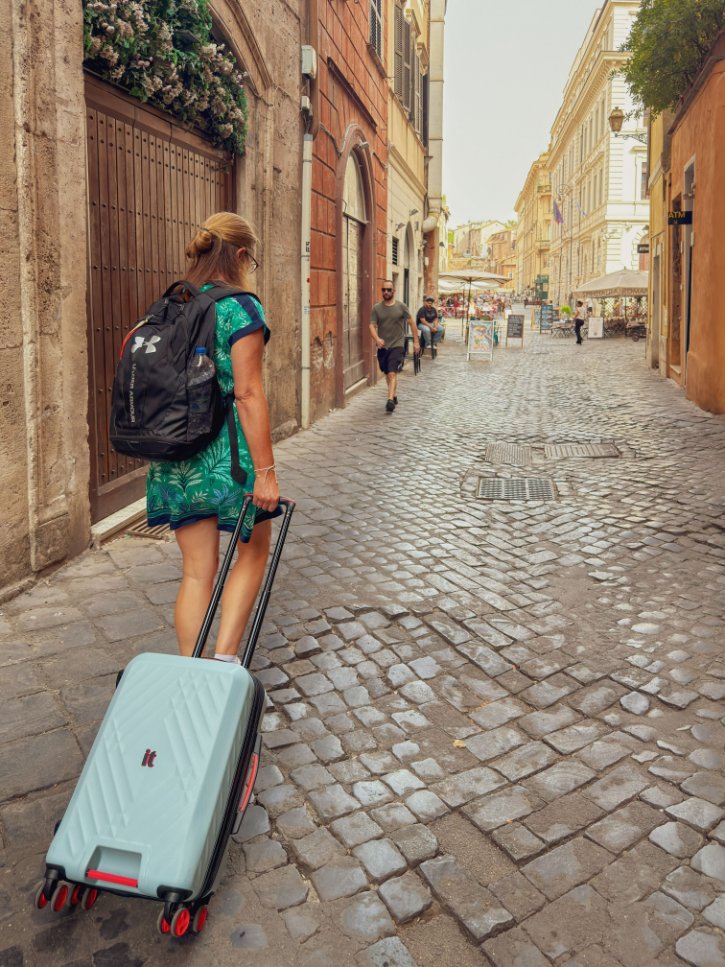
This one surprises people, but it is narrow and sensible. Rome does not ban wheeled suitcases. It just asks you not to drag them down its ancient stone stairs.
a. A longstanding rule
The rule has been in force for years as part of Rome’s Urban Police Regulation. It is not a new change, despite how it sometimes gets reported.
b. Exactly what is prohibited
You may not drag, roll, bounce, or slide wheeled items over the steps or ramps of staircases with historic, artistic, or monumental status. That covers:
- Wheeled suitcases and trolleys.
- Strollers and pushchairs, known locally as passeggini.
- Hand carts and wheeled freight.
The Spanish Steps are a cited example, along with the Aracoeli staircase and the Capitoline Cordonata.
c. What to do instead
On these historic staircases, you are expected to:
- Lift and carry the bag or stroller by hand across the steps, or
- Take a street-level detour or use a public elevator where one exists.
Near Piazza di Spagna, for instance, use the elevator inside the Spagna Metro Station or follow the gentle ramps along Via San Sebastianello.
d. It is not a citywide ban
Wheeled luggage is perfectly fine on:
- Ordinary streets, sidewalks, and cobblestone lanes.
- Train station corridors.
- Modern concrete stairways.
The rule applies only to staircases with recognized historic, artistic, or monumental value, not to every step in the city.
e. Strollers and mobility devices
The wording specifically names strollers and pushchairs alongside luggage, so families should plan to carry them over historic steps. Wheelchairs and disability mobility equipment are a different matter. They are exempt under national accessibility law, and officers cannot apply the luggage rule to them.
f. The penalty
Dragging luggage or a stroller over a historic staircase can bring a €250 fine. If you visibly chip or crack the stone, it escalates to damage of cultural property, with restoration liability on top.
10. No “Love Locks” on Monuments and Public Structures
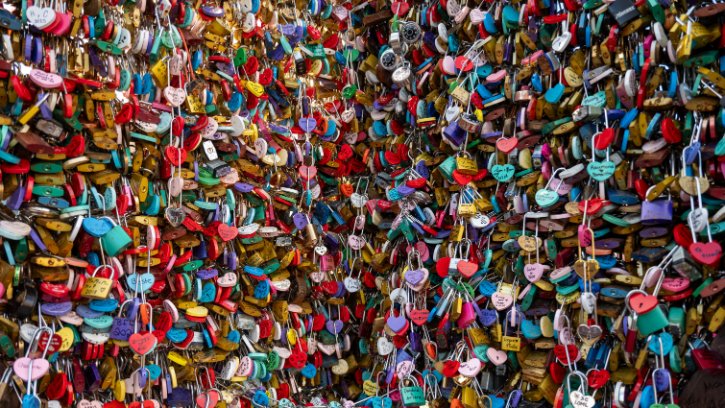
That romantic ritual of clipping a padlock to a bridge and tossing the key has been banned in Rome for years. The scope is wider than most people assume, and adding to an existing cluster of locks does not make it okay.
a. A longstanding ban
The prohibition is a permanent part of Rome’s Urban Police Regulation, not a recent one. The city famously cut thousands of locks from Ponte Milvio before writing the ban into law.
b. It covers far more than famous bridges
You may not attach padlocks, chains, cables, bands, or objects of any kind to a broad range of property, including:
- Historic, archaeological, artistic, and monumental assets.
- Bridges such as Ponte Milvio, Ponte Sant’Angelo, Ponte Sisto, and Ponte Fabricio.
- Historic ironwork, railings, and fencing.
- Street lighting, lampposts, signposts, and public utility structures.
- Urban furniture and other municipal infrastructure.
So this is not only about a handful of famous spots. It reaches across the city’s public fabric.
c. What it means in practice
A few things worth remembering:
- Do not clip a lock to bridges, railings, lampposts, or fencing.
- The presence of existing locks changes nothing. Every new lock is treated as its own separate violation.
- Public and municipal infrastructure is protected, even where nearby private property might not be.
d. Why Rome bothers
The reasons are practical, not just about appearances:
- The weight of thousands of locks stresses historic railings. On Ponte Milvio, a lamppost buckled under the strain.
- Rust and corrosion damage historic stone and ironwork.
- Keys thrown into the Tiber add heavy-metal pollution to the river.
- Removal and restoration cost the city time and money.
e. Enforcement
The Polizia Locale enforces the ban, and maintenance crews patrol bridges with bolt-cutters. Attach a lock and you can face a €250 fine, while the lock itself is cut off and destroyed as scrap.
f. A better way to mark the moment
You do not need a padlock to make the memory last:
- Take a photo together at the spot.
- Keep a small personal souvenir.
A lovely custom does not create an exemption from the rules, so choose the version that leaves the monument untouched.