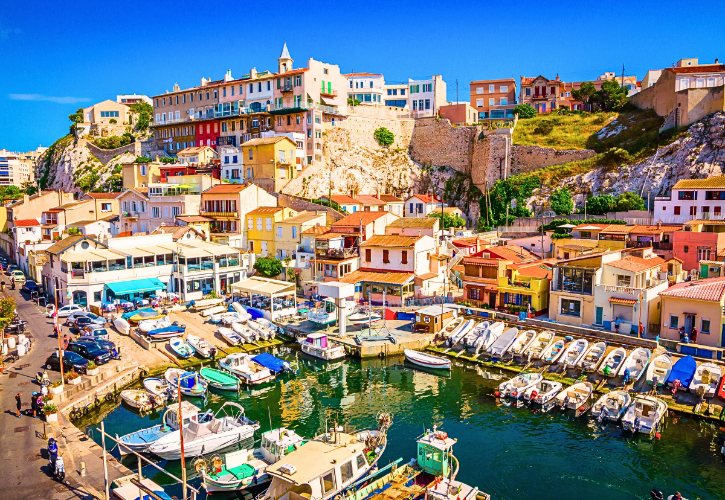
France is never just one experience. It is monumental cities and quiet old towns, Atlantic culture and famous wine regions, Mediterranean ports and Roman ruins.
Add medieval walls, serious food, and half-timbered Alsatian towns, and you have a country that changes character every few hours.
Here is the good part. You can see many of these different sides of France on one train route, with no rental car and no repeated trips back to Paris. 😊
1. Paris
a. Why Visit Here
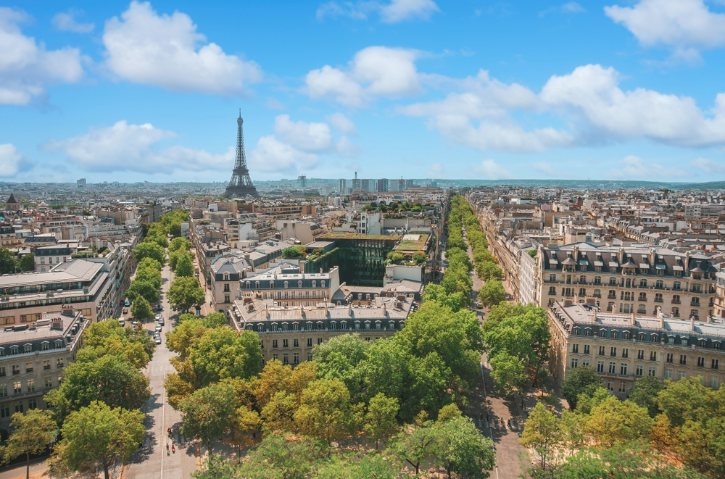
Paris is the logical place to begin. It is France’s main international gateway and its largest rail hub, with direct trains running west to Nantes.
It also sets the tone for the whole trip: Haussmannian boulevards, great museums, café culture, and the Seine.
b. Best Spots to Visit
- The Eiffel Tower area: the best views are from Champ de Mars and the Trocadéro terraces
- The Seine and Île de la Cité: Pont Neuf, Notre-Dame, and the stained glass of Sainte-Chapelle
- One major museum: the Louvre for antiquities, or the Musée d’Orsay for Impressionists
- Arc de Triomphe: twelve grand avenues meet here, with wide rooftop views
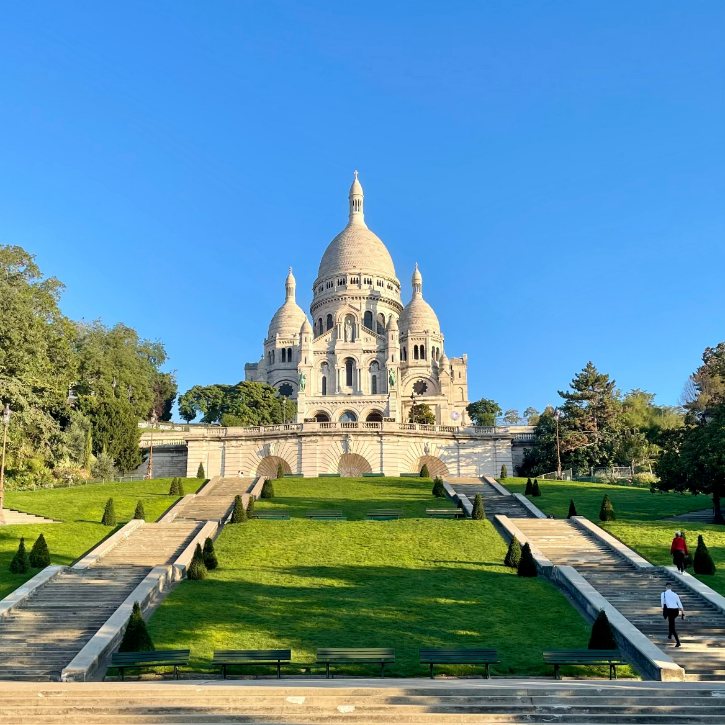
- Montmartre: the domes of Sacré-Cœur, steep staircases, and quiet lanes off the busy squares
- Le Marais: stone mansions, Jewish heritage, and Place des Vosges, the oldest planned square
- Latin Quarter and Luxembourg Gardens: the Sorbonne, bookshops, and chairs under chestnut trees
c. Best Nearby Spots and Day Trips
Versailles shows 17th-century royal life at full scale. The palace is only part of it. The vast formal gardens and the Trianon estate turn this into a full day.
Amiens is the quieter choice. It holds the largest Gothic cathedral in France, the canal district of Saint-Leu, and Les Hortillonnages, a maze of floating gardens reached by flat-bottomed boat.
d. How Long to Stay
- First-time visitors: 4 nights, giving three full days including Versailles
- Repeat visitors: 2 to 3 nights
- Both day trips plus several museums: 5 to 6 nights
e. How to Get to the Next Stop
- Paris Montparnasse to Nantes, TGV INOUI, about 2 hour 20 minutes
- Direct OUIGO high-speed services run on the same line
2. Nantes
a. Why Visit Here
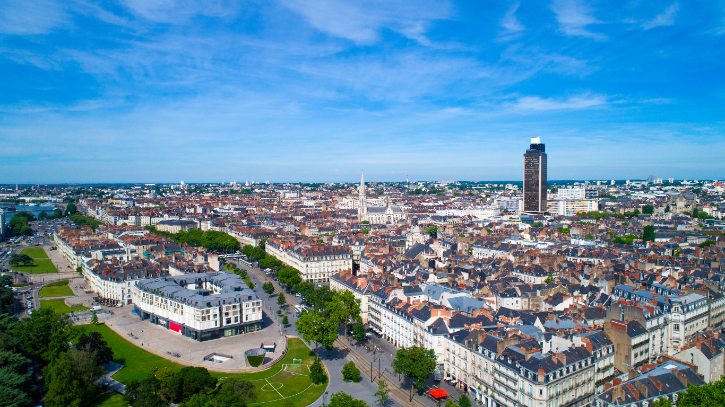
Nantes sits where the Loire meets the Erdre, close to the Atlantic. Once the capital of the Duchy of Brittany, it grew rich on maritime trade, shipbuilding, and sugar refining.
Today it is known for turning that industrial past into something creative and slightly strange.
b. Best Spots to Visit
- Château des Ducs de Bretagne: the last fortress on the Loire, with a museum of the city’s trade
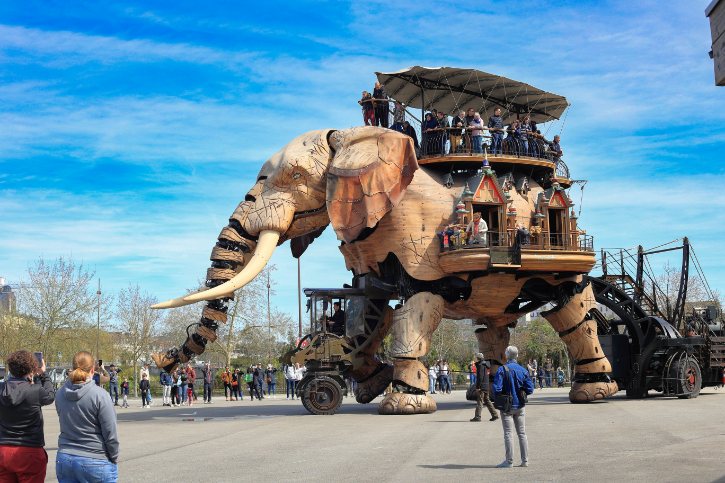
- Les Machines de l’Île: a 12-metre mechanical elephant walks the old shipyard
- Passage Pommeraye: a glass-roofed arcade from 1843, with grand wooden staircases
- Bouffay: the medieval center of twisting streets and half-timbered houses
- Île Feydeau: 18th-century merchant houses with iron balconies and famously leaning facades
- The Green Line: a green stripe on the pavement linking monuments and art installations
c. Best Nearby Spots and Day Trips
Clisson is one of the strangest towns in western France. Artists rebuilt it in the Tuscan style, so red-tiled roofs and brick arches wrap around genuine medieval castle ruins.
Trentemoult is a former fishing village across the Loire, a maze of traffic-free lanes lined with brightly painted houses.
d. How Long to Stay
2 nights is ideal: one day for the city, a second for Clisson and Trentemoult.
e. How to Get to the Next Stop
- Nantes to Bordeaux Saint-Jean, Intercités, about 4 hours 10 minutes
- Only 3 to 4 direct trains run per day, so plan around one of them
3. Bordeaux
a. Why Visit Here
Bordeaux is the architectural capital of southwestern France, and far more than a wine label.
Rebuilt in the 18th century as a model of classical design, it offers white limestone facades, monumental squares, and wide avenues along the Garonne.
b. Best Spots to Visit
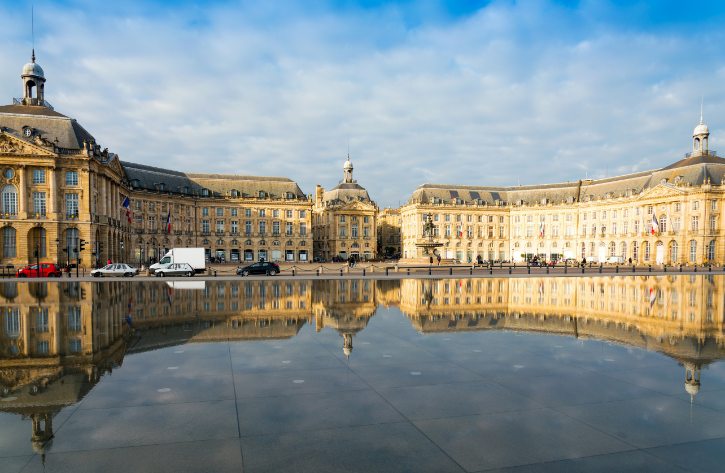
- Place de la Bourse: fronted by the Miroir d’Eau, a pool that shifts between mirror and mist
- The historic center: medieval Saint-Pierre and Rue Sainte-Catherine, one of Europe’s longest pedestrian streets
- Grand Théâtre: an 18th-century masterpiece behind twelve Corinthian columns
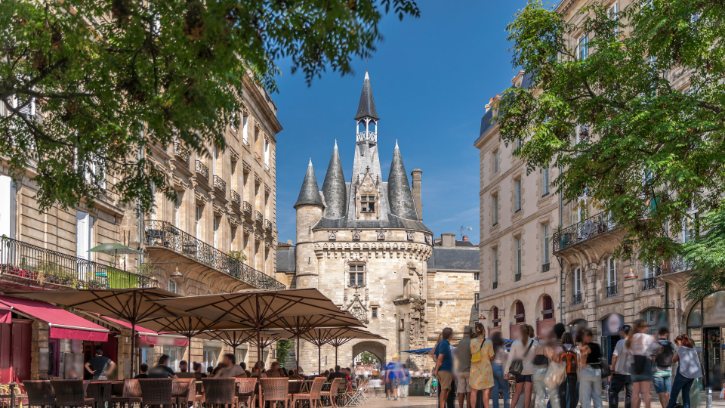
- Porte Cailhau and Grosse Cloche: two surviving gates from the medieval walls
- Marché des Capucins: the belly of Bordeaux, best enjoyed with oysters from Arcachon Bay
- Chartrons and Cité du Vin: the old merchants’ district, plus an ultramodern wine museum
c. Best Nearby Spots and Day Trips
Saint-Émilion is a medieval village of golden limestone among UNESCO-listed vineyards. Its steep lanes lead to a monolithic church carved out of a single cliff face.
Arcachon is a classic Atlantic resort of grand villas, especially in the hillside Ville d’Hiver. Just outside town rises the Dune du Pilat, Europe’s tallest sand dune.
d. How Long to Stay
- Bordeaux only: 2 nights
- With Saint-Émilion or Arcachon: 3 nights
- With both, or winery tours: 4 nights
e. How to Get to the Next Stop
- Bordeaux Saint-Jean to Toulouse Matabiau, Intercités/ OUIGO/ TGV INOUI, about 2 hours and 30 minutes
4. Toulouse
a. Why Visit Here
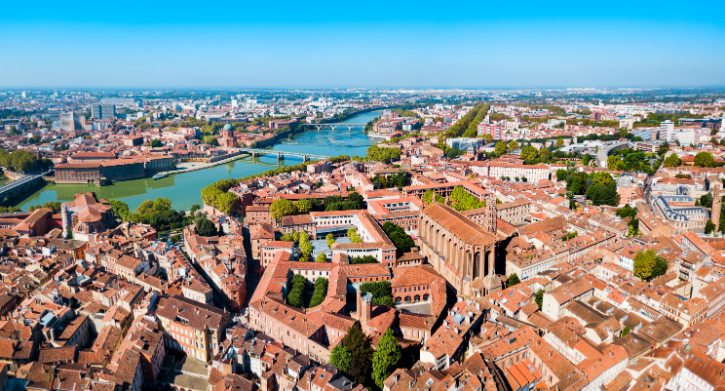
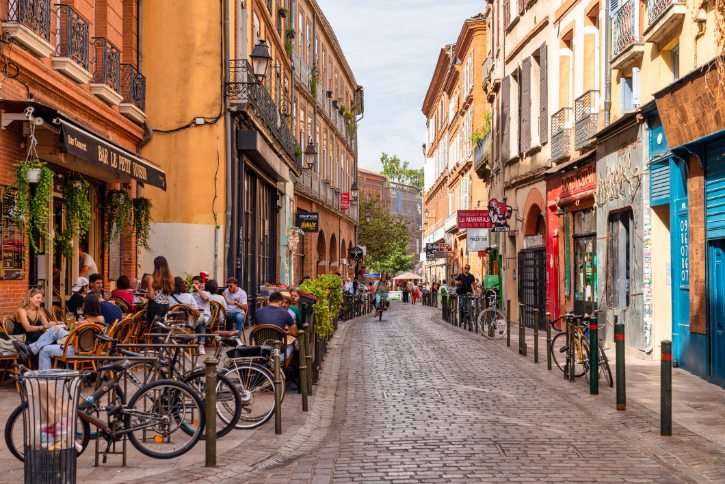
Toulouse is La Ville Rose, the Pink City, and the nickname is literal. Almost everything is built from local clay brick.
- A strong Occitan identity rooted in the southwest
- Youthful energy from a very large student population
- Relaxed social life along the Garonne
- The center of Europe’s aviation and aerospace industries
b. Best Spots to Visit
- Place du Capitole: a vast square anchored by a brick palace with pink marble columns
- Basilique Saint-Sernin: one of Europe’s largest Romanesque churches, and a pilgrimage stop
- Couvent des Jacobins: famous for the Palm Tree, a pillar spreading twenty-two rib vaults
- The Garonne riverfront: walk from Pont Neuf, the city’s oldest brick-arched bridge
- The old center: Renaissance mansions built on woad, a plant-based blue dye
- Marché Victor Hugo: duck confit, foie gras, and Toulouse sausages, with restaurants above
c. Best Nearby Spots and Day Trips
Albi is a dramatic red-brick city and a UNESCO World Heritage site. Its Episcopal City centers on Sainte-Cécile Cathedral, a fortress outside and delicate Gothic carving inside. The neighboring palace holds the world’s largest Toulouse-Lautrec collection.
Closer to home, Cité de l’Espace covers rockets and space science, while Aeroscopia covers aviation history and two Concorde aircraft.
d. How Long to Stay
- Toulouse only: 2 nights
- With Albi or Cité de l’Espace: 3 nights
e. How to Get to the Next Stop
- Toulouse Matabiau to Carcassonne, Intercités, about 41 minutes
- TER liO regional trains cover the same route in about 1 hour
5. Carcassonne
a. Why Visit Here
Most people photograph Carcassonne and leave. That is a mistake.
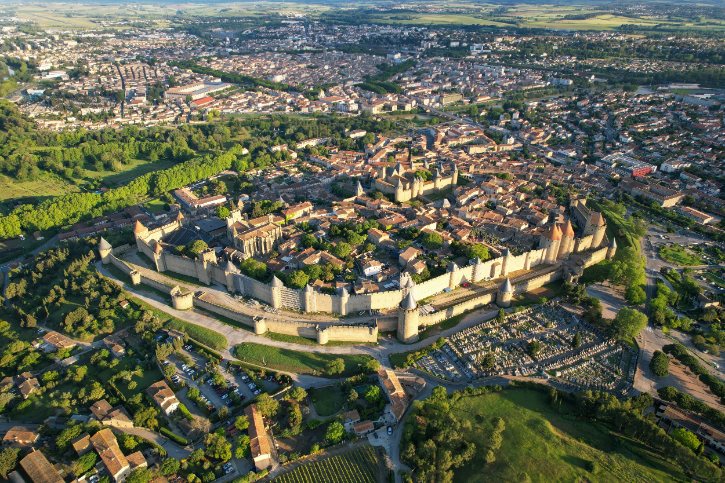
This is one of Europe’s best-preserved fortified medieval cities, standing above the Aude valley behind double walls and fifty-two towers. Roman in origin and restored in the 19th century by Eugène Viollet-le-Duc, it is now UNESCO listed.
Once the day visitors leave, the illuminated ramparts belong to you.
b. Best Spots to Visit
- The fortified Cité: three kilometres of concentric walls, gates, and dry moats
- Château Comtal: the 12th-century Trencavel stronghold, with gallery walks facing the Pyrenees
- Basilique Saint-Nazaire: a Romanesque nave meeting Gothic vaults, with superb medieval glass
- Porte Narbonnaise: the main gate, with twin towers, a drawbridge, and portcullises
- Pont Vieux: a 14th-century footbridge, and the classic view of the citadel
- Bastide Saint-Louis: the lower town, built on a grid in 1260, where locals actually eat
c. Best Nearby Spots and Day Trips
Narbonne was a major Roman city and still shows it, with Via Domitia paving in the main square, an underground Roman warehouse, and a monumental Archbishop’s Palace.
Limoux is quieter. This small Aude valley town produces Blanquette de Limoux, a sparkling white wine made by traditional methods since 1531, well before Champagne.
d. How Long to Stay
- The Cité and lower town: 1 night, arriving in the afternoon so you catch both dusk and early morning
- Adding Narbonne or Limoux: 2 nights
e. How to Get to the Next Stop
- Carcassonne to Montpellier Saint-Roch, TGV INOUI or Intercités, about 1 hour 30 minutes
6. Montpellier
a. Why Visit Here
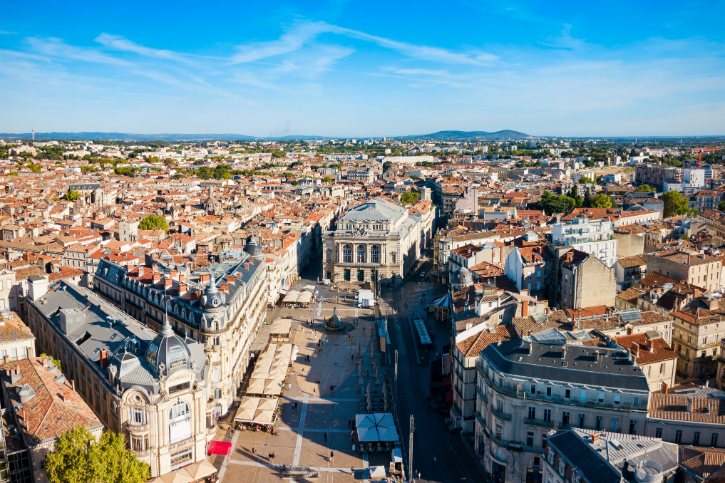
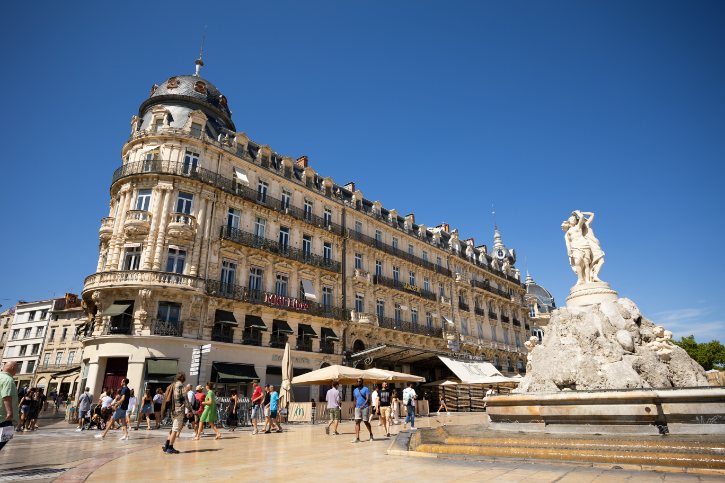
Montpellier is where this route turns Mediterranean, and it does so with a young, sunny energy.
- Medieval limestone lanes in the old center
- One of the world’s oldest active medical schools
- Neoclassical squares and busy café terraces
- Bold modern architecture on the eastern edge
You get Mediterranean atmosphere without a beach resort that closes in winter.
b. Best Spots to Visit
- Place de la Comédie: a huge plaza nicknamed L’Œuf, the Egg, anchored by the opera house
- The Écusson: a pedestrianised maze of 12th-century lanes and hidden courtyards
- Promenade du Peyrou: a royal terrace with a water tower, stone aqueduct, and long views
- Montpellier Cathedral: a Gothic fortress-church beside a 12th-century faculty of medicine
- Musée Fabre: European painting from the Renaissance onward, including Delacroix and Courbet
- Jardin des Plantes and Antigone: France’s oldest botanical garden, from 1593, beside a monumental 1980s district
c. Best Nearby Spots and Day Trips
Sète is a working port built around canals, nicknamed the Venice of Languedoc. Fishing trawlers moor beside drawbridges, and you should try tielle, a pastry pie filled with spicy octopus.
Nîmes holds some of the best-preserved Roman monuments anywhere: a superb amphitheatre, the near-complete Maison Carrée temple, and gardens built around ancient spring ruins.
d. How Long to Stay
- Montpellier only: 2 nights
- With Sète or Nîmes: 3 nights
e. How to Get to the Next Stop
- Montpellier Saint-Roch to Avignon Centre, TER liO, about 1 hour 20 minutes
7. Avignon
a. Why Visit Here
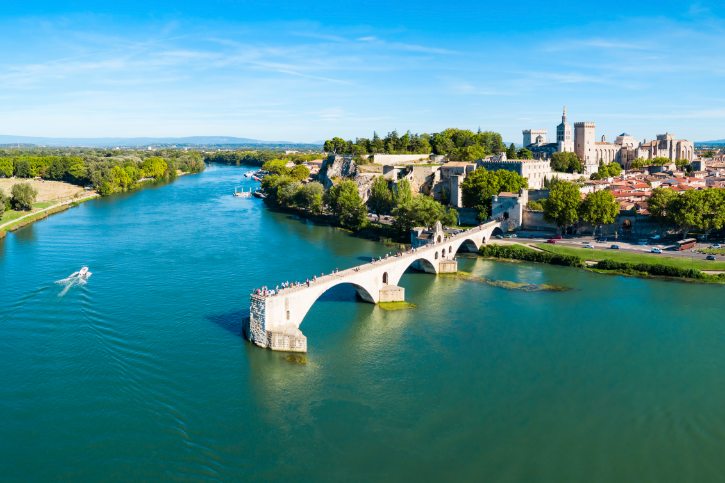
Avignon is one of the great medieval cities of Provence, and it wears its history openly.
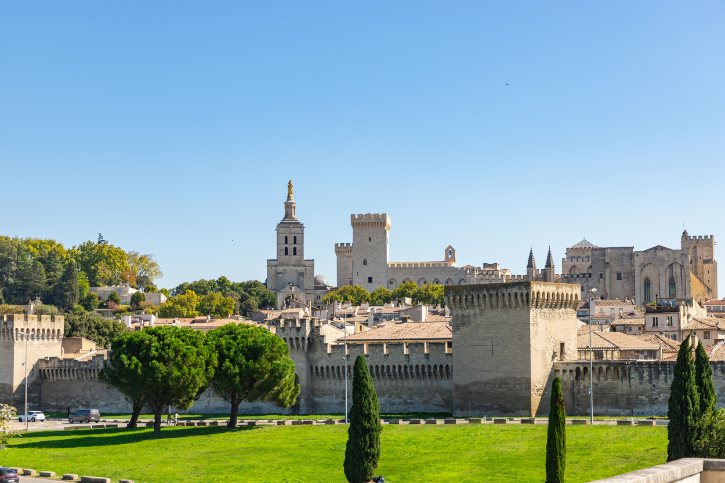
The whole center still sits inside its original 14th-century ramparts. This was once the seat of Western Christianity, when the Papal Court moved from Rome to the Rhône.
b. Best Spots to Visit
- Palais des Papes: the largest Gothic palace in the world, both fortress and papal residence
- Pont Saint-Bénezet: the half-broken bridge, once twenty-two arches, now reduced to four
- Rocher des Doms: the hilltop garden where the city began, looking over the Rhône toward Mont Ventoux
- Place de l’Horloge: the central square, named for its clock tower
- Rue des Teinturiers: a paved lane beside the canal, lined with old textile waterwheels
- Les Halles d’Avignon: a covered market behind a huge green wall, selling honey and truffles
c. Best Nearby Spots and Day Trips
Villeneuve-lès-Avignon sits across the Rhône and was the retreat of popes and cardinals. The colossal Fort Saint-André gives the best view back toward the Palais des Papes.
L’Isle-sur-la-Sorgue is built around canals turned by wooden waterwheels. It is one of France’s great antique towns, and its Sunday market fills every street.
d. How Long to Stay
- Avignon only: 2 nights
- With L’Isle-sur-la-Sorgue on a Sunday: 3 nights
In July, plan around the Festival d’Avignon, when hotels book out months ahead.
e. How to Get to the Next Stop
- Avignon Centre to Marseille Saint-Charles, TER ZOU!, about 1 hour 15 minutes
- Faster TGV services run, but only from the outlying Avignon TGV station
8. Marseille
a. Why Visit Here
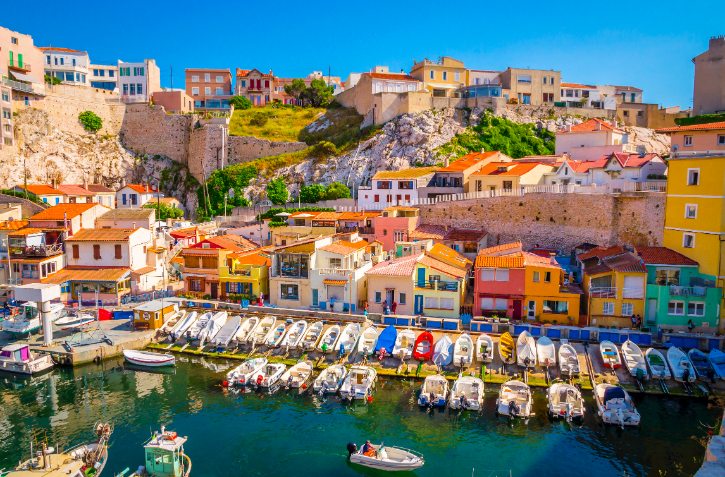
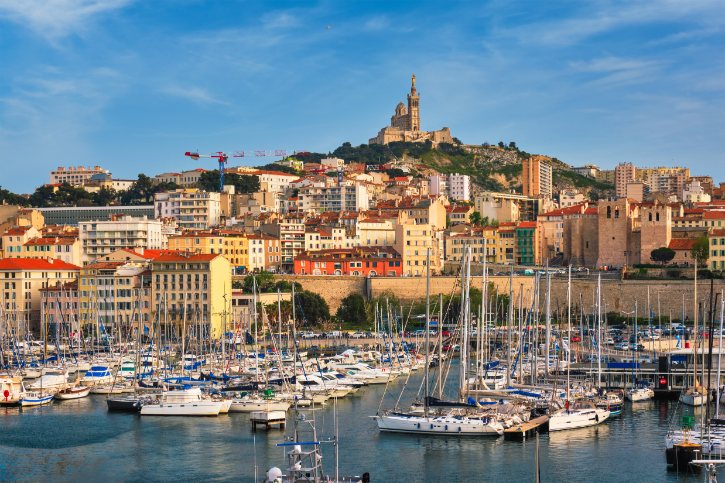
Marseille is France’s oldest city, founded by Phoenician sailors in 600 BC, and the most honest stop on this route. Not a polished resort, but a working port facing the sea.
- A multicultural identity shaped by centuries of migration
- Busy food markets and strong maritime cooking
- Dramatic white limestone cliffs on the doorstep
- Creative neighborhoods with serious street art
b. Best Spots to Visit
- Vieux-Port: the social heart of the city, with a morning fish market off the boats
- Le Panier: the oldest district, a hillside of staircases, pastel facades, and street art
- MuCEM and Fort Saint-Jean: a modern museum joined to a 17th-century fort by a footbridge
- Notre-Dame-de-la-Garde: the hilltop basilica, hung with votive model ships left by sailors
- The Corniche and Vallon des Auffes: a coastal road ending at a tiny port under a stone bridge
- The Calanques: towering limestone cliffs and narrow sea inlets, reached by boat or on foot
The Calanques need preparation. Trails are steep and exposed, there is no water in the park, and access can close in extreme heat or fire risk.
c. Best Nearby Spots and Day Trips
Cassis is a fishing village wedged between the Calanques and the red cliffs of Cap Canaille, one of the highest sea cliffs in France. You can hike or sail into the coves nearby.
Aix-en-Provence is the refined opposite: 17th-century mansions, shaded boulevards, and stone fountains everywhere. It was home to Paul Cézanne.
d. How Long to Stay
- Marseille only: 2 to 3 nights
- With Cassis, Aix-en-Provence, or the Calanques: 4 nights
Build in a spare day, since heat and fire risk can close the coast without warning.
e. How to Get to the Next Stop
- Marseille Saint-Charles to Lyon Part-Dieu, TGV INOUI, about 1 hour 45 minutes
9. Lyon
a. Why Visit Here
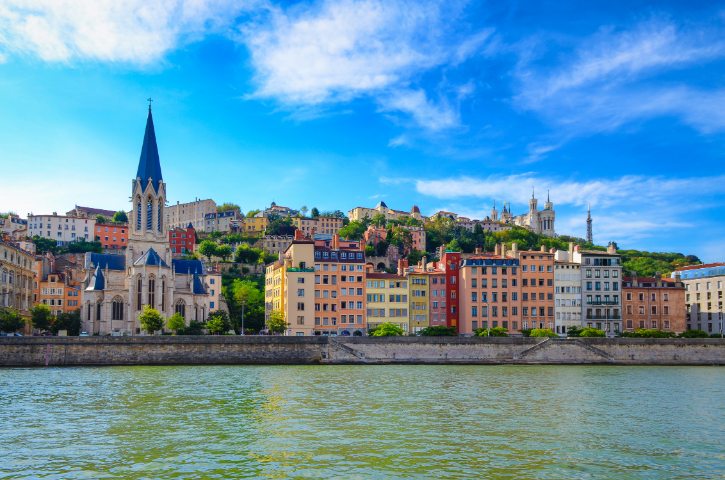
Lyon is France’s culinary capital, sitting where the Rhône and Saône rivers meet.
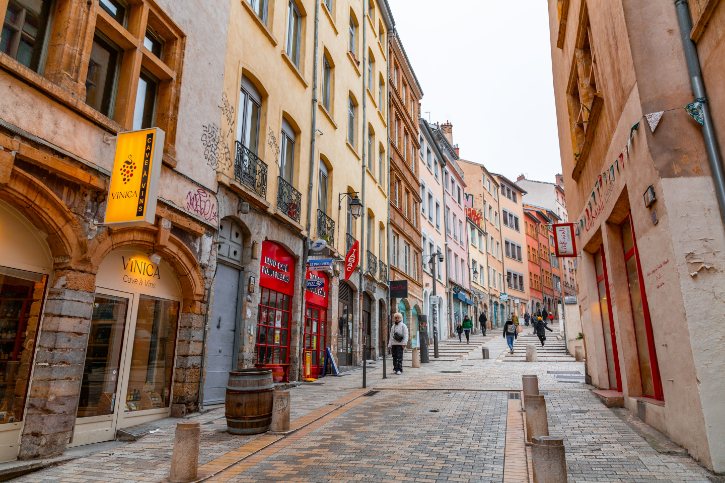
It was the capital of Roman Gaul, then the center of Europe’s silk-weaving industry, and both layers are still visible. Lyon is a city of hidden courtyards and very long lunches.
b. Best Spots to Visit
- Vieux Lyon: a huge Renaissance district threaded with traboules, covered silk merchants’ passageways
- Fourvière: the hill above the old town, with a white basilica and working Roman theatres
- Presqu’île: the peninsula between the rivers, with vast Place Bellecour and the Bartholdi Fountain
- Croix-Rousse: the quarter of the canuts, silk weavers, with apartments built to fit huge looms
- Les Halles de Lyon Paul Bocuse: a market of premium cheeses, charcuterie, and quenelles
- A traditional bouchon: a rustic tavern serving duck pâté, quenelles, and praline tart
Look for the official Association des Bouchons Lyonnais label, since plenty of imitations target visitors.
c. Best Nearby Spots and Day Trips
Vienne packs a remarkable amount of Roman France into a small space. The Temple of Augustus and Livia dates from 1 BC and stands almost intact.
Pérouges is a walled hilltop medieval village of cobbled lanes and timber-framed houses. Try the Galette de Pérouges, a warm sugar-crust pastry.
d. How Long to Stay
- Lyon only: 2 to 3 nights
- With Vienne or Pérouges, or focused on food: 3 nights
Lyon deserves more than one night. Slow meals are the entire point.
e. How to Get to the Next Stop
- Lyon Part-Dieu to Dijon, TGV INOUI, about 1 hour 30 minutes
- Intercités and TER services cover the same route in about 2 hours
10. Dijon
a. Why Visit Here
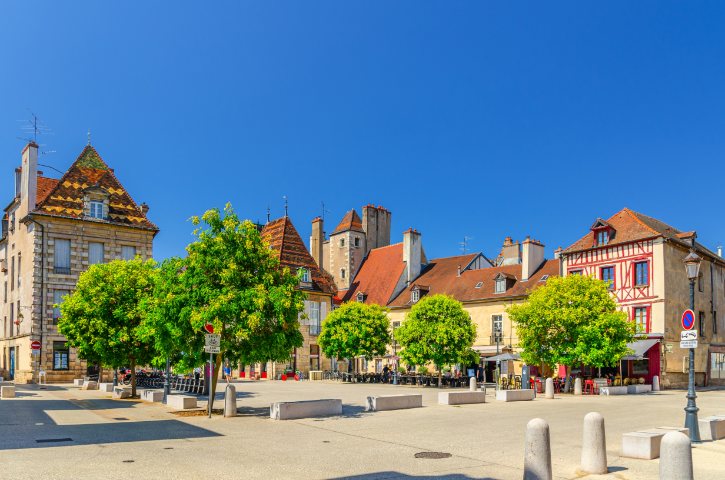
Dijon is the capital of the historic Duchy of Burgundy, and the best introduction to one of France’s great wine and food regions.
- A compact, highly walkable historic core
- Magnificent glazed-tile roofs in geometric patterns
- Deep food culture, from mustard to Burgundian cheeses
- Vineyard towns beginning almost at the edge of town
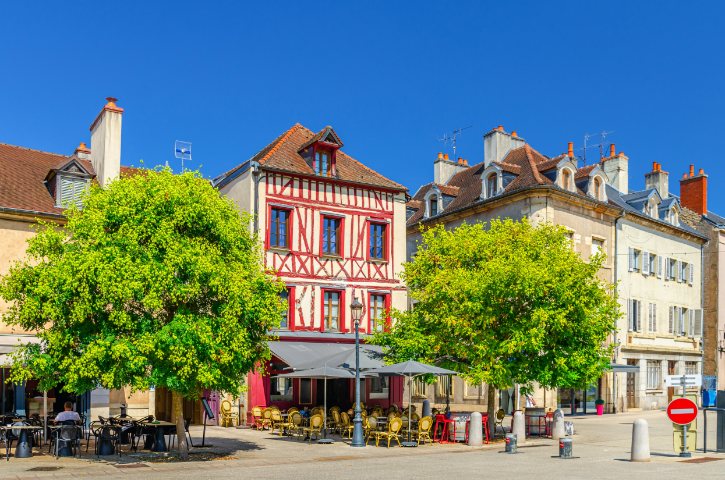
b. Best Spots to Visit
- The Owl Trail: brass owl plates in the pavement, linking twenty-two landmarks
- Palace of the Dukes: the heart of the city, holding the Musée des Beaux-Arts and the ducal tombs
- Notre-Dame de Dijon: a Gothic church with gargoyles and the small owl locals touch for luck
- Rue des Forges: Dijon’s best-preserved medieval and Renaissance mansions
- Les Halles: a cast-iron market selling Époisses cheese, charcuterie, and pastries
- Cité Internationale de la Gastronomie et du Vin: devoted to French food and Burgundy wine
Dijon mustard was historically made with verjuice, unripe grape juice, rather than vinegar. Crème de cassis with local Aligoté wine gives you a Kir.
c. Best Nearby Spots and Day Trips
Beaune is the historic capital of the Burgundy wine trade. Its centerpiece is the Hospices de Beaune, a 15th-century charity hospital under a famous patterned tile roof.
Nuits-Saint-Georges and Gevrey-Chambertin carry some of the world’s most famous wine names. Be realistic though. The Route des Grands Crus is hard to explore by public transport, so a bicycle or small-group tour works better.
d. How Long to Stay
- Dijon only, or with Beaune: 2 nights
- Adding a vineyard town, tastings, or cycling: 3 nights
e. How to Get to the Next Stop
- Dijon to Colmar, direct TGV INOUI, about 1 hour 45 minutes, with only 3 to 4 direct trains daily
- The common alternative is TGV to Mulhouse Ville, then TER Fluo Grand Est on to Colmar
11. Colmar
a. Why Visit Here
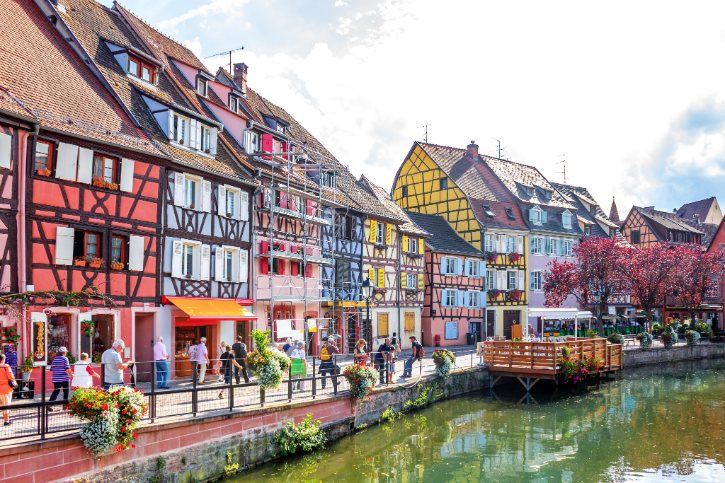
Colmar is small, intimate, and remarkably pretty, and it makes the perfect introduction to Alsace.
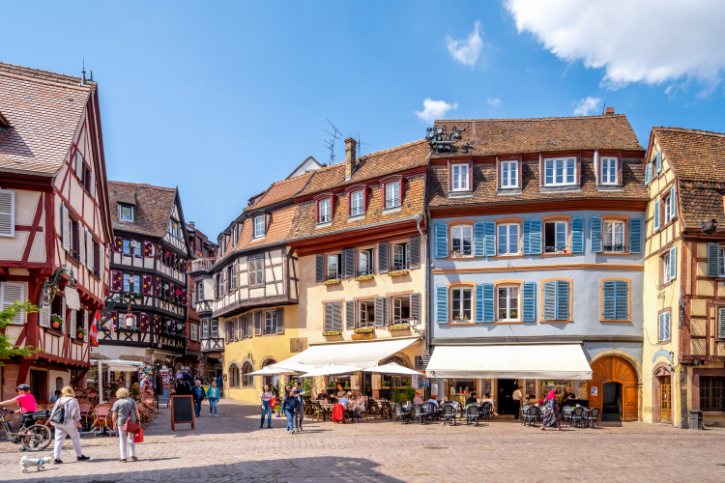
The historic center escaped destruction during the region’s major conflicts, so it is genuinely preserved rather than rebuilt. Expect half-timbered houses, flower-lined canals, and a blend of French and German influences.
b. Best Spots to Visit
- Little Venice: pastel half-timbered houses rising straight out of the Lauch River
- Quai de la Poissonnerie: the old fishmongers’ row of painted timber houses along the canal
- Pfister House: a 1537 Renaissance masterpiece with a wooden gallery and painted frescoes
- Koïfhus: the medieval customs house, once the center of regional trade
- Unterlinden Museum: a 13th-century convent holding the Isenheim Altarpiece
- Bartholdi connections: Colmar is the birthplace of the sculptor who designed the Statue of Liberty
c. Best Nearby Spots and Day Trips
Turckheim is a walled wine town at the foot of the Vosges, entered through medieval stone gates. Vineyards press against the walls, and it keeps its Night Watchman tradition in season.
Eguisheim, Kaysersberg, and Riquewihr are the storybook villages of the Alsace Wine Route. One honest warning. None has a train station, so a seasonal tourist bus, tour, or taxi is required.
d. How Long to Stay
- Colmar only, or with Turckheim or one wine village: 2 nights
- Several villages, or Christmas market travel: 3 nights
During the Alsace Christmas markets, hotels, trains, and restaurants fill months ahead.
e. How to Get to the Next Stop
- Colmar to Strasbourg, TER Fluo Grand Est, about 30 minutes, with very frequent departures
- Direct TGV INOUI services also run, but the regional train is the easier choice
12. Strasbourg
a. Why Visit Here
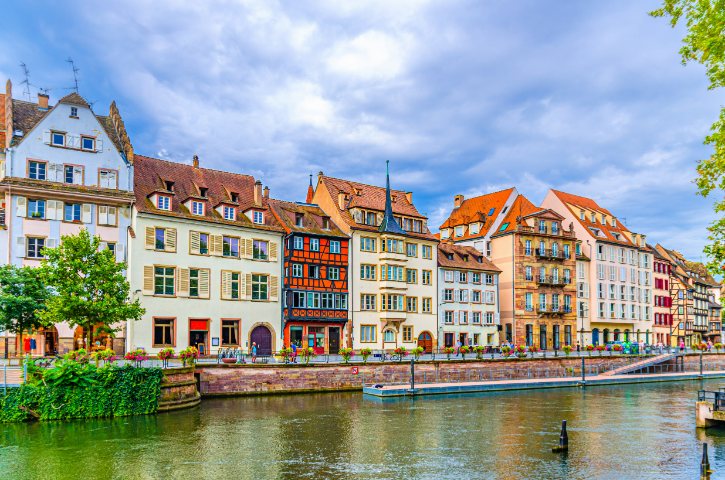
Strasbourg is the capital of Alsace, sitting on the French-German border, and it is the ideal place to finish.
The city has moved between French and German rule across the centuries, and absorbed both.
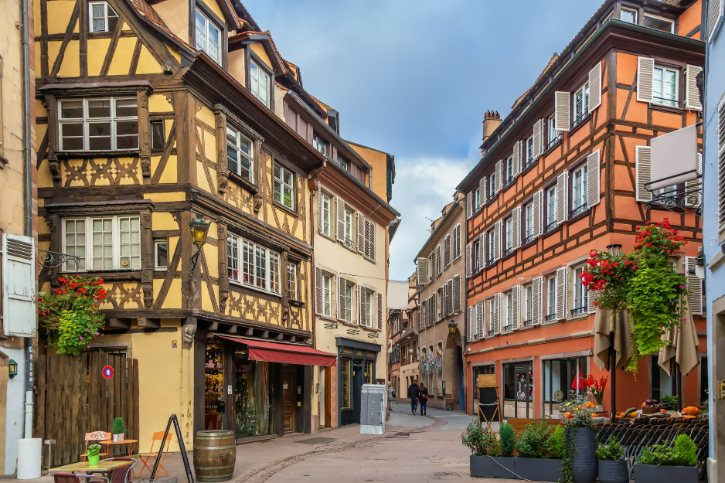
You get medieval architecture, canals wrapping a historic island, an imperial German quarter, and the seat of major European institutions. Colmar gave you Alsace in miniature. This is the same culture at full scale.
b. Best Spots to Visit
- Strasbourg Cathedral: pink sandstone under a 142-metre spire, with a famous astronomical clock
- Grande Île: the UNESCO-listed historic heart, ringed by the Ill River
- Petite France: the old tanners’ quarter, a network of canals, locks, and timber houses
- Barrage Vauban and Ponts Couverts: medieval bridges and towers, beside the city’s best viewpoint
- Neustadt: a German imperial quarter of wide avenues and grand buildings, also UNESCO listed
- The European Quarter: the European Parliament and the Court of Human Rights
Give Alsatian food its own evening. A winstub is a cosy, wood-panelled tavern serving choucroute garnie, tarte flambée, and the stew baeckeoffe.
c. Best Nearby Spots and Day Trips
Obernai is a walled Alsatian town below the Vosges, with preserved ramparts and a market square anchored by a belfry and a Renaissance well.
Kehl is a quiet German town across the Rhine, and the easiest border crossing you will ever make. Walk the riverside gardens and stroll back into France.
Haut-Koenigsbourg Castle is the dramatic one. Rebuilt by Emperor Wilhelm II on a high ridge, it has towers, drawbridges, and halls of medieval armour.
d. How Long to Stay
- Strasbourg only, or with Kehl: 2 nights
- With Obernai or Haut-Koenigsbourg: 3 nights
e. How to Finish or Continue the Route
- Return to Paris: Strasbourg to Paris Est, TGV INOUI, about 1 hour 45 minutes
- Continue to Switzerland: Strasbourg to Basel SBB, TER Fluo Grand Est, about 1 hour 17 minutes
- Continue to Germany: Strasbourg to Frankfurt am Main Hauptbahnhof, ICE or TGV, about 2 hours
If you are flying home from Paris Charles de Gaulle, return the afternoon before rather than the same morning.
And that is the route. Twelve cities, one country, and a very different France at every station. 😊