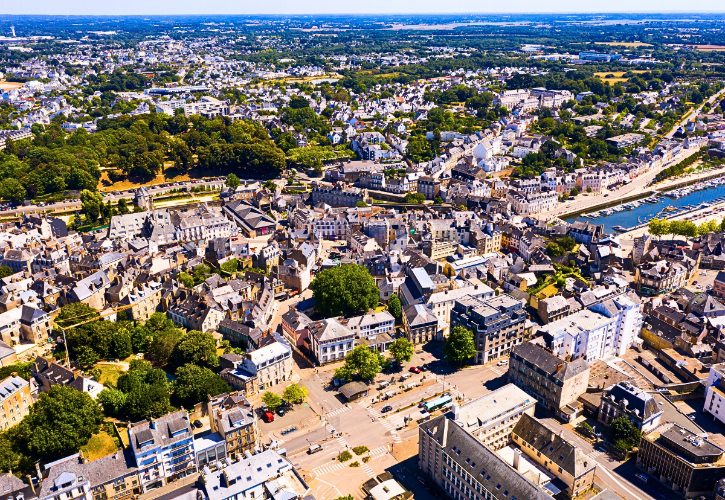
Ask almost anyone where to go in northwestern France, and Normandy comes up first. It is famous, easy to reach, and full of names you already know.
But next door, Brittany offers a very different kind of coastal journey. Both regions have dramatic coastlines, historic towns, strong food traditions, beaches, and deep heritage.
The right choice is not simply about which region has the most famous attractions. Your transport plans, your available days, your interests, and your travel pace can all change the answer. 😊
1. The Biggest Difference: What Each Region Feels Like
a. Normandy in short
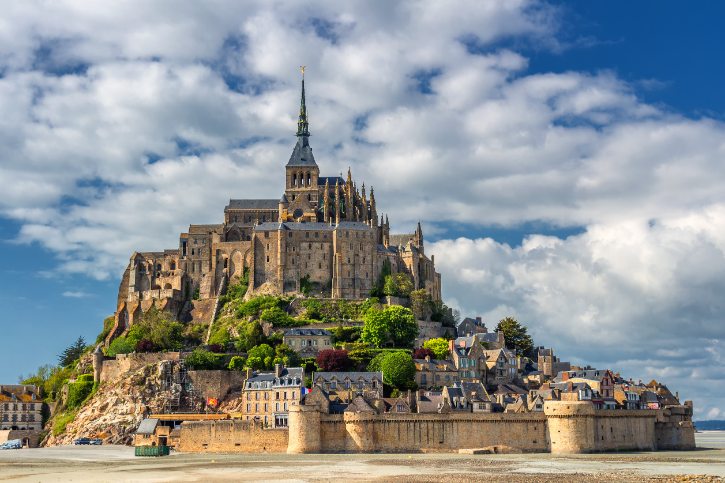
Normandy feels polished and structured. Big historical landmarks sit beside soft farmland and elegant seaside resorts.
The history covers two very different eras. You have the medieval world of William the Conqueror, and you have the Second World War landings.
Inland, the Pays d’Auge is all apple orchards, dairy farms, and old manor houses. That farming tradition shows up directly on the table.
b. Brittany in short
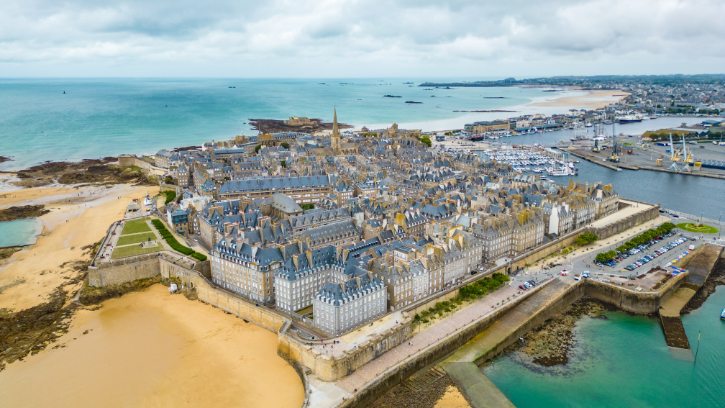
Brittany feels maritime from the moment you arrive. The region pushes far into the Atlantic, and the sea shapes almost everything.
The coast here is granite. Expect exposed headlands, rocky reefs, small coves, lighthouses, and islands where fishing is still a real industry.
Breton identity stays visible in daily life through bilingual road signs, traditional music, and local festivals.
c. The names you will hear
- Normandy: Mont-Saint-Michel, the D-Day beaches, Bayeux, Rouen, Honfleur, Étretat, Deauville, Trouville-sur-Mer, Giverny, Caen
- Brittany: Saint-Malo, Dinan, the Pink Granite Coast, the Crozon Peninsula, Carnac, Quimper, Concarneau, Vannes, the Gulf of Morbihan, Dinard
d. What this means for your trip
Normandy works well when you want famous landmarks to structure your days. Those sights act as strong anchors, which makes a focused, theme-based trip easy to build.
Brittany often works better when you want the journey itself to be the experience. The appeal is slow exploration between fishing villages, peninsulas, and crêperies.
Just avoid the lazy version of this. Normandy has quiet rural corners and wild cliffs. Brittany has cities, busy resorts, and heavy summer crowds. Both regions mix everything.
2. Which Region Has the More Impressive Scenery?
a. Normandy’s landscapes
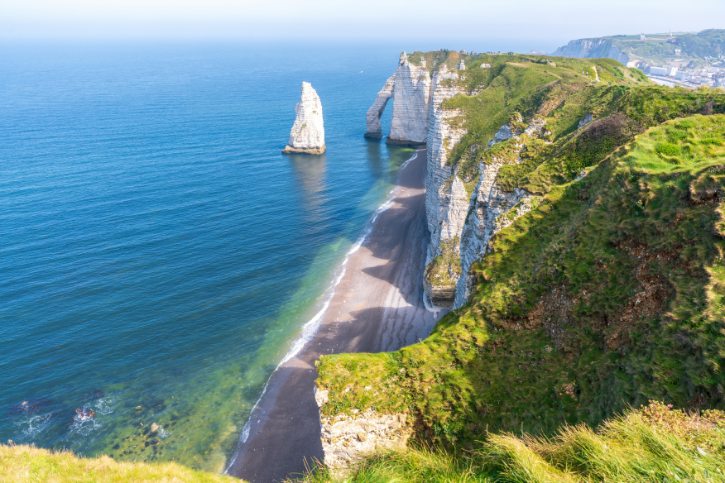
The headline act is the Alabaster Coast, a 130-kilometre stretch of white chalk cliffs rising up to 100 metres above the sea. At Étretat, erosion has carved them into huge arches and needle formations.
Further west, the Cotentin Peninsula turns rugged, with granite cliffs at Nez de Jobourg and windswept heath at Cap de la Hague.
Inland, the Seine Valley winds between limestone cliffs, forests, and half-timbered villages. Around Mont-Saint-Michel Bay, the tide is the main event.
b. Safety on the Étretat cliffs
These cliffs are unstable, and the rules are strict. Please take them seriously.
- Walking directly beneath the cliffs is prohibited
- Certain caves and old access routes are closed to the public
- On the clifftop, stay at least 5 metres from the edge
- Fines start at 35 euros, and the fire service charges for rescues
- Stick to marked paths and obey local warning signs
c. Brittany’s landscapes
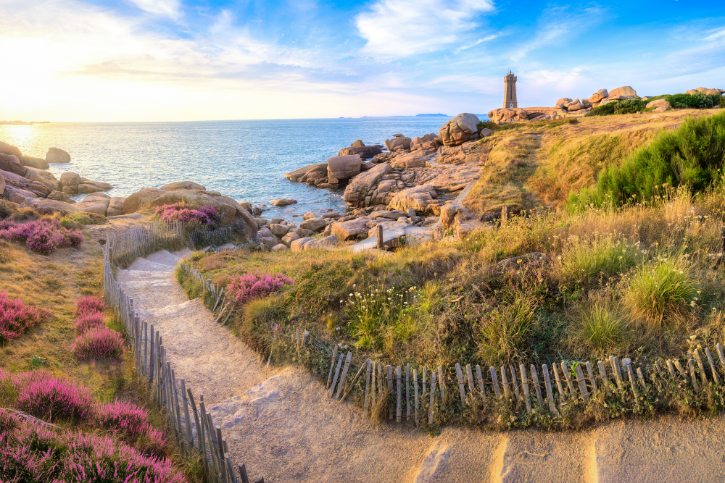
Brittany’s coast changes character as you move around it, which is its greatest strength.
- Emerald Coast: rocky capes, deep sandy bays, green-tinted water
- Pink Granite Coast: huge smooth boulders framing tiny coves at Ploumanac’h and Perros-Guirec
- Finistère and Crozon: jagged cliffs, sea stacks, caves, and exposed headlands like Pointe du Raz
- Southern Brittany: calmer sand, pine groves, and the island-studded Gulf of Morbihan
d. Comparing fairly
For single, unforgettable natural landmarks, Normandy wins. Étretat and Mont-Saint-Michel deliver instant drama with very little effort, which suits shorter trips.
For a week-long coastal drive, Brittany offers more variety. You move from pink granite in the north, to wild Atlantic cliffs in the west, to calm southern islands.
Neither coast is objectively more beautiful. Normandy has wetlands and cliffs that rival Finistère for wildness, and plenty of Brittany’s beaches are busy rather than empty.
3. Coastal Towns, Medieval Towns and Larger Cities
a. Normandy’s best bases
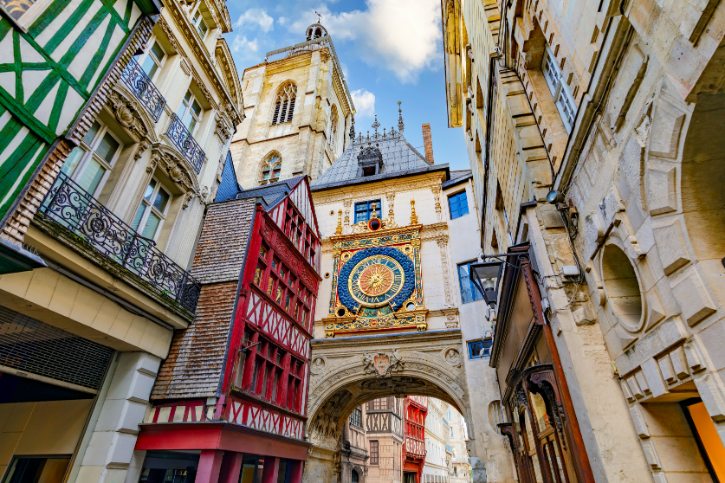
Rouen is a lively historic city with a Gothic cathedral, medieval streets, and strong museums. It is ideal for a car-free weekend.
Bayeux has a preserved medieval centre and is the premier base for D-Day touring, with direct trains from Paris.
Caen offers larger-city facilities plus the Mémorial de Caen museum. Le Havre, rebuilt in concrete by Auguste Perret, is UNESCO-listed and holds France’s second-largest Impressionist collection at the MuMa museum.
b. Normandy’s coastal towns
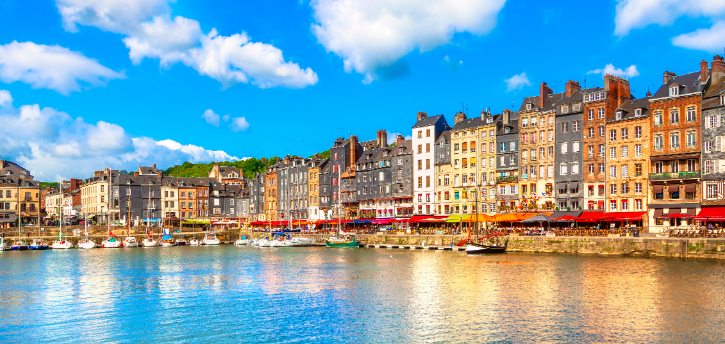
- Honfleur: a beautiful seventeenth-century harbor with timber buildings. Crowded by day, romantic at night
- Deauville: polished and upscale, with grand villas, boutiques, and a famous 1920s boardwalk
- Trouville-sur-Mer: a working fishing port next door, more casual and family-friendly
- Cabourg: a classic Belle Époque resort with a long beach and strong Proust connections
c. Brittany’s best bases
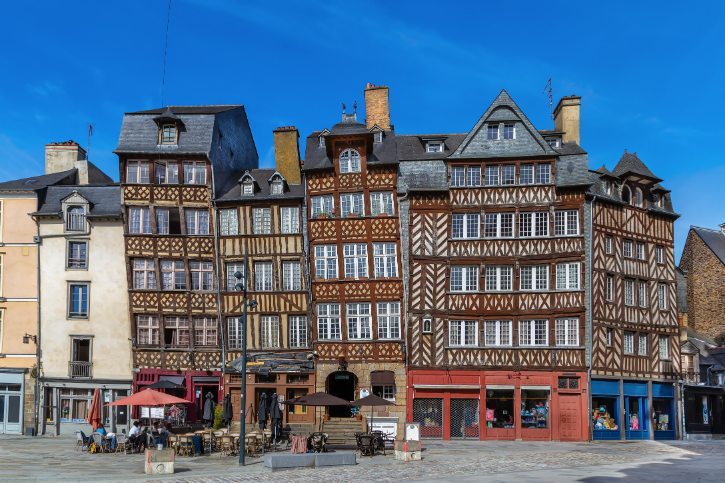
Saint-Malo is a walled granite city projecting into the sea, with a superb rampart walk and heavy summer crowds.
Rennes is the regional capital and main rail gateway, good as both an overnight stop and a transfer point.
Vannes has intact ramparts, a historic harbor, and the best access to the Gulf of Morbihan. Quimper is the cultural heart of Finistère and works well without a car.
d. Brittany’s smaller towns
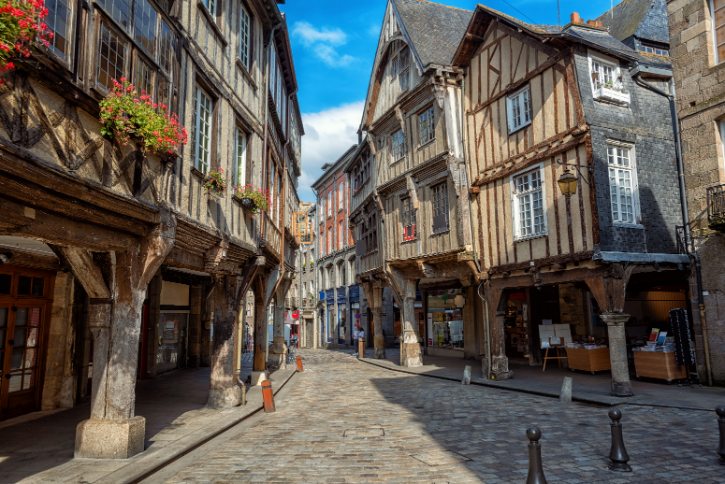
- Dinan: three kilometres of medieval walls and cobbled streets dropping steeply to a river port
- Dinard: over 400 Belle Époque villas above sandy beaches, quieter than Saint-Malo
- Concarneau: the fortified Ville Close on an island in a working fishing harbor
- Petites Cités de Caractère: officially recognised villages under 6,000 people, including Locronan, Rochefort-en-Terre, and Bécherel
e. Quick answers
- Best medieval towns? Normandy for grand half-timbered cities, Brittany for fortified granite ones
- Best elegant resorts? Normandy, along the Côte Fleurie
- Best harbor towns? Brittany, for sea-facing walled ports
- Best without a car? Rouen, Caen, Bayeux, Deauville, Rennes, Saint-Malo, Vannes
- Deserve a night? Rouen, Bayeux, Saint-Malo, Dinan
4. Beaches: Swimming, Walking, Surfing or History?
a. Normandy’s beach types
The Côte Fleurie around Deauville, Trouville, and Cabourg has wide flat sand, promenades, beach cabins, and full family facilities.
The Alabaster Coast has narrow pebble beaches under vertical cliffs. Dramatic to look at, but hard for swimming and walking.
The five D-Day beaches, Utah, Omaha, Gold, Juno, and Sword, are vast sandy plains dotted with bunkers and memorials. Their meaning matters far more than their swimming.
b. Brittany’s beach types
- Sheltered coves along the northern Pink Granite and Emerald Coasts, good for families
- Granite-backed sandy beaches, often small and framed by boulders
- Exposed Atlantic beaches in western Finistère and on the Crozon Peninsula
- Pointe de la Torche, a Natura 2000 site with regular swells that attracts international surf competitions
- Calm southern beaches around Quiberon, the Gulf of Morbihan, and islands like Île-aux-Moines
c. Match the beach to your purpose
- Families and swimming: Normandy’s Côte Fleurie, or Brittany’s sheltered northern coves and Gulf of Morbihan
- Surfing: Brittany, clearly. Normandy’s seas are generally too calm or too tidal
- Long walks and coastal hiking: Brittany, thanks to the GR34 running along the shore
- History: Normandy, without question
- Small hidden coves: Brittany
- Resort holidays: Normandy
d. Safety notes
A calm surface does not mean safe swimming. Undercurrents, rip tides, and rapid tidal shifts are common on both coasts.
In Normandy, the tidal flats of Mont-Saint-Michel Bay are seriously dangerous. Water advances quickly across flat sand, and the bay has deep quicksand pockets. Never walk out without an authorised guide.
In Brittany, the narrow entrance to the Gulf of Morbihan produces powerful currents. The Jument Current can reach 9 knots on spring tides.
Lifeguard coverage is typically limited to July and August. Outside those months, assume there is none, and always check tide tables, safety flags, and municipal notices first.
5. Historic Sites: Where Normandy Is Especially Strong
a. The D-Day coast
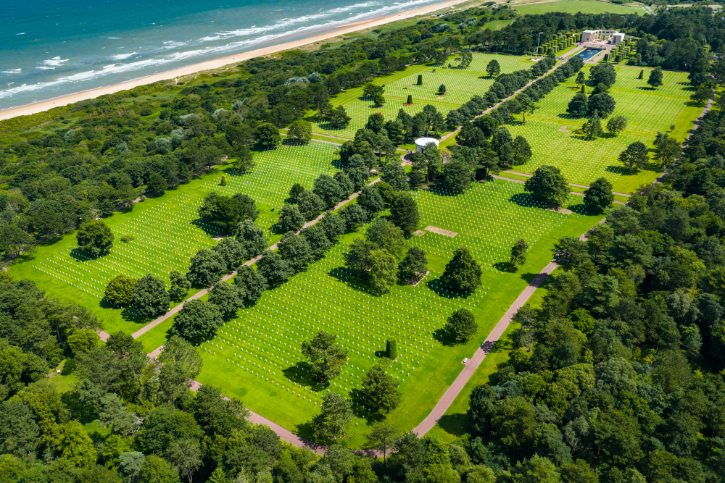
The story of 6 June 1944 and the Battle of Normandy is preserved across more than 80 kilometres of coastline.
At Pointe du Hoc you walk among bunkers and bomb craters where US Rangers scaled vertical cliffs. Pegasus Bridge and Sainte-Mère-Église tell the airborne story, and at Arromanches the concrete caissons of the artificial Mulberry Harbour still rise from the sea.
The Normandy American Cemetery at Colleville-sur-Mer, with 9,387 white marble crosses above Omaha Beach, carries immense emotional weight.
b. Planning a D-Day visit
- Give it at least one full day, and more if the history matters to you
- The sites are widely dispersed, so travel time adds up
- A car or a guided tour from Bayeux is the most effective option
- A seasonal shuttle bus (Nomad line 125) runs in July and August
- Cyclists can follow the marked Vélomaritime (EuroVelo 4) route
- A guide genuinely helps, because the geography explains the events
- Please behave respectfully. These are burial grounds, not photo stops
c. Medieval Norman history
Mont-Saint-Michel’s abbey, a UNESCO site since 1979, is one of the world’s great monuments and needs timed-entry booking in summer.
In Caen, William the Conqueror built one of Europe’s largest medieval fortresses, alongside the Abbaye aux Hommes and the Abbaye aux Dames.
Rouen preserves its cathedral and the landmarks tied to Joan of Arc’s trial, while Château-Gaillard, built by Richard the Lionheart in 1196, shows how fiercely this land was fought over.
6. Brittany’s Prehistory, Fortified Towns and Living Heritage
a. Carnac and the megaliths
The Megaliths of Carnac and of the shores of Morbihan were inscribed on the UNESCO World Heritage List in July 2025.
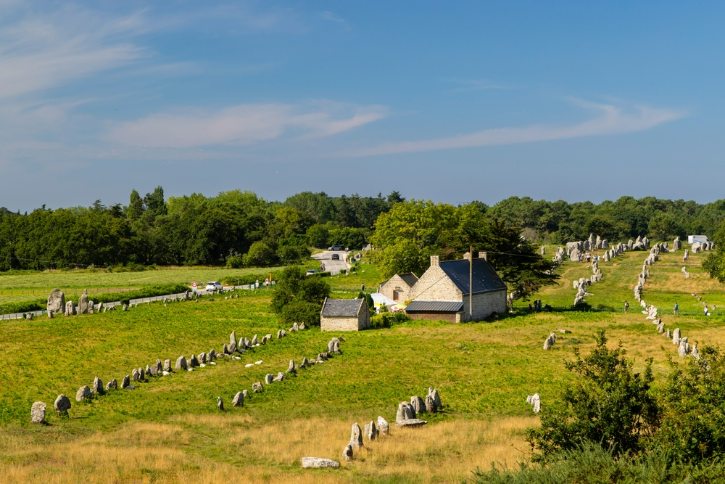
The inscription covers over 550 megalithic sites across roughly 1,000 square kilometres of southern Morbihan, dating from 4800 to 3500 BC.
At Carnac itself, over 3,000 granite standing stones run in precise rows for four kilometres, in four main groups: Le Ménec, Kermario, Kerlescan, and Petit Ménec.
b. How to visit the stones properly
- This is a complete ritual landscape, not a set of roadside stones
- Start at a visitor centre or museum. It transforms your understanding
- Some protected areas restrict access or require a guided visit
- Nearby highlights include the 280-tonne Grand Menhir Brisé at Locmariaquer and the carved burial chamber of Gavrinis
- Give it half a day at least. It is not a quick photo stop
c. Fortified towns and maritime heritage
Saint-Malo’s ramparts form a continuous ring above the sea. Dinan has fifteen defensive towers and a fourteenth-century keep. Fougères and Vitré are among Europe’s largest medieval fortresses.
The maritime history is just as rich. Brittany’s ports launched privateers from Saint-Malo, cod fleets from Paimpol, and naval yards at Brest and Lorient.
Hundreds of stone lighthouses still guard difficult channels, and traditional red-sailed Sinagot boats survive from the Gulf of Morbihan’s oyster trade.
d. Living Breton culture
Finistère is famous for its Parish Enclosures, monumental stone religious complexes built between the 1500s and 1700s and funded by the linen trade. Each typically has a triumphal gate, an ossuary, and an elaborate carved calvary.
Look for Saint-Thégonnec, Guimiliau with its 200 carved figures, and Lampaul-Guimiliau with its 75-metre bell tower.
None of this is frozen in the past. Fest-Noz night dances, bilingual signage, and summer Pardons show Breton culture as part of modern life.
7. Art, Architecture and Living Culture
a. Normandy and Impressionism
This is where Impressionism was born, and the trail is easy to follow.
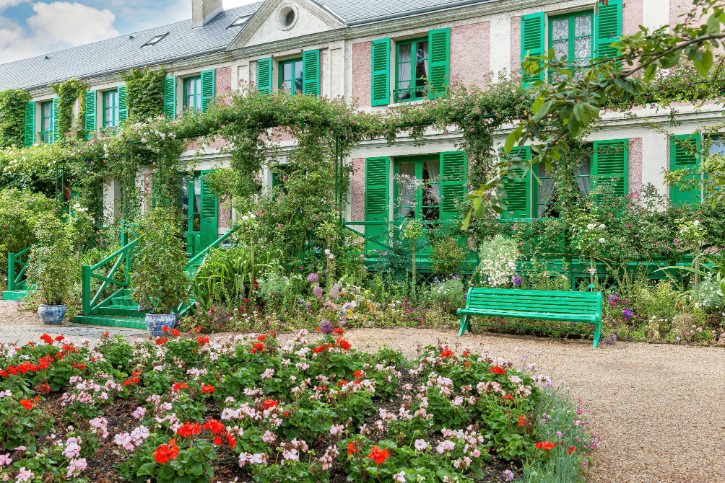
At Giverny, Monet designed the house, water garden, and Japanese bridge behind his most famous paintings. Rouen Cathedral, Honfleur harbor, and the cliffs of Étretat all appear in his work.
Le Havre’s André Malraux Museum (MuMa) holds France’s second-largest Impressionist collection.
b. Planning the Impressionist trail
- Monet’s house and gardens open seasonally, from spring through to late autumn, and close over winter
- Advance online booking is mandatory, so reserve before you travel
- Rouen and Le Havre both make strong museum-focused bases
- Normandy also hosts regular Monet-related exhibitions and events, so check regional tourism sites before you go
c. Brittany and the Pont-Aven School
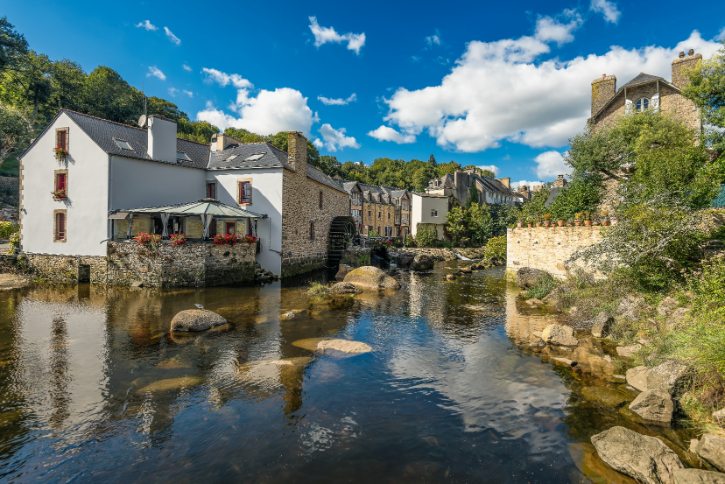
Brittany’s artistic identity centres on the Pont-Aven School, founded in the late nineteenth century by Paul Gauguin, Émile Bernard, and Paul Sérusier.
They developed Synthetism, using bold flat colour and dark outlines that helped open the door to modern abstract art.
The Musée de Pont-Aven, housed in a former paper mill, holds over 5,000 works and documents from the movement. Nearby, the Trémalo Chapel houses the wooden crucifix that inspired The Yellow Christ.
d. Music, festivals and choosing a base
Brittany’s living culture runs on Celtic music, especially the bagad bands and Fest-Noz community dances.
Major annual events include the Festival Interceltique de Lorient, usually held in August, and the Festival de Cornouaille in Quimper. Dates shift each year, so check official listings before booking.
In short: Normandy suits formal museum visits and architectural contrasts, so base yourself in Rouen or Le Havre. Brittany suits open-air festivals and community traditions, so plan around Lorient or Quimper and book early.
8. Food and Drink: Two Different Experiences
a. Normandy’s specialities
Normandy is dairy country. It is home to four famous soft cheeses: Camembert de Normandie, Livarot, Pont-l’Évêque, and Neufchâtel.
Cooking uses generous butter and crème fraîche, shown best in chicken à la normande, braised with apples, cider, and cream.
Because the climate is unsuitable for vineyards, apples became the base for drinks: dry and sweet ciders, Pommeau, and Calvados, a double-distilled apple brandy aged in oak.
On the coast, Normandy is France’s leading harvester of scallops, especially around Port-en-Bessin.
b. Brittany’s specialities
- Kouign-amann: laminated dough layered with salted butter and sugar
- Far Breton: a dense baked custard flan with prunes
- Palets bretons: crumbly shortbread biscuits
- Demi-sel butter: made with sea salt from marshes like Guérande
- Seafood: flat Cancale oysters, mussels, and cotriade, a rich Finistère fish stew
- Drinks: cider served in ceramic bowls called bolées, plus chouchen, a sweet honey mead
c. Galette or crêpe? The real difference
A savory galette is made with buckwheat flour, water, and salt. It is dark, nutty, lace-textured, and naturally gluten-free. The classic filling is the galette complète, with ham, Emmental, and a fried egg.
A sweet crêpe is made with white wheat flour, milk, and eggs. It is soft and golden, usually filled with sugar, jam, or salted butter caramel.
Recipes vary slightly between crêperies, so do not expect complete uniformity.
d. Comparing the two
- Cheese lovers: Normandy
- Apple drinks: both, but Normandy adds Pommeau and Calvados
- Casual dining: Brittany, thanks to its crêperie culture
- Seafood: both, though Brittany’s indented coast gives more variety
- Producer visits: Normandy, for cheese makers, cider routes, and distilleries
One honest note on money. Brittany’s crêperies are a reliable everyday option in almost any town, but that does not mean the region is cheaper overall. Prices vary by location, season, and what you order.
9. Accommodation: Compare Bases, Not Just Prices
a. Normandy bases
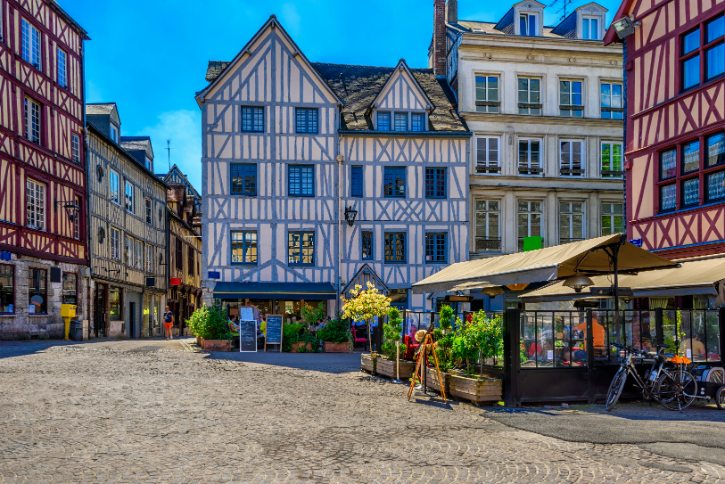
Rouen gives you history and hundreds of restaurants on foot. Le Havre offers modern architecture, sea views, and much easier parking. Both work well without a car.
Bayeux is walkable, peaceful, and the best base for organised D-Day tours. Caen gives you bigger-city amenities and a key rail connection.
On the coast, Honfleur is romantic but hard to park in, Deauville is upscale with direct trains, and Trouville-sur-Mer is more affordable and family-oriented.
b. Mont-Saint-Michel and the Cotentin
Staying on the Mont is expensive and means carrying luggage up steep steps, but you get the empty medieval streets at night once day visitors leave.
Staying in Pontorson or Avranches is far cheaper, has easy parking, and stays active year-round.
The Cotentin Peninsula, around Cherbourg and Barfleur, suits slow coastal road trips. It is impractical if your trip also includes Rouen or Giverny.
c. Brittany bases
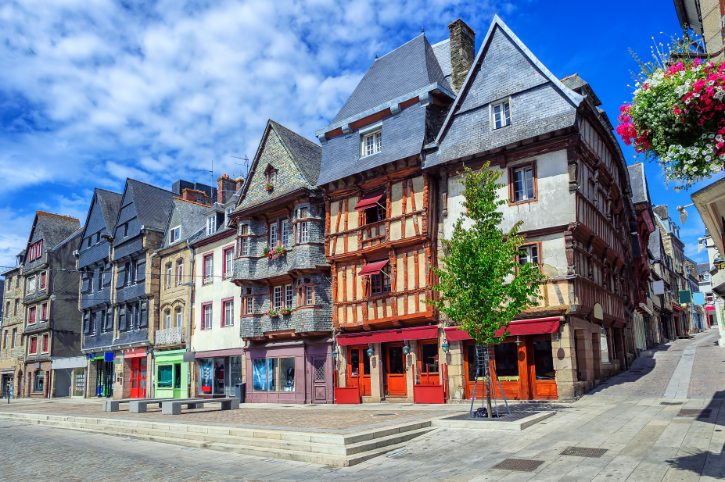
- Rennes: walkable, well connected, good as a city break or a gateway before renting a car
- Saint-Malo or Dinan: ramparts and sea views versus quiet medieval charm.
- Perros-Guirec or Lannion: a coastal resort on the Pink Granite Coast versus a practical rail-connected town
- Brest or Crozon: a maritime city versus isolated cottages and campsites. Crozon requires driving
- Quimper or Concarneau: a walkable cultural city versus a scenic harbor base
- Vannes or Auray: the main southern base versus a quieter historic port
d. Practical questions for any base
- Is it walkable, and is parking realistic?
- Are restaurants open in the evening, and outside summer?
- Is it connected by rail, or do you need a car?
- Can you stay several nights and day-trip from there?
Avoid two common assumptions. One region is not simply cheaper than the other, and rural stays are not automatically less expensive.
Also remember that many small coastal towns in both regions close down outside May to September. For off-season travel, larger cities like Rouen, Caen, Rennes, or Vannes are far more practical.
10. Getting There from Paris
a. Normandy routes
All of these leave from Paris Saint-Lazare, except Granville and Pontorson.
- Rouen: TER, direct, fastest about 1h 12m, typical 1h 28m. Station is walkable to the centre
- Le Havre: TER, direct, fastest about 2h 05m, typical 2h 18m. Local bus onward to Étretat
- Caen: TER or Nomad, direct, fastest about 1h 55m, typical 2h 11m. Bus to the D-Day beaches
- Bayeux: TER or Nomad, direct or one transfer, fastest about 2h 14m, typical 2h 25m
- Cherbourg: TER, direct, fastest about 3h 08m, typical 3h 24m. Car needed for the Cotentin
- Granville: from Montparnasse, TER, direct, fastest about 3h 06m, typical 3h 33m to 3h 48m
- Mont-Saint-Michel: from Montparnasse to Pontorson, direct train in summer, fastest about 2h 55m, typical 3h 53m to 4h 30m, then a shuttle to the rock
b. Brittany routes
All of these leave from Paris Montparnasse on the high-speed TGV line.
- Rennes: TGV InOui or Ouigo, direct, fastest about 1h 27m, typical 1h 57m. Walkable centre
- Saint-Malo: TGV InOui, direct or one transfer, fastest about 2h 30m, typical 2h 43m
- Vannes: TGV, direct, fastest about 2h 29m, typical 2h 50m. Boats onward to the islands
- Quimper: TGV InOui, direct, fastest about 3h 33m, typical 4h 05m
- Brest: TGV, direct, fastest about 3h 34m, typical 3h 55m
Schedules and journey times vary by date, so always check current timetables on SNCF Connect for your exact trip.
c. What the headline times hide
Arriving at the station is not the same as arriving at your destination.
Reaching Caen or Bayeux does not put you on the D-Day beaches. Expect another 30 to 45 minutes by bus, tour vehicle, or bike.
Reaching Le Havre does not make Étretat walkable, and reaching Brest does not place you on the Crozon Peninsula. Vannes still needs local transport or seasonal boats for the Gulf islands.
d. The practical comparison
Normandy is excellent for a short two or three day extension from Paris. You can reach Rouen in around 75 minutes, which makes a car-free trip very realistic.
Brittany is faster than most people expect. Rennes is under 1h 30m, and Vannes and Saint-Malo are both under two and a half hours.
The real difference is the final leg. If you want remote cliffs, wild peninsulas, or prehistoric stone fields, a car is still very useful in both regions.
11. Where Brittany Might Genuinely Be Better
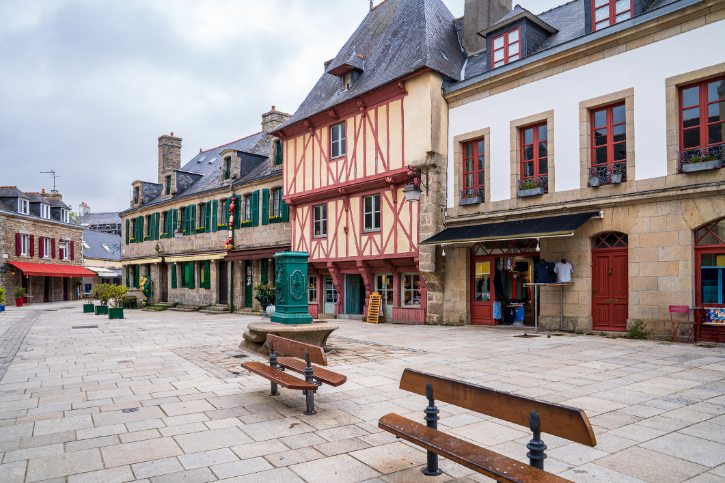
a. A coast-centered journey
With over 2,000 kilometres of deeply indented shoreline, Brittany keeps the sea in view almost constantly. You can drive for days past rocky peninsulas, fishing harbors, lighthouses, and hidden coves.
Normandy’s coast is beautiful but more segmented, moving from chalk cliffs to industrial ports to the landing beaches.
b. Coastal walking
This is Brittany’s clearest advantage. The GR34, or Sentier des Douaniers, follows the coast for over 2,000 kilometres from Mont-Saint-Michel to Saint-Nazaire.
- Created in 1791 for customs officers watching for smugglers
- Clearly marked with red-and-white signs
- Works for a one-hour stroll or a multi-week trek
- Best sections: the Pink Granite Coast, around Saint-Malo, Crozon, and southern Brittany
- Exposed parts get windy and slippery, so check the forecast and stay back from edges
Normandy has fine clifftop walking too, especially the GR21. Brittany’s edge is variety and continuity.
c. Prehistory and toll-free roads
For deep prehistory, Brittany has no real equivalent in northern Europe. The Carnac and Morbihan megaliths, UNESCO-listed since July 2025, connect you to Europe’s earliest stone-building societies.
Brittany’s main dual carriageways are also entirely free of tolls, a political decision from the 1960s meant to connect the peninsula to the rest of France. These are four-lane expressways with a 110 km/h limit.
That makes regional driving simpler to plan. It does not make the whole trip cheaper.
d. Honest qualifications
Brittany is not automatically quieter, cheaper, less crowded, or more authentic.
Saint-Malo and Concarneau see intense congestion in July and August. Breton coastal towns are also highly seasonal, so open restaurants and hotels can be harder to find outside summer than in Normandy’s larger year-round cities.
Read More: The Best Route to Explore Brittany’s Most Beautiful Towns, Coastlines, and Hidden Gems
12. Where Normandy May Still Be the Better Choice
a. The D-Day advantage
If your main interest is the Second World War, Normandy is the definitive choice. Its battlefields, cemeteries, bunkers, and museums create a deeply moving journey that Brittany cannot substitute.
b. Famous landmarks and medieval history
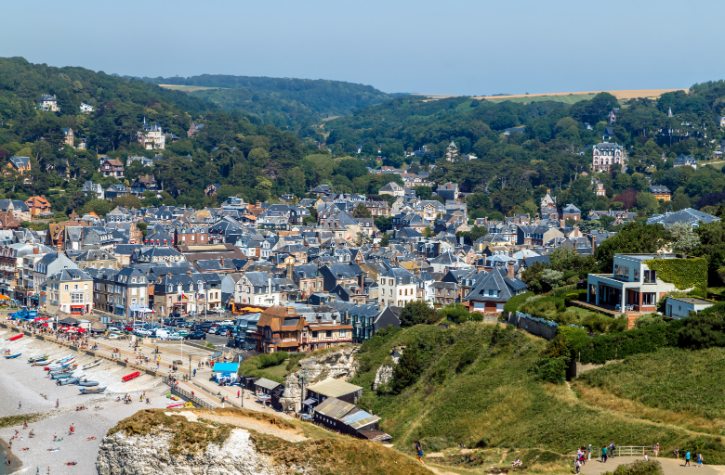
For a first visit to France, Normandy delivers recognisable sights with immediate impact: Mont-Saint-Michel, Étretat, the D-Day beaches, Giverny, Rouen Cathedral, Bayeux, and Honfleur.
It also offers a cohesive record of the Anglo-Norman world, from Caen Castle to Rouen’s Gothic cathedral, which is compelling if you care about the historic links between Normandy and England.
c. Art and elegant resorts
Normandy is exceptional for art lovers, and the 2026 Monet centenary makes it an especially strong year to visit.
For a polished seaside holiday, the Côte Fleurie is superb. Deauville and Cabourg offer grand hotels, casinos, boutiques, and manicured boardwalks.
d. Ideal for shorter trips
Normandy’s compact geography lets you combine very different experiences quickly.
- Best by direct train: Rouen, Caen, Bayeux, Le Havre, Deauville
- Best two to three day plans: Rouen alone, or Bayeux plus the D-Day coast
- Within five days: D-Day beaches, Mont-Saint-Michel, Giverny, Étretat, and the Pays d’Auge
- Still avoid: trying to add the Cotentin Peninsula to a short trip
One fair note. Famous attractions do not automatically make a better trip, and Normandy’s popularity brings heavy congestion in summer.
Read More: The Perfect Route to Explore Normandy’s Most Beautiful Towns, Dramatic Coastlines, and Hidden Gems
Final Thoughts: Which One Is Right for You?
Brittany does not replace Normandy, and Normandy does not make Brittany unnecessary.
Brittany may be better if you want:
- A longer, slower coastal journey
- Coastal walking on the GR34
- Granite headlands and island scenery
- Fishing ports and maritime culture
- Prehistoric heritage and living regional traditions
Normandy may be better if you want:
- D-Day history
- Mont-Saint-Michel
- Medieval Norman heritage
- Impressionist art and famous landmarks
- Chalk cliffs, elegant resorts, and a focused trip from Paris
Before you book, ask yourself a few honest questions. What do you most want to experience? Will you drive or rely on trains? How many days do you really have? Do you prefer major landmarks, or a slower regional journey?
Answer those, and the choice usually makes itself.
Brittany may well be the better region for travelers who want the coast at the centre of everything. But for others, Normandy remains the stronger and more meaningful trip.