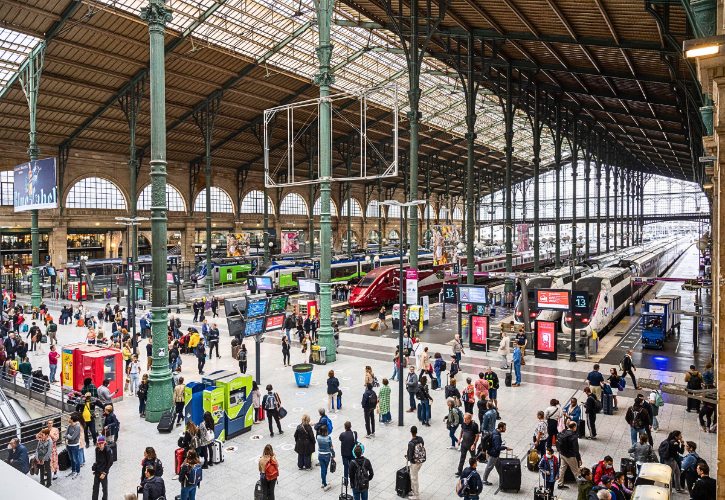
Paris looks effortless in photos. Golden light on the river, a quiet café table, an empty staircase in Montmartre.
The real city runs on booking windows, luggage rules, deep staircases, and crowds that arrive before you do. None of it is difficult once you know it is coming.
Here are seven things worth sorting out before you fly, so your days feel calm instead of rushed. 😊
1. Be Prepared for Long Restaurant Queues
a. Where the Queues Actually Are
Most neighborhood bistros in Paris have no wait at all. You walk in, you sit down, you eat.
The lines you see online belong to a small group of places: famous historic bouillons, viral social media favorites, fashionable brunch spots, and small rooms where demand simply beats the number of chairs.
So the skill is not avoiding queues everywhere. It is knowing which few restaurants come with a wait.
b. Three Booking Systems Worth Knowing
These three show how differently Paris restaurants operate:
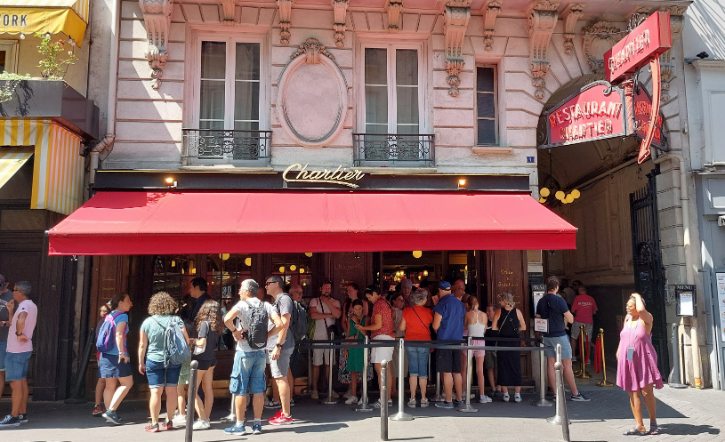
- Bouillon Chartier takes no reservations at all, at any of its three locations. Service runs from late morning to midnight, seven days a week, and the line moves faster than it looks.
- Bouillon Pigalle and Bouillon République do take online bookings, through bouillonlesite.com/reservation. The catch is strict: your table is held for around 10 to 15 minutes, and your whole party must be present before you are seated.
- Pink Mamma in Pigalle uses a hybrid system. Reservations open exactly 15 days ahead on a rolling basis at bigmammagroup.com, and some tables are kept back for walk in guests at each service.
Policies change. Always confirm on the restaurant’s own booking page rather than an old review.
c. Never Put a Walk In Meal Before a Timed Ticket
A walk in restaurant has an unpredictable wait by definition. Putting one directly before a timed museum entry or a train departure is a risk you do not need.
French service also runs in windows. Lunch is roughly 12:00 PM to 2:00 PM and dinner roughly 7:00 PM to 10:00 PM. Places advertising service continu stay open through the afternoon, which gives you a much quieter option around 2:30 PM to 6:00 PM.
d. Simple Ways to Cut the Wait
- Book through the restaurant’s own site whenever one exists
- Find out exactly when bookings are released, then be ready
- Choose lunch over the busiest dinner slot
- Arrive shortly before service starts at walk in places
- Go on a quieter weekday
- Try a different branch of the same group
One last thing. A long queue means a place is popular, not that the food beats the bistro around the corner.
Read More: 12 Delicious Cheap Eats in Paris You Shouldn’t Miss
2. Check Train Luggage Rules Before You Travel
a. Find Your Operator First
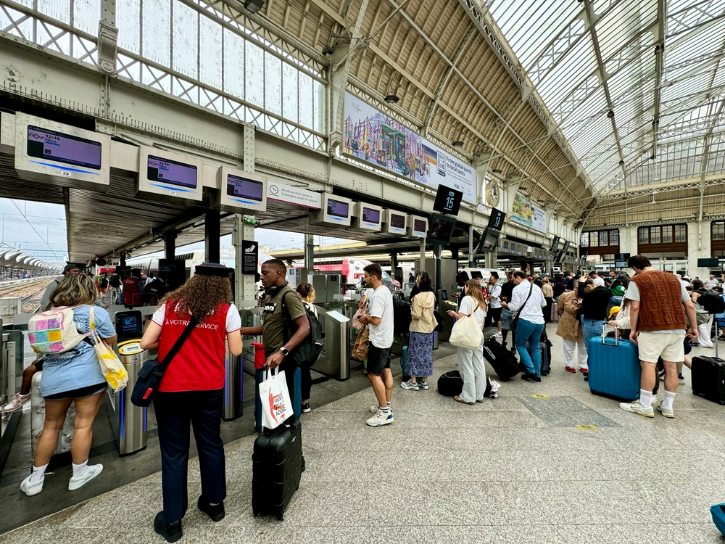
There is no single luggage rule for trains in France. Allowances change by operator, service, fare type, and whether your journey is domestic or international.
This matters, because SNCF now actively enforces baggage rules on TGV INOUI and INTERCITÉS, with fines in the region of €50 to €150.
Your operator is printed on your ticket. Never apply one operator’s rules to another.
b. The TGV INOUI and INTERCITÉS Allowance
Standard tickets allow a maximum of three items:
- Two large suitcases plus one item of hand luggage, or
- One large suitcase, one special item, plus one item of hand luggage
Sizes:
- Hand luggage: up to 40 x 30 x 15 cm
- Large suitcase: up to 70 x 90 x 50 cm
You must be able to lift and stow everything yourself. Full conditions are on sncf-connect.com.
c. Why OUIGO Catches People Out
OUIGO is the low cost service, and the baggage allowance is where the savings come from.
A basic Essentiel fare includes only one cabin bag (up to 55 x 35 x 25 cm) and one item of hand luggage (up to 40 x 30 x 15 cm). A normal holiday suitcase is not included.
Add the luggage option at ouigo.com when you book, or up to 30 minutes before departure, for around €5. Buying at the platform costs far more, and may be refused outright.
Other operators to check directly: eurostar.com for continental Eurostar routes, and tgv-lyria.com for services to Switzerland.
d. Labels Are the Law, Not a Suggestion
Under French transport rules, every bag must carry a label showing your first and last name.
Unlabeled luggage can be treated as a security threat and destroyed. A cheap tag solves it.
Store bags in overhead racks, the gap between back to back seats, or the racks at carriage ends. Never block doors, aisles, or wheelchair spaces.
e. Bikes, Skis, and Strollers
On TGV INOUI and INTERCITÉS:
- Bicycles must be folded or dismantled inside a labeled cover (maximum 130 x 90 cm) to travel free. An assembled bike needs a reserved space, currently around €10
- Skis are allowed as an exception, one pair per person, inside a labeled cover, with no size limit
- Folded strollers travel free but must go in the baggage zones
One more practical point. There are no porters at standard platforms, and double deck TGV trains have steep internal stairs. Pack only what you can carry up a flight of steps by yourself.
3. Expect Stairs and Narrow Gates on the Métro
a. The Network Is Not One Thing
The Métro is fast and cheap, and most of it was built long before accessibility standards existed.
- Métro Line 14 is step free across its stations, with modern lifts and spacious platforms. It also links major rail hubs including Gare de Lyon
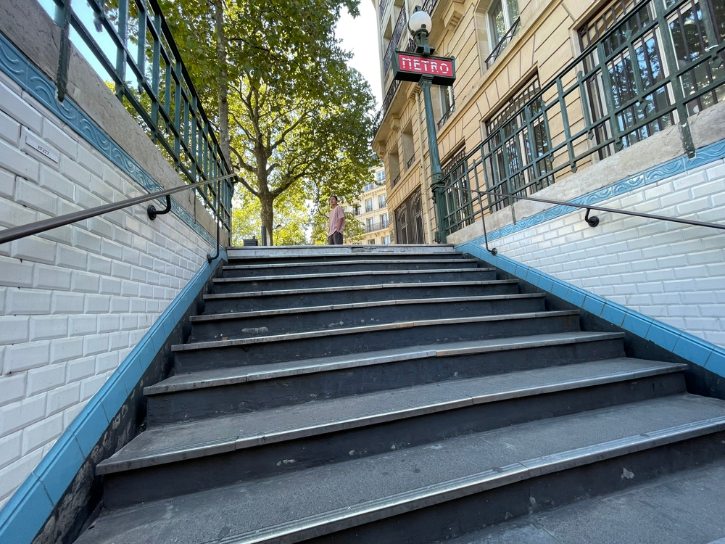
- Lines 1 to 13 rely heavily on stairs and long corridors
- RER trains sit in the middle, with larger carriages and lifts at many major stations, but very long transfer corridors
- Buses and trams are the quiet winners, with low floor ramps on almost all vehicles
A lift at one entrance does not make the whole journey step free. Check the full route, including your interchange and your exit.
b. Stairs, Depth, and Long Transfers
Abbesses in Montmartre is the extreme case. The platform sits 30 meters below street level, and while lifts exist, the main route is a spiral staircase equal to about eight stories. If the lift fails, you carry your case up all of it.
Abbesses is unusual, so check the stations on your arrival and departure days, when you actually have bags.
c. Gates and Luggage Rules
Traditional turnstiles are narrow by design. Look for the wider automated gate, which opens with a Navigo contactless pass or a paper ticket, or ask staff at a staffed booth.
RATP rules are built on one principle: you must be able to handle your own bags.
- Large volumes of luggage can be refused
- Bags must not block aisles, doorways, or platforms
- Have your ticket ready before you reach the gate
- Keep luggage in front of you and move through in one motion
- Avoid commuter peaks, roughly 8:00 AM to 9:30 AM and 5:00 PM to 6:30 PM on weekdays
d. Check Before You Go, and Know Your Alternatives
Two tools do the job:
- ratp.fr and the Bonjour RATP app, for station accessibility and live lift status
- iledefrance-mobilites.fr and its app, for journey planning with accessibility filters
An accessibility filter improves the route it suggests. It does not guarantee a step free trip, because lifts fail between your search and your journey. Recheck on the morning you travel.
When stairs are not an option, consider Line 14, an RER route, a bus, or an official taxi. Regulated taxis run legally set flat rates between Paris and both Charles de Gaulle and Orly, with no extra charge for standard luggage.
4. Know How to Find a Clinic When You Need One

a. The Four Level Ladder
France runs healthcare in clear tiers. Knowing which one you need saves hours.
- Pharmacy for minor problems. French pharmacists are trained clinical professionals who can assess symptoms and recommend treatments
- Doctor, clinic, or health center for non emergency consultations
- Urgent home visits through SOS Médecins, reachable on 36 24, available 24 hours
- Emergency services for anything critical
If symptoms are severe or worsening quickly, skip the ladder and call for emergency help.
b. Finding a Doctor: Where to Search
Start with sante.fr, the official French public health directory of verified medical centers and specialists, searchable by location and specialty.
For booking, most French practices use doctolib.fr. You can register with an international mobile number, as long as you enter the country code with the “+” prefix, since verification comes by SMS.
Doctolib lets you filter by languages spoken, the fastest way to find English speaking care. Each practice sets its own fees and policy on new patients, so check the provider’s own page.
c. Pharmacies and the Night System
Look for the illuminated green cross. Pharmacists can advise on minor symptoms, supply non prescription medicines, provide emergency contraception, and tell you when to see a doctor.
Standard pharmacies close on Sundays. Outside normal hours, a rotating pharmacie de garde system takes over.
Here is the part that surprises visitors. Inside Paris, on duty pharmacies are open and you can walk straight in. In the surrounding suburbs, night access usually means going first to the local police station, called a commissariat, with identification and a valid prescription. The police then contact the on duty pharmacist for you.
To find one, use monpharmacien-idf.fr or the MonPharmacien app, run in partnership with the regional health agency. You can also call 3237 or use 3237.fr.
Bring your original packaging, your prescription, and the generic name of your medicine, since brand names differ between countries.
d. Emergency Numbers and What to Bring
- 15 for medical emergencies. You reach a medical regulator who dispatches an ambulance or directs you to care
- 18 for fire and rescue, often dispatched for serious trauma and cardiac incidents
- 17 for police
- 112, the European emergency number, free from any working mobile even if locked or without a local SIM
- 114, an SMS based service for people who are deaf, hard of hearing, or unable to speak
Bring your passport, travel insurance documents, a credit card, and a medication list written with generic names.
Non EU visitors normally pay upfront and claim back later. Ask for a feuille de soins and an itemized receipt, and keep everything for your insurer.
Never delay an emergency call while hunting for an English speaker.
5. Book Major Attraction Tickets Early
a. Eiffel Tower
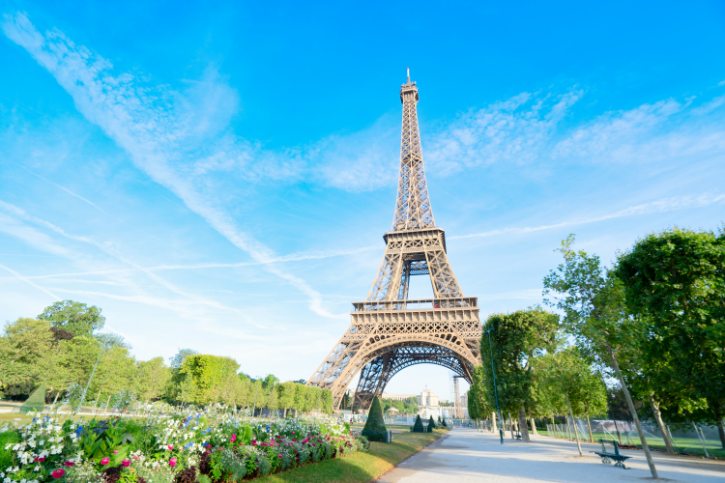
Book at ticket.toureiffel.paris, the official ticket office.
- Lift tickets go on sale up to 60 days in advance
- Stair tickets to the second floor go on sale up to 30 days in advance
- Summit slots sell out fastest in summer and school holidays
- Tickets are personalized, and ID is checked against the name on them
- If online availability is gone, tickets are still sold on site, though queues are long
Stair tickets are moving toward advance reservation, so check before relying on buying them on the day.
Read More: 10 Best Free Spots to Take Stunning Eiffel Tower Photos
b. Louvre
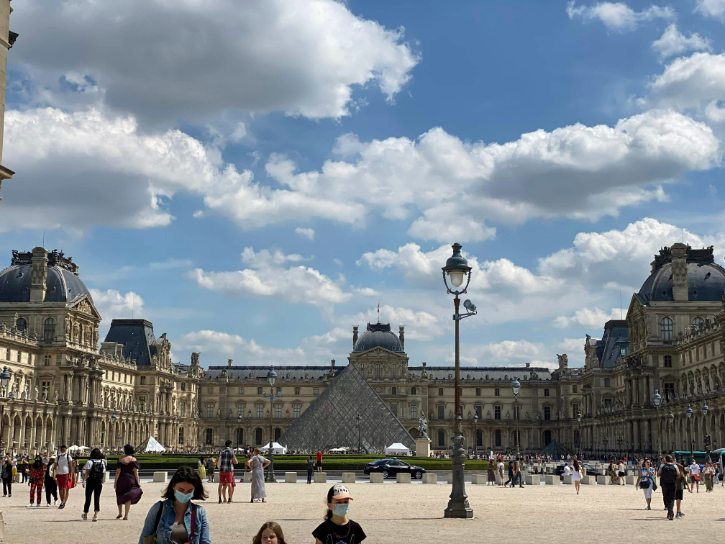
Book at ticketlouvre.fr, the museum’s official ticketing site.
Timed entry is strongly recommended all year and becomes mandatory in the busiest periods. The detail that catches people out is that visitors entitled to free admission should still reserve a slot, including under 18s, EU and EEA residents under 26, and Paris Museum Pass holders. A pass is not a queue jump on its own.
The Louvre is closed every Tuesday. A thorough visit takes three to four hours, so do not stack much else around it.
c. Musée d’Orsay
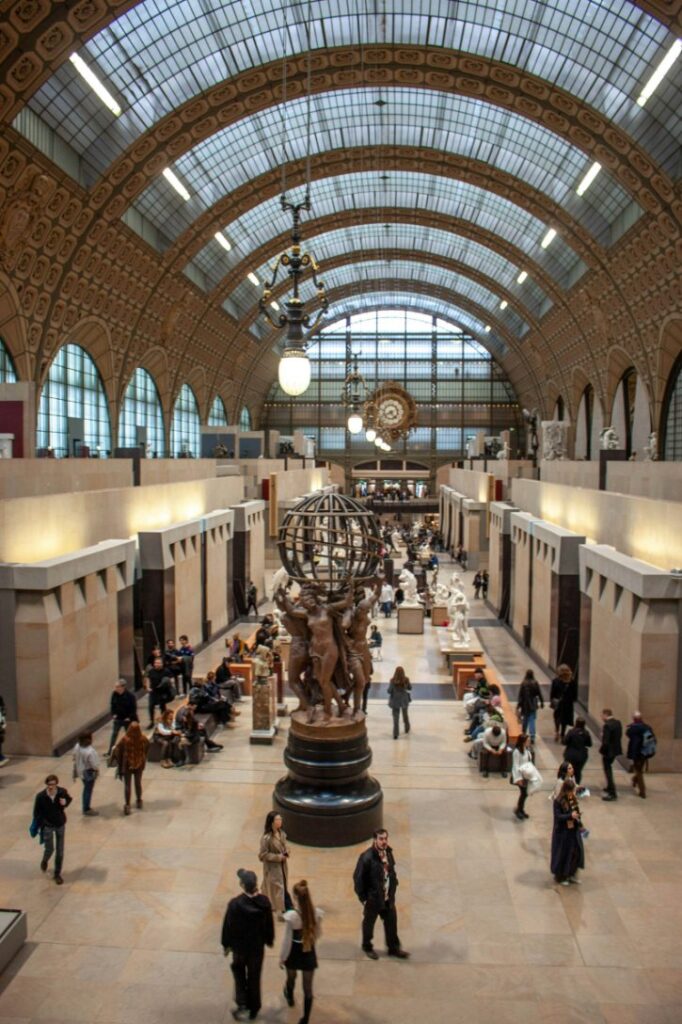
Book at billetterie.musee-orsay.fr, with visitor information at musee-orsay.fr.
Major work on the reception areas means entry arrangements are changing. Booking a timed slot is strongly recommended, and Paris Museum Pass holders are asked to reserve a free slot through the ticketing site.
Tickets are still sold on the day, with separate entrance lines for booked slots, pass holders, and people buying on arrival. Confirm the current setup before you go, because this one is in flux.
Closed on Mondays. The Thursday late opening runs until 9:45 PM and is the quietest window, with a reduced rate after 6:00 PM.
d. Notre-Dame
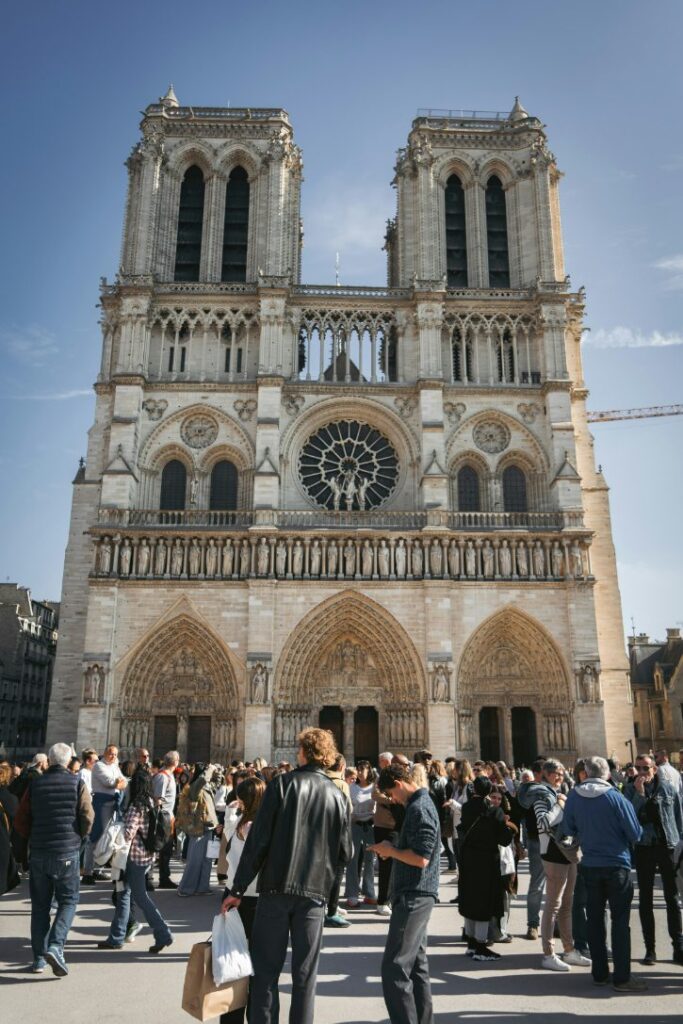
Entry to the cathedral is completely free. No one sells tickets for it.
You can reserve a free timed slot at notredamedeparis.fr or through the official cathedral app, but slots generally open only the day before, two days before, or on the day itself. Walk ins are still accepted.
The towers are separate and paid, around €16 for 424 steps with no lift, booked through the Centre des monuments nationaux.
The cathedral warns directly about resellers who book free slots and sell them on. Those are worthless and will not get you in.
Read More: 10 Breathtaking Churches in Paris You Can’t Miss
e. Book in the Right Order, From the Right Sites
- Choose your dates
- Pick the two or three attractions that matter most
- Check when each one releases tickets, since the windows are wildly different
- Secure the hardest ticket first, setting a reminder if needed
- Build the rest of the day around it
Start on the official sites listed above, not the first sponsored search result. Legitimate tour operators charge more for a guide, so just be clear what you are buying.
A booked slot is not instant entry either. You still pass security, bag checks, and ID checks, so never stack two timed bookings back to back.
6. Watch Out for Pickpockets
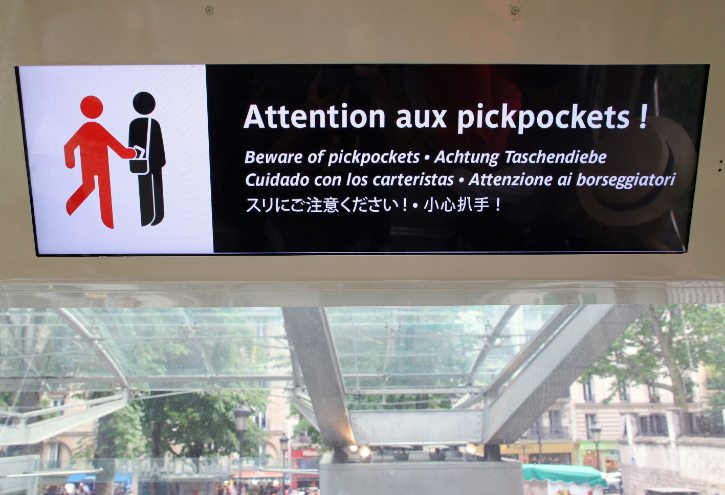
a. Where the Risk Concentrates
Risk rises with crowd density and distraction, not with neighborhoods:
- Métro Lines 1 and 4
- RER B, the line to Charles de Gaulle Airport
- Major stations, especially Gare du Nord
- Crowded escalators and train doors during boarding
- Attraction queues and museum security lines
- Outdoor café terraces and street performances
Notice the pattern. These are the moments you are holding a phone, checking a map, or wrestling a suitcase.
b. The Three Classic Tricks
The petition. Someone asks you to sign a clipboard for a charity that does not exist. While you look down, an accomplice works your pockets.
The door jostle. A group crowds the carriage doorway as doors close. One person blocks or drops something near your case, another lifts a wallet, and the train pulls away.
The café cover. A map or flyer is laid over the phone on your table, then lifted with the phone underneath.
Most people who talk to you in Paris are just people. The warning sign is the combination: distraction, crowding, pressure, and someone very close to your bag.
c. Habits That Prevent Most of It
- Wear a closed bag across the front of your body in crowds
- Never keep a wallet in a back pocket
- Do not hold your phone loosely near open Métro doors
- Keep phones off outdoor café tables
- Never hang a bag on the back of a chair
- Carry only the cash you need, and keep a backup card separate
- Move away from the doors after boarding
Before you travel, back up your phone, turn on remote tracking and erase, record your IMEI number, and enable multi factor authentication on banking and email. Five minutes at home turns a theft into an inconvenience.
d. What to Do After a Theft
- Move somewhere safe
- Freeze your bank cards
- Lock or erase your phone remotely
- Change important passwords
- Report the theft and get an official report
- Contact your embassy or consulate if a passport was taken
- Contact your travel insurer, and keep every receipt
For property theft where you do not know the culprit, France has a single official online reporting service at masecurite.interieur.gouv.fr. Foreign nationals can use it, and in most cases you file entirely online and receive a report reference for insurance. Police may still contact you to finish the statement.
For anything involving violence, threats, or weapons, go directly to a police station, known in France as a commissariat.
Most visitors go home having lost nothing. Awareness beats fear.
7. Group Your Days by Area
a. Start With the Fixed Booking
The most common planning mistake is choosing sights without looking at where they are.
Build each day around one rigid timed booking. Add nearby sights that need no reservation, pick a restaurant in the same area, then check real walking times.
Leave gaps. Do not fill every hour, because the gaps are usually where the good memories happen.
b. The Five Clusters
- Eiffel Tower and western Paris: Eiffel Tower, Champ de Mars, Trocadéro, Invalides, Musée Rodin, and the Seine riverfront. Use the tower as your morning anchor, then walk east along the river
- Louvre and central Paris: Louvre, Tuileries Garden, Palais Royal, Place Vendôme, and the Opéra district. Book the earliest Louvre slot so the afternoon stays free
- Île de la Cité and the Latin Quarter: Notre-Dame, Sainte-Chapelle, the Conciergerie, the Panthéon, and the Luxembourg Gardens. These sit minutes apart, making this the most efficient cluster in the city
- Le Marais and the Right Bank: Hôtel de Ville, Rue des Rosiers, Place des Vosges, Musée Carnavalet, and Bastille. Best left unstructured. The Centre Pompidou is closed for a multi year renovation, so cross it off older lists
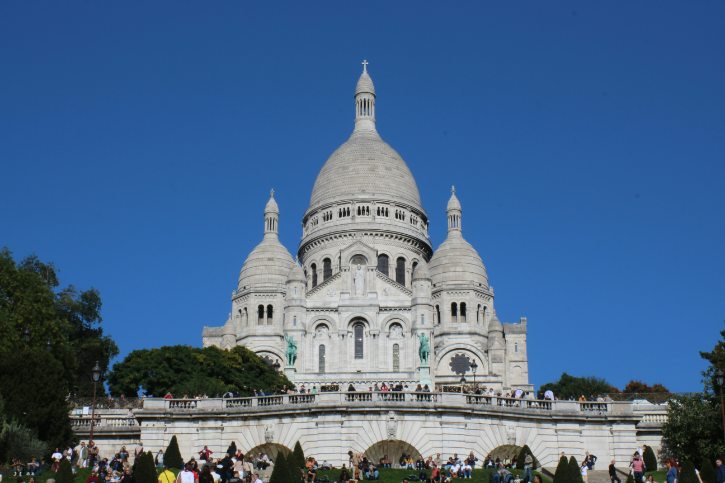
- Montmartre and Pigalle: Sacré-Cœur, Place du Tertre, Abbesses, and the quieter back streets. Steep hills and cobbled stairs, so give it a half day and use the funicular, which accepts a standard transit ticket
Each cluster is an example, not a checklist.
c. Why Map Distance Lies
Two dots close together on a map can still be a long trip.
Flat maps hide hills, security checks, and the size of monuments. The Louvre’s entry pavilions can sit more than a kilometer apart, and changing lines at Châtelet-Les Halles can mean over 15 minutes of walking underground.
Check the exact public entrance you need, not the central map pin. Door to door time is the number that matters.
d. Plan With Official Tools, and Keep Day Trips Separate
Use ratp.fr and iledefrance-mobilites.fr rather than only third party map apps, since official planners carry live disruption information. Recheck your route each morning.
Day trips deserve their own day. Versailles is reached via RER C and Disneyland Paris via RER A. Both involve real travel time and a lot of walking.
Do not combine a day trip with a major timed booking in central Paris. It looks fine on paper and collapses by four in the afternoon.
Do this once before you fly, and your itinerary stops being a scattered list. It becomes a route you can actually walk.