Picture pale limestone peaks catching fire at sunrise, turquoise lakes hidden in pine forest, and mountain passes that unfold a brand new view at every bend. That is the Dolomites, a UNESCO World Heritage corner of northern Italy made for driving.
At dawn and dusk, a glow called enrosadira paints the cliffs pink and gold. One loop connects dramatic summits, quiet villages, and glassy water into a single journey, and you will remember every mile of it. 😊
1. Cortina d’Ampezzo
a. Why This Town Wears the Crown
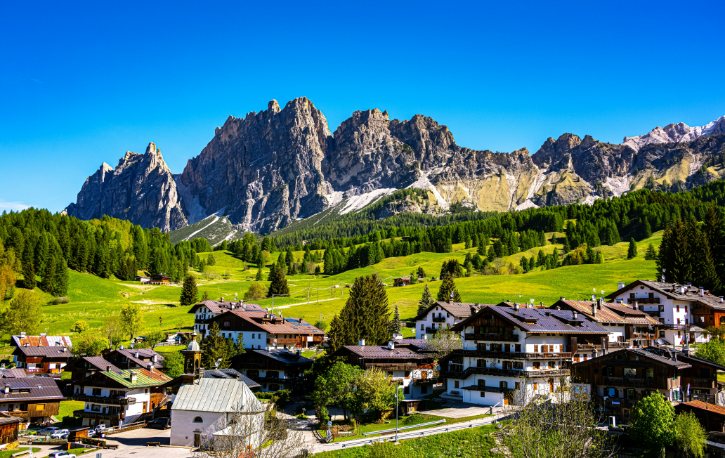
Cortina d’Ampezzo is known as the “Queen of the Dolomites”, and the setting earns the title. The town spreads across a wide, sunny basin, wrapped in a full circle of massifs: the Tofane to the west, Monte Cristallo to the northeast, and Faloria and Sorapiss to the east.
At its heart runs Corso Italia, an elegant, traffic-free street of grand old hotels and timber-and-stone homes. Its landmark is the 18th-century Basilica dei Santi Filippo e Giacomo, next to a tall stone bell tower added in the 1850s.
b. Rides That Lift Your Spirits
- The Freccia nel Cielo network climbs the Tofana massif in three stages, rising past Col Drusciè and Ra Valles to Cima Tofana, the highest lift-served point in the area.
- The separate Faloria cable car leaves straight from the town center, with gentle terrace walks and front-row views of the Tofane and Monte Cristallo.
- The summit platform at Cima Tofana is safe for everyone, while the exposed ridge beyond it is strictly for equipped climbers.
- Keep these clear from the Lagazuoi and Cinque Torri lifts further along the loop, which are a different set entirely.
c. Step Straight Into the Wild
- Cortina sits beside the vast Parco Naturale delle Dolomiti d’Ampezzo, thick with spruce, larch, and stone pine.
- For an easy win, visit Lago Pianozes, a small emerald pool reached by a short stroll.
- The tall Cascate di Fanes waterfalls lie deeper in the park, reached by a longer and more demanding route.
- The multi-day Alta Via 1 trek crosses this country, while the via ferrata iron paths on Monte Cristallo and Tofana di Rozes call for proper gear and climbing experience.
d. A Place Steeped in Tradition
Cortina carries a deep Ladin heritage. For over a thousand years, its pastures and woodlands have been cared for by the Regole d’Ampezzo, an institution of native families.
The town blends centuries of Austrian rule with its later fame as a resort, having hosted the Winter Olympics and set to welcome the Games once again. You can dive into its costumes and crafts at the Ethnographic Museum of the Regole. When you are ready, the road climbs over Passo Tre Croci toward a serene mountain lake.
2. Lago di Misurina
a. A Lake That Mirrors the Peaks
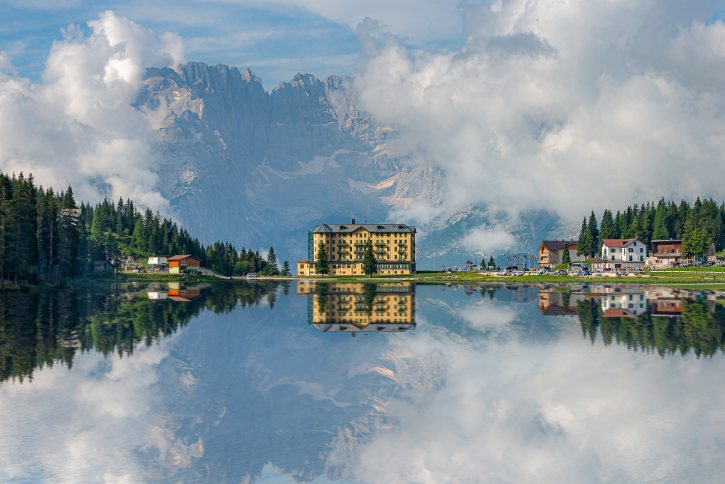
Lago di Misurina is one of the most photogenic lakes in the eastern Dolomites, and it feels blissfully calm. It rests in an open hollow ringed by dark pine forest, the largest natural alpine lake in the Cadore region.
The jagged Cadini di Misurina rise to the east, Monte Cristallo and Piz Popena stand to the west, and the great Sorapiss massif looms to the south. Grand old buildings along the shore add a touch of history to the scene.
b. Catch the Perfect Reflection
- From the northern shore looking south, the water mirrors the walls of Sorapiss and the historic Istituto Pio XII.
- From the southern shore looking northwest, the towers of Monte Cristallo rise above the trees.
- Early morning gives the stillest water and the cleanest reflections.
- Sunrise lights the Cristallo towers, while sunset turns the northern Sorapiss walls gold and pink.
c. Slow Moments by the Water
- An easy, mostly flat path loops the whole lake, with benches and docks along the way.
- Part of it follows the lakeside road, while the far side becomes a quiet trail through the trees.
- In summer, you can glide across the water in a rented pedal boat or rowboat.
- Motorboats and swimming are not allowed, which keeps the lake calm and clear.
d. The Lake That Helps You Breathe
Misurina has an unusually pure, dry mountain air, and since the late 19th century it has drawn people seeking easier breathing. The lakeside Istituto Pio XII was long a renowned center for treating childhood asthma, until it closed in 2022.
That restful mood sets it apart from Cortina’s buzz. From here the road slips past the peat bogs of Lago d’Antorno and winds up toward one of the most famous rock formations in the Alps.
3. Tre Cime di Lavaredo
a. The Three Peaks That Say “Dolomites”
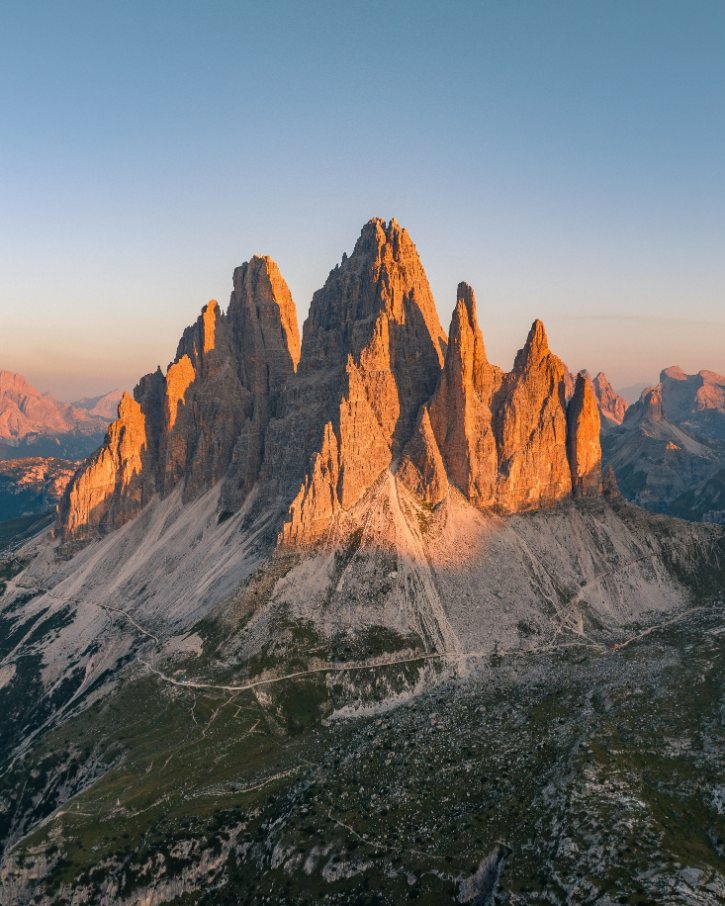
If one image sums up the whole range, it is Tre Cime di Lavaredo, also called Drei Zinnen. Three free-standing rock towers, Cima Piccola, Cima Grande, and Cima Ovest, rise straight from a high plateau.
Shaped by faulting, fracturing, and ancient glaciers, their northern walls fall away in sheer, sometimes overhanging cliffs that drop hundreds of meters. It is mountain drama at its most raw.
b. Walk the Classic Circuit
- The celebrated loop circles the entire massif, passing a string of mountain refuges.
- At Forcella Lavaredo you get your first full view along the sheer north faces.
- Rifugio Locatelli delivers the postcard north-face panorama everyone comes for.
- To see those vertical walls, you need to walk in; the roadside only shows the gentler southern slopes.
c. Best Light, Best Angles
- The terrace at Rifugio Locatelli and the nearby Sasso di Sesto ridge offer the finest views.
- At sunrise, the eastern faces glow while the valleys stay in shadow.
- Behind Locatelli, the two small Laghi dei Piani mirror the towers and Monte Paterno on calm days.
- Sunset light falls beautifully on the northwestern side of Cima Ovest.
d. Echoes of the Great War
These peaks sat on the front line during the First World War, and the land still carries the marks. Fortified caves, crumbling barracks, and restored trenches stand near the main refuges and viewpoints.
You can wander the trenches along the trails near Rifugio Locatelli with ease. The old tunnel routes through Monte Paterno, by contrast, are dark and demanding and meant only for equipped climbers.
e. A World Icon in Stone
Tre Cime is the centerpiece of the Northern Dolomites UNESCO zone, celebrated for its dramatic rock architecture. For most travelers, the real prize is simply standing beneath the towers. From here the road drops back past Misurina and threads through quiet valleys toward a lake many call the loveliest in Italy.
4. Lago di Braies
a. The Pearl of the Dolomite Lakes
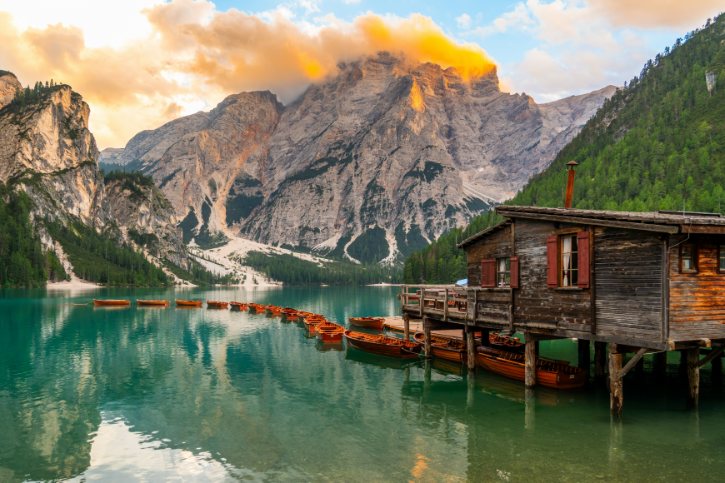
Lago di Braies, known in German as Pragser Wildsee, is often called the pearl of the Dolomite lakes. Long ago, a rockfall dammed a mountain stream and created it.
Its water glows turquoise, emerald, and deep blue beneath the stark wall of Croda del Becco, whose folded rock layers rise straight above the southern shore. That first glimpse genuinely stops you in your tracks.
b. Wooden Boats and Still Water
- The lake’s icon is its historic wooden boathouse, at the northern end beside the old hotel.
- From late spring to autumn, you can hire a handcrafted rowboat and drift across the bay.
- The stillest reflections appear in the earliest morning, before the boats and breezes arrive.
- For the classic shot, stand by the boathouse and look down the lake toward Croda del Becco.
c. A Shoreline With Two Faces
- A path loops the whole lake, and each side feels completely different.
- The western shore is a flat, easy promenade, passing a small timber chapel from the early 1900s.
- The eastern shore turns wilder and rockier, carved into limestone ledges with wooden stairways and narrow stretches.
- Together they show the lake from every angle.
d. Loved by Many, Protected for All
Braies is beloved, and in peak summer the valley carefully manages its crowds to protect the setting. Swimming and private boats are off limits, all to keep the fragile water clean.
It sits within the Fanes-Sennes-Braies Nature Park, a gentle reminder to tread lightly. From here the loop heads west and then climbs into a green, storybook valley.
5. Santa Maddalena (Val di Funes)
a. The Most Photographed Church in the Alps
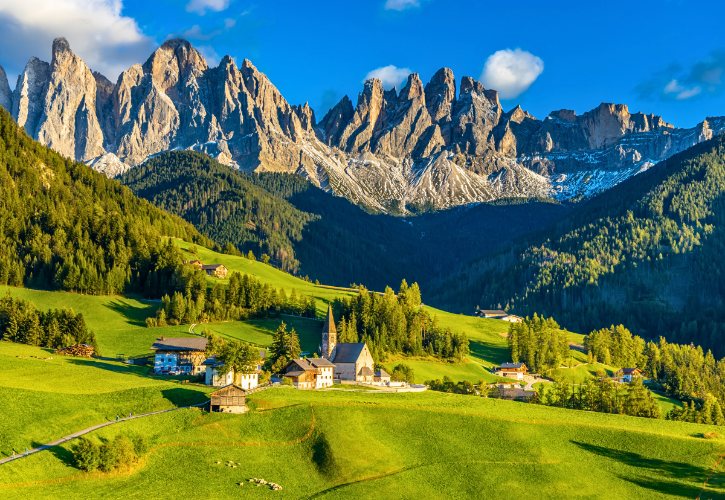
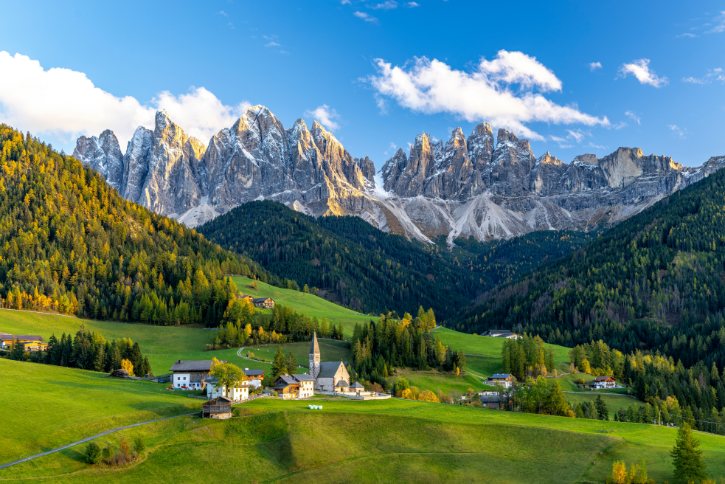
Few scenes are as recognizable as Santa Maddalena, a tiny village cradled in the Val di Funes. Its small late-Gothic church, with a slender stone bell tower, sits against green meadows and the jagged wall of the Odle (Geisler) peaks behind.
The classic view comes from the elevated Panorama Weg path on the hillside just north of the village.
b. Please, Mind the Meadows
- The hay meadows here are private working farmland, so stepping into them is not allowed.
- Viewing platforms and timber fences guide you to the best angles.
- A second famous chapel, San Giovanni in Ranui, sits alone in the meadows a little further up the valley, with its own viewing barriers.
- Stick to the lanes and platforms, and you will still get the shot.
c. A Valley for Every Season
- Early summer fills the pastures with wildflowers.
- Autumn turns the larch forests below the cliffs to gold.
- Winter blankets the meadows in snow beneath the pale spires.
- Year round, the rolling farmland is a gentle counterpoint to the sharp peaks elsewhere on the loop.
d. Trails Beneath the Odle Giants
- The celebrated Adolf Munkel Trail runs right beneath the thousand-meter north faces of the Odle group.
- It begins up the valley near Zannes (Zanser Alm), not in the village itself.
- Along the way, cozy mountain huts like Geisleralm and Glatschalm make perfect rest stops.
- For something gentler, a flat valley path links Santa Maddalena with the hamlet of Ranui.
e. Where the Old Ways Endure
This valley has held onto its South Tyrolean soul. Timber farms pass down whole through generations under an old tradition, and the valley even keeps its own breed of spectacled sheep.
It is the childhood home of the famous mountaineer Reinhold Messner, a nice thread of history to carry with you. Next, the road climbs toward one of the most dramatic ridgelines in the whole range.
6. Seceda
a. The Ridge That Steals Your Breath
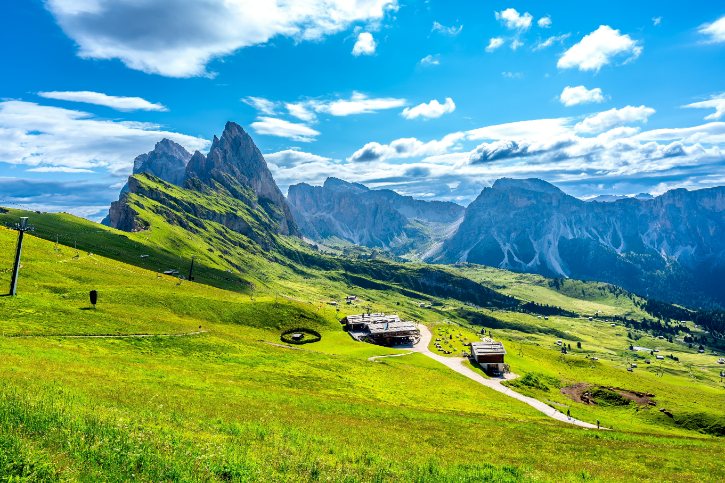
Seceda is one of those sights that stays with you for years. On one side, soft green meadows roll gently upward. On the other, the land drops away in a vast, near-vertical wall into the valley below.
The famous view looks east along the sharp crest toward the Odle peaks, where Fermeda and Sass Rigais rise like tilted blades of rock.
b. To the Summit, the Easy Way
- A two-stage lift carries you up from the village of Ortisei, first by gondola, then by cable car.
- From the top station, a short, gentle walk leads to the summit cross and its panoramic viewpoint.
- The summit path is wide and welcoming, but the northern cliff edge is unfenced and drops hundreds of meters.
- Stay on the marked trails and keep well back from the crumbling edge.
c. A Full Sweep of Giants
- Look east for the knife-edge Odle crest, with Fermeda and Sass Rigais up close.
- Turn south for the huge walls of Sassolungo and, beyond, the glaciated Marmolada.
- Southwest lie the rolling pastures of Alpe di Siusi, reaching toward Sciliar.
- On the clearest days, you can even pick out the distant Austrian Alps to the north.
d. Trails for Every Mood
- An easy crest walk leads toward Pieralongia, where two huge leaning monoliths stand beside a rustic dairy hut.
- From there you can loop down to Rifugio Firenze and across to Col Raiser.
- Lifts at either end mean you can tailor just how far you roam.
- The protected iron paths up Sass Rigais are for seasoned climbers only.
e. Full Circle With the Odle
Seceda sits on the edge of the Puez-Odle Nature Park, home to chamois, marmots, and fragile high-altitude rock, so light footsteps matter here.
There is a lovely symmetry, too. Down in Val di Funes you gazed up at the Odle towers; now you face them across the ridge, with the whole jagged wall rising in front of you. The cable car then drops you straight into a charming woodcarving town.
7. Ortisei (Urtijëi)
a. The Prettiest Town in Val Gardena
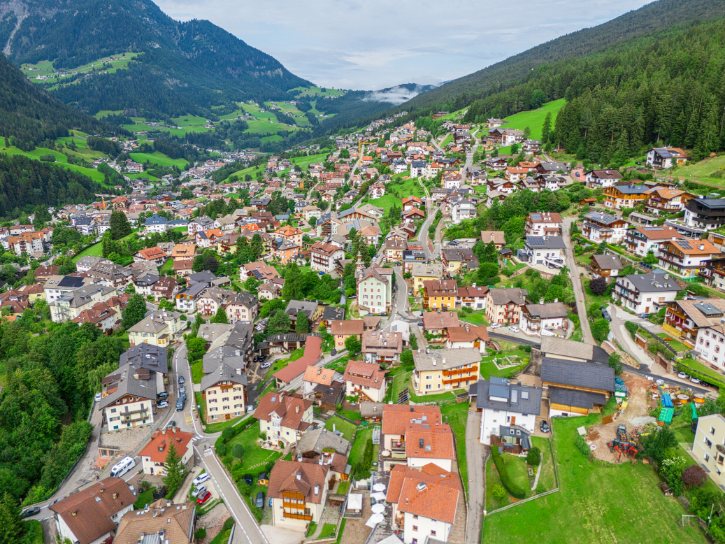
Ortisei, known as Urtijëi in Ladin and St. Ulrich in German, is the lively heart of Val Gardena. Its center is a traffic-free zone of pastel townhouses, carved wooden balconies, art galleries, and historic churches, often rated among the prettiest in the Alps.
The neoclassical Parish Church of St. Ulrich and the 17th-century Church of St. Anthony both reward a pause.
b. A Town Carved From Wood
- Ortisei is the world’s historic center of alpine woodcarving.
- The craft began as a winter trade among farming families and grew over four centuries into a respected art.
- At the Museum Gherdëina you will find antique wooden toys, religious statues, and local finds.
- Working studios and the ART52 exhibition show both traditional and modern carvings.
c. Three Mountains, One Village
- North, the Seceda lift climbs to the Odle ridgeline.
- South, the Mont Sëuc gondola crosses the river to Alpe di Siusi.
- Northeast, the historic Resciesa funicular rises to a quiet high plateau.
- Few towns let you reach so many different mountain worlds straight from the center.
d. Flavors Worth Slowing Down For
- Cajoncìe: ravioli stuffed with spinach and ricotta, finished with browned butter and poppy seeds.
- Canederli: bread dumplings with speck or cheese, served in broth.
- Hearty venison stew with polenta.
- Warm apple strudel to round things off.
Well fed, you cross the valley next to reach the largest high meadow in Europe.
8. Alpe di Siusi (Seiser Alm)
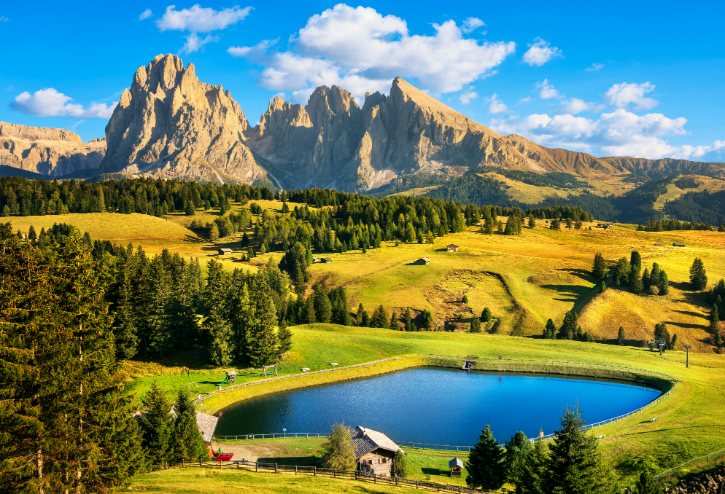
a. Europe’s Grandest High Meadow
Alpe di Siusi, or Seiser Alm, is the largest high-altitude alpine pasture in Europe. Instead of sharp cliffs, you get wide, rolling green meadows dotted with hundreds of traditional wooden hay huts and scattered pines, all framed by limestone peaks.
After the knife-edge ridges of Seceda, its soft, open feel is a welcome change of pace.
b. Peaks on Every Horizon
- East stand the twin giants Sassolungo and Sassopiatto, rising straight from the grass.
- West, the flat-topped Sciliar anchors the plateau with its rock sentinels.
- South, the distant ridges of the Catinaccio and Latemar.
- The meadows near Saltria frame the great Sassolungo wall beautifully.
c. Gentle Paths and Cozy Huts
- Wide, easy tracks cross the plateau, perfect for a relaxed walk or an e-bike.
- A favorite route rolls gently from Compatsch down to the hamlet of Saltria.
- The Puflatsch loop reaches the quirky “Witches’ Benches” viewpoint.
- Traditional dairy huts serve cheeses, herb salads, and dumplings on sunny decks.
d. A Plateau for All Seasons
- Early summer brings a carpet of gentians, alpine roses, and orchids.
- Autumn glows with golden pasture grasses.
- Winter turns it into a Nordic and downhill ski playground.
- Cars are restricted here to protect the grassland, so the cable car is the easy way up.
e. Onward to a Lake of Color
From the plateau, the road winds down and around toward the Eggental, where a small lake famous for its glowing colors waits in the forest.
9. Lago di Carezza (Karersee)
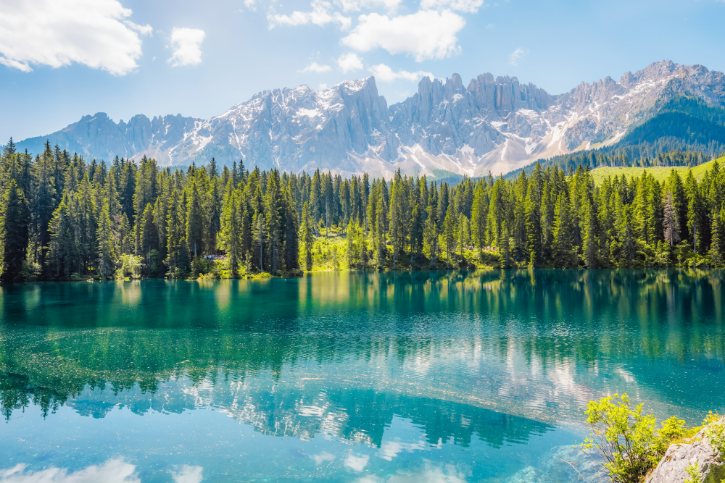
a. The Lake That Shimmers Like a Rainbow
Tucked into spruce forest beneath the saw-toothed Latemar, Lago di Carezza is famous for its colors. The water glows emerald, turquoise, and deep sapphire, fed by clear mountain springs carrying fine limestone sediment.
Its size shifts through the year, filling after the snowmelt and shrinking again by late autumn.
b. A Legend Written in Color
Local legend gives the colors a story. A water nymph named Ondina once lived here, and a lovestruck sorcerer cast a rainbow of jewels across the sky to win her.
When she fled into the depths, he tore the rainbow down and flung its fragments into the water, staining it forever with shifting hues. A bronze statue of the nymph still rests below the surface, glimpsed now and then in low water.
c. The View and the Walk
- The classic view is from the timber platform on the western shore, with the Latemar reflected in the water.
- An easy path circles the lake through the Karerwald, a forest once prized for violin-making wood.
- Autumn frames the green water in gold; early winter freezes it into a mirror.
- A safe underpass leads you from the roadside straight to the viewing deck.
d. Look, but Don’t Touch
- A wooden fence rings the entire shore.
- Crossing it, reaching the water, swimming, or throwing stones is strictly forbidden.
- The rules protect the delicate springs and the lakebed beneath.
- Admiring from the platform is the way to enjoy it, and the view is more than enough.
e. Over the Pass to Ladin Country
From here the road climbs over a gentle pass, crosses from South Tyrol into Trentino, and drops into a valley rich with Ladin culture and legend.
10. Val di Fassa
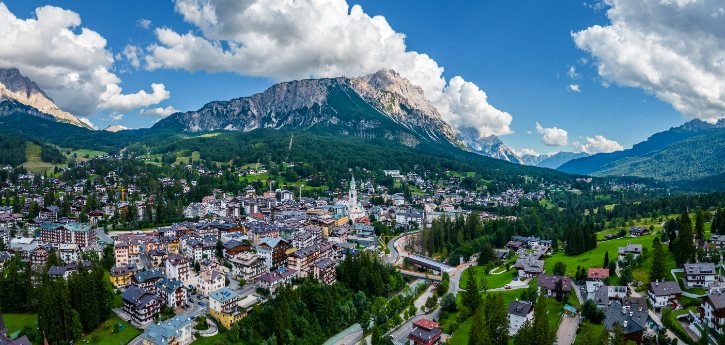
a. The Beating Heart of the Dolomites
Val di Fassa is one of the most scenic and culturally rich valleys in the Trentino Dolomites, carved by a mountain river and home to the Ladin people. Great massifs guard it on every side, making it a natural corridor between the gentle lowlands and the high passes ahead.
b. A Skyline of Legends
- West rises the Catinaccio (Rosengarten), the prime stage for the evening enrosadira glow.
- East stands Marmolada, the “Queen of the Dolomites”, crowned by the range’s largest glacier.
- North looms the fortress-like Sella massif above Canazei.
- Not every peak shows from every village, so each viewpoint has its own surprise.
c. Villages With Real Character
- Moena: the “Fairy of the Dolomites”, known for its pungent Puzzone di Moena cheese.
- Vigo di Fassa: home to the Ladin Museum, guardian of the valley’s language and folklore.
- Pozza di Fassa: a thermal spa village at the gateway to the lovely Val San Nicolò.
- Campitello di Fassa: a classic mountaineering hamlet of cobbled alleys and timber barns.
d. Mountains Made Easy
- The Col Rodella cable car lifts you close to the towering walls of Sassolungo.
- The Ciampac cable car from Alba reaches a scenic high basin.
- Val San Nicolò offers gentle paths through wildflower meadows past old wooden huts.
- A road climbs to Lago di Fedaia, where you can gaze across to the Marmolada glacier.
e. Climbing Toward the Towers
Past Canazei the road leaves the valley floor, winding up through pine forest and hairpin bends into a world of bare rock, where the great towers of Sassolungo take over the sky.
11. Passo Sella
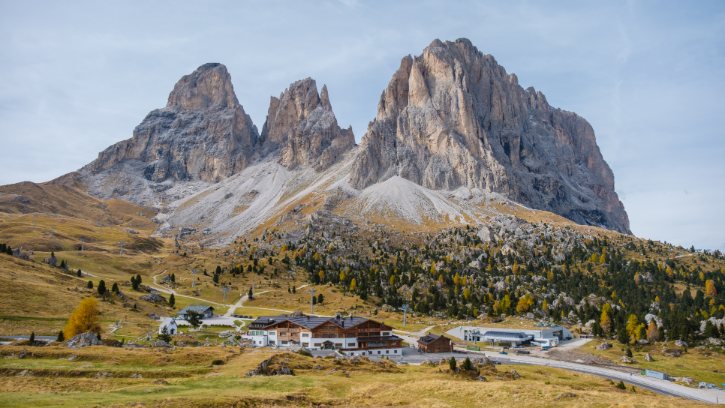
a. One of the Great Alpine Drives
Passo Sella is widely counted among the most scenic high roads in the Alps. It threads a saddle between two mighty rock walls: the Sella massif on one side, and the three-pronged towers of Sassolungo on the other.
The drive itself, curving beneath the spires, is half the reward.
b. Views Straight From the Roadside
- West, Sassolungo soars above the boulder-strewn “City of Stones”.
- East, the Torri del Sella climb straight up beside the road.
- South, the view runs back down the valley toward the Marmolada glacier.
- A short climb up the grassy knolls behind the refuge frames the serpentine road below.
c. Boulders, Gondolas, and Good Food
- The easy “City of Stones” walk winds through giant mossy boulders left by an ancient rockfall.
- A historic stand-up gondola carries you up into the rocky notch of Forcella del Sassolungo.
- Mountain refuges here serve dumplings, polenta with cheese, and game, all with huge views.
- This lift is a different ride from the big Sass Pordoi cable car at the neighboring pass.
d. A Link in the Sellaronda
Passo Sella is a cornerstone of the Sellaronda, the famous road loop that circles the Sella massif. In summer it fills with cyclists and motorbikes, so take the switchbacks with care.
From here, the road curves on toward another high pass, where the Sella shows you a whole new face.
12. Passo Gardena
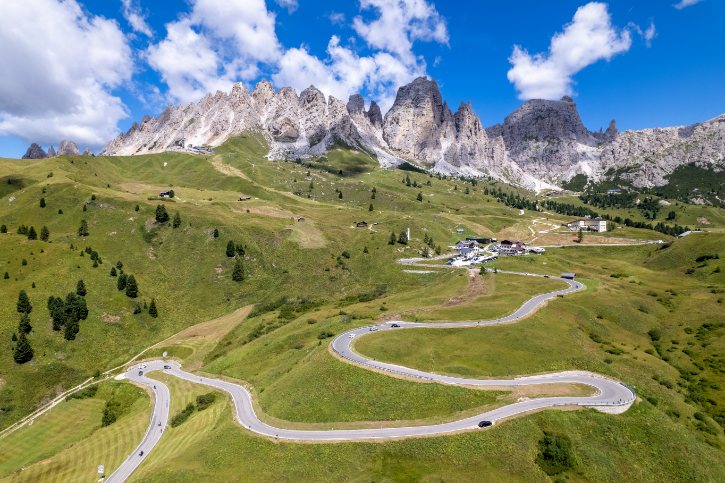
a. An Airy Balcony Between Valleys
Passo Gardena links Val Gardena with the high valley of Alta Badia, and where Passo Sella felt enclosed, this one opens wide. To the south rise the terraced walls of the Sella Group; to the north stand the jagged Cir peaks.
The result is a breezy, east-west panorama stretching across two Ladin valleys.
b. A Chapel Made for Photos
- A small stone chapel, San Maurizio, crowns the top of the pass.
- Its wooden-shingled roof makes a perfect foreground for the Sella wall behind.
- Mountain refuges at the pass offer terraces with sweeping valley views.
- It is a classic spot to pause and simply take it all in.
c. Short Walks, Big Rewards
- A gentle trail climbs north toward the grassy shoulders beneath the Cir towers.
- From there you look down into both Val Gardena and Val Badia.
- Another path heads south toward the base of the Sella wall and the Pisciadù waterfall.
- The high summits beyond these walks are for equipped climbers only.
d. Bridging Two Cultures
The pass joins the Ladin communities of Val Gardena and Val Badia, united by a shared language and a pastoral way of life. Open meadows bloom with flowers in summer and turn golden in autumn.
Descending the far side, the road weaves through Alta Badia and climbs again toward a pass soaked in history.
13. Passo Falzarego
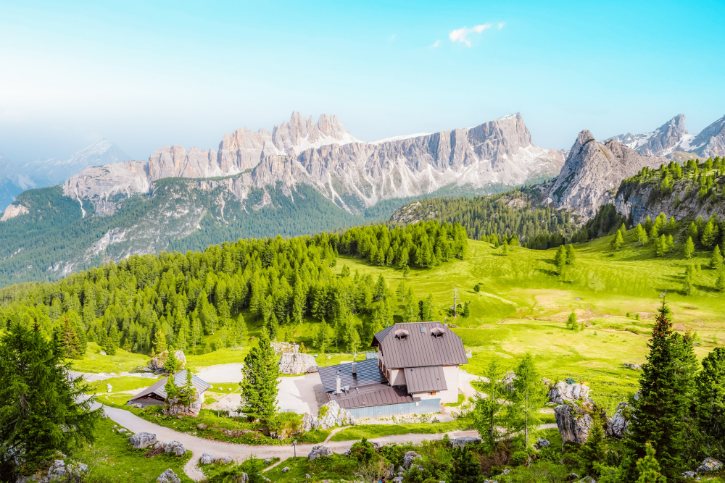
a. A Windswept Saddle of Stone
Passo Falzarego is a historic gateway between Cortina and the western valleys, set in an open, boulder-strewn saddle. Sheer peaks ring it on every side, from the flat-topped Piccolo Lagazuoi to the great pyramid of Tofana di Rozes.
The landscape is rocky and wild, and it wears the scars of mountain warfare.
b. Soaring Up to Lagazuoi
- A cable car whisks you from the pass up to the summit of Piccolo Lagazuoi.
- At the top sits Rifugio Lagazuoi, with a sun terrace perched over the drop.
- The view takes in a roll call of peaks, from Tofana di Rozes to the Marmolada glacier.
- An easy path leads along the ridge to the summit cross, open to all.
c. Tunnels Carved by War
- Falzarego saw fierce high-altitude fighting in the First World War.
- An open-air museum preserves trenches, gun nests, and shelters across the slopes.
- A long spiral tunnel, bored right through the mountain, still survives today.
- That tunnel is steep, dark, and demanding, and calls for a via ferrata kit, helmet, and headlamp; the outdoor trenches near the summit are easy to explore.
d. Scenery Right From the Road
Even without riding the cable car, the roadside views are dramatic, framing the crag of Sasso di Stria and the ruins of an old fort.
The mix of raw scenery and living history makes this a stop you will not forget. A short drive on, a cluster of famous towers comes into view.
14. Cinque Torri
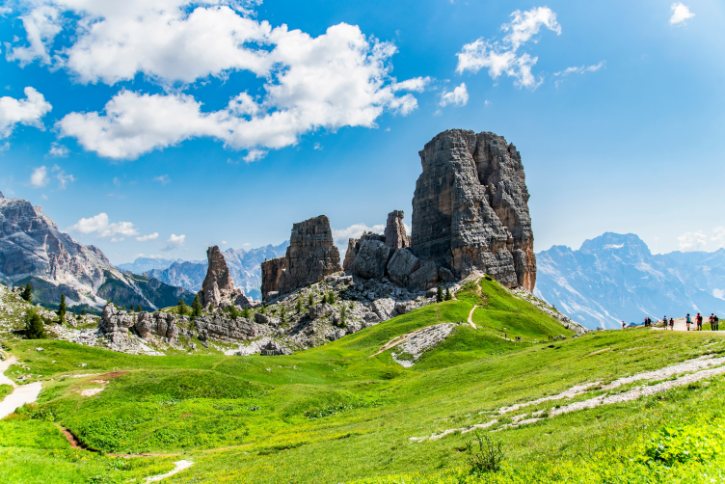
a. Five Towers Shaped by Time
Cinque Torri, the “Five Towers”, is one of the most recognizable rock formations near Cortina. It was born when an ancient plateau fractured and collapsed, leaving a cluster of broken monoliths behind.
The rock is still very much alive. One neighboring pinnacle came down in a natural collapse not long ago, reshaping the skyline in an instant.
b. Meet the Towers
- Torre Grande: the tallest, split into three distinct peaks.
- Torre Seconda: a cluster of slender spires.
- Torre Latina and Torre Quarta: fractured towers divided into blocks.
- Torre Inglese: a graceful, double-pointed needle on the northern edge.
c. Up Close to the Rock
- A quick chairlift from the valley carries you up to Rifugio Scoiattoli.
- From there, an easy gravel path loops right around the base of the towers.
- You can watch climbers at work on the vertical walls as you stroll.
- The views open across the valley toward Tofana di Rozes and Monte Cristallo.
d. The Birthplace of Dolomite Climbing
Cinque Torri is the historic cradle of sport climbing in the range, the training ground of the legendary Scoiattoli di Cortina, founded in 1939. Today the towers hold well over a hundred routes.
The scenic walking paths welcome everyone, while the vertical climbs are strictly for trained, equipped climbers.
e. A Battlefield Among the Towers
During the First World War, Cinque Torri served as an artillery command post, raining fire on enemy positions across the valley. An open-air museum now winds through the corridors between the towers, with restored trenches, bunkers, and observation posts to explore.
From here, the road climbs toward the grandest pass of the whole loop.
15. Passo Giau
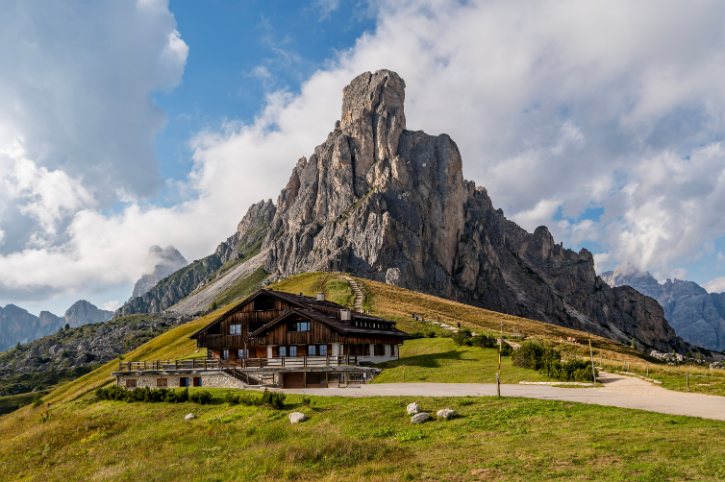
a. A Grand Finale in the Sky
Passo Giau is, for many photographers, the most beautiful pass in the Alps, and it makes a fitting end to the loop. Its wide, high pastures are crowned by the dramatic tooth of Ra Gusela.
With no forest to block the view, the panorama sweeps a full circle around you. Monte Pelmo, Monte Averau, the Tofane wall, and the distant Marmolada glacier all crowd the horizon.
b. The Shot Everyone Comes For
- The signature view frames the winding road cutting across green pastures toward Ra Gusela.
- At sunrise, the eastern faces of Ra Gusela and Monte Pelmo glow gold and pink.
- At sunset, the enrosadira sets the distant cliffs alight.
- Rolling seas of cloud often spill through the valley below the pass.
c. High Country Without the Climb
- Gentle grassy ridges beside the pass are carpeted with gentians and edelweiss in early summer.
- A scenic trail leads to Rifugio Averau through flower-filled meadows.
- From there, a track continues to Rifugio Nuvolau, perched right on a cliff edge.
- The toughest summits remain the preserve of equipped climbers.
d. Closing the Loop
Leaving Giau, the road winds down past an 18th-century stone boundary wall and through spruce forest, back into the basin of Cortina where your journey began.
In one unforgettable loop, you have traveled from jagged spires and turquoise lakes to quiet villages, golden meadows, battle-scarred ridges, and the highest, most beautiful passes in Italy. That astonishing variety, packed into a single drive, is exactly what makes the Dolomites so hard to forget.