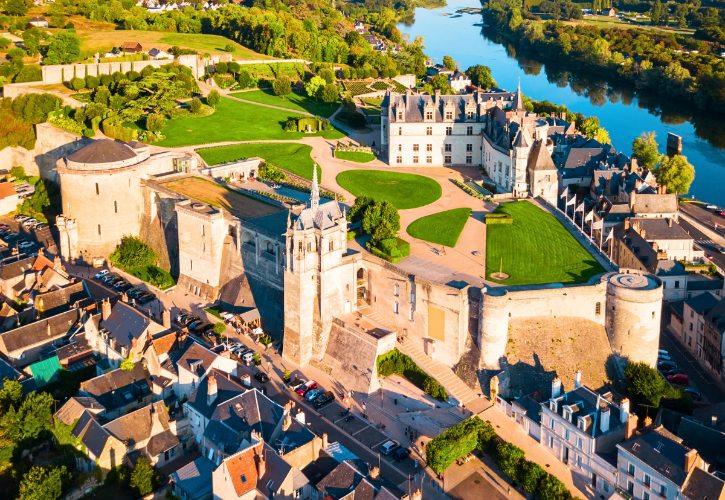
If you love a trip where every short drive brings something new, the Loire Valley is made for you. In one connected river region, you move from grand Renaissance palaces to medieval fortresses, quiet family estates, world-famous gardens, and sleepy riverside villages.
Most stops sit just fifteen to thirty minutes apart, so you spend less time behind the wheel and more time exploring. Pack light, keep your camera close, and get ready for twelve beautiful places that each feel completely their own. 😊
1. Château de Chambord
a. The castle a young king built to impress
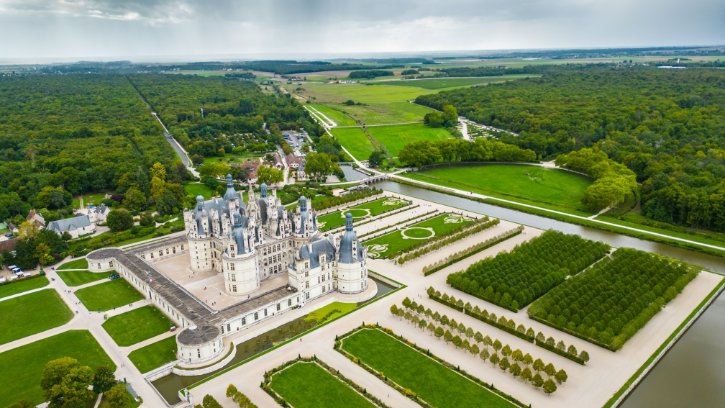
You start big. Chambord was ordered in 1519 by King Francis I, who was only twenty-four at the time, soon after his victory at Marignano.
The design blends two ideas. It keeps the shape of a medieval French fortress, with a square keep and four round towers, then adds the balance and symmetry of the Italian Renaissance. The result is one of the most recognizable castles in the whole valley.
b. The staircase everyone comes to see
At the center of the keep sits the famous double-helix staircase. Two stone spirals wind around an open core, so two groups can climb and come down at the same time without ever meeting.
It is often linked to Leonardo da Vinci, who served Francis I and lived nearby at Amboise until his death in 1519.
c. What to look for on the roof
The rooftop is where Chambord really shows off. Head up and find:
- The lantern tower, rising thirty-two meters and topped by a stone fleur-de-lis
- A crowded skyline of carved dormers, chimneys, spires, and slate inlays
- The salamander emblem and the royal letter “F” carved into the ceilings inside
d. A hunting forest the size of Paris
Chambord sits inside a huge hunting estate in the wooded Sologne.
- The grounds cover 5,440 hectares, about the size of inner Paris
- A 32-kilometer wall rings the whole park, the largest walled forest park in Europe
- The inner forest is a protected reserve for deer and wild boar, so you stick to the outer and canal paths
- Don’t miss the restored eighteenth-century French formal gardens
e. The castle that helped protect the Louvre
Francis I used Chambord as a hunting retreat and a symbol of power, spending fewer than two months here across his long reign.
Centuries later, during World War II, the château took on a quieter role. The Louvre’s treasures, including the Mona Lisa, were moved here for safekeeping, away from bombing and occupation.
2. Blois
a. Step into four centuries at once
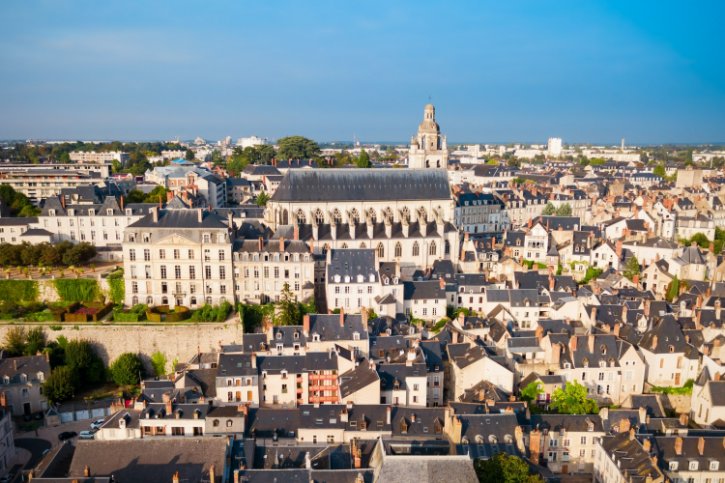
Right in the heart of town, the Château Royal de Blois wraps four wings around a single courtyard.
Together they show how French building changed from the thirteenth to the seventeenth century, from heavy medieval defense to graceful classical calm. It is a rare chance to see so many styles in one place.
b. Four wings, four very different looks
- A medieval hall from around 1214, one of France’s largest preserved Gothic civil halls
- The Louis XII wing in red brick and white stone, with the king’s porcupine emblem
- The Francis I wing, known for its open spiral staircase carved with royal salamanders
- The Gaston d’Orléans wing, strict and symmetrical in the Classical style
c. What to see inside
- Royal apartments restored in the nineteenth century with painted walls and gilded stencils
- Period fireplaces, carved oak cabinets, and Flemish tapestries
- The Musée des Beaux-Arts on the first floor, with European paintings and court portraits
d. The night a duke was ambushed
Blois saw real drama. In December 1588, King Henry III had the Duke of Guise assassinated inside the king’s own chamber. The duke led the Catholic League, and his brother was executed the next day.
Across the forecourt, the Maison de la Magie honors local magician Robert-Houdin, with mechanical dragons that lean from its windows on the hour.
e. Walk down to the river
The town slopes down to the Loire on steep limestone bluffs.
- The grand Denis Papin staircase drops straight toward the old bridge
- The terraced gardens behind the cathedral look out over slate roofs and the river’s sandbars
3. Château de Cheverny
a. A home, not just a castle
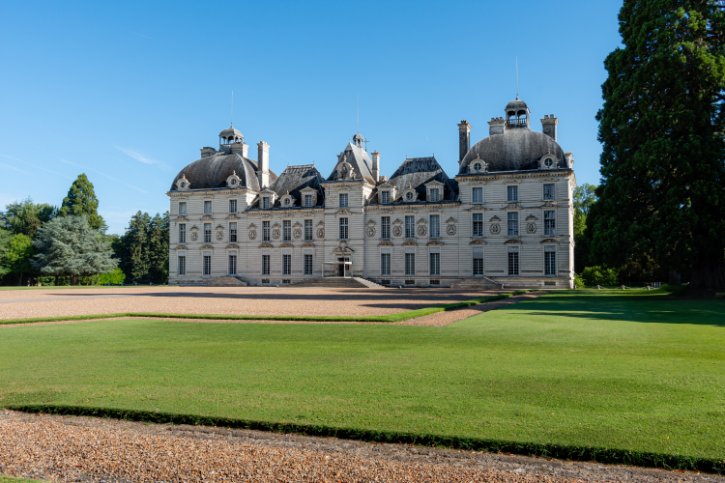
Cheverny feels different the moment you arrive. It was built between 1624 and 1634 in the elegant Louis XIII style, using pale local stone that has whitened with age.
Here is what makes it special. The same family has owned it for more than six hundred years, so it still feels warm and lived-in.
b. Rooms the Revolution left untouched
Because Cheverny was spared during the French Revolution, its interiors are beautifully intact.
- A dining room with thirty-four painted panels telling the story of Don Quixote
- A guard room with Renaissance armor, weapons, and a 17th-century Gobelins tapestry
- The King’s Bedchamber, with a Persian bed canopy and painted ceilings
- The Grand Salon, with family portraits and master paintings, including works attributed to Titian and to Raphael’s workshop
c. Where Tintin fans feel at home
Cheverny inspired Marlinspike Hall, the home of Captain Haddock in The Adventures of Tintin. Hergé copied the central block and left off the side wings.
Inside, a permanent exhibition recreates scenes from the comics, including Professor Calculus’s laboratory and Tintin’s bedroom. The estate also keeps an active kennel of over one hundred tricolor hounds, carrying on its hunting tradition.
d. Gardens worth wandering
The hundred-hectare estate has several gardens to explore.
- The Apprentice Garden, a romantic ornamental garden with wisteria and pastel flowers
- The Garden of Love, with bronze sculptures on themes of romance
- The Tulip Garden, with more than 250,000 bulbs in spring
- A kitchen garden beside a hornbeam hedge maze
4. Chaumont-sur-Loire
a. A fortress with a dramatic past
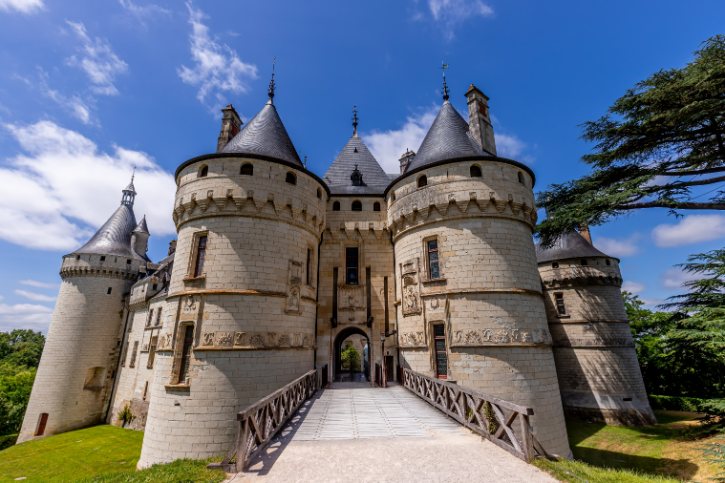
Perched high above the Loire, Chaumont-sur-Loire shows the shift from medieval fortress to Renaissance manor. The original castle was burned down in 1465 on royal orders, then rebuilt by the d’Amboise family.
It still keeps its drawbridge, round towers, and battlements. When a new owner pulled down the worn north wing around 1750, it opened a three-sided courtyard with wide views over the valley.
b. A forced swap between two rivals
Queen Catherine de Médicis bought Chaumont in 1550. After King Henry II died in 1559, she pressed his mistress, Diane de Poitiers, to give up the grander Château de Chenonceau in exchange for Chaumont.
Look for Diane’s carved emblems, bows, arrows, and crescent moons, on the friezes and towers. You can also visit the room named after Catherine’s astrologer, though that stargazing story is local tradition rather than hard fact.
c. A garden festival like no other
Chaumont is famous for its gardens, and this is its real draw.
- The International Garden Festival has run since 1992
- Around thirty experimental gardens appear from spring to late autumn
- Each year follows a new theme set by landscape artists and botanists
- Permanent sculptures, including works by Andy Goldsworthy, sit among the parkland
d. Views you will want to photograph
- A nineteenth-century park with century-old Atlas cedars and weeping beeches
- Open courtyard terraces looking over the Loire’s braided channels and sandbars
5. Amboise
a. A royal castle high above the river
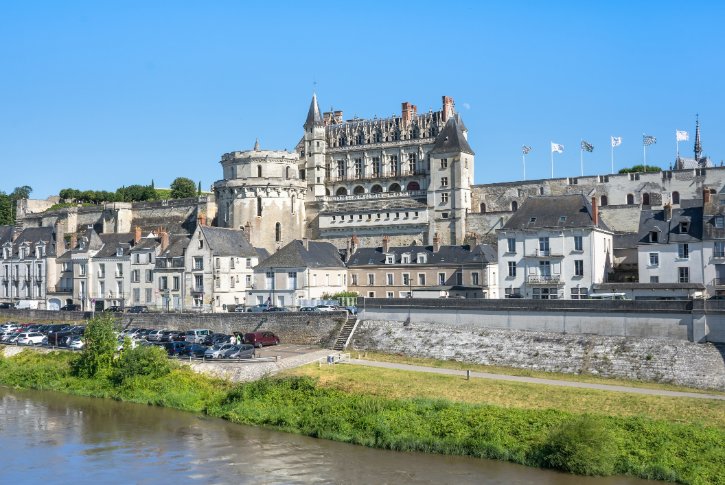
Set on a rocky spur forty meters over the Loire, the Château Royal d’Amboise was a favorite home of French kings.
Charles VIII, born and died here, modernized it after his Italian campaigns in 1495. He brought Italian artists and gardeners who helped launch the French Renaissance style. The royal lodging mixes late Gothic and early Italian details, with open terraces over the water.
b. Leonardo da Vinci’s final resting place
In 1516, Francis I invited the aging Leonardo da Vinci to Amboise and gave him the nearby manor of Clos Lucé.
Leonardo lived there until his death in 1519, and his tomb now lies in the Chapel of Saint-Hubert on the ramparts. At Clos Lucé, you can explore his inventions and art, which gives you a real feel for the Renaissance.
c. Towers built for horses, not just soldiers
- The Minimes Tower holds a spiral ramp so horses and carriages could ride up from the town
- The Heurtault Tower adds a second huge cavalry ramp with stone vaults
- The ramparts saw the grim end of the 1560 Conspiracy of Amboise
d. Gardens and a quiet bird haven
- The Jardin de Naples, the first formal Renaissance garden in the valley
- The Jardin d’Orient, a peaceful stone memorial garden
- A certified bird refuge, home to more than ninety bird species
- Historic streets and shops in the town below, worth a slow wander
6. Château de Chenonceau
a. The castle built by powerful women
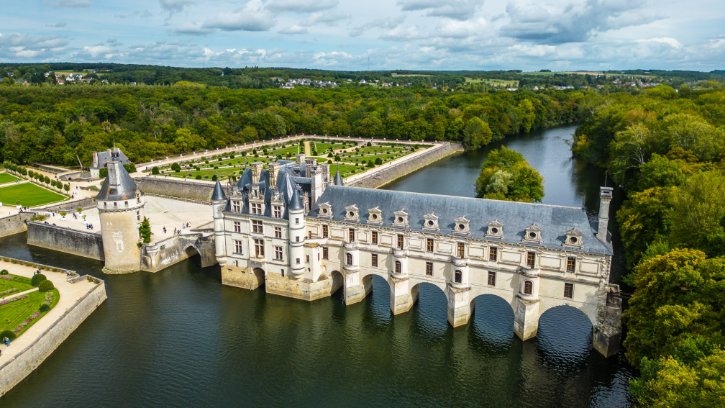
Stretching right across the River Cher, Chenonceau is one of the most photographed castles in France. People call it the Ladies’ Castle, because a line of remarkable women shaped it over the years.
b. The women who made it famous
- Katherine Briçonnet built the first residence
- Diane de Poitiers added the bridge across the Cher
- Catherine de Médicis built the long gallery on top of the bridge
- Louise de Lorraine mourned here in black-painted rooms
- Madame Dupin saved it during the Revolution
c. Inside the famous river gallery
- A sixty-meter ballroom crossing the Cher, floored in black and white tiles
- Renaissance kitchens built inside the bridge piers, with copper pots and a bread oven
- Old Master paintings by Rubens, Tintoretto, and Poussin
d. Gardens and the perfect photo spot
Two Renaissance gardens frame the castle, one laid out for Diane de Poitiers and one for Catherine de Médicis.
For the best photo, head to the riverbanks and gardens, where the château’s arches mirror in the Cher. The grounds also include a boxwood maze and working vineyards.
e. A castle with a moving wartime story
Chenonceau has a powerful modern past. In World War I, its gallery became a hospital for more than two thousand wounded soldiers.
In World War II, the river ran along the line between occupied France and the free zone, and the gallery’s far door became an escape route for people fleeing to safety.
7. Tours
a. A lively city after all those castles
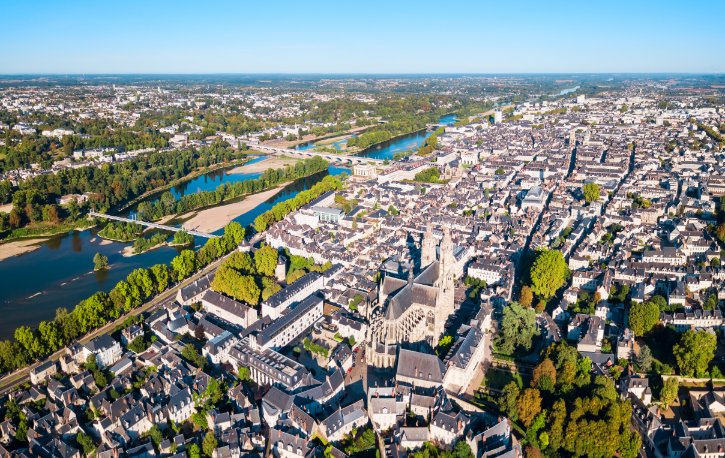
Tours gives you a welcome change of pace. As the old capital of the Touraine, it mixes everyday city life with beautiful historic streets.
After a run of castles, its cafés, markets, and squares feel refreshing and easy.
b. The old quarter and its central square
- Place Plumereau, ringed by fifteenth-century timber-framed houses
- A lively, friendly feel, especially in the evening
- Streets like Rue Colbert, lined with half-timbered houses and carved wooden details
c. A cathedral worth stepping inside
- Cathédrale Saint-Gatien, built over three centuries
- Thirteenth-century stained glass glowing deep blue and red
- The marble tomb of the children of Charles VIII and Anne of Brittany
d. Museums and landmarks to see
- Château de Tours, now hosting art exhibitions
- Basilique Saint-Martin, holding the tomb of Saint Martin
- Musée des Beaux-Arts, with paintings by Andrea Mantegna
e. Where to eat and drink
- The covered Halles market, full of local specialties
- Rillettes, rillons, and Sainte-Maure goat cheese to try
- Nearby wines, from Vouvray whites to Chinon reds
8. Château de Villandry
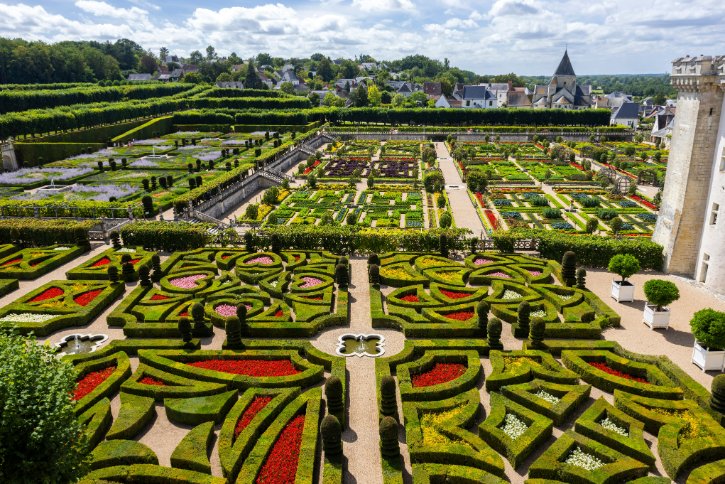
a. Gardens that steal the show
You come to Villandry for the gardens, and they do not disappoint. Six hectares of Renaissance gardens spread across stepped terraces, planned down to the smallest detail of color and shape.
Walking them slowly is the whole point.
b. Six gardens, each with its own mood
- The Water Garden, calm around a mirror basin
- The Ornamental Salons, with meaningful boxwood patterns
- The Ornamental Kitchen Garden, blending vegetables and flowers
- A herb garden, a hedge maze, and a Sun Garden
c. The love garden, explained
The Jardin d’Amour tells four kinds of love in boxwood shapes.
- Tender love, with soft hearts and pastel flowers
- Passionate love, with red blooms and broken hearts
- Fickle love, with yellow flowers for unfaithfulness
- Tragic love, with dagger shapes for duels
d. A castle saved by one determined couple
By about 1900, Villandry had fallen into disrepair. In 1906, Spanish scientist Joachim Carvallo and his American wife, Ann Coleman, bought it and spent their fortune restoring the Renaissance gardens from old engravings.
Their family still owns and cares for the estate today, using chemical-free, organic methods.
e. The best place to see it all
For the full effect, climb to the stone belvedere path on the hillside above the keep. From up there, the geometric patterns line up perfectly.
The planting changes twice a year, so the view looks different in spring and in late summer.
9. Château d’Azay-le-Rideau
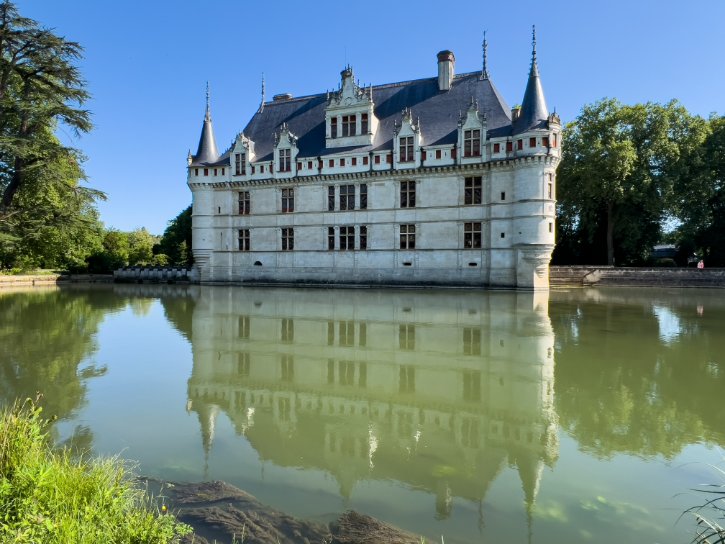
a. A castle that seems to float on water
Built on an island in the River Indre, Azay-le-Rideau is all about elegance. The writer Balzac once called it a diamond set in the river, and you will see why.
Its pale walls reflect in the water, and its smaller size feels gentle and personal after the grand royal castles.
b. Where two styles meet
- Medieval touches like corner turrets, tall chimneys, and steep roofs
- Italian Renaissance details like pilasters, even windows, and shell niches
- A straight interior staircase, a new idea at the time, carved with royal medallions
c. Rooms that tell the story
- The Great Hall, with a fireplace bearing the Francis I salamander
- A restored Renaissance bedchamber with period hangings
- The Biencourt Salon, recreated in rich 19th-century style and hung with royal and historical portraits
d. Reflections and a pretty village
- An English-style park with sequoias and tulip trees
- Water mirrors that double the castle’s reflection
- The village nearby, with tuffeau lanes, watermills, and willow workshops
10. Chinon
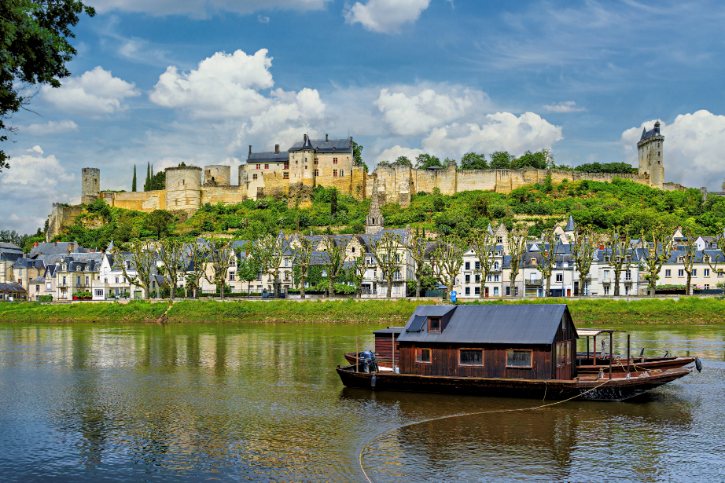
a. The most dramatic fortress on the route
High above the Vienne, Chinon is one of the best-preserved medieval fortresses in the valley. It stretches 400 meters along a rocky ridge, split into three sections by deep moats cut into the stone.
This is the most dramatic castle setting on the whole drive.
b. Three forts along one ridge
- Fort Saint-Georges, built by Henry II Plantagenet
- Château du Milieu, the main compound with the royal lodgings
- Fort du Coudray, topped by a round keep
c. Kings, Templars, and Joan of Arc
- Henry II of England favored Chinon and died here in 1189
- The last Templar Grand Master was imprisoned here, and the Templars’ carved graffiti is still visible
- In March 1429, Joan of Arc came here to meet the future Charles VII, and by tradition picked him out from among his courtiers
d. Views from the ramparts
- The Clock Tower and southern walls look over the rooftops and river
- Farmland and vineyards spread out beyond the old town
e. The old town and its wines
- Medieval streets like Rue Haute Saint-Maurice
- A link to the writer François Rabelais, born nearby
- Cabernet Franc reds and Chenin Blanc whites, aged in cellars cut into the cliffs
11. Candes-Saint-Martin & Montsoreau
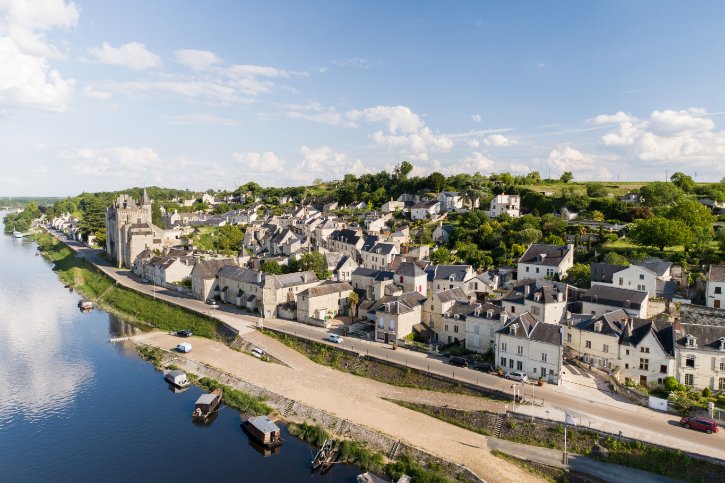
a. Two villages, one lovely stop
Where the Vienne meets the Loire, two of France’s most beautiful villages sit side by side.
You can explore them as one easy stop, with pale stone houses, quiet lanes, and water everywhere you look.
b. Candes-Saint-Martin and its hilltop church
- Listed among Les Plus Beaux Villages de France
- Tied to Saint Martin of Tours, who died here in 397
- The Collégiale Saint-Martin, fortified with battlements and arrow slits
- A hilltop overlook with views across the river confluence
c. The castle built right into the river
Montsoreau is the only castle in the Loire Valley built directly into the riverbed, with its foundations once set in the water.
Built around 1450, it keeps its moats and drawbridge while adding early Renaissance windows and a carved staircase tower. It simply looks different from every other castle you have seen.
d. Art, caves, and riverside walks
- A contemporary art museum inside the castle, with the world’s largest Art & Language collection
- Cave dwellings and cellars carved into the limestone cliffs, including a mushroom farm
- Riverside quays where you can spot traditional wooden boats
12. Saumur
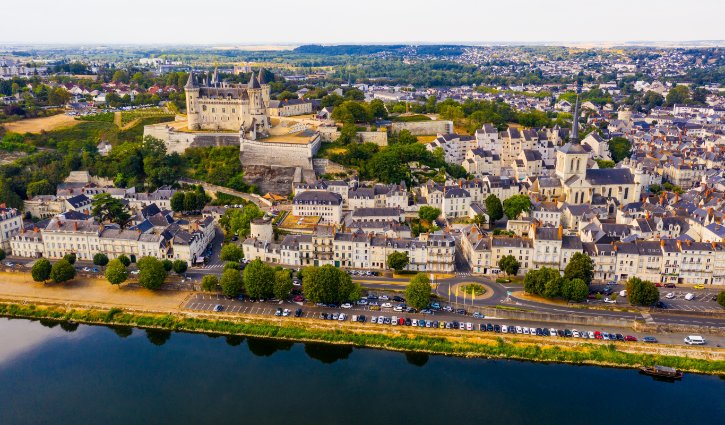
a. A grand finish above the Loire
Saumur makes a fitting last stop. Its castle stands on a bright limestone bluff above the river, rebuilt in the late fourteenth century into a palace-like home.
Its towers and pinnacles are so striking they appear in a famous medieval manuscript, the Très Riches Heures du Duc de Berry.
b. Inside the castle museum
- A decorative arts collection with tapestries, woodwork, and fine porcelain
- A horse museum tracing riding gear through the centuries
- Ducal apartments that reveal the castle’s long history
c. Views to end the trip
Step onto the ramparts and esplanade for wide views across the valley. You look over the town, the old bridge, and the river’s sand islands.
From here you can see exactly why this spot mattered as a crossing. It is a satisfying final picture for your journey.
d. A town of horses and sparkling wine
- Saumur is the home of French classical riding and the famous Cadre Noir
- Its riding tradition is listed by UNESCO as Intangible Cultural Heritage
- Underground cellars age sparkling wines like Crémant de Loire and Saumur Brut
- Nearby vineyards make Cabernet Franc reds in the Saumur-Champigny appellation