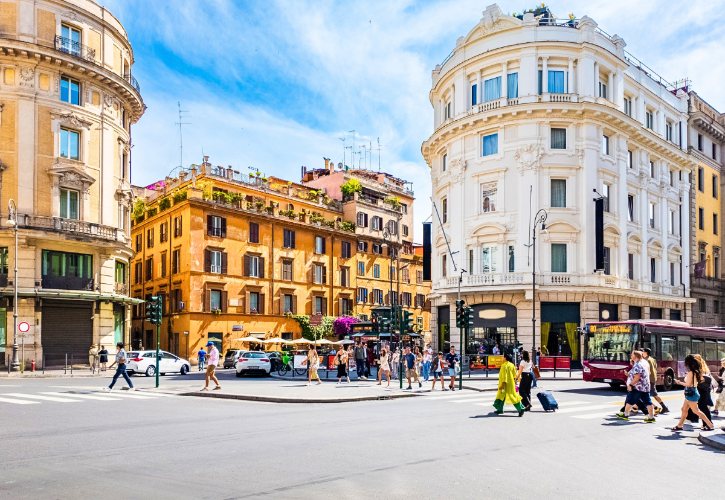
Where you stay in Rome shapes your whole trip. The right base puts the big sights within an easy walk, keeps your evenings calm, and makes getting around simple.
The wrong one leaves you with noise, long transfers, and sore feet. Every neighborhood has its own rhythm, its own mix of hotels, transport links, and after-dark mood.
Five areas make a reliable home base, and three deserve a closer look before you book a room. 😊
1. Centro Storico
The Feel of the Neighborhood
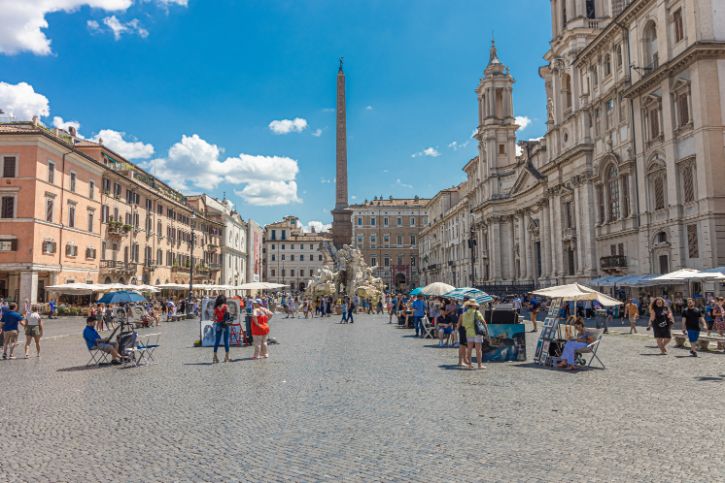
Centro Storico sits in the central bend of the Tiber, framed by the river to the west and south, the Tridente to the north, and Via del Corso and Piazza Venezia to the east. This is the Rome you picture: Baroque squares, grand fountains, and narrow cobbled lanes paved with basalt stones locals call sampietrini.
Each corner has its own feel. The Pantheon and Piazza Navona form the busy pedestrian heart, Campo de’ Fiori shifts from a morning market to a lively evening hub, and the streets around the Trevi Fountain stay packed and noisy.
You stay here to walk nearly everywhere, with landmarks just minutes from your door. The trade-offs are steady crowds, higher room rates, and no metro inside the core.
Sights You Can Reach on Foot
- The Pantheon, Piazza Navona with Bernini’s Fountain of the Four Rivers, Campo de’ Fiori, and the ruins at Largo di Torre Argentina sit inside the district
- The Trevi Fountain lies just east of Via del Corso, a short walk beyond the district’s edge
- Piazza Venezia and the Capitoline Hill border the eastern edge
- The Colosseum and Vatican City fall just outside, but you can walk to both
- Piazza Navona to the Pantheon: about 5 minutes
- The Pantheon to the Trevi Fountain: about 8 to 10 minutes
- Across the river to St. Peter’s Square: about 15 to 20 minutes on foot
- Largo di Torre Argentina to the Colosseum: about 15 to 18 minutes
Wear supportive shoes, since narrow sidewalks and uneven cobblestones add up over a day.
Getting Around the City
- No metro runs through the core, so for most trips walking beats reaching the nearest station
- The closest Line A stations, Spagna and Barberini, are a 12 to 20 minute walk northeast
- Largo di Torre Argentina is the main transit hub, with Tram 8 to Trastevere and buses 40 and 64 toward Termini and St. Peter’s
- Piazza Venezia is the eastern transit gateway
- Official taxi stands sit at Largo di Torre Argentina, near Piazza Navona, and near the Pantheon
- Reaching Termini takes 8 to 12 minutes by taxi or 15 to 20 minutes by bus
- For Fiumicino Airport, take a fixed-fare taxi or transfer through Termini for the Leonardo Express
Where to Stay
Most places are boutique hotels, restored historic residences, upscale guesthouses (affittacamere), and short-term apartments, with a few luxury hotels in grand old palazzi around the edges.
What you gain and what to weigh:
- You get early access to the sights before crowds, a beautiful setting, and the ease of popping back to your room
- Expect late-night noise, compact rooms, small or missing elevators, and vehicle limits under the ZTL traffic zone
Before you book, check for:
- An elevator (ascensore), since upper floors can mean steep stone stairs
- Double-glazed windows (doppi vetri) and working air conditioning (aria condizionata)
- A courtyard-facing room (affaccio interno) for a quieter night
Where to Eat and Drink
The district is packed with places to eat, from historic bakeries like Antico Forno Roscioli near Campo de’ Fiori to tourist restaurants with picture menus around the main squares.
- For better traditional cooking, try the quieter lanes like Via dei Giubbonari, Via del Pellegrino, and Via dei Banchi Vecchi
- Piazza dining is lovely, but note that Rome banned the coperto cover charge, so you’ll instead see a bread (pane) or service (servizio) fee on the bill
- Look for seasonal Roman dishes like carciofi alla giudia, cacio e pepe, and amatriciana
- Skip places with pushy hosts or big multilingual signs by the door
Tips for a Smooth Stay
- For central convenience with a calmer feel, look at lanes between Piazza Navona and the river, such as Via di Monserrato or Via Giulia
- The big piazzas stay lit and lively until about 1:00 a.m., while side alleys quiet down after midnight
- Stick to well-lit routes like Corso Vittorio Emanuele II or Via dei Coronari at night
- Street-cleaning trucks run from about 5:00 to 7:00 a.m., and the sound carries in narrow alleys
- Before booking a non-refundable rate, read recent reviews for mentions of noise and window insulation
2. Trastevere
The Feel of the Neighborhood
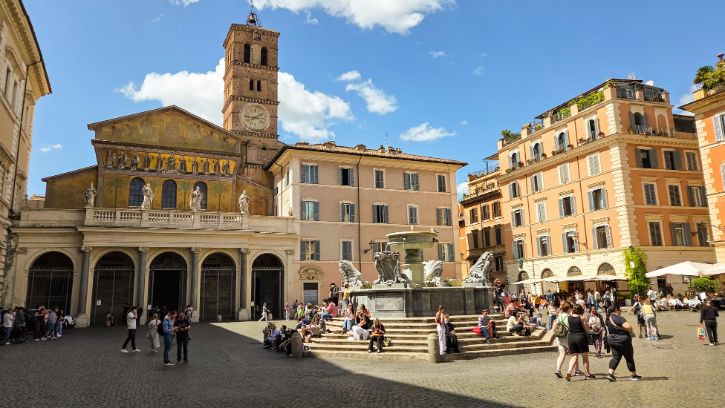
Trastevere sits on the west bank of the Tiber, across from Centro Storico. The name means “across the Tiber”, and it grew up as an independent, working-class quarter. You’ll find ochre walls, winding medieval lanes, laundry strung overhead, ivy arches, and lively squares like Piazza di Santa Maria in Trastevere.
By day it feels calm and residential. After dark, the northern stretch becomes one of the city’s nightlife centers.
You come here for the neighborhood atmosphere, the trattorias and wine bars, and the buzzing evenings, rather than a room beside the biggest monuments. The downsides are no metro, loud nights in the northern alleys, and longer walks to Ancient Rome.
Sights You Can Reach on Foot
- The Basilica di Santa Maria in Trastevere, famous for its golden mosaics
- The Basilica di Santa Cecilia, with an ancient crypt and Roman ruins below
- The Basilica di San Crisogono and the Renaissance Villa Farnesina, with frescoes by Raphael
- Piazza San Cosimato, with a morning market and a children’s playground, and Piazza Trilussa on the riverfront
- Janiculum Hill (Gianicolo), reached by steep stairs, for the best city views
- Campo de’ Fiori is about 12 to 15 minutes away, Piazza Navona about 18 to 20 minutes, and the Colosseum about 30 to 35 minutes on foot or a quicker tram ride
Getting Around the City
- There’s no metro here. The nearest rail station, Roma Trastevere, is about a 25 minute walk or a 10 minute tram ride south
- That station runs the FL1 line, with a direct 27 minute link to Fiumicino Airport
- Tram 8 is the main artery, crossing the river to Largo di Torre Argentina and Piazza Venezia, running from early morning until after midnight
- Bus H runs along Viale di Trastevere straight to Termini, and bus 280 heads toward the Vatican
- Taxi stands sit near Ponte Garibaldi and at Piazza Trilussa, since cabs can’t reach the narrow alleys
- On foot, you can cross into Centro Storico easily over Ponte Sisto and Ponte Garibaldi
Where to Stay
Most options are vacation rentals, small bed and breakfasts, and independent boutique hotels in historic buildings. Large hotels are rare, with a few upscale places toward the base of Janiculum Hill.
- What you’ll appreciate: authentic character, varied dining, and scenic evening walks
- What to watch for: night noise in the northern alleys, rough cobbles, few elevators, and limited vehicle access for luggage
- For a quieter room: book south of Viale di Trastevere, around Via dei Vascellari, Via Anicia, or Piazza San Cosimato, away from the bar noise on Via della Scala and Via del Moro
Where to Eat and Drink
Trastevere has one of the highest densities of eateries in Rome, with everything from classic trattorias to casual pizza spots.
- Well-known tables include Da Enzo al 29 for classic pastas, Pizzeria Ai Marmi for thin-crust wood-fired pizza, and Tonnarello for high-volume traditional service
- The most tourist-heavy spots cluster around Piazza Trilussa and Piazza Santa Maria, often with hosts calling you in
- Stronger trattorias keep smaller menus, take reservations, and skip the street marketing
- Try Roman classics like amatriciana, carbonara, and gricia, plus suppli and local Lazio wines
Tips for a Smooth Stay
- Rooms facing Via della Scala, Vicolo del Cinque, or Via del Moro can mean rough sleep on weekend nights
- For calm, choose a soundproofed courtyard room or a property south of Viale di Trastevere
- Quiet streets within a short walk of Tram 8 include Via dei Vascellari, Via di Santa Cecilia, Via Anicia, and Via Dandolo
- Wheeled luggage struggles on the cobbles, so stick to the paved paths along Viale di Trastevere
- Coming back late from the center, walk over Ponte Sisto; from farther out, use the n8 night bus or an official taxi
3. Monti
The Feel of the Neighborhood
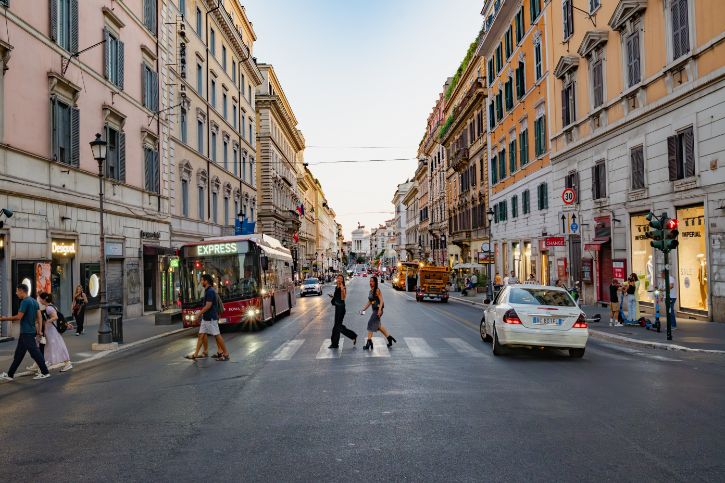
Monti sits in the valley between the Esquilino and Quirinale hills, just northeast of the Colosseum and Roman Forum, framed by Via Nazionale and Via Cavour. Once an ancient working-class quarter, it’s now a stylish, bohemian corner full of ivy-covered townhouses, artisan workshops, vintage shops, galleries, and wine bars.
You get a nice balance here: historic character, good food, and handy transit, with Ancient Rome and Termini both within walking reach. It stays relaxed by day and turns social in the evening around the fountain in Piazza della Madonna dei Monti. The main drawbacks are steep cross-street inclines and higher rates for the boutique hotels.
Sights You Can Reach on Foot
- The Colosseum, Roman Forum, and Imperial Forums are a 5 to 8 minute walk from the southern edge, perfect for an early start before the crowds
- The Basilica di San Pietro in Vincoli holds Michelangelo’s statue of Moses
- The Basilica di Santa Maria Maggiore sits on the eastern edge
- Mercato Monti is a weekend craft market on Via Leonina
- Piazza Venezia is about 10 to 12 minutes away on foot
- The Trevi Fountain and Pantheon are about 15 to 20 minutes away
Getting Around the City
- Metro Line B serves Monti at Cavour and Colosseo stations
- Cavour is just one stop, about two minutes, from Termini
- Termini is also a 10 to 12 minute walk along Via Cavour
- Frequent buses run along Via Nazionale toward Piazza Venezia and Termini, and bus 75 links Termini, the Colosseum, and Trastevere
- For Fiumicino, walk or ride one stop to Termini, then take the 32 minute Leonardo Express
- Streets slope and include stone stairways, which are tough with luggage or a stroller
Where to Stay
Monti is full of design-focused boutique hotels, restored apartments, guesthouses, and upscale bed and breakfasts.
- What you’ll appreciate: historic surroundings, walking access to monuments, immediate Metro Line B, and strong neighborhood dining
- What to watch for: compact rooms, few elevators, steep slopes, and weekend bar chatter over the main square
- Best places to book: Via Urbana and Via Panisperna for the classic Monti feel, or within a short walk of Metro Cavour for the easiest transit
Where to Eat and Drink
Eating here feels far less commercial than around the Pantheon, with small, stylish rooms where residents and visitors mix.
- Reliable names include La Carbonara, a trattoria running since 1906, and Urbana 47, built around local Lazio ingredients
- Via Urbana and Via dei Serpenti are the best streets to browse
- Mid-range meals offer strong value for the quality
- Evenings gather at Piazza della Madonna dei Monti, where people sip drinks on the fountain steps, calmer than Trastevere’s late-night scene
Tips for a Smooth Stay
- The quietest, prettiest stretches are Via Urbana, Via Panisperna, and Via del Boschetto
- A room on Via Cavour is practical but noisier, with more bus and traffic sound
- Monti sits inside the ZTL, so private cars are limited, though taxis can drop you off
- Use normal caution late at night along the northeastern edge toward Termini
- Confirm there’s an elevator, since many townhouses have steep, winding stairs, and check for air conditioning in summer
4. Prati
The Feel of the Neighborhood
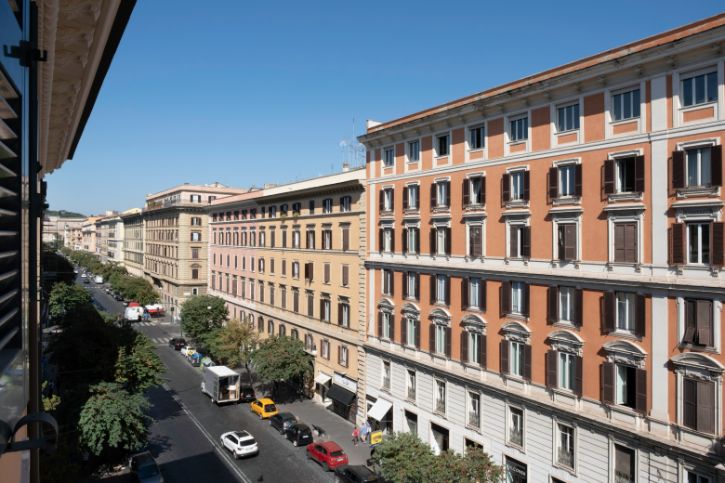
Prati runs along the west bank of the Tiber, just north of the Vatican walls and Castel Sant’Angelo. It was planned as an orderly, middle-class district, so it looks different from the medieval center, with wide tree-lined avenues, elegant apartment blocks, and smart shops.
You stay here for comfort: a calm, secure feel, local dining, and direct Metro Line A connections, plus walking access to the Vatican. The main limitation is distance from Ancient Rome, which means a ride or a longer walk across the river. Days bring shoppers and office workers, while nights stay quiet and subdued.
Sights You Can Reach on Foot
- The Vatican Museums, Sistine Chapel, and St. Peter’s Basilica are a 5 to 15 minute walk from hotels near Ottaviano
- Castel Sant’Angelo sits just south of Prati, in the neighboring Borgo quarter, an easy walk along the river
- Via Cola di Rienzo is one of Rome’s top shopping streets, with boutiques and gourmet food halls
- Piazza Cavour holds the grand Palace of Justice and landscaped gardens
- Mercato Trionfale is Rome’s largest food market, with hundreds of stalls at local prices
- Crossing the river brings you to Piazza Navona in about 12 to 15 minutes
Getting Around the City
- Metro Line A serves Prati at Ottaviano and Lepanto, both recently modernized
- Line A reaches the Spanish Steps in about 5 minutes and Termini in about 10 minutes
- Buses cross the river toward the historic center and Termini
- Airport shuttles run direct to Fiumicino from near Piazza Cavour, taking roughly 45 to 55 minutes
- You can also ride Line A to Termini and connect to the Leonardo Express
- Flat, wide sidewalks make this one of the easiest areas for luggage, strollers, or mobility aids
Where to Stay
You’ll find plenty of mid-scale and upscale hotels, boutique guesthouses, business hotels, and family apartments, usually with more space than similar rooms in the historic center.
- What you’ll appreciate: strong security, quiet nights, spacious layouts with modern elevators, reliable Metro Line A, and everyday shops
- What to watch for: a longer walk to Ancient Rome, little late-night life, and weekday traffic on Via Cola di Rienzo
- Best places to book: within a short walk of Metro Ottaviano or Lepanto for transit, or near Piazza Cavour for a scenic, upscale feel
Where to Eat and Drink
Dining in Prati caters to residents and professionals, so it feels polished and relaxed rather than touristy.
- Try Hostaria Dino & Toni on Via Leone IV for traditional Roman fare, or Pizzarium Bonci for famous pizza by the slice, just west of Prati by Metro Cipro
- Locals fill the aperitivo bars and trattorias on Via Properzio, Via Ovidio, and Via Fabio Massimo
- The pushy tourist spots are mostly limited to the blocks right by the Vatican Museum entrance
- Castroni on Via Cola di Rienzo is worth a browse for coffee, treats, and edible gifts
Tips for a Smooth Stay
- Around Piazza Cavour, Via Tacito, and Via Boezio you get peaceful, tree-lined blocks
- Rooms on Via Cola di Rienzo see more daytime delivery and traffic noise
- Petty theft concentrates near the Ottaviano metro and along the Vatican approach, so stay aware there
- Metro Line A runs until about 11:30 p.m., and later on Friday and Saturday
- Confirm whether reception is staffed around the clock, since some guesthouses have limited check-in hours
5. Spanish Steps (Spagna) Area
The Feel of the Neighborhood
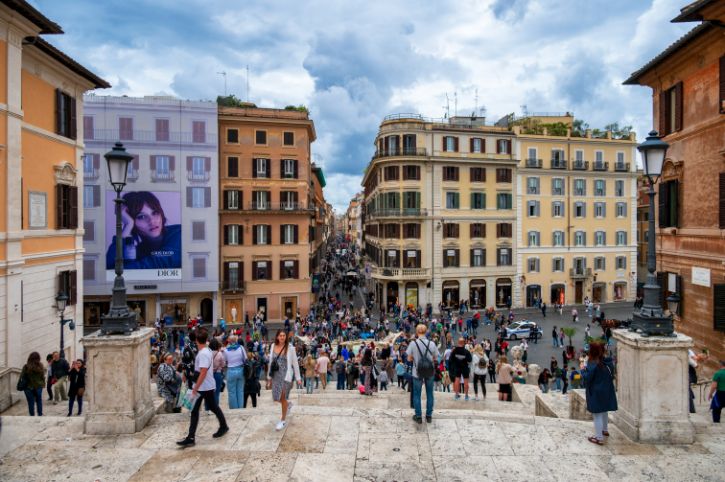
The Spanish Steps area covers Piazza di Spagna, the grand 135-step staircase up to Trinità dei Monti, and the elegant streets of the Tridente. This is Rome at its most polished, with Baroque and Neoclassical architecture, flagship fashion stores, five-star hotels, and spotless pedestrian avenues.
You stay here for the prestigious address, the luxury shopping, the fine dining, and the easy Metro Line A access, with Villa Borghese and the central monuments close by. The trade-offs are steep room rates, pricey meals, and heavy daytime crowds around the steps and the designer streets. Evenings feel refined and calm once the shops close.
Sights You Can Reach on Foot
- The Fontana della Barcaccia, sculpted by the Berninis, sits at the foot of the steps
- The Keats-Shelley House museum stands at the base of the staircase
- Via dei Condotti is Italy’s top fashion street, lined with designer names
- Villa Borghese‘s gardens are reachable via the Pincio terrace or elevators from the metro
- The Trevi Fountain is about 8 to 10 minutes south on foot
- The Pantheon is about 12 to 14 minutes away, and Piazza del Popolo about 8 minutes north
Getting Around the City
- Spagna station on Line A anchors the area and recently reopened after a full upgrade
- It runs direct to Termini and the Vatican in about 5 minutes each
- A pedestrian tunnel with moving walkways links the metro to Villa Borghese
- Surface buses are restricted in the pedestrian zone, running along the outer streets
- Taxi ranks sit at Piazza di Spagna and Piazza San Silvestro
- With luggage, use the upper-street drop-offs or the metro elevators rather than climbing the steps
Where to Stay
This area has Rome’s densest cluster of luxury five-star hotels, alongside historic four-star properties, boutique townhouses, and luxury suites.
- What you’ll appreciate: prestige, immaculate streets, green space nearby at Villa Borghese, direct Metro Line A, and excellent concierge service
- What to watch for: crowded pedestrian streets through the midday hours and strict traffic rules that complicate private transfers
- Before you book: some historic rooms face narrow lightwells with little daylight, so confirm the orientation and soundproofing, especially over busy streets
Where to Eat and Drink
The square itself leans toward pricey, tourist-focused dining, while stronger traditional cooking hides on the quieter lanes.
- Babington’s Tea Room, a landmark by the steps running since 1893, is a classic stop
- Ristorante Nino serves Tuscan-Roman dishes, and Pastificio Guerra offers cheap, fresh take-away pasta with long daily lines
- Days revolve around shopping and café culture, evenings around upscale dining
- Unlike Trastevere, there are no loud late-night bars, so it stays quiet after restaurants close
Tips for a Smooth Stay
- For charm with quieter evenings, aim for Via della Croce, Via Vittoria, or Via Bocca di Leone
- The upper ridge along Via Sistina and Via Gregoriana offers quiet surroundings with a view
- Petty theft concentrates in the crowd around the fountain and inside the metro, and street hawkers work the steps
- Sitting, eating, or drinking on the steps is banned and fined
- Wear comfortable, rubber-soled shoes for the marble and sloped cobbles
6. Caution: Roma Termini Station and Esquilino
What This Area Is Really Like
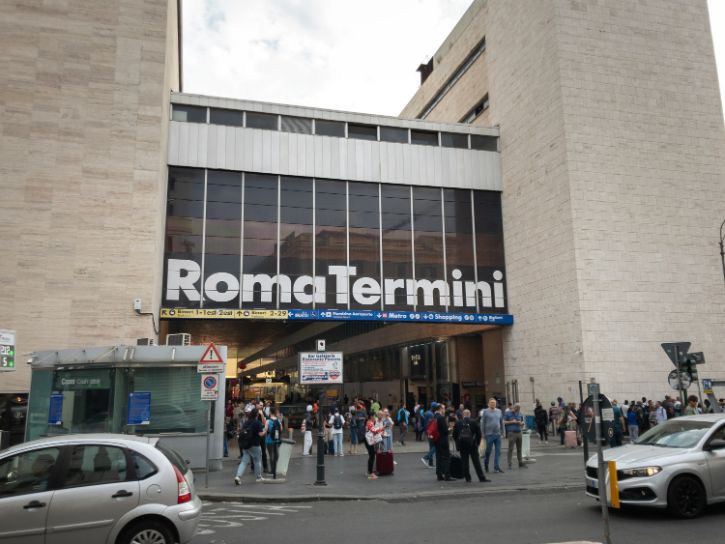
Roma Termini is Italy’s busiest railway hub, set on the Esquilino hill. Here’s the key thing to understand: the immediate station perimeter is a busy, high-pressure transit corridor, while the wider Esquilino neighborhood is a genuine, multi-ethnic, 19th-century residential quarter. They are not the same place.
Right around the station you’ll see constant movement, commuters, vendors, and people gathered near the entrances. Esquilino itself has grand architecture, porticoed squares, and ordinary shops and apartments. You come here for the budget rooms, the transport links, and the direct Fiumicino rail connection, rather than charm.
Why You Need to Stay Alert
- Termini is one of Rome’s most active areas for petty theft, especially distraction pickpocketing in crowded ticket lobbies and on packed metro platforms
- Luggage snatching happens as people board intercity trains
- Touts push illegal taxi rides or fake ticket “assistance”
- After dark, the streets beside the tracks, like Via Giolitti and Via Marsala, feel less comfortable, with patchy lighting
- Violent crime against tourists stays low, but busy transfers call for steady awareness
What You’ll Find Across the Area
Conditions vary a lot from block to block, so where you book matters more than the district name.
- Via Giolitti and Via Marsala: congested by day, low comfort after 10:00 p.m., best only for a single transit night
- Piazza dei Cinquecento: an open hub with heavy police presence and good lighting
- Via Cavour and Santa Maria Maggiore: an attractive, safe, lively boulevard that feels like an extension of Monti
- Piazza Vittorio Emanuele II: good-value apartments and authentic dining, though the park closes at dusk
- Via Merulana: a stately, quiet, secure residential street, an excellent choice
Getting To and From the Center
- Termini is the only place where Metro Lines A and B meet
- Dozens of bus lines depart from here
- The Leonardo Express runs non-stop to Fiumicino in about 32 minutes
- Trains reach Florence, Naples, and Pompeii for easy day trips
- Monti is one metro stop or about an 8 minute walk away
Smart Moves and Precautions
- Buy tickets only from official machines, licensed tobacconists (tabacchi), or tap-and-go readers, and validate paper tickets as you board
- Use only the official taxi stand in front of the terminal, and ignore anyone shouting “taxi” inside
- Official Rome taxis are white, with a lit sign, the city crest on the doors, and a working meter
- For a hotel, aim west along Via Cavour, near Santa Maria Maggiore, or south along Via Merulana
- Read recent reviews for mentions of “location at night” and “station safety”
Should You Stay Here?
Termini works best as a practical base for short stays of one or two nights, for train travelers making several trips, and for anyone with an early-morning or late-night flight. The logistics are unbeatable, even if the immediate surroundings lack charm.
If you want the transit links without the station grit, consider:
- Monti, one stop away on Line B
- The area around Piazza della Repubblica
- Via Merulana
7. Caution: Colosseum and Imperial Forums
What This Area Is Really Like
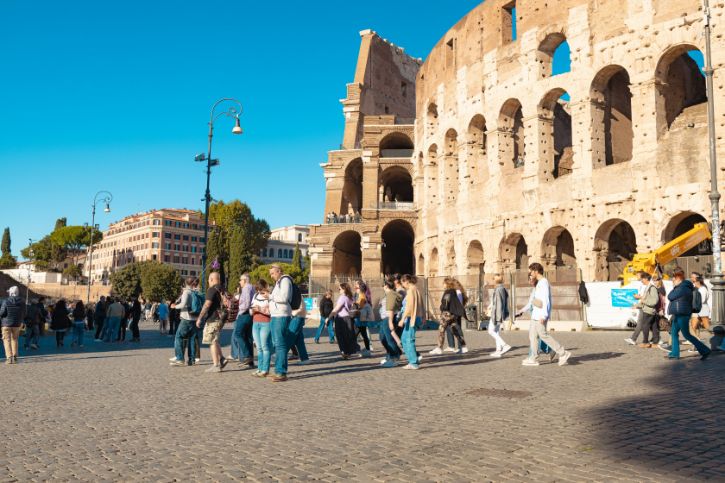
This zone takes in the Colosseum, Roman Forum, Palatine Hill, and the surrounding streets, bordering Monti to the northeast and Celio to the south. The key thing to grasp is that the vast archaeological park is made up of unpopulated ruins, while real residential quarters sit just beyond its edges.
By day, the Colosseum perimeter is one of the most crowded pedestrian spots anywhere, packed with tour groups, vendors, and police patrols. At night, once the gates close, the parkland empties fast into a softly lit corridor of floodlit ruins. You get iconic views and a central spot, but the zone itself has almost no everyday services.
Why You Need to Stay Alert
- The heavy crowds at the plaza and the metro entrance make this prime pickpocket territory
- Common scams include fake “skip-the-line” tours, people tying bracelets on your wrist to demand money, costumed gladiators charging for photos, and fake petition collectors
- The green spaces around the monuments turn dim and empty after midnight, which can feel isolating late at night
- The ground is tough, with ancient flagstones, gravel, steep inclines, and ongoing metro works, so wheeling a suitcase is hard work
What You’ll See Day and Night
- By day: intense crowds, persistent tour touts, security screening queues, and large school groups
- In the evening: beautifully lit monument views, light foot traffic along Via dei Fori Imperiali, and quiet, deserted park trails
- Pickpockets tend to strike when people pause for photos or get caught in the crush at the metro escalators
- After dark, stick to wide, lit streets like Via dei Fori Imperiali rather than the shadows of the parks
Getting Around the City
- Colosseo station runs on Metro Line B with a Line C interchange
- From Monti’s southern edge, the monuments are a 5 to 8 minute walk
- Via dei Fori Imperiali leads to Piazza Venezia in about 12 to 15 minutes on foot
- The park bans large luggage and has no lockers, so use a nearby deposit or store bags at Termini
- Entry needs named tickets bought online in advance, matching the ID you show at the gate
Where to Stay Instead
Staying right on the monument perimeter is usually impractical, thanks to the crowds, higher prices, and lack of everyday services. Booking two or three blocks into Celio or Monti gives you a far better place to actually live for a few days.
- For dining, pharmacies, and supermarkets, walk five minutes into Celio or Monti
- Rooms advertising “Colosseum views” often charge a premium
- The quieter residential pockets of Celio, just south, are both practical and atmospheric
Should You Stay Here?
If a bucket-list view is your priority, you can make it work, as long as you choose carefully in the calm residential pockets nearby rather than right on the plaza. History lovers and first-time visitors tend to enjoy it most. For everyone else, a short hop into Monti or Celio delivers the same access with far more comfort.
8. Caution: Tor Bella Monaca
What This Area Is Really Like
Tor Bella Monaca is an outer residential suburb on Rome’s eastern edge, beyond the GRA ring road and well over an hour from the historic center by transit. It was built in the 1980s as public housing, defined by large concrete towers, long apartment blocks, and wide roads.
It’s home to tens of thousands of working-class residents, with community centers, churches, youth groups, and a municipal theater. To be fair and clear: it is not a war zone, and residents go about daily life peacefully. But it has no tourism infrastructure and is not suited to a visitor’s stay.
Why You Need to Stay Alert
- Police reports tie specific pockets, mainly around Via dell’Archeologia and Largo Ferruccio Mengaroni, to organized drug dealing
- Law enforcement runs regular operations there, with arrests for drugs and weapons
- The documented problems involve local organized crime, not tourist scams or pickpocketing, so they generally pass visitors by
- The real risk for an outsider is unfamiliarity, isolation, and getting disoriented after dark
- Patchy lighting, uncollected refuse, and few shops make for poor nighttime walkability
What You’ll Find on the Ground
- Tall concrete complexes, broad roads with few crosswalks, corner shops, small bars, and discount supermarkets
- Everyday working families, elderly residents, and students commuting to the nearby Tor Vergata campus
- Visible police patrols and occasional checkpoints
- Random attacks on uninvolved pedestrians are rare, but lingering in unfamiliar housing corridors is unwise
- In any emergency across Rome, dial 112, which has multilingual operators
Getting To and From the Center
- Reaching the center takes roughly 50 to 75 minutes each way, with multiple transfers
- You’d ride a feeder bus to Metro Line A at Anagnina, or walk to Metro Line C and change at San Giovanni
- Late-night service is very limited, with a single night bus running at wide intervals
- Licensed tourist accommodation here is practically non-existent
- Always check a rental’s exact address, since some listings hide the location behind vague transit claims
Should You Stay Here?
In a word, no. This isn’t about media hype, it’s about the practical reality: the district is far from the sights, demands around two and a half hours of daily commuting, has no tourist infrastructure, and carries documented safety concerns. A low nightly rate out here is a false economy once you add the lost time and late-night taxis.
Better budget-friendly alternatives include:
- Ostiense and Piramide, with strong transit, a lively food scene, and safe streets
- San Lorenzo, an authentic student quarter near the university with easy access to Termini
- Garbatella, a historic garden-suburb with peaceful courtyards and direct Metro Line B access