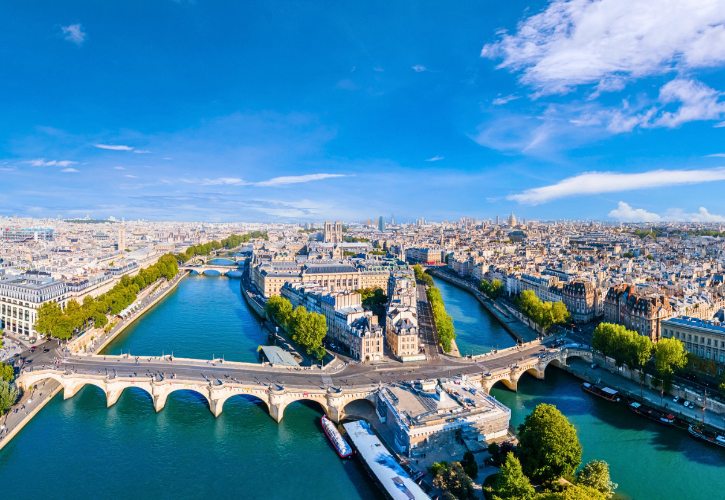
Right in the middle of Paris sit two small river islands, Île de la Cité and Île Saint-Louis. This is where the city began, so centuries of history are packed into a tiny space.
In just a few steps you can pass a royal bridge, a Gothic church filled with colored light, a revolutionary prison, a flower market, cafés, and quiet riverside streets.
Everything below is close together, so you can slow down and enjoy each stop. Trust me, walking beats rushing here. 😊
1. Pont Neuf
a. Why this bridge is the perfect place to begin
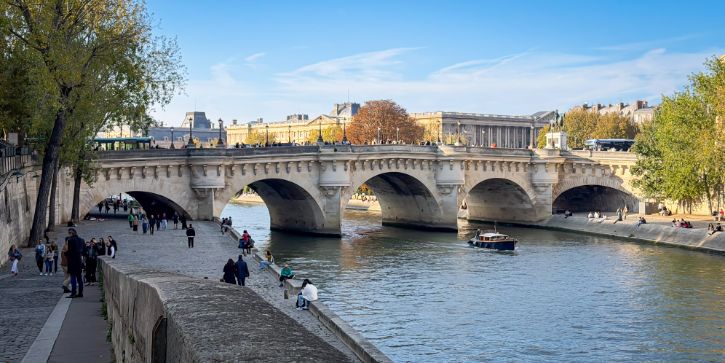
Pont Neuf is the oldest bridge still standing in Paris. King Henri III laid the first stone in 1578, but the Wars of Religion stopped the work. It was finished under King Henri IV, who opened it in 1607.
b. Why it changed Paris
Older bridges were crowded with tall houses that blocked the light. Pont Neuf was different:
- It was the first Paris bridge built with no houses on it.
- With the roadway open, the Seine became a public space for everyone.
- It was also the first bridge in Paris with raised stone sidewalks.
c. What makes it beautiful
Take a moment to notice these details:
- The semicircular arches and solid stone parapets.
- The rounded stone balconies over each pier, once used by vendors, now perfect viewing spots.
- Looking west (downstream), the island tapers to a stone point right below you, the Square du Vert-Galant, where the river reopens toward the Louvre, with the Eiffel Tower on the horizon.
- Looking east (upstream), the Seine splits into two arms that flow along either side of the island.
d. The mascarons
Look under the parapets for the mascarons, 381 carved stone faces:
- Each one is different, showing woodland spirits, satyrs, and playful old street characters.
- The faces you see today are 19th-century copies.
- The surviving originals are kept in the Musée de Cluny and the Musée Carnavalet.
e. The Henri IV statue
At the center of the bridge stands the bronze statue of King Henri IV on horseback:
- The first statue went up in 1614.
- In 1792, during the Revolution, crowds pulled it down and melted the bronze for cannons.
- The present statue dates from 1818, cast from melted-down statues of Napoleon and a French general.
So one crossing holds royal pride, revolution, and restoration all at once. Don’t just cross it, stop on it.
2. Place Dauphine
a. A quiet royal square
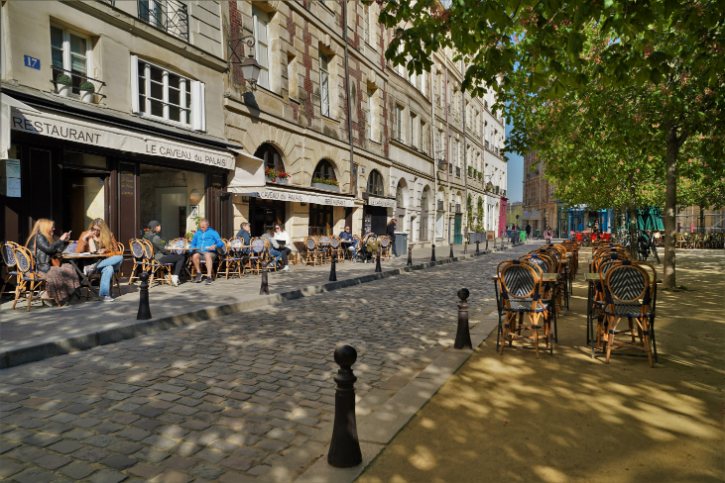
Place Dauphine was created by King Henri IV in March 1607, alongside Pont Neuf, and named after his eldest son the Dauphin, the future King Louis XIII. Because the land narrows to a point at the island’s tip, the square has its unusual triangular shape.
b. What to experience here
Step inside and it feels almost like a village:
- It is enclosed and sheltered, set back from traffic.
- Gravel underfoot and mature horse chestnut trees filter the light.
- Old brick-and-stone façades give it warmth.
- You hear café chatter and the clink of pétanque games.
It is one of the most romantic corners in Paris, so grab a bench and sit for a while.
c. A history point to clear up
People often say the Henri IV statue stands “inside” the square. It doesn’t:
- The statue is outside, on Pont Neuf itself.
- The square was designed to face the monument, framing it from behind.
- The two were built as parts of the same plan under Henri IV.
d. Writers who loved it
This little triangle has inspired famous writers:
- The Surrealist André Breton used its triangular shape as a powerful symbol in his book Nadja (1928).
- In Georges Simenon’s novels, Inspector Maigret slips off to the fictional “Brasserie Dauphine”, inspired by a real bistro here.
e. An easy-to-miss piece of heritage
There is more history than the pretty façades suggest:
- In the 1600s and 1700s, the square hosted an open-air art show on the feast of Corpus Christi.
- The young painter Jean-Siméon Chardin was noticed here in 1728.
- The square earned official heritage protection in 1950.
3. Sainte-Chapelle
a. Why it can feel almost impossible
Sainte-Chapelle was built between 1242 and 1248 by King Louis IX, or Saint Louis, as a giant reliquary for holy treasures, above all the Crown of Thorns, which he bought in 1238. Remarkably, that relic cost far more than the chapel built to hold it.
b. The two chapels
Sainte-Chapelle is built in two stacked levels:
- The lower chapel was for servants and guards, low, dim, and richly painted.
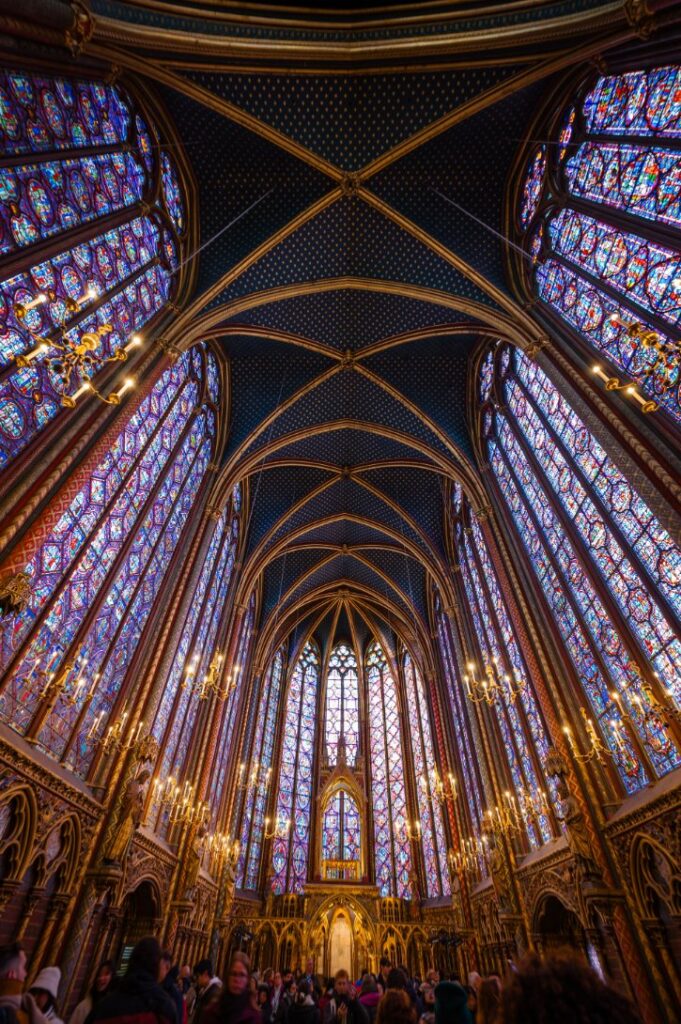
- The upper chapel was for the king, soaring about 20 meters high and wrapped in glass.
- You climb a narrow spiral staircase, and as you enter the upper chapel, height opens up, color floods in, and the stone seems to melt away.
c. The stained glass
The upper chapel holds fifteen tall lancet windows with around 1,113 biblical scenes:
- Roughly two-thirds is original 13th-century glass.
- The windows tell the Bible story from beginning to end.
- Read each window left to right and bottom to top, like rising toward heaven.
- Some rows snake back and forth in a pattern called boustrophedon.
Pick one window and follow it, and the place comes alive.
d. The rose window
Above the entrance is the great Rose Window:
- It measures about nine meters across and dates from around 1485 to 1498.
- It is dedicated entirely to the Book of Revelation, the end of the Bible.
- It faces west, so it catches the setting sun as you leave.
e. The engineering behind the beauty
Sainte-Chapelle is a masterpiece of Rayonnant Gothic, built to make walls disappear:
- Buttresses outside absorb the outward push of the roof.
- Hidden iron tie-bars hold everything steady against the wind.
- Stone makes up less than a quarter of the wall area, with 618 to 640 square meters of glass in its place.
f. Details most visitors miss
With all that glass, the carvings get overlooked. Hunt for these:
- The twelve statues of the Apostles on the piers.
- Carved plants like oak leaves, ivy, and water lilies.
- The lower chapel Annunciation mural, the oldest surviving wall painting in Paris.
- The scene of Louis IX carrying the Crown of Thorns barefoot, in the south wall.
g. On to the Conciergerie
Next door stands the Conciergerie, where the royal story turns dark toward prison and revolution.
4. Conciergerie
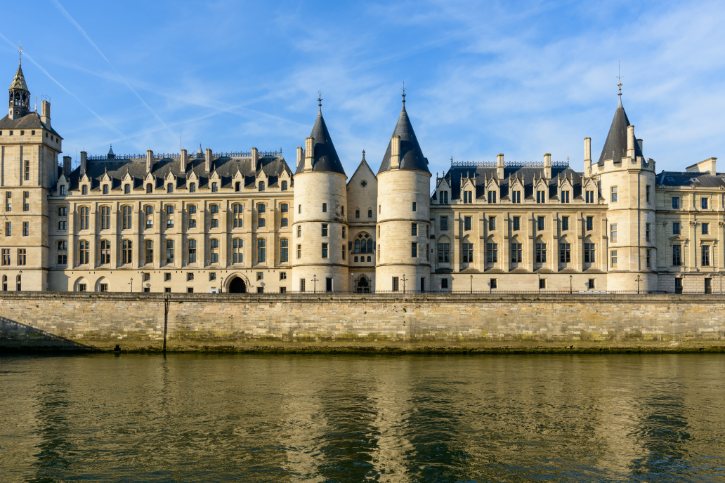
a. One building, several lives
The Conciergerie is the surviving lower level of the medieval Palais de la Cité, home to French kings for centuries. Over time it became a court, then a prison, and finally the main holding prison of the Revolution. The Revolutionary Tribunal met here, and more than 2,700 prisoners were sent from these halls to the guillotine.
b. The great medieval hall
Start with the Salle des Gens d’Armes, the Hall of the Men-at-Arms:
- Built between 1302 and 1313 under King Philip IV.
- At 64 meters long, it is the largest surviving secular Gothic hall in Europe.
- Rows of stone pillars carry a forest of rib vaults, once warmed by four huge corner fireplaces.
c. Two themes to hold in mind
Group what you see into two ideas.
The medieval palace:
- The Guard Room with its carved figures.
- The medieval kitchens, with fireplaces once used to roast whole animals.
The Revolutionary prison:
- The Rue de Paris, where the poorest prisoners slept on straw.
- Reconstructed private cells that wealthier prisoners paid for.
- The Women’s Courtyard, with its stone fountain.
d. Marie Antoinette, the facts
Her final chapter is often dramatized. Here is what the records confirm:
- She was moved here on August 2, 1793, and held for seventy-six days.
- Her trial ended early on October 16, 1793.
- She was executed that afternoon at the Place de la Révolution, now Place de la Concorde.
- You do not see her real cell. In 1816 it became a memorial chapel, and a nearby room holds a reconstruction.
e. The clock tower outside
View the building from across the river to see the Tour de l’Horloge:
- Its clock was installed in 1370 for Charles V.
- It is often called Paris’s first public clock.
- Before this, the city ran on church bells. Now it ran on civic time.
5. Marché aux Fleurs de Paris
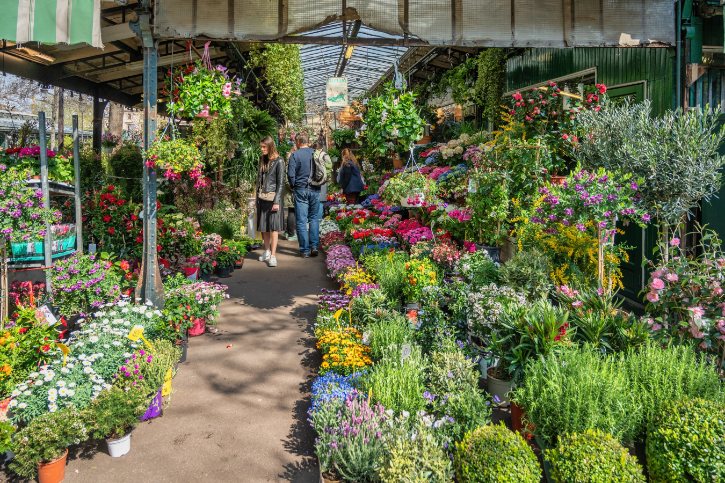
a. A living market among the monuments
This flower market sits on Place Louis Lépine, facing the Quai de la Corse. Its official name is the Marché aux fleurs Reine Elizabeth II, though locals just call it the Marché aux fleurs. Unlike the monuments around it, this is a working market you can wander straight through.
b. What to enjoy here
Take your time in the covered iron-and-glass pavilions:
- Seasonal flowers like roses, hydrangeas, tulips, and hyacinths.
- Potted shrubs and small citrus trees.
- Orchids and bonsai under cover.
- The gentle sounds of running water and rustling leaves.
c. Real history beneath the flowers
The market has grown here for over 200 years, in stages:
- It began with a decree from Napoleon Bonaparte in 1808.
- It opened for business in 1809 as an open-air riverside market.
- The cast-iron pavilions you see today were designed around 1900 by Jean-Camille Formigé.
d. Small details at eye level
Look for two original Wallace fountains among the stalls:
- These are the elegant green drinking fountains found across Paris.
- They were installed in the early 1870s, funded by a British philanthropist.
- Their domes are held up by four female figures representing simple virtues.
e. The royal name
So why a British queen’s name on a Paris market?
- Queen Elizabeth II first visited as a young princess in 1948.
- She returned several times over the years.
- On her final state visit, in June 2014, the market was renamed in her honor.
f. A hidden Roman layer
There is history beneath your feet:
- Between 1905 and 1906, Métro work uncovered a large Gallo-Roman civic basilica from the 3rd or 4th century AD.
- It proved that Roman officials governed the ancient town of Lutetia from this exact spot.
6. Au Vieux Paris d’Arcole
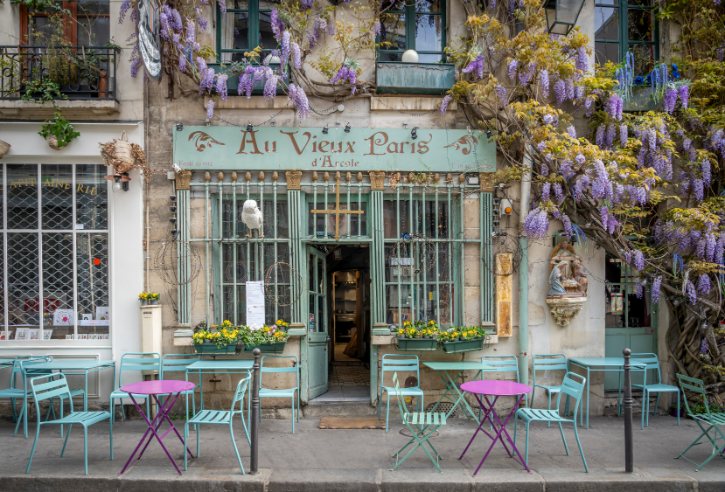
a. An atmospheric food stop
Au Vieux Paris d’Arcole sits at 24 Rue Chanoinesse, in one of the last medieval pockets of Île de la Cité, on a street once home to the priests who served Notre-Dame. The restaurant leans into traditional cooking from the Aveyron region, with a welcoming terrace.
b. What to eat
The kitchen focuses on hearty dishes from Aveyron and the Aubrac plateau:
- Bœuf Fermier d’Aubrac, prime beef from cattle raised on high plateaus.
- Aligot de l’Aubrac, mashed potatoes beaten with cheese until smooth and stretchy.
- Coufidou d’Aubrac, a slow-cooked beef stew in red wine.
- Vins de Marcillac, peppery regional red wines.
Menus change, so treat these regional dishes as the heart of the place.
c. A little food background
This food arrived through the Bougnats, 19th-century migrants from the Aveyron who came to Paris and opened bistros serving the food of home.
d. A quick accuracy note
You’ll find some colorful claims about this building online. Handle them with care:
- The story that it was built in 1512 from leftover Notre-Dame stone is not supported. The visible building dates to the 17th and 18th centuries.
- The claim that Pope Clement VIII lived here is simply not true.
- The wisteria vine on the façade is real, and it blooms purple in spring, usually mid-April into early May.
e. Why the setting fits this walk
The location does a lot of the work:
- The narrow, historic Rue Chanoinesse feels a world away from the crowds.
- The terrace lets you sit right in the old streetscape.
- After a morning of huge monuments, a small place to pause is a real pleasure.
7. Notre-Dame Cathedral of Paris
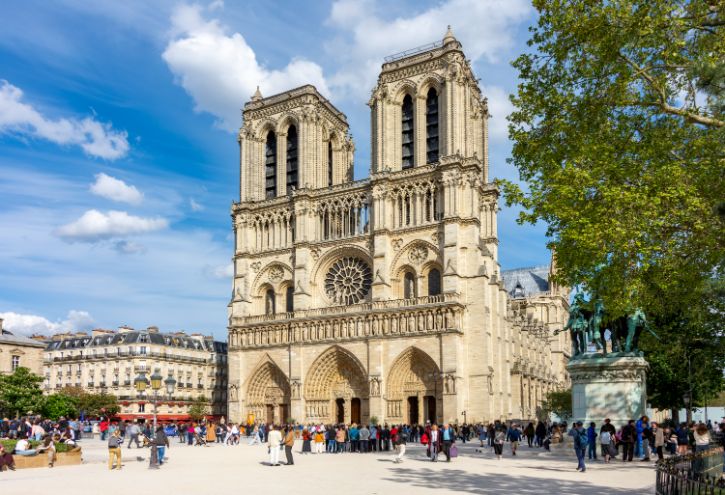
a. A restored masterpiece and living cathedral
Good news for your trip. Notre-Dame reopened on December 7 and 8, 2024, after a five-year restoration following the April 2019 fire:
- The cathedral is now fully open for both worship and visits.
- You can walk through the nave, aisles, transepts, choir, and chapels.
- Entry is free and no ticket is needed. A free timed reservation is offered to help you skip the queues, but it is optional, and walk-ins are welcome.
- Remember, this is still a working Catholic cathedral, not only a tourist site.
b. Reading the west front
The western façade rewards a slow look:
- Three doorways: the Portal of the Virgin, the Last Judgment Portal, and the Portal of Saint Anne.
- The Gallery of Kings, 28 statues recarved in the 1850s after the originals were destroyed in 1793.
- The central rose window, about 9.6 meters across, from around 1220 to 1225.
c. The sides and back
Don’t stop at the front. Walk around and look up:
- The famous flying buttresses, which catch the outward push of the roof and carry it safely down.
- The rounded eastern end, called the chevet.
- The two great transept rose windows, both of which survived the fire.
You’ll see these again beautifully from Pont Saint-Louis.
d. Inside, space and light
Step inside and let the scale sink in. The interior is 128 meters long and rises 33 meters to the vaults:
- Notice the height and the strong pull upward.
- Notice the long rhythm of arches marching toward the choir.
- The pale, blond stone was cleaned during the restoration.
Both this and Sainte-Chapelle are Gothic, but they feel completely different: jewel-toned color there, soft daylight here.
e. Don’t miss the art
A few works are worth seeking out:
- The Mays de Notre-Dame, large paintings given by the Goldsmiths’ Guild; thirteen were saved from the fire and reinstalled.
- Our Lady of Paris, a 14th-century statue of the Virgin and Child, which survived the fire unharmed.
- The white marble Pietà in the choir.
f. The relic that links back to Sainte-Chapelle
The Crown of Thorns story continues here:
- Louis IX first housed it in Sainte-Chapelle.
- It later came to Notre-Dame, in 1806.
- It was rescued during the 2019 fire and returned in December 2024.
- It now rests in a modern reliquary behind the high altar, shown during weekly services.
Read More: 10 Breathtaking Churches in Paris You Can’t Miss
8. Pont Saint-Louis
a. A scenic threshold
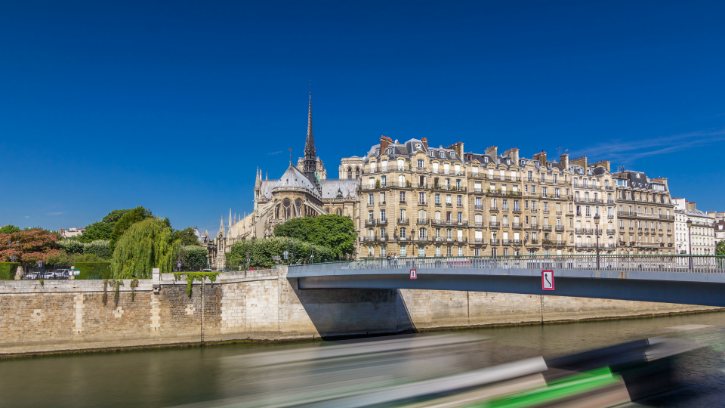
Pont Saint-Louis is the only bridge that directly links Île de la Cité and Île Saint-Louis. Reserved for people on foot and on bikes, it works less like a crossing and more like an open viewing terrace, so there is no rush.
b. The view to look for
This is one of the best places to see Notre-Dame from behind:
- The rounded eastern end, the chevet, and its sweeping flying buttresses.
- The rebuilt spire rising over the roofline.
- Looking north, the Right Bank quays across the water, with the Hôtel de Ville (City Hall) rising just beyond.
From here you finally read the cathedral as a piece of engineering.
c. What makes it memorable
Because it is free of traffic, this bridge often becomes a stage:
- You may find jazz players, cellists, or accordionists performing.
- People gather to sit, listen, and take in the view.
A gentle note: these performances come and go. Treat them as a happy surprise, not a guaranteed show.
d. A photography angle with purpose
Instead of the usual front-facing cathedral photo, try something better:
- Frame Notre-Dame with the river, the trees, and the embankments.
- Include the skyline and the water reflections.
This shows the cathedral as part of the island landscape.
e. Two islands, side by side
This bridge is the clear turning point between two very different places:
- Île de la Cité is grand, institutional, and busy.
- Île Saint-Louis is smaller and residential, full of historic mansions, food shops, and a quiet local rhythm.
9. Le Saint-Régis, Paris
a. A classic brasserie at the island’s slower pace
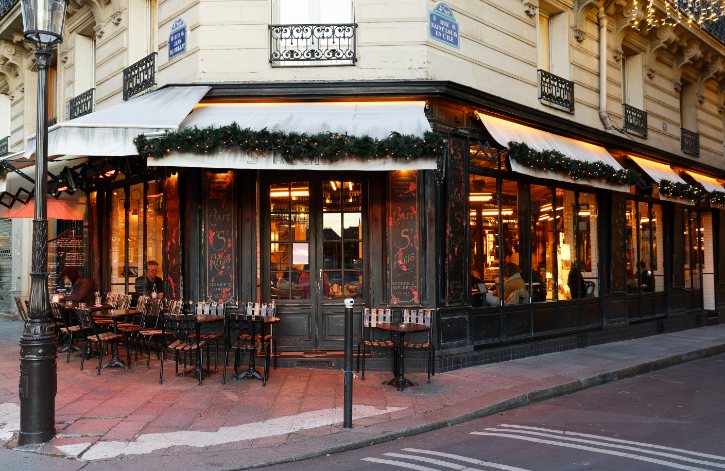
Le Saint-Régis is a traditional neighborhood brasserie at 6 Rue Jean du Bellay, right where you enter Île Saint-Louis. It is not a monument, but it offers a real taste of Paris café and bistro culture, and sits at the island’s main entrance.
b. Why stop here
After a monument-heavy morning, this is a stop you’ll be glad to have:
- A coffee, a drink, or a full meal.
- A proper Paris brasserie atmosphere.
- A relaxed island setting.
c. The terrace
The outdoor corner keeps a classic look:
- Woven bistro chairs and small round tables.
- Dark green fabric awnings.
- A setup made for people-watching along the main street.
d. Inside
The dining room keeps its early-1900s style:
- Black-and-white floor tiles.
- Antiqued mirrors and plaster moldings.
- A zinc-topped bar, with lighting that turns warm and golden in the evening.
e. What to order
The kitchen does well-made French comfort food:
- Morning classics like croissants, café crème, and soft-boiled eggs.
- Bistro staples like croque-monsieur, French onion soup, and steak tartare with fries.
- A friendly wine list by the glass, including Sancerre and Chablis.
Read More: 12 Delicious Cheap Eats in Paris You Shouldn’t Miss
10. Berthillon
a. More than a simple ice cream stop
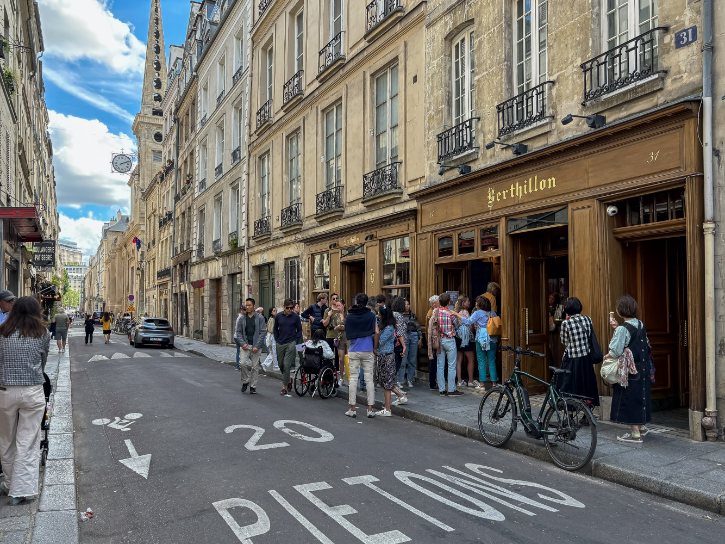
At 29 to 31 Rue Saint-Louis-en-l’Île, Berthillon is one of the most famous ice cream makers in Paris. It was founded in 1954 by Raymond Berthillon and has stayed independent and family-run for four generations, still managed on site today.
b. The production story
What sets Berthillon apart is that it still makes everything itself:
- All ice creams and sorbets are made in workshops directly beneath the shop.
- Dairy ice creams use fresh milk, cream, egg yolks, and cane sugar; sorbets use pure fruit pulp.
- The house avoids artificial stabilizers, emulsifiers, and flavorings.
The result is dense and full of clean, concentrated flavor.
c. What you should actually do
Don’t get stuck on one “must-have” flavor:
- The selection rotates with the seasons.
- Choose between rich dairy ice creams and bright fruit sorbets.
- Ask the counter staff what was freshly churned that day. That is the local move.
d. A wider dessert tradition
Berthillon is a full traditional dessert house, not just a scoop shop:
- Vacherins glacés, layered ice cream centerpieces with meringue and cream.
- Bombes glacées, molded frozen desserts.
- A family tea salon nearby for a plated sundae.
e. Reputation, kept honest
Berthillon’s fame is well earned. It is fair to call it one of Paris’s best known ice cream makers and a landmark of Île Saint-Louis food culture. Just don’t expect grand “best in the world” claims. The pleasure here is simple and real.
11. Église Saint-Louis-en-l’Île
a. A plain outside hiding a rich inside
This is the only parish church on Île Saint-Louis. The island was two marshy islets until a planned expansion from 1614 joined them. As wealthy residents moved in, a small chapel from 1623 grew too small, so in 1664 the parish began the present church.
b. The architects
The church took about 60 years to build, from the first stone in 1664 to its consecration in 1726, passing through several hands:
- François Le Vau, younger brother of the famous Louis Le Vau, designed the church and began the choir.
- After his death, Gabriel Le Duc finished the choir.
- Pierre Bullet and Jacques Doucet completed the nave, transept, and dome by around 1725.
- It was consecrated in 1726.
c. The bell tower
The most memorable outside feature is the unusual bell tower:
- The earlier tower was struck by lightning and destroyed in 1740.
- The present 30-meter stone spire was built in 1765.
- It is an openwork stone obelisk, pierced with holes and oval openings.
- The open cutaways let strong river winds pass through, easing pressure on the tower.
d. Why the front looks so plain
Many visitors are surprised by the flat, bare wall facing the street:
- The original plan called for a grand columned entrance with statues.
- As building dragged on, the surrounding plots were sold and built up with houses.
- Short on space and money, the parish gave up on the grand façade.
e. Inside, and its Revolution story
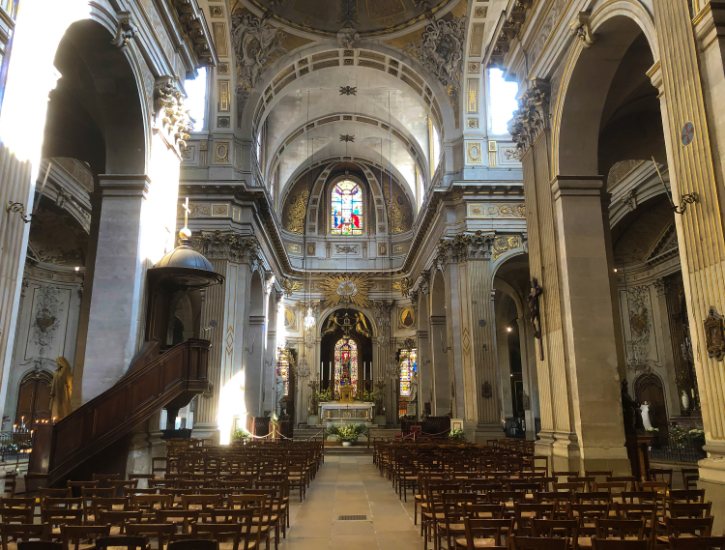
Step through the plain front and the interior opens up bright and decorated:
- The 17th-century church was decorated in rich Baroque style, with contributions from the painter Jean-Baptiste de Champaigne, who is buried here.
- Much of the richness was added in the 19th century.
- In 1791 the church was closed and used as a depot; the City of Paris bought it back in 1817.
- Look for images of Saint Louis holding the Crown of Thorns, a quiet echo of Sainte-Chapelle.
f. The village feel
The church, its bell tower, and the narrow Rue Saint-Louis-en-l’Île create a real village feeling, a world apart from the giant monuments of Île de la Cité.
12. Quai d’Anjou
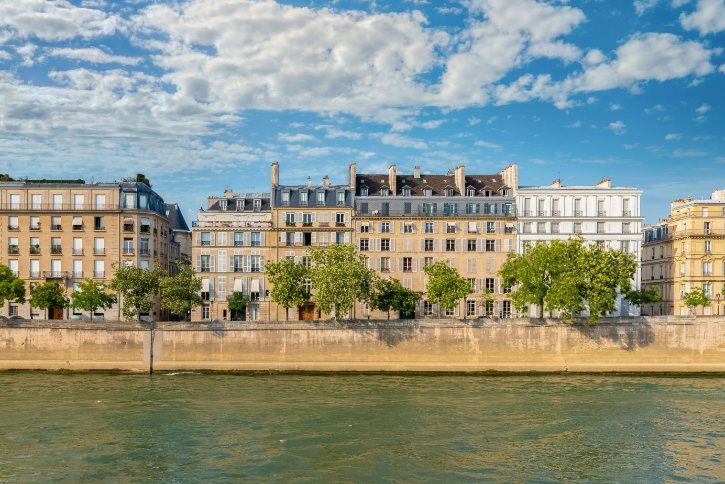
a. Ending with the island as a whole
For the finale, enjoy the island as a whole rather than one more big sight. Quai d’Anjou runs along the northern edge of Île Saint-Louis, built in the 1620s to 1640s under one unified plan, lined with elegant private mansions, called hôtels particuliers, facing the water.
b. The mansion to notice: Hôtel de Lauzun
The star along the quay is the Hôtel de Lauzun at 17 Quai d’Anjou:
- Its street front is deliberately restrained, with plain limestone and an iron balcony.
- Behind that simple face hides an opulent interior of gilded woodwork, painted ceilings, and marble fireplaces.
That contrast, plain outside and lavish inside, is its whole charm.
c. The history behind it
A few facts give it real depth:
- It was commissioned in 1656 to 1657 by financier Charles Gruyn.
- His architect, Charles Chamois, worked in the circle of the great Louis Le Vau.
- In 1682 it passed to the Duke of Lauzun, whose name stuck to the building.
d. A literary story that makes the quay unforgettable
In the 1800s, the mansion became a famous gathering place for writers:
- Poet Charles Baudelaire rented an apartment here and wrote early poems for Les Fleurs du mal.
- Writer Théophile Gautier lived here too.
- The salons hosted the Club des Haschischins, where writers such as Balzac and Dumas met to explore altered states.
e. Can you go inside?
Here is the practical truth, so you’re not disappointed:
- Since 2013, it has housed the Paris Institute for Advanced Study.
- It is closed to regular walk-in visits, with no daily tickets.
- Admire the exterior, the gate, and the details from the public quayside.
f. Hôtel Lambert and the Seine
Glance east and you’ll spot other grand residences, above all the Hôtel Lambert at No. 1:
- Designed in 1640 by the royal architect Louis Le Vau.
- Known for its riverfront garden terrace and curving river rotunda.
- Later a cultural center for Polish exiles, welcoming figures like Chopin.
Then let the river close the walk: soft light, reflections on old limestone, mature trees, and a quiet, residential calm.
g. A quick word to finish
The real magic of this walk is not any single stop. It is how much changes in so little distance, from grand bridge to hidden square, glowing chapel to grim prison, flower market to family ice cream, and finally to a calm riverside. Take your time, look closely, and let this small corner of Paris show you just how much it holds.