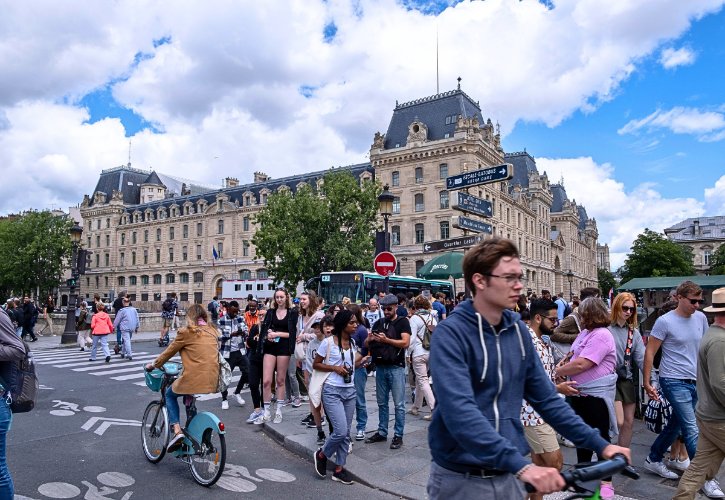
Paris rewards you the moment you slow down, whether it is light on the Seine or the smell of fresh bread on a quiet street.
Most visits go beautifully. Still, a little local knowledge goes a long way. Knowing a few rules, small risks, and simple steps before you arrive helps you relax, avoid preventable hassles, and enjoy the city with real confidence. 😊
1. Never Buy Attraction Tickets from Unofficial Street Sellers

a. Where they operate
Some of the busiest spots in Paris attract sellers who are not linked to any official venue.
You will notice them most around the Champ de Mars near the Eiffel Tower, the Cour Napoléon outside the Louvre, the Sacré-Cœur stairs in Montmartre, and transit points like Châtelet-Les Halles, Gare du Nord, and Opéra. They often act like helpful guides or event staff.
b. Why the tickets are risky
The pitch usually sounds tempting, such as “last-minute entry”, “discounted group passes”, or “skip-the-line access”.
But tickets from these sellers are almost always invalid, counterfeit, duplicated, or already scanned.
Big sites like the Louvre, Versailles, and the Eiffel Tower issue tickets that carry a name and a fixed entry time.
If a QR code has already been used, the gate simply rejects it, and you lose your money.
The same risk lives online through mirror websites that copy an official page and charge inflated fees for bookings that do not exist.
c. How to spot the real thing
- Buy only from the attraction’s official website, such as louvre.fr or toureiffel.paris.
- Check that the web address matches the official venue, not an advertised link that only looks official.
- Look for a named, time-stamped ticket rather than an anonymous pass.
- Be wary of street cash sales and prices that seem oddly cheap.
d. Legitimate sellers still exist
Not every third party is a scam. Licensed tour operators and travel agencies work legally across France. To confirm one is genuine, check the attraction’s own website, where authorized partners are listed.
e. If something feels wrong
Report a suspected ticket scam or online booking fraud to SignalConso, the French consumer platform. For a physical scam or theft, file a report with the French National Police at a commissariat, or online through THESEE or Ma Sécurité.
2. Book Major Attractions Before You Arrive

a. Why booking matters now
Many top sites run on timed-entry reservations to manage crowds and protect the buildings. Turning up and buying at the door often does not work anymore, especially in peak season, on holiday weekends, and during big events.
b. What the main sites require
- Louvre: a booked time slot for everyone, including free visitors and Paris Museum Pass holders.
- Paris Catacombs: only 200 people underground at once, tickets released 7 days ahead, often gone within hours.
- Versailles: a timed reservation for the main Palace, with separate rules for the parkland.
- Eiffel Tower: strongly recommended, since walk-up lines can run 1 to 2 hours and summit slots go first.
- Musée d’Orsay and Sainte-Chapelle: strongly recommended, ideally 1 to 2 weeks ahead.
Read More: The Perfect Right Bank Walking Route in Paris for One Unforgettable Day
c. What “skip-the-line” really means
This confuses many visitors. A timed ticket lets you skip the ticket-buying queue. It does not skip the security screening (part of the national Vigipirate plan) that everyone passes at the entrance.
Arrive late for your slot and you may lose it, then have to join a general line or rebook.
d. When everything is sold out
- Look for evening openings, such as late nights at the Louvre or Thursday lates at the Musée d’Orsay.
- Book authorized guided tours or combined-entry tickets through verified platforms.
- Watch the official site for last-minute cancellations, which are sometimes released again.
e. Plan around the season
Not every site needs early booking, and needs vary by attraction and time of year. Availability tightens in summer, on public holidays, on weekends, and during major events, so check each site you care about.
3. Check Weekly Closure Days Before Visiting Attractions
a. The weekly rhythm
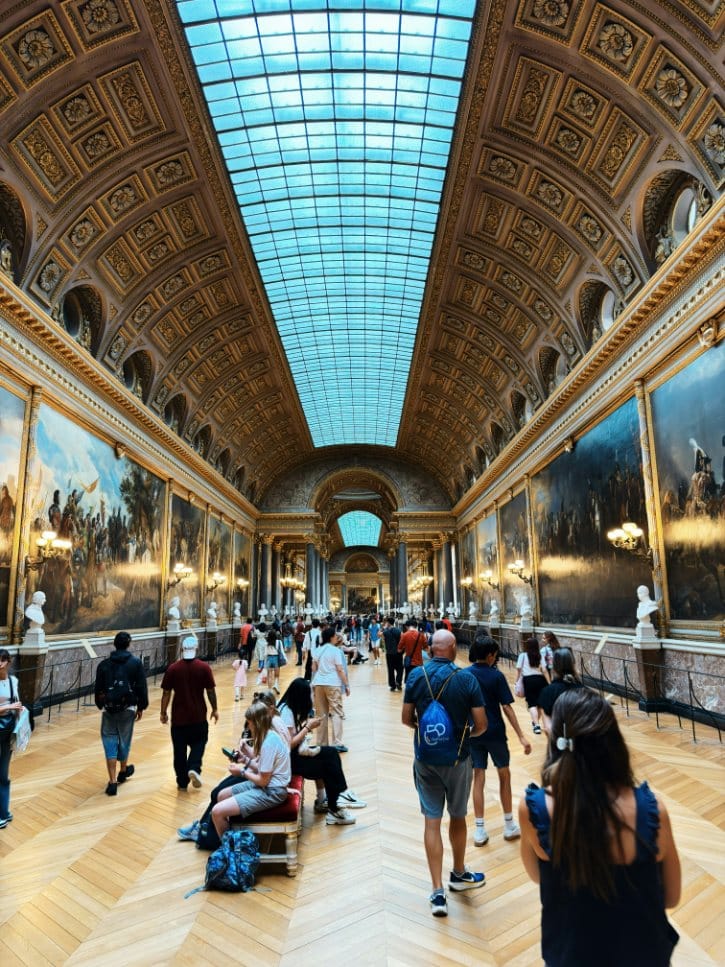
Unlike shops, most major museums close one day a week, usually Monday or Tuesday. Plan a museum-heavy day on the wrong day and you may cross the city for nothing.
b. Who closes when
- Closed Tuesday: the Louvre and the Musée de l’Orangerie.
- Closed Monday: the Musée d’Orsay, Versailles, Musée Rodin, Musée Picasso, and Musée de Cluny.
- Fully closed for now: the Centre Pompidou, shut from late 2025 through 2030 for a major renovation, with its collection touring partner venues.
c. Public holiday closures
Most national museums also close on January 1, May 1 (Labor Day), and December 25. Some days are mixed. On Bastille Day (July 14), the Louvre offers free entry, but if July 14 lands on a Tuesday, the usual Tuesday closure still applies.
d. Closing time is not last admission
The closing time is not the same as the last-admission time. Many places stop letting people in 45 to 60 minutes before closing, and galleries may start clearing before the doors shut. Build that into your plan so you are not rushed.
e. Double-check before you go
- Check the official website within 48 hours of your visit.
- Check again on the morning of your visit, since strikes (grèves), weather, security, or events can change things fast.
- Group nearby sites by open day and neighborhood, and keep a backup close by in case something is closed.
4. Be Careful of Tourist Trap Restaurants Near Major Landmarks
a. Where they cluster
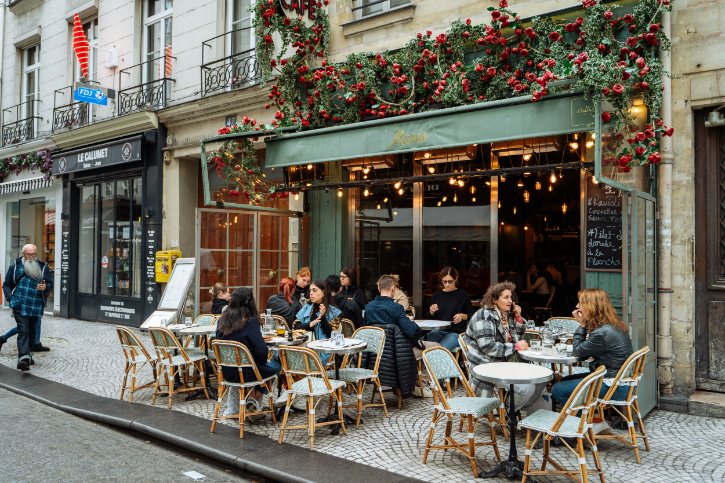
Paris is a food lover’s dream, but restaurants right beside famous sights often care more about foot traffic than flavor.
You will find more of these around the Eiffel Tower, Place du Tertre in Montmartre, the Champs-Élysées, and the plazas facing big stations like Gare du Nord and Gare de Lyon.
b. Warning signs
- Staff standing outside pressuring you to sit down.
- Huge menus covering many unrelated cuisines, which often points to frozen food.
- Glossy photo boards aimed mainly at non-French speakers.
- Unclear prices, such as hidden drink costs or unlisted terrace charges.
c. What French law protects
French rules (affichage des prix) require restaurants to display the full menu, including taxes and service, outside so you can read it first. A few things must be free with a meal:
- Tap water (carafe d’eau) on request when you order food.
- Bread (le pain), with no extra charge allowed.
- Service, already included in the listed prices (service compris).
- A receipt for meals over €25 or whenever you ask.
If a server tries to charge for bread, or opens mineral water you did not request, you can simply ask for free tap water and bread instead.
d. Finding better food
- Walk two or three streets away from the landmark.
- Look for a short, seasonal menu that changes daily (an ardoise or menu du jour).
- A steady flow of local customers and clearly displayed prices is a good sign.
- Read recent reviews, not just the overall star rating.
e. If you are overcharged
Not every restaurant near a landmark is bad, and many are wonderful. But if a place overcharges you or ignores its posted prices, you can complain through the government’s SignalConso portal.
Read More: 10 Mistakes Tourists Make Before Walking Into a Paris Restaurant
5. Be Mindful of Paris Café and Restaurant Etiquette
a. Service is already included
The key idea is service compris, meaning service is built into the prices you see. Displayed prices already include a 15% service charge, so an extra tip is never required and is not automatically expected.
b. Tipping, if you want to
Tipping (le pourboire) is optional and usually small:
- Cafés and bars: a little change, around €0.20 to €1.00, if service was friendly.
- Full-service restaurants: about €1 to €3 per person for good service.
- Fine dining: 5% to 10% is generous.
Card machines usually do not ask for a tip, so cash handed to your server is the nicer way. Be a little cautious in very touristy spots that add tip prompts on top of service compris, since that extra amount is optional.
c. Seating and pricing
On a café terrace (en terrasse), you can usually take any open table for drinks. Indoors (en salle), wait to be seated during meal hours.
Prices can legally differ by where you sit. Standing at the bar (au comptoir) is often cheapest, while indoor and terrace seating may cost a bit more, and these prices must be displayed outside.
d. Handy French phrases
- A coffee at the bar: “Un café, s’il vous plaît.” (A coffee, please.)
- An indoor table: “Bonjour, une table pour deux, s’il vous plaît.” (Hello, a table for two, please.)
- The terrace: “On peut s’installer en terrasse ?” (Can we sit on the terrace?)
- Free tap water: “Une carafe d’eau, s’il vous plaît.” (A jug of tap water, please.)
- The bill: “L’addition, s’il vous plaît.” (The bill, please.)
e. Getting the bill and paying
Your server will not usually bring the bill until you ask, since rushing you is seen as impolite. Catch their eye and ask for it.
Most places take major cards, though small spots may set a minimum card amount (often €5 to €15), shown at the counter. When in doubt, ask before ordering whether cards are accepted.
6. Stay Alert for Pickpockets in Crowded Areas
a. What this really is
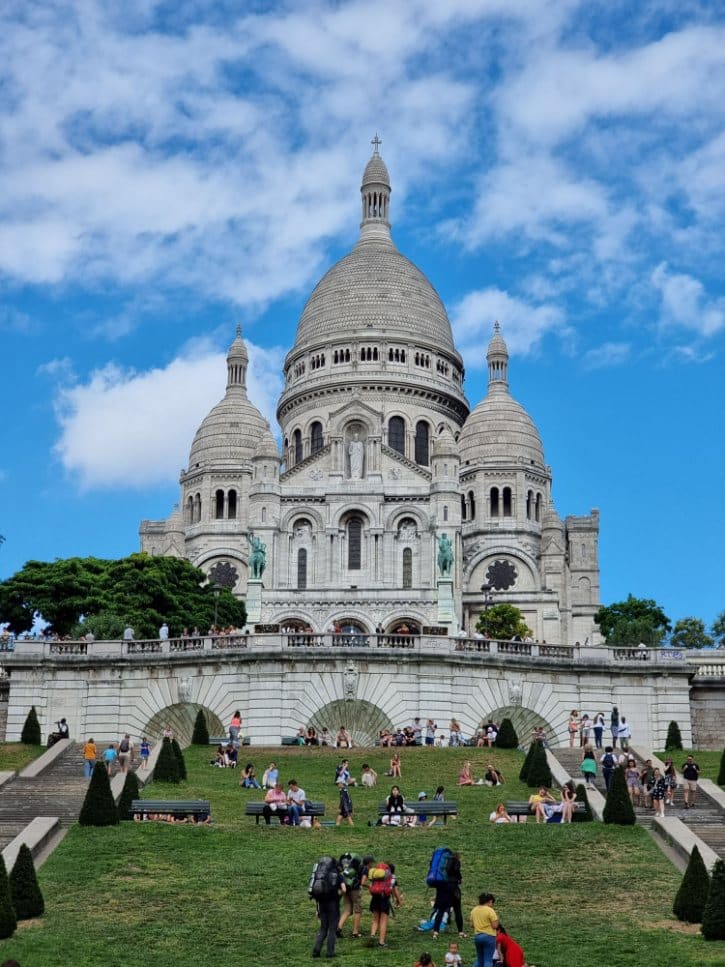
Most theft in Paris is quiet and based on distraction, aimed at phones, wallets, and open bags in busy places. Police patrol widely. This is about being prepared, not fearful, and simple habits protect you well.
b. Where to pay attention
- Metro and RER: Lines 1, 2, 4, and 9, plus RER B (to Charles de Gaulle) and RER C (to Versailles).
- Busy hubs: Châtelet-Les Halles, Gare du Nord, Gare de Lyon, Saint-Michel, and Opéra.
- Landmarks: the Eiffel Tower grounds, the Louvre courtyard, the Sacré-Cœur stairs, Notre-Dame, and the Champs-Élysées.
Read More: The Best Walking Route to Explore Montmartre
c. Common tricks to know
- The petition scam: someone with a clipboard asks you to sign, while a partner reaches into your bag.
- Door crowding: people bump into you as Metro doors close, then step off just in time.
- Staged distractions: someone drops coins or causes a small scene to pull your eyes away.
- Café table grab: a phone on an outdoor table is covered with a flyer, then lifted.
d. Simple prevention
- Wear a backpack across your front in crowds, with zippers closed.
- Keep cash, cards, and documents in inner zipped pockets, not back trouser pockets.
- Keep a hand or eye on your bag in cafés and on trains, never on a chair back.
- Split your money, keeping a backup card and some cash
e. If you are targeted or robbed
If you feel crowded on purpose, step toward a station agent, say “Police!”, and do not chase anyone.
If something is taken, block your cards right away, file a police report (procès-verbal) at a commissariat or online through Ma Sécurité, and contact your embassy for a stolen passport.
7. Never Leave Your Luggage Unattended
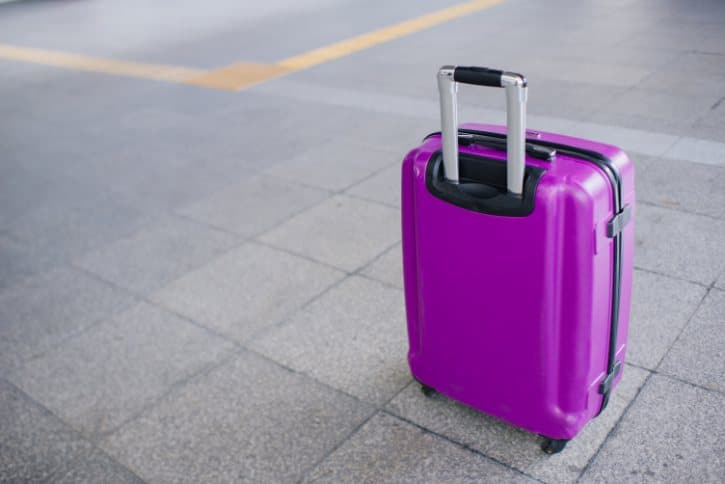
a. Why it matters here
France runs a national security plan called Vigipirate, and unattended bags are taken seriously. This is about safety, not fear, and it is easy to stay on the right side of it.
b. What can happen to a forgotten bag
An unattended bag in a station, train, airport, or museum is treated as a possible hazard.
Staff may clear the area and set up a perimeter, call a bomb disposal team (service de déminage), and close part of a station or a whole rail line.
The item may be inspected, opened, or even destroyed. Leaving luggage unattended can also lead to fines under RATP and SNCF rules.
c. Standing by versus leaving
There is a real difference between briefly standing next to your bag and walking away from it. The first is fine. The second is the problem, so keep your luggage within reach or clear sight at all times.
d. Keeping your bags safe
- On trains, use the overhead racks or in-sight luggage areas near your seat.
- When using the restroom or buying food, keep your luggage with you or ask a companion to watch it.
- For longer storage, use official lockers (consignes en gare) at stations like Gare de Lyon, Gare du Nord, Gare de l’Est, and Gare Montparnasse.
e. If you see an abandoned bag
Never touch, open, carry, or move it. Report its exact location and description to an onboard train manager, a uniformed RATP or SNCF employee, or a police officer.
Not every forgotten item is destroyed. The response depends on the situation and what security decides.
8. Avoid Unlicensed Taxis at Paris Airports
a. The one rule to remember
Getting into Paris is simple once you know where to go. The trouble comes from drivers who approach you inside the terminal. Official taxis never do that, so ignore anyone offering a “taxi”, “private transfer”, or “cheap ride” in the arrivals hall.
b. The fixed flat fares
Trips between the airports and central Paris use fixed flat rates set by the Paris Police Prefecture, updated 1 February 2025. They apply in both directions, whatever the traffic:
- CDG to central Paris: €56 to the Right Bank, €65 to the Left Bank.
- Orly to central Paris: €45 to the Right Bank, €36 to the Left Bank.
These cover up to four passengers and standard luggage, with the only extras being booking fees (€4 immediate, €7 in advance). The Seine splits the city into the Right Bank (north) and Left Bank (south).
c. Finding the official rank
Follow the blue and yellow overhead signs marked “Taxis” after baggage claim, then go outside to the marked queue. Ranks sit on the arrivals level at each terminal, such as CDG Terminal 1 at Exit Gate 24 and the Orly terminals at Gate 32a or 48a.
d. Spotting a genuine taxi
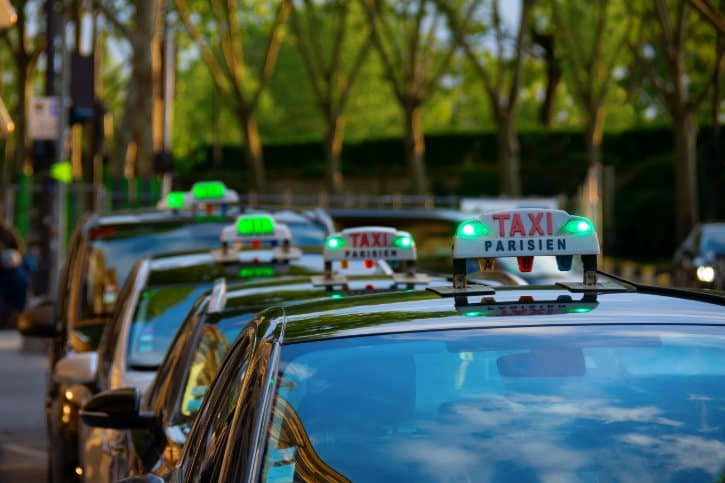
- An illuminated “TAXI Parisien” roof sign (green when free, red when taken).
- A visible license plate and a taximeter
- An official rate card on the rear window.
e. Ride-hailing and complaints
Ride-hailing services (VTCs like Uber, Bolt, or Marcel) are legal but cannot pick up at the taxi rank. You book them by app and meet the driver at the ride-app pick-up zones (Parking Pro / VTC) outside.
If a driver asks for more than the fixed fare or suddenly demands cash, refuse the extra, ask for a receipt (reçu), and report the plate to the Prefecture or SignalConso.
9. Always Carry an Accepted Form of Identification
a. The legal basis
French law lets police carry out identity checks (contrôle d’identité) in public under Article 78-2. As a visitor, you should be able to prove who you are and that you are in France legally.
b. Which documents count
- Non-EU / Non-EEA visitors: an original valid passport, with entry stamp or visa if needed.
- EU / EEA / Swiss visitors: an original valid national ID card or passport.
- Foreign residents: an original valid residence permit (titre de séjour) or passport.
The key point is that during a formal check, photocopies, phone photos, and foreign driving licenses do not count. If you cannot show valid original ID, police may take you to a station to verify your identity, which can last up to four hours.
c. When else you need ID
- Named tickets at sites like the Louvre and Versailles, checked against a photo ID.
- Tax-free shopping (détaxe), which needs your original passport at purchase.
- Larger card payments, where a merchant may ask for photo ID.
- Hotel check-in, where accommodations must confirm your identity.
d. A sensible strategy
Carry your original passport in a concealed inner pocket or neck pouch on transit days and while sightseeing, since it is your legally valid ID.
Keep digital scans and paper copies of your passport page, entry stamp, and visa stored separately, in the hotel safe or secure cloud storage.
Avoid carrying the whole family’s passports in one bag, so a single loss does not affect everyone.
e. If a passport is lost or stolen
File a police report first, then contact your embassy or consulate for emergency travel documents. Your stored copies will make the replacement process much faster.
10. Never Ride Bikes or Electric Scooters on Sidewalks
a. The shared-scooter change
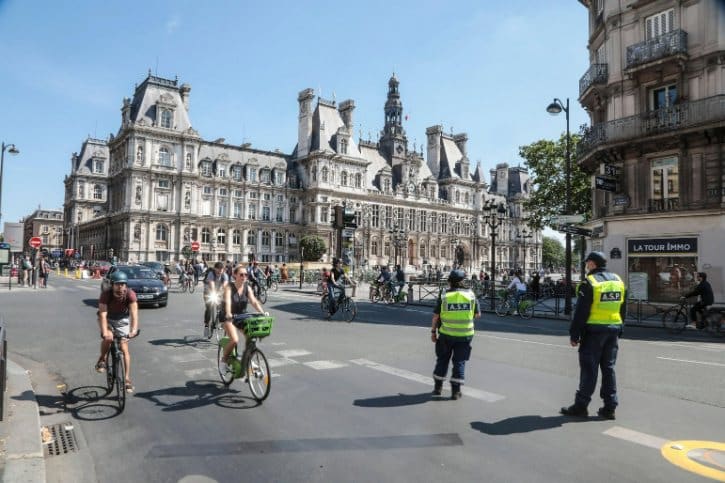
Paris is great for cycling, with a huge network of bike lanes, though a few rules surprise visitors.
On September 1, 2023, the city banned shared rental e-scooters (trottinettes en libre-service) after a public vote.
You can no longer rent those, but privately owned e-scooters and rental bikes, including the public Vélib’ network, are still widely used and must follow the traffic rules.
b. Sidewalks are off-limits
Riding a bike or private e-scooter on the sidewalk (trottoir) is illegal, since sidewalks are for pedestrians, and it brings a €135 fine. The only exceptions are children under 8 riding at walking pace, or anyone pushing a bike or switched-off scooter on foot.
c. Key rules and fines
- Wearing earphones or holding a phone while riding: €135.
- Private e-scooters must be capped at 25 km/h, with fines up to €1,500 for uncapped devices.
- Carrying a passenger on an e-scooter: €135.
- Minimum age of 14 to ride an e-scooter (EDPM): €135.
- Missing reflective gear in low light or at night: €35.
d. Where to ride and park
Use bike lanes (pistes cyclables) wherever they exist. Paris also has shared bus-and-bike lanes and pedestrian-priority zones (zones de rencontre), where you yield to pedestrians and keep to 20 km/h.
Park in marked bike racks (arceaux vélo), and never block sidewalks, entrances, or attach to street furniture, since vehicles left in the wrong place can be removed.
e. Signs and courtesy
Some one-way streets allow cycling against traffic (double-sens cyclable), but only where a bike sign says so.
Watch for bike-specific traffic lights (M12 signs) that let you turn right or continue on red after yielding.
Always give way at crossings and to people getting on or off buses. If you are new to cycling here, start on a calm, marked lane, take it slow, and you will settle in quickly.