Some countries you simply visit. Italy you fall for. It has a quiet way of slowing you down, turning an ordinary afternoon into something golden and unhurried.
One moment you stand before centuries of history, the next you are wandering a sleepy village or gazing at scenery that looks almost too beautiful to be real.
The food, the warmth of the people, the soft light on old stone, it all stays with you. These are the places that make saying goodbye feel almost impossible.
1. Amalfi Coast & Capri
a. The Coast That Barely Looks Real
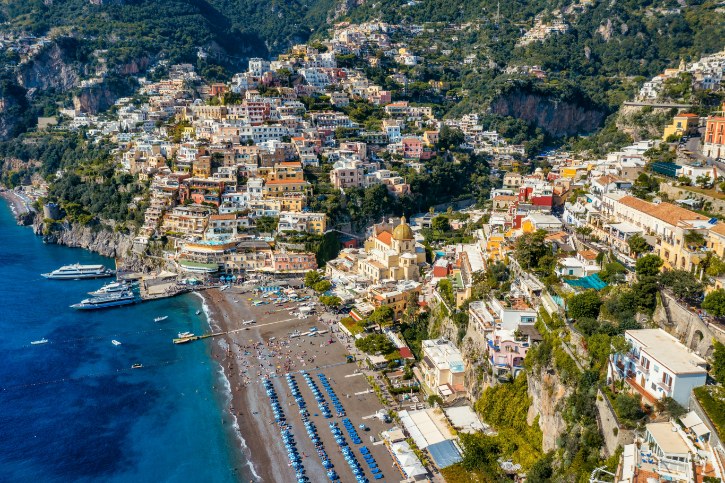
You know the Amalfi Coast from a hundred photos, but nothing prepares you for seeing it in person. Steep cliffs drop into the sea, and pastel villages seem to hang off the rock. Protected on the UNESCO World Heritage List, this is a landscape built by hand, where families spent centuries carving the slopes into terraces for lemons and grapes. That patient, human effort is exactly what makes it feel so alive.
b. Pick Your Favorite Town
Each town here has its own mood, so try to fit in all three:
- Positano: A spill of pastel houses tumbling toward the beach, laced with stairways that pass little shops selling linen and leather. Look up for the bright tiled dome of its main church.
- Amalfi: A former sea power, built around a grand cathedral you reach by a sweeping marble staircase. The peaceful old cloister beside it is worth a quiet moment.
- Ravello: High above the water and wonderfully calm. Its gardens are the draw, especially Villa Cimbrone and its Terrace of Infinity, where the sea and sky seem to melt together.
c. Capri’s Finest Moments
Just offshore sits Capri, an island that has charmed dreamers for generations. These are the moments to chase:
- The Faraglioni: Three tall rock stacks rising from the sea, with a natural arch that boats love to slip through.
- The Blue Grotto: A sea cave where light enters from below the surface and turns the water a glowing, electric blue.
- The Piazzetta: Capri Town’s lively little square, framed by an old clock tower and open-air cafés.
- Monte Solaro: Take the single-seat chairlift from quiet Anacapri to the island’s highest point for a view that stretches for miles.
d. Island Calm vs. Coastal Buzz
It helps to know how the island differs from the mainland shore:
- A gentler pace: The coast road is famously jammed with traffic, while Capri keeps private cars out through the warmer months, so you get around on foot, by funicular, and by boat.
- Escape the crowds: Head up to Anacapri and the pace slows right down.
- The reason to linger: That blend of drama and quiet is why a day trip so often turns into a longer stay.
e. Lace Up for the Path of the Gods
The best way to feel this coast is on foot, along the old mule paths that once linked mountain villages to the sea. The star is the Path of the Gods, a high trail that runs between a mountain hamlet and the village of Nocelle above Positano. As you walk, the views open to sheer cliffs, old stone shepherd huts, and glimpses all the way out to Capri. It is the kind of walk that stays with you for years.
f. Eat Your Way Along the Cliffs
The food here tastes of sunshine and the sea just below:
- Limoncello: Made from the famous giant Amalfi lemons, bright and fragrant.
- Scialatielli ai frutti di mare: Thick handmade pasta tossed with clams, mussels, and squid.
- Colatura di alici: A rich amber anchovy sauce from Cetara, aged in wooden barrels in a tradition that reaches back to Roman times.
- Local cheeses: Creamy fior di latte and aged provolone from the hills above.
Read More: The Best Route to Explore the Amalfi Coast and Its Beautiful Nearby Places
2. The Dolomites
a. Peaks That Catch Fire at Dusk
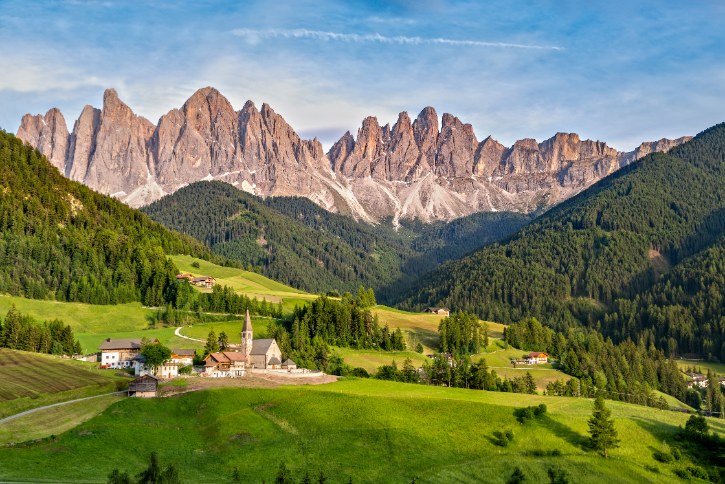
If someone designed mountains to leave you speechless, they would look like the Dolomites. These pale, jagged peaks rise out of northern Italy and spread across nine protected areas on the UNESCO World Heritage List. The magic moment comes at dawn and dusk, when the rock soaks up the low light and glows pink, orange, and deep rose. Locals call it enrosadira, and once you see it, every photo you’ve ever admired finally makes sense.
b. The Peaks Worth Chasing
A few sights capture the drama better than words:
- Tre Cime di Lavaredo: Three sheer towers standing shoulder to shoulder, among the most photographed peaks in the Alps.
- Marmolada: The highest massif of all, crowned by its glacier.
- An ancient seabed: Remarkably, these peaks began as coral reefs on the floor of a warm sea before the land slowly rose.
c. Three Cultures, One Valley
The valleys here mix Italian, German, and the old local Ladin culture, which gives each town its own flavor:
- Cortina d’Ampezzo: An elegant town ringed by famous peaks, with a chalet-lined main street.
- Ortisei: The heart of Ladin tradition, known for fine woodcarving you can still watch in progress.
- San Candido: Close to Austria and distinctly Tyrolean, built around one of the finest old Romanesque churches in the eastern Alps.
d. High Meadows in Summer
When the snow melts, the whole range turns green and golden:
- Alpe di Siusi: The largest high-altitude meadow in Europe, carpeted in wildflowers beneath sheer rock walls.
- Via ferrata: “Iron paths” fitted with fixed cables and rungs, many built during the First World War, letting you cross steep ledges safely with a harness.
e. Snow, Skis, and Hearty Plates
In the cold months, the mountains become one of Europe’s great ski regions, with routes that loop around an entire massif in a single day. Just keep in mind that high passes and mountain huts often close through deep winter, so check before you set out. After a day outside, warm up with honest mountain food:
- Speck: A lightly smoked, juniper-scented ham.
- Canederli: Round bread dumplings served in broth or butter.
- Polenta: Slow-cooked and often paired with mushrooms or game.
Read More: The Best Dolomites Road Trip: 15 Beautiful Stops in One Spectacular Loop
3. Lake Como
a. Old-World Romance on the Water
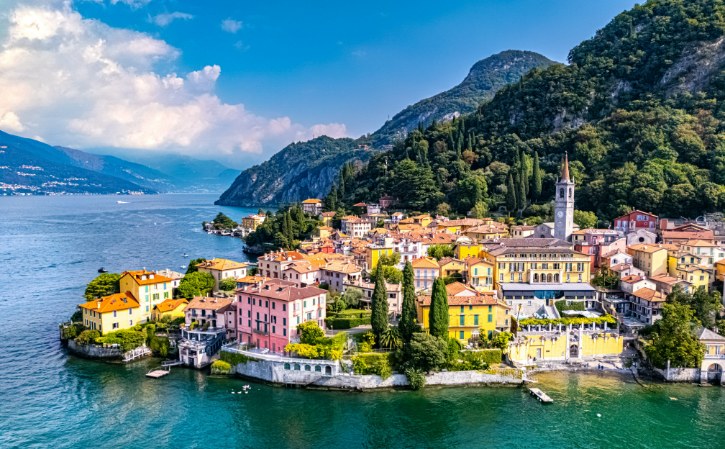
Lake Como has a quiet, effortless magic. Shaped like an upside-down Y, it stretches between steep green mountains, and its deep water keeps the shores mild enough for palms, olives, and flower gardens. The appeal is in the contrast. Sharp peaks rise overhead while the villages below feel calm and refined, just as they have since Roman times. It is easy to see why artists and writers have always come here to slow down.
b. Towns to Lose Track of Time In
Three lakeside towns are reason enough to visit:
- Bellagio: Sitting right where the lake splits in two, with cobbled stairways climbing past cafés and stone archways.
- Varenna: Quieter and full of charm, with pastel houses and a pretty railed path built right along the water.
- Como: The main town, home to a beautiful cathedral and a historic funicular that climbs to a hilltop village with wide views.
c. Gardens Worth a Boat Trip
Some of Italy’s loveliest gardens sit right on this lake:
- Villa Carlotta: Famous for fine sculptures and acres of gardens that burst with color in spring.
- Villa del Balbianello: Set on a wooded point, with graceful arched loggias and holm oaks trimmed into neat umbrella shapes.
d. The Pleasure of Slow Days
The real secret of Como is to do very little, and there are plenty of lovely ways to manage it:
- Glide across the water: Hop on a traditional ferry or a polished wooden boat between the villages.
- Walk in the shade: Wander the lakeside promenades beneath wisteria and old trees.
- Dine by the water: Settle onto a terrace as the evening light fades over the mountains.
e. Straight From the Lake
The food comes from the water and the hills around it:
- Missoltini: Small lake fish, dried and lightly grilled, served over toasted polenta.
- Perch risotto: A delicate rice dish with butter, sage, and fresh lake perch.
- Autumn treats: Roasted chestnuts and wild mushrooms turn up on menus once the weather cools.
4. Tuscany
a. The Countryside You Already Picture
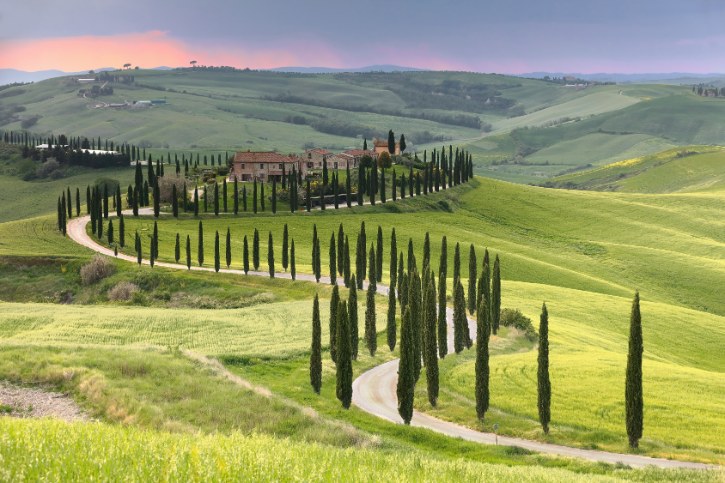
Close your eyes and imagine the Italian countryside, and you are probably seeing Tuscany: rolling hills, cypress trees, vineyards, and stone farmhouses glowing at dusk. The Val d’Orcia, shaped long ago to be both useful and beautiful, is the classic image. Just north, the Chianti hills feel different again, with thick oak woods, tight rows of vines, and old castles crowning the ridges.
b. Florence in a Few Must-Sees
Florence is the cradle of the Renaissance and feels like a museum with no walls:
- The Cathedral: Crowned by Brunelleschi’s giant brick dome, a true feat of engineering.
- The Uffizi Gallery: Home to masterpieces including Botticelli’s Birth of Venus.
- The David: Michelangelo’s famous statue, carved from a single block of marble.
- Ponte Vecchio: The medieval bridge lined with old goldsmith shops, stretching over the Arno.
c. Why Siena Feels Different
Siena is older and more tightly knit than Florence, and a few sights show why:
- Piazza del Campo: A beautiful shell-shaped square, one of the finest in Italy and the heart of local life.
- The Palio: A thrilling bareback horse race held twice each summer that keeps centuries of pride alive.
- Pisa nearby: With a spare afternoon, its famously tilted tower waits on a wide green lawn.
d. Hill Towns, No Two Alike
The joy of Tuscany’s hill towns is that each has its own story:
- San Gimignano: Famous for its tall medieval towers and unforgettable skyline.
- Volterra: Rich in ancient Etruscan history and known for delicate alabaster carving.
- Lucca: Wrapped in thick walls turned into a lovely tree-lined walking park.
- Pienza: A small Renaissance jewel with sweeping valley views.
- Montepulciano: Strung along a ridge, lined with grand old palaces.
e. The Tuscan Table
Tuscan cooking is honest, rustic, and built on good olive oil:
- Ribollita: A hearty vegetable and bread soup.
- Bistecca alla Fiorentina: A thick, char-grilled steak, cooked rare and seasoned simply.
- Pecorino: Sheep’s milk cheese, sometimes aged wrapped in walnut leaves.
f. Wine and Farm Stays
Tuscany is one of the world’s great wine regions, and the best way in is to taste and stay:
- Chianti Classico: A famous red marked with its black rooster seal, from the hills between Florence and Siena.
- Brunello di Montalcino: A bold, deep red aged for years before it is released.
- Agriturismo stays: Settle into a working farm estate where your days follow the harvest and the first pressing of olive oil.
Read More: A Beautiful Tuscany Road Trip With 17 Amazing Stops
5. Cinque Terre
a. Five Villages on the Cliffs
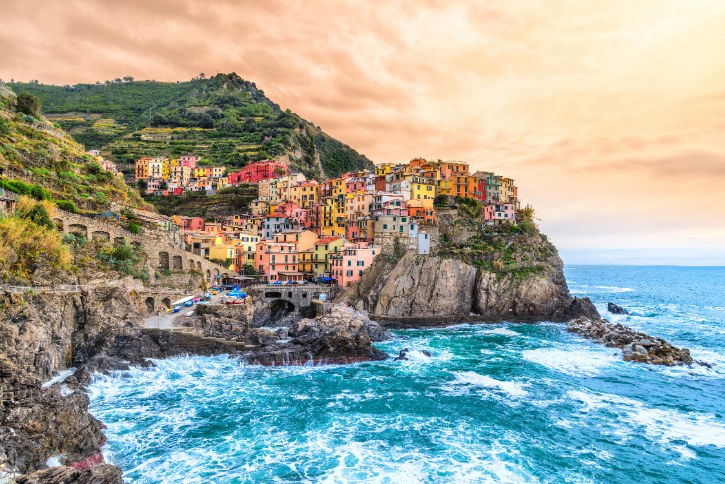
The Cinque Terre, or “Five Lands”, is a string of colorful fishing villages clinging to a rugged stretch of the Ligurian coast. Over a thousand years, farmers carved these near-vertical cliffs into countless terraces to grow grapes and olives on slopes that plunge into the sea. The result is unlike anywhere else, and it has long been protected on the UNESCO World Heritage List.
b. Get to Know Each One
Every village has a different character:
- Monterosso al Mare: The largest, and the only one with proper sandy beaches.
- Vernazza: Often called the prettiest, built around a natural harbor and an old round tower.
- Corniglia: The quiet one, perched high on a clifftop with no harbor.
- Manarola: Colorful tower-houses rising above a small rocky marina.
- Riomaggiore: Tucked into a narrow valley, with warm-colored houses framing a steep little harbor.
c. Walking the Coast
Walking is the best way to feel how these villages fit their landscape, and a few honest notes will save you disappointment:
- Via dell’Amore: The beloved cliff path between Riomaggiore and Manarola has reopened after years closed, though it now runs in one direction only.
- Manarola to Corniglia: Still shut because of landslides, so you take a higher inland detour that rewards you with lovely views.
- The open sections: Corniglia to Vernazza and Vernazza to Monterosso are walkable, but wear proper shoes, as sandals aren’t allowed.
- Hilltop sanctuaries: Climb to the old chapels above the villages for the grandest views of all.
d. The Everyday Magic
With cars kept out, these villages run to a gentler rhythm:
- No traffic, just sound: Lapping waves, church bells, and chatter drift across the stone alleys.
- Early mornings: Fishermen push their wooden boats into the water while shopkeepers open their stalls.
- A watching pace: It is the kind of calm that makes you want to stay put and simply take it in.
e. Ligurian Flavors
The food leans on both the sea and the terraced hills:
- Pesto: Liguria is the home of pesto alla Genovese, born in nearby Genoa, and it is the classic sauce all along this coast, made by hand with fragrant local basil.
- Trofie: Twisted pasta that is pesto’s perfect partner.
- Monterosso anchovies: Prized locally, salted or marinated fresh with lemon and oil.
- Sciacchetrà: A rare sweet wine from grapes grown on impossibly steep slopes.
6. Sardinia
a. Two Islands in One
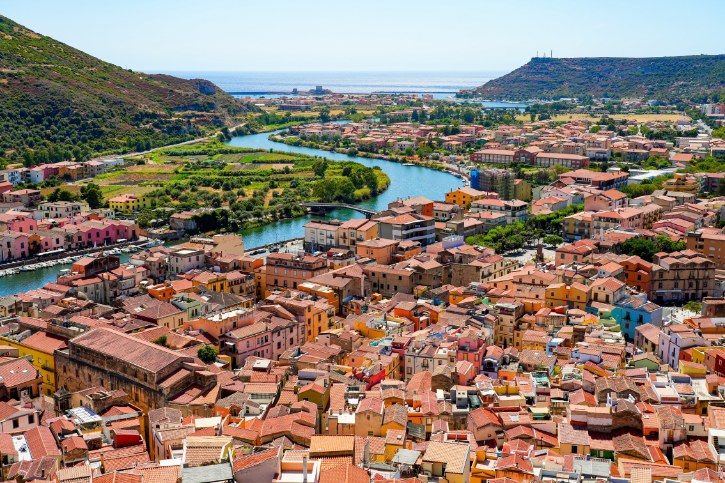
Sardinia keeps surprising you. It has some of the most beautiful beaches in the Mediterranean, yet turn inland and it goes wild and rugged, all mountains and deep gorges. That contrast is the magic. You can spend a glamorous morning by the water and a quiet, untamed afternoon in the hills, all on the same day.
b. Beaches You’ll Barely Believe
The coastline here looks like a screensaver:
- Cala Luna: A curved beach backed by a lagoon and dotted with wide natural caves.
- Cala Goloritzé: Famous for its tall rock spire and natural arch, with motorboats kept away to protect the clear water.
- Spiaggia Rosa: A rare pink-sand beach so delicate that you can only admire it from an excursion boat at a distance. Landing, walking on it, or swimming there isn’t allowed.
- Gorropu gorge: One of Europe’s deepest canyons, with rock walls soaring hundreds of meters overhead.
c. Stone Towers and Hidden Villages
Sardinia holds one of Europe’s great ancient riddles:
- The Nuragic people: A Bronze Age culture that left behind thousands of cone-shaped stone towers called nuraghi.
- Su Nuraxi di Barumini: The finest surviving example and a UNESCO site, centered on a massive tower built around 3,500 years ago.
- Tiscali: An ancient village hidden inside a collapsed sinkhole high in the mountains, tucked completely out of view.
d. A Culture All Its Own
Sardinia guards its identity fiercely:
- The Mamuthones: In the village of Mamoiada, men parade in dark wooden masks and heavy cowbells, moving in a slow, haunting rhythm.
- Alghero: A coastal town with deep Catalan roots, where you’ll still hear a Catalan dialect in the streets.
- Cagliari: The capital, crowned by a hilltop old quarter with watchtowers and lookouts over the sea.
e. On the Sardinian Table
Sardinian food is proudly rustic:
- Porceddu: Spit-roasted suckling pig scented with wild myrtle.
- Culurgiones: Pasta pockets filled with potato, pecorino, and mint, sealed with a pretty braided seam.
- Local wines: Bold red Cannonau and crisp white Vermentino.
f. Resorts and Wild Islands
The island balances stylish resorts with fiercely guarded nature:
- Costa Smeralda: The glamorous “Emerald Coast”, with low-key luxury tucked into rocky bays.
- La Maddalena Archipelago: More than 60 wind-sculpted granite islands scattered across the water.
- Asinara: A car-free island park, once a prison and now a quiet sanctuary, home to a rare white albino donkey.
7. Sicily
a. In the Shadow of Etna
Sicily is crowned by Mount Etna, the tallest and most active volcano in Europe. Its slopes are an otherworldly mix of smoking craters, black lava fields, and the vast Valle del Bove. Because Etna is genuinely active, a few realities shape any visit:
- Access is limited: Unguided hiking usually stops well below the summit.
- Guides for the top: Reaching the summit craters means going with a licensed volcanic guide.
- Check conditions first: When activity rises, access is restricted further.
The volcano’s rich soil also feeds famous local wines, Bronte pistachios, and sweet blood oranges.
b. Stromboli After Dark
Off the northern coast lie the volcanic Aeolian Islands, where Stromboli glows after dark with gentle, rhythmic eruptions. Hiking high up the cone is no longer permitted after powerful eruptions a few years back, but you can still watch the show from authorized lower trails or, best of all, from a boat bobbing offshore. It is a sight you won’t forget.
c. Empires Layered in Stone
Wave after wave of cultures left its mark here, and the architecture tells the whole story:
- Valley of the Temples: A stunning row of ancient Greek temples near Agrigento, led by the beautifully preserved Temple of Concordia.
- Taormina: Home to an ancient theater with one of Italy’s most famous views, framing the coast and smoking Etna.
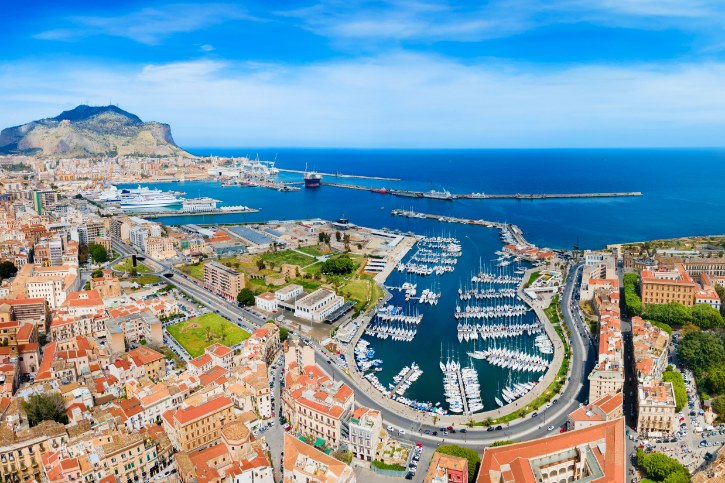
- Arab-Norman Palermo, Monreale, and Cefalù: Churches where Norman rulers blended Arab and Byzantine craft, glittering with gold mosaics.
- Val di Noto: A cluster of golden Baroque towns rebuilt after a great earthquake, full of curved facades and carved balconies.
d. Along the Coast
Sicily’s shoreline mixes fishing towns with natural wonders:
- Cefalù: A lovely seaside town beneath a dramatic crag, with a grand Norman cathedral and a curved sandy beach.
- Scala dei Turchi: A dazzling white cliff shaped into natural steps. It is open to visit again with limited daily entry, but walking or climbing on the fragile white rock itself stays off-limits, so you admire it from the viewpoints and the beach below.
- Marzamemi and Sciacca: Two atmospheric fishing towns, one built around an old tuna fishery, the other known for its working fleet and ceramics.
e. Sweet and Savory Sicily
The food is as layered as the history:
- Cannoli: Crisp pastry tubes filled with sweet ricotta.
- Granita: A silky iced treat, often eaten with a soft brioche for breakfast.
- Arancini: Fried rice balls stuffed with ragù.
- Pasta alla Norma: A Catania classic with tomato, fried aubergine, and salted ricotta.
Read More: This Sicily Road Trip Connects 17 of the Island’s Most Beautiful Places
8. Puglia
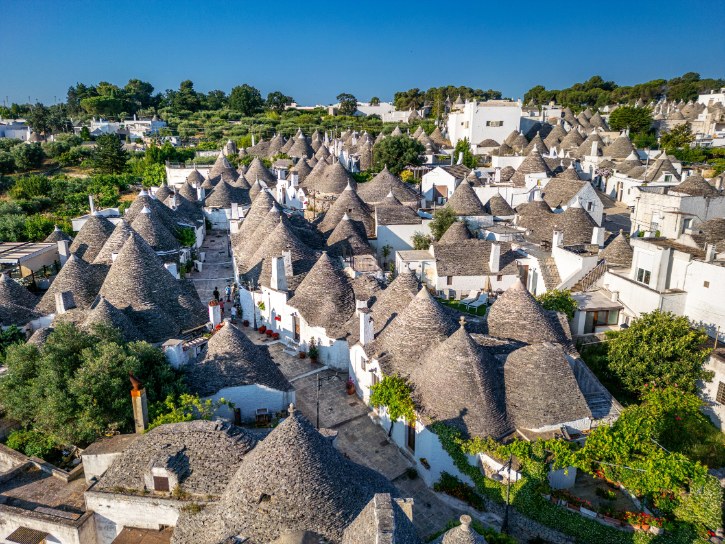
a. A Land of Little Stone Cones
Down in the heel of Italy, Puglia feels like a fairy tale come to life. Nowhere captures this more than Alberobello, famous for its trulli, small whitewashed houses with cone-shaped stone roofs built without any mortar. Centuries old and protected by UNESCO, the town looks almost too charming to be real.
b. Whitewashed Towns to Wander
Each village here has its own look:
- Rione Monti and Aia Piccola: Alberobello’s two trulli districts, one busy with shops, the other quiet and still lived in.
- Painted roofs: Many cones carry whitewashed symbols, a mix of Christian, astrological, and old protective emblems.
- Ostuni: Known as “The White City”, a hilltop maze of lime-washed alleys with views out to the sea.
- Locorotondo: A neat circular town of white houses with steep, pitched stone roofs.
c. Ancient Olives and Two Seas
Puglia’s countryside is ruled by ancient olive trees, some with gnarled trunks dating back to Roman times. Its coastlines are worth telling apart:
- Adriatic side: Limestone cliffs and coves, including Torre dell’Orso and historic Otranto, home to a cathedral with a remarkable floor mosaic.
- Ionian side: Softer, with turquoise water and sandy beaches around the island town of Gallipoli.
- Gargano: A rugged northern spur with white cliffs, hidden coves, ancient beech forests, and the cave sanctuary of Monte Sant’Angelo.
d. Castles and Carved Stone
Puglia is scattered with striking landmarks:
- Castel del Monte: A mysterious castle built by Emperor Frederick II, famous for its unusual octagonal shape.
- Lecce: The capital of Baroque here, carved from soft golden stone into incredibly detailed facades.
- Masserie: Old fortified farmhouses dotting the countryside, once built with walls and watchtowers.
e. The Flavors of the Heel
The food is simple, generous, and tied to the land:
- Orecchiette con cime di rapa: Little ear-shaped pasta with bitter turnip greens, garlic, and anchovy.
- Burrata di Andria: A pouch of mozzarella filled with rich, creamy stracciatella.
- Primitivo: A bold, sun-drenched red wine full of ripe dark fruit.
f. Stay Like a Local
The best way to feel Puglia is to stay in a restored masseria, a fortified farm turned into a charming retreat. You dine in stone courtyards under old olive trees, eating food grown on the estate itself. It is warm, unhurried, and very easy to love.
Read More: The Best Puglia Road Trip: 15 Amazing Stops
9. Matera
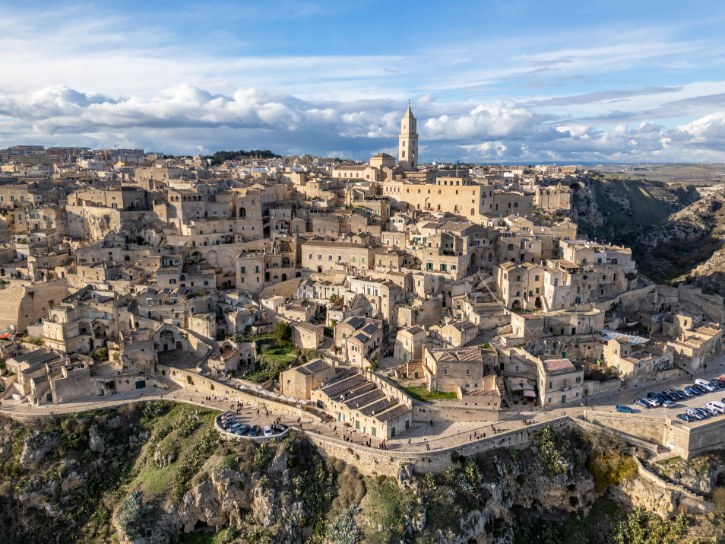
a. A Town Carved Into the Rock
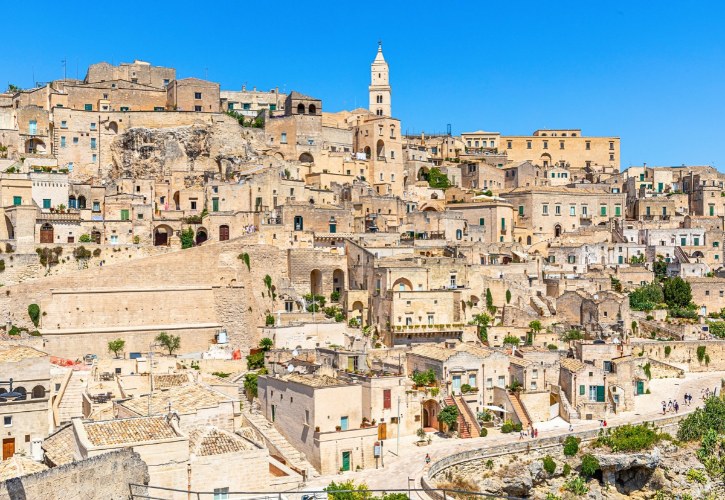
Few places feel as otherworldly as Matera, tucked into the southern region of Basilicata. The old town is carved straight into the rock along the edge of a deep canyon, one of the oldest settled places on earth. Its ancient cave districts, known as the Sassi, together with nearby rock-cut churches, are protected by UNESCO as a rare and almost complete example of a cave town.
b. The Two Old Quarters
The Sassi split into two halves with distinct characters:
- Sasso Caveoso: The more ancient side, full of homes carved directly into the rock.
- Sasso Barisano: More built-up, with carved stone doorways and vaulted rooms.
- The Civita: The high rocky spur between them, crowned by the old cathedral.
c. Where to Catch the Best View
Matera is all about its setting, so chase the best vantage points:
- Belvedere di Murgia Timone: Across the gorge, taking in the entire sweep of the Sassi in one glance.
- Piazzetta Pascoli and San Pietro Caveoso: Lookouts right on the cliff edge within the city.
- The changing light: The stone glows pale at noon, turns golden at sunset, and lights up like a nativity scene after dark.
d. A Hard Past and a Bright Present
Matera’s recent story is honest and worth knowing. For much of the last century, families lived in crowded, poorly ventilated caves, often alongside their animals and without running water. A law passed in the early 1950s moved thousands of residents into new housing, and the Sassi stood empty for decades. Only from the 1980s onward were the old stone homes carefully restored, and today those same caves hold boutique hotels, restaurants, and museums. It is a remarkable turnaround.
e. Hidden Beneath the Stone
There is more to Matera than first meets the eye:
- Palombaro Lungo: A huge underground cistern beneath the main square, carved to catch every drop of rain in a dry land.
- A movie star: Thanks to its ancient look, Matera has stood in for old Jerusalem on screen and starred in the dramatic opening of a recent James Bond film.
f. What to Eat in Matera
The local food is as rooted as the architecture:
- Pane di Matera: A tall-crested bread shaped to echo the surrounding hills.
- Peperoni cruschi: Sweet peppers, dried and flash-fried until crisp.
- Crapiata: A hearty soup of mixed legumes and grains, born from old harvest festivals.
10. Lake Garda
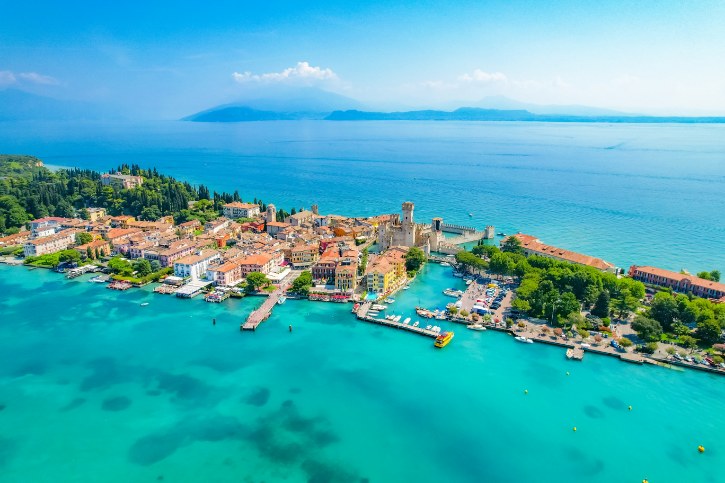
a. One Lake, Two Moods
Lake Garda is the largest in Italy, and part of its charm is that it gives you two different worlds in one:
- The dramatic north: Narrow and fjord-like, hemmed in by steep cliffs, with a fresh mountain energy.
- The gentle south: Wide and sunny, opening into soft hills, gardens, and villages where olives and citrus grow.
- Compared to Lake Como: Where Como feels enclosed and aristocratic, Garda feels more open, warmer, and more active.
b. Towns Where History Lingers
Garda’s towns are full of castles and stories:
- Sirmione: Set on a slender peninsula, guarded by a storybook castle, with the ruins of a grand Roman villa at its tip.
- Gardone Riviera: Home to the eccentric hillside estate of poet Gabriele d’Annunzio, full of gardens and curious treasures.
- Malcesine: A pretty town with its own lakeside castle and a revolving cable car that climbs high up the mountain.
- Lazise: A charming walled town with a canal harbor and an old customs house.
c. Out on the Water and the Trails
The lake is one of Europe’s favorite spots for the outdoors:
- Reliable winds: A steady morning wind and an afternoon breeze make the north a top destination for sailing and windsurfing.
- Sentiero del Ponale: An old cliffside road, now a path for walking and biking, suspended high above the water.
- Monte Baldo: Nicknamed the “Garden of Europe” for its rich plant life, with trails from alpine meadows to high ridges.
d. Local Tastes to Seek Out
Garda’s gentle climate shapes its table:
- Olive oil: One of the northernmost olive-growing areas in the world, producing a light, almond-scented oil.
- Lemon houses: Along the shore you can still see restored limonaie, the old stone greenhouses that once protected citrus from frost.
- Local wines: Crisp white Lugana and fresh red Bardolino.
- Lake fish: Look for whitefish and lake trout, often served with polenta.
e. A Warm Soak to End the Day
For pure relaxation, Sirmione is famous for its natural thermal waters, warm sulfur-rich springs that have fed healing spa treatments for well over a century. Between the scenery, the food, the wine, and a long soak in that warm water, Garda has a way of making you forget your departure date entirely. And honestly, that is the whole point of a trip to Italy.
Read More: 12 Beautiful Lake Garda Spots With Only a Short Drive Between Them