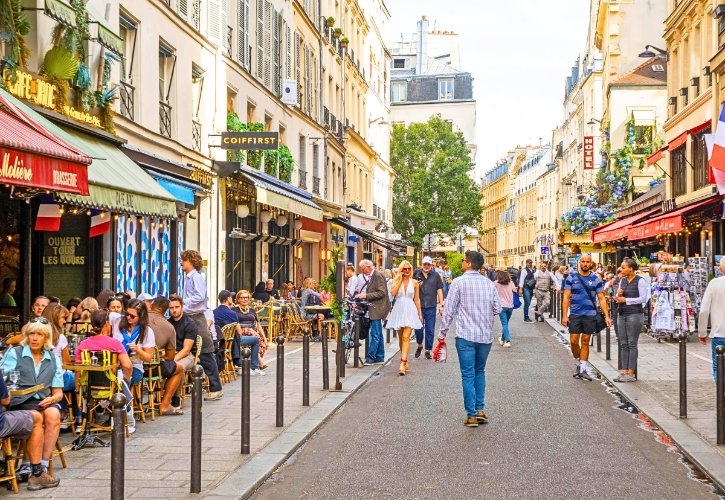
Paris is a safe city for travelers, and basic everyday awareness is usually all you need to enjoy your trip. But where you stay shapes how easy and relaxed those days feel.
Choosing a neighbourhood is not only about being close to famous landmarks. Comfort, walkability, transport access, the evening atmosphere, your exact hotel location, and a little personal safety awareness all matter too.
Pick the right base, and Paris feels smoother, calmer, and far less stressful. Here is how to choose well. 😊
1. Le Marais (3rd and 4th Arrondissements)
a. Overview
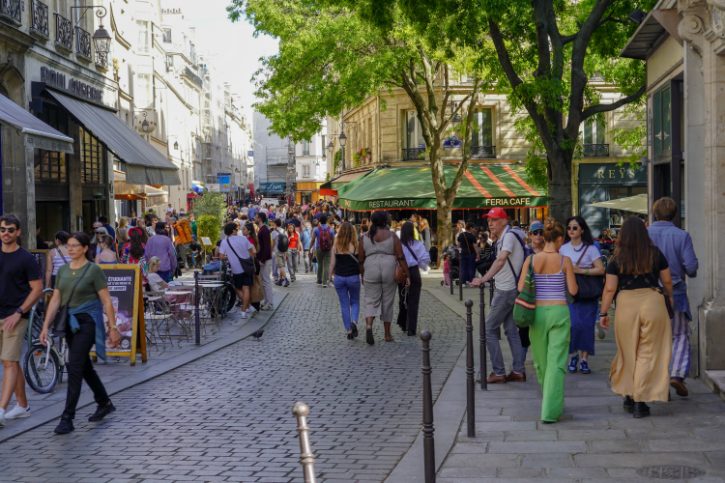
Le Marais sits on the Right Bank across the 3rd and 4th arrondissements. It is one of the most central, stylish, and walkable areas in the city, and it works well for first time visitors and returning travelers alike.
It kept its old character when much of Paris was rebuilt in the 19th century, so you get narrow medieval streets, hidden courtyards, and grand 17th century mansions.
It is a historic Jewish quarter centred on Rue des Rosiers, and the main LGBTQ+ friendly hub of the city. Streets get busy and crowded by day, but evenings stay comfortable thanks to active, well lit streets.
b. Key Attractions Nearby
- Place des Vosges, the oldest planned square in Paris, about 5 minutes from Saint-Paul
- Centre Pompidou (Temporary Closed), just 2 minutes from Rambuteau
- Musée Picasso and Musée Carnavalet, both a short walk away
- Notre-Dame Cathedral and Île Saint-Louis, about 12 to 15 minutes on foot
For most of these, walking beats the Métro.
c. Transport Access
The inner streets can feel cut off from the Métro, but the edges are very well served. The most useful stations are Saint-Paul (Line 1), your fastest way across central Paris, and Hôtel de Ville (Lines 1 and 11).
Both give simple reach to the Louvre, Châtelet, and Bastille, and for many nearby spots, walking is quicker.
d. Hotels and Accommodation
You will mostly find boutique hotels, design properties, and historic apartment rentals. Because the buildings are old and protected, rooms are often small, many have no elevator, and stairwells can be steep.
- The northern 3rd, the Haute Marais, feels quieter and more residential
- Street-facing rooms on busy shopping streets can pick up noise
- If you have heavy luggage or limited mobility, confirm a working elevator before you book
e. Dining and Local Food Scene
The food scene is one of the most varied in Paris, from historic bakeries and falafel shops on Rue des Rosiers to modern coffee shops and classic bistros.
The Marché des Enfants Rouges, the oldest covered market in the city, is full of food stalls and casual seating. One tip. Many spots on Rue des Rosiers close on Saturdays for Shabbat.
f. Practical Tips
- Stay near Saint-Paul or Hôtel de Ville for the easiest sightseeing
- Side streets away from the main lanes feel quieter at night
- Keep your bag zipped and phone secure in crowds, on terraces, and on the Métro
- Check reviews for room size, elevator access, noise, and exact location
Read More: The Best Route to Explore Le Marais on Foot
2. Saint-Germain-des-Prés (6th Arrondissement)
a. Overview
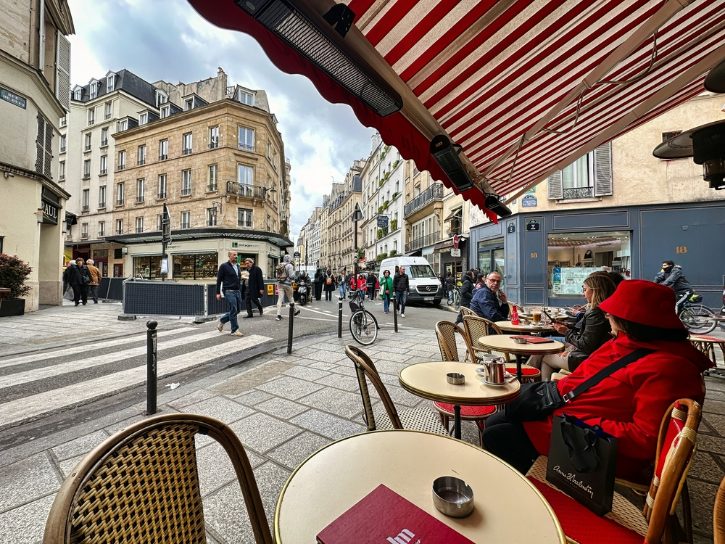
Saint Germain des Prés sits in the 6th arrondissement on the Left Bank, and it is the home of refined, classic Parisian style. Think cafés, galleries, bookstores, boutiques, and fine dining.
This was once the heart of 20th century intellectual life, and that history still flavours the streets. Luxury fashion and art galleries have replaced the old workshops, but you still get handsome Haussmann avenues, independent bookstores, and neat green spaces.
It is elegant, polished, and calm, with quieter evenings than busier areas, helped by its closeness to the Luxembourg Gardens.
b. Key Attractions Nearby
- Jardin du Luxembourg, bordering the southern edge
- Saint-Sulpice and Saint-Germain-des-Prés churches, both a few minutes away
- Pont des Arts and the Musée d’Orsay, around 10 to 12 minutes on foot
- Musée de Cluny, about 15 minutes east toward the Latin Quarter
c. Transport Access
The area connects well to the rest of the city. The most useful stations are Saint-Germain-des-Prés (Line 4), a direct route to Gare du Nord and Châtelet, and Saint-Michel Notre-Dame (RER B and RER C), with direct rail to CDG Airport, Orly Airport, and Versailles. The Latin Quarter and Île de la Cité are close and walkable.
d. Hotels and Accommodation
Expect mostly upscale boutique hotels, refined historic inns, and luxury apartments. Budget rooms are rare, and rates reflect the high status of the 6th.
- Rooms can still be compact, but elevators are more common here than in older parts of Le Marais
- For quieter nights, look south of Boulevard Saint-Germain, toward Luxembourg or Saint-Sulpice
- For the same atmosphere at a slightly lower price, try the eastern edge near Odéon
e. Dining and Local Food Scene
This area is home to some of Europe’s most famous literary cafés, including Café de Flore and Les Deux Magots. They carry premium prices but are classic stops for people-watching.
For a more local feel, the lanes around Rue de Buci hold excellent bakeries, cheese shops, and bistros. Dining here is polished and relaxed, though pricier than in many other areas.
f. Practical Tips
- Staying near Boulevard Saint-Germain or Odéon gives stronger transport access
- Staying nearer the Luxembourg Gardens feels calmer and quieter
- Prices here sit among the city’s top tiers, higher than the Latin Quarter
- Keep your phone off the café table and your handbag secure on busy terraces
Read More: The Best Walking Route to Explore Saint-Germain-des-Prés
3. The Latin Quarter (5th Arrondissement)
a. Overview
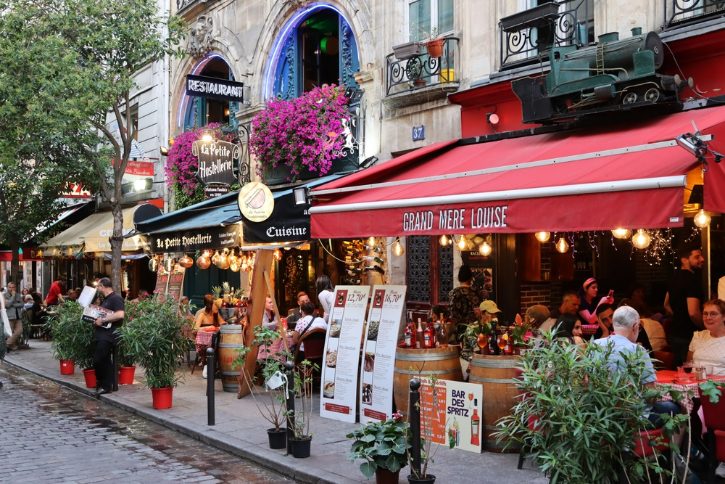
The Latin Quarter, in the 5th arrondissement on the Left Bank, is historic, lively, and very central. It is known for student energy, old academic buildings, cobbled lanes, restaurants, and bookshops.
The name comes from the medieval students of the Sorbonne, who once spoke only Latin, and that spirit still lingers.
The area shifts as you climb, from crowded tourist lanes near the river to quiet residential streets higher up.
It offers good relative value, which makes it a smart pick for first timers, younger travelers, and budget conscious tourists.
b. Key Attractions Nearby
- The Panthéon, at the top of the Montagne Sainte-Geneviève
- Jardin du Luxembourg and Jardin des Plantes, on either side
- Musée de Cluny, beside Boulevard Saint-Michel
- Sainte-Chapelle and Notre-Dame, about a 12 minute walk north
Read More: 17 Best Spots in the Latin Quarter You Absolutely Can’t Miss
c. Transport Access
The connections here are excellent, including direct airport links. The most useful stations are Saint-Michel Notre-Dame (Line 4, RER B, RER C), with direct rail to CDG Airport and Versailles, and Luxembourg (RER B), a fast route to the airports.
You can also walk easily to Le Marais, the Île de la Cité, and the Luxembourg Gardens. One reminder. These stations get busy and have several levels, so keep an eye on your bags, especially with luggage.
d. Hotels and Accommodation
The hotel choice here is varied, with independent three star hotels, hostels, and mid-range boutiques. Rates are generally easier on the wallet than the 6th or 8th.
- Some hotels offer river or Notre-Dame views, so it is worth looking
- Lively corridors near Rue de la Huchette can stay noisy late
- Check reviews for noise and the exact street, since some lanes are much louder than others
e. Dining and Local Food Scene
The food runs from cheap student crêperies to market dining on Rue Mouffetard, which is great for cheese, pastries, and casual meals. Here is the part many tourists overlook.
The narrow lanes right behind Place Saint-Michel are packed with tourist-focused restaurants and pushy hosts. Walk a few blocks away to find genuine bistros where locals actually eat.
f. Practical Tips
- Staying near the Panthéon, Place Monge, or the Jardin des Plantes feels calmer
- Staying near Saint-Michel gives the strongest transport access
- Keep a firm grip on your bags inside busy Métro and RER stations
- Check reviews for noise, room size, and exact street before booking
4. Eiffel Tower and Invalides (7th Arrondissement)
a. Overview
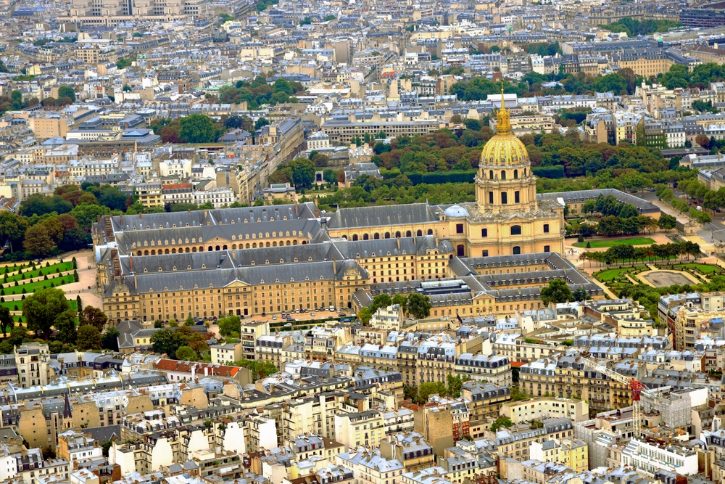
The 7th arrondissement runs from the Eiffel Tower to the stately Les Invalides. It is calm, polished, and scenic, with wide avenues, leafy streets, and elegant stone buildings.
The area around the tower draws huge daytime crowds, but the rest of the district stays quiet and residential, with peaceful evenings and lovely illuminated views.
One honest point. This is a high-priced district, with hotels in the high to luxury range. It is lovely for families, couples, and travelers who want a calm base near landmarks, but it is not the right fit for every budget or every traveler.
b. Key Attractions Nearby
- Eiffel Tower and the Champ de Mars, along the Seine
- Les Invalides and the nearby Musée Rodin
- Musée d’Orsay, on the eastern edge
- Rue Cler market street and the Trocadéro viewpoints across the river
One thing to know. Not every hotel near the Eiffel Tower actually has a tower view, so check carefully before you book.
Read More: 12 Best Hotels in Paris With Eiffel Tower Views You’ll Never Forget
c. Transport Access
The district is well connected, though some residential streets sit a longer walk from a station.
The most useful stations are École Militaire (Line 8), near Rue Cler, and Invalides (Lines 8, 13, RER C), a major hub with direct links to Versailles.
RER C is useful for both Versailles and riverside travel, and you can walk easily to the Musée d’Orsay and Saint Germain des Prés.
d. Hotels and Accommodation
You will find elegant four star properties, luxury hotels, and quiet apartments, mostly at higher price points.
- Many hotels advertise Eiffel Tower views, but the angle is often partial, so verify with photos or reviews
- Hotels here book up far ahead during peak season
- Check reviews for comfort, room size, and the real walking distance to the sights you want
e. Dining and Local Food Scene
The food here feels more local than touristy, centred on the famous Rue Cler market street, where it is easy to put together a picnic for the Champ de Mars.
For sit-down meals, Rue Saint-Dominique offers authentic brasseries and bistros, and the Rue Cler and École Militaire area is the sweet spot for daily convenience.
f. Practical Tips
- This area is expensive and not ideal for everyone, so weigh the calm and the views against your budget
- The real walking distance to the Eiffel Tower varies a lot by hotel, so map it first
- Keep your bag and phone secure around the tower and Champ de Mars, where pickpockets work
- Watch for the petition clipboard scam and gold ring tricks at busy photo spots
- Nightlife is quiet here, so book dinner ahead since many restaurants close early
Read More: The Best One-Day Walking Route Around Les Invalides and Saint-Germain in Paris
5. Champs Élysées & Golden Triangle (8th Arrondissement)
a. Overview
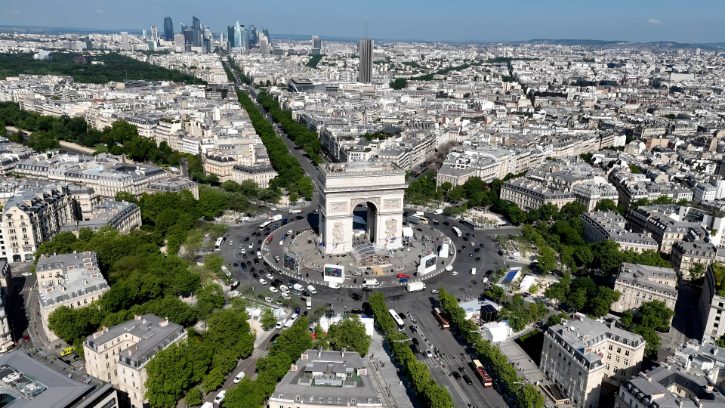
The 8th arrondissement, around the Champs-Élysées and the Golden Triangle (Avenue Montaigne, Avenue George V, and Rue François 1er), is the peak of Parisian luxury, world-class shopping, and grand architecture.
The main avenue is busy and high-energy, while the Golden Triangle side streets are polished, exclusive, and home to famous Palace hotels.
One honest point. This is one of the most expensive areas in Paris to stay, eat, and shop. It is iconic and superbly connected, but it is not ideal for every traveler, and anyone hoping for a quiet, village-like feel will be happier elsewhere.s
b. Key Attractions Nearby
- Arc de Triomphe, at the Charles de Gaulle-Étoile hub
- Avenue Montaigne, the famous high-fashion corridor
- Grand Palais, Place de la Concorde, and the Tuileries Gardens
- Rue du Faubourg Saint-Honoré and Place de la Madeleine
Expect security checks and occasional road closures around major sites and events.
c. Transport Access
This is one of the best-connected districts in the city. The most useful stations are Charles de Gaulle-Étoile (Lines 1, 2, 6, RER A) at the Arc de Triomphe, and Saint-Lazare (Lines 3, 12, 13, 14), a major rail terminus. You can reach the wider region, Montmartre, Le Marais, and Versailles with ease. Just note that the big stations get crowded.
d. Hotels and Accommodation
This area holds many of the world’s most famous luxury and Palace hotels, plus exclusive apartments.
- For more accessible options, mid-range and business hotels sit slightly north, near Saint-Lazare and Boulevard Haussmann
- This central location cuts your transit time across the city
- Hotel, food, and shopping prices here are among the highest in Paris
e. Dining and Local Food Scene
The food ranges from world-class dining inside luxury hotels to pricey, tourist-facing cafés on the main avenue
For better value, head to the side streets of the Golden Triangle, or toward Rue du Faubourg Saint-Honoré and Place de la Madeleine, where you will find strong bistros, specialty food shops, and wine bars.
f. Practical Tips
- This area is expensive and not for every budget, so it suits luxury, shopping, and special occasion trips best
- The Golden Triangle side streets are quieter than staying directly on the Champs-Élysées
- Major parades, events, and demonstrations can bring temporary road closures
- Use official taxi stands or trusted ride apps, and avoid unmarked vehicles
- Stay alert around crowded crossings and photo spots, where pickpockets and gold ring scams are common
Read More: The Perfect Right Bank Walking Route in Paris for One Unforgettable Day
6. Caution: Gare du Nord and Gare de l’Est Surroundings (10th Arrondissement)
a. Overview
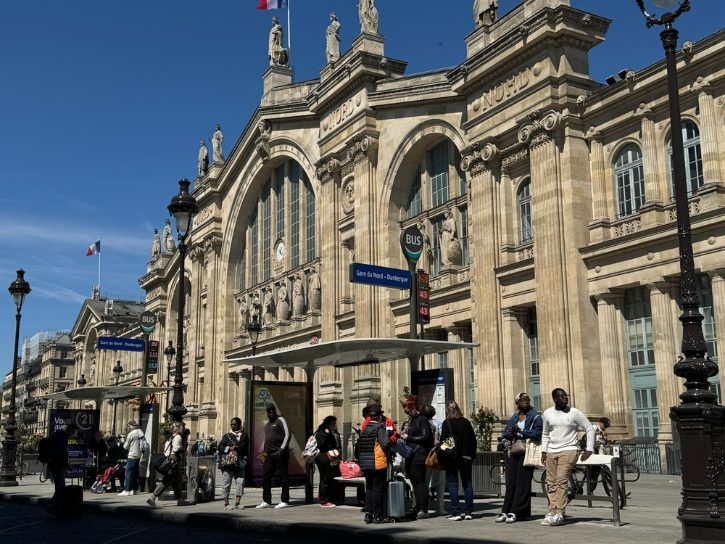
The streets around Gare du Nord and Gare de l’Est are vital transport corridors. Heavy crowds, visible luggage, and transit distractions mean it pays to stay a little more alert here. These areas are practical and functional, but not built for a quiet, classic Paris feel.
b. Why It Needs Extra Care
These two stations sit side by side in the 10th and form one of the largest transport hubs in Europe.
Gare du Nord handles the Eurostar, regional RER trains, and direct rail from Charles de Gaulle Airport, while Gare de l’Est serves eastern France.
Together they move hundreds of thousands of people daily, and that density of travelers carrying luggage creates an easy environment for opportunistic petty crime.
c. What You Might Encounter
- Pickpocketing near ticket barriers, escalators, and gates, often using distraction
- Luggage theft when bags are left on the floor during ticket purchases
- Ticket machine scams, where someone offers “help” then sells invalid tickets
- Illegal taxi solicitations from unlicensed drivers who often overcharge
- Some visible street difficulty, including loitering and public intoxication
These are everyday issues rather than rare or violent crimes.
d. When to Take Extra Care
- Late-night arrivals after 10:00 PM feel grittier, with fewer people around
- Early-morning departures before 7:00 AM mean quiet concourses where loitering is more visible
- Peak hours bring the main risk of pickpocketing in crowded Métro cars
Daytime is generally manageable. The bigger caution is late-night and early-morning travel with bags.
e. Practical Tips
- Plan your route before you step off the train, and save it offline
- Keep bags zipped and close, and never leave luggage unattended
- Use only the official taxi queue, and ignore anyone offering rides inside the station
- Buy tickets only from official machines, counters, or apps
- If staying nearby, pick a hotel within a short walk, and check reviews for the exact street and evening atmosphere
f. Is It Worth Staying Here?
It can make sense if you have an early Eurostar or airport connection, you are watching your budget, or you already know Paris well.
If you want a romantic or calm Paris feel, the gritty atmosphere often cancels out the convenience.
If this is your first trip, or you are traveling with young children, you will usually be happier in Le Marais, Saint Germain des Prés, the Latin Quarter, the 7th, or selected parts of the 8th.
You do not have to avoid this area, though. It is simply a practical choice rather than a scenic one.
7. Caution: Barbès, La Chapelle, Clignancourt (Northern 18th Arrondissement)
a. Overview
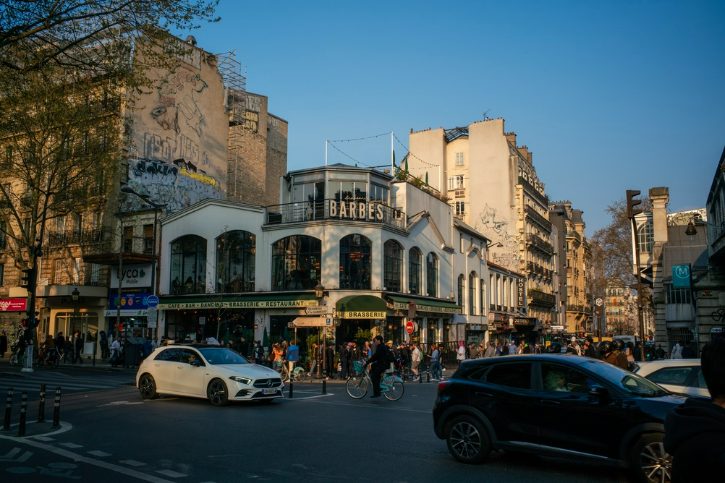
This is a large, lively, and culturally rich part of northern Paris, with busy markets and dense transit junctions. The advice here is to keep standard urban awareness, not to avoid it.
One thing matters most. There is a clear difference between the charming hilltop of Montmartre and the busier transit corridors of the northern 18th just east and north of the hill.
b. Why It Needs Extra Care
The areas around Barbès-Rochechouart, La Chapelle, Château Rouge, and Porte de Clignancourt feel very different from the polished tourist centre.
They are culturally rich and full of bustling markets, but they also face real socioeconomic challenges, dense crowding, and active informal street trade.
That is why they come up in safety talks, and why they should not be judged by the same profile as the quiet hilltop of Montmartre nearby.
c. What You Might Encounter
- Dense crowds and street friction around the Barbès and Château Rouge stations
- The Sacré-Cœur “friendship bracelet” scam, where men try to tie a string on your wrist, then demand payment
- Petition and distraction scams, where someone distracts you while an accomplice tries to pickpocket
- Flea market crowds near Porte de Clignancourt, which draw vendors and pickpockets
- Some localized drug and social issues, especially around La Chapelle, which can feel uncomfortable after dark
d. When to Take Extra Care
- Evenings and nighttime after about 9:00 PM around Barbès, Château Rouge, and La Chapelle can feel less comfortable
- The Porte de Clignancourt flea market is best visited earlier in the day
- Weekend market hours draw big crowds, with pickpocketing the main concern
Daytime visits are far more comfortable than late-night walking. Risk depends on the exact street, the time, and the crowd.
e. Practical Tips
- Visit markets and the Sacré-Cœur during the day, and use the funicular to skip the scam-heavy stairways
- Do not stop for bracelets, petitions, or street games, and keep walking with a polite “Non, merci”
- Stay on well-lit main streets after dark, and plan your route between stations and your hotel
- Use the Métro, official taxis, or trusted ride apps at night when it makes sense
- Check reviews for the exact street, and do not pick a hotel just because it is cheap
f. Montmartre vs Northern 18th
It is a common mistake to treat the whole 18th as one place. It is not. Montmartre is usually tourist friendly. The hilltop around Abbesses, Rue Lepic, and Place du Tertre is charming and secure through the day and evening.
More caution applies to Barbès and Château Rouge east of the hill, La Chapelle to the north, and Porte de Clignancourt around the flea market. Treat the arrondissement as a patchwork, not a single safety zone.
g. Is It Worth Staying Here?
It can be a good, high-value option if you are a confident repeat visitor, watching your budget, or comfortable in busy, dense neighbourhoods, and your exact hotel location matters a lot.
If this is your first trip, you are traveling as a family, or you want a calm or polished Paris stay, a more central base will usually suit you better. This is not an area to write off, but it is one to choose with care.
8. Caution: Stalingrad and Jaurès (19th Arrondissement)
a. Overview
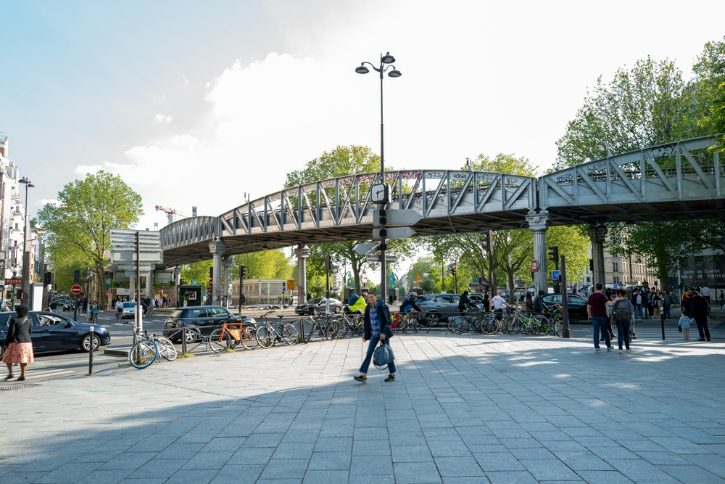
Stalingrad and Jaurès sit in the 19th arrondissement, near canals, parks, and cultural venues in northeastern Paris. They are lively and pleasant by day, but they call for more awareness at night.
The key idea is that the 19th varies a lot from one street to another. Big junctions, transit stops, and quiet canalside stretches are where care matters most.
b. Why It Needs Extra Care
These neighbourhoods sit where the canals meet the Bassin de la Villette, close to Parc de la Villette and the Buttes-Chaumont.
Redevelopment has brought scenic canal banks, trendy bars, and a young, artistic crowd, and the canalside feels relaxed during the day.
It comes up in safety talks because the junctions have struggled with localized public drug use under the elevated Métro arches, along with some petty crime.
The city has worked to manage this, but the area still rewards awareness, which is why it suits you better as a returning visitor than on a first trip.
c. What You Might Encounter
- Visible drug activity and loitering under the elevated Métro tracks at Stalingrad
- A gritty feel around Place de la Rotonde, with some litter and disorder
- Isolated canal paths after dark, where some stretches become poorly lit
- Pickpocketing at the busy Stalingrad and Jaurès interchanges, especially at commute hours
- Some noise near major roads, bars, and busy intersections
d. When to Take Extra Care
- Late nights on weekdays after 10:00 PM, when canal bars close and foot traffic thins
- Summer evenings, when packed canal crowds feel festive but also attract pickpockets
- The stretch under the elevated tracks at Stalingrad is the spot most often flagged
Daytime visits to the canals, the Buttes-Chaumont, and La Villette are generally pleasant and secure.
e. Practical Tips
- Walk along major, active streets at night, such as Avenue Jean Jaurès or Rue de Flandre, rather than quiet canal shortcuts
- Keep bags and phones secure around Métro entrances and busy junctions
- Enjoy the canals during the day, and choose Parc de la Villette or the Buttes-Chaumont for evenings
- Use taxis or ride apps late at night when the walking route feels unclear
- Check reviews for the exact street, and pick a quiet street rather than one facing the transit corridors
f. Is It Worth Staying Here?
It can be rewarding if you are watching your budget, returning to Paris, or heading to an event at La Villette.
Calmer, charming options sit close by, such as the streets near the Parc des Buttes-Chaumont or the Jourdain district.
For most leisure trips, the 19th works better as a daytime visit than a hotel base. If this is your first trip, or you want classic Paris scenery near the hotel, you will usually prefer Le Marais, Saint Germain des Prés, the Latin Quarter, the 7th, or selected parts of the 8th.
The area is worth exploring, just choose your base thoughtfully.